
Tour Package
Gujarat Tour Packages
SUPER DEAL PRICE
STARTS FROM
per person on twin sharing

ATMs are in cities but few in villages.

Cards work in towns but not much in villages.

Banks are found in cities but rare in villages.

Frequent public transport is available in most cities.

Gujarat residents are known for their warm hospitality.
Gujarat - Visitors Statistics

By Purpose

Couples
For Newlywed Vacations

Family
For Family Vacations
Top Travel Destinations
Little Rann of Kutch
Somnath Temple
Dwarkadish Temple
Sabarmati Ashram
Gir Wildlife Sanctuary
Laxmi Vilas Palace
Rani ki Vav (UNESCO)
Modhera Sun Temple
Adalaj Stepwell
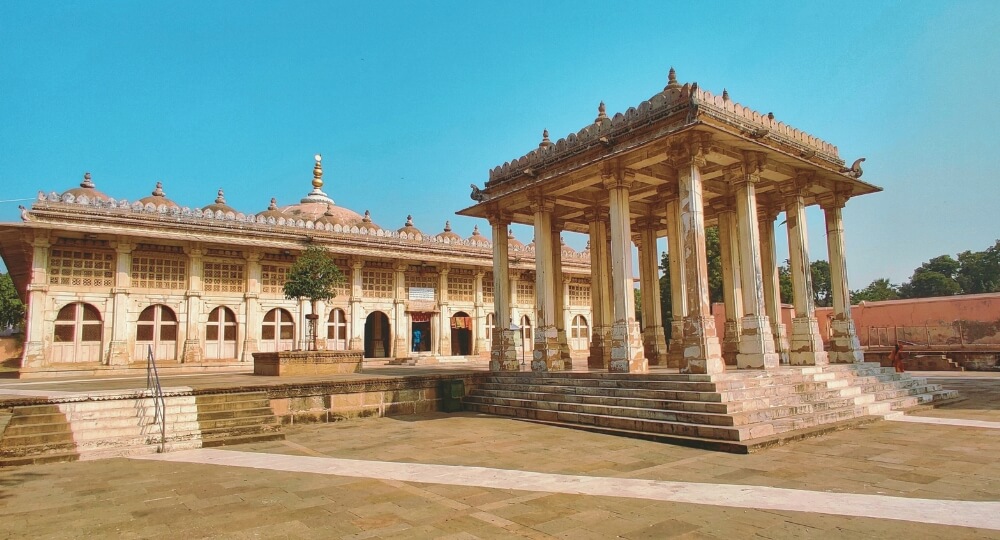
Sidi Saiyyed Mosque
White Kutch
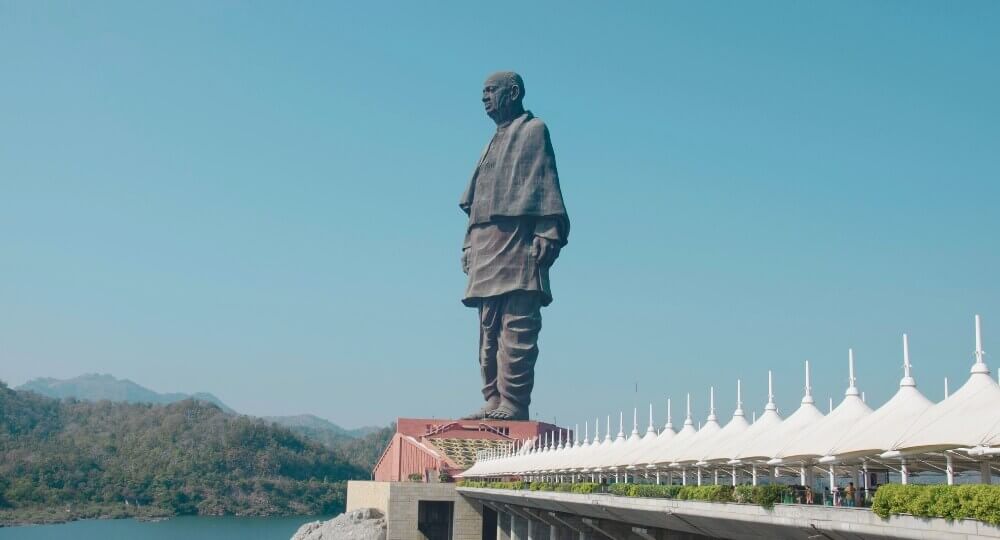
Statue of Unity
Everything You Need to Know About Gujarat
From being a relatively lesser-known desert region to growing into a prominent tourist destination, Gujarat has transitioned magically. And true to its tagline, Gujarat is undoubtedly vibrant and diverse. The Land of the Gurjaras is famed for its desert, that have influenced its crafts, cuisine, dance, music, and traditions.
With a 1600 km coastline, Gujarat stretches into the Arabian Sea. It has historically been a significant port centre, with ports like Lothal and Khambhat facilitating trade since the times of the Indus Valley Civilisation. Read on to learn more about the state and book our Gujarat tour packages.
Call +91 9940882200 to learn more about our Gujarat tour packages. You can also customise your group tours to personalise itineraries and include private activities. Please send us a message on Instagram to learn more.
Table of Content:
- About Gujarat
- Infographic Tidbits
- Things To Remember When Booking Gujarat Tour Packages
- Best Time To Choose Gujarat Tour Packages
- Top Reasons To Choose Gujarat Tour Packages
- Top Cities To Explore With Our Gujarat Tour Packages
- Iconic Attractions Included In Your Gujarat Tour Packages
- Food
- Shopping
- Art And Culture
- Dos And Don’ts Of Visiting Gujarat
About Gujarat
Gujarat, the jewel in the western region, takes its name from the Gurjaras, a nomadic tribe that ruled Gujarat from the 8th to the 11th century CE. The Gurjara-Pratihara dynasty resisted Arab invasion for a long time, thus preventing their expansion into the east. Gujarat is a diverse land famous for its temples, UNESCO World Heritage monuments, and unique geographical marvels. The state ranks 4th in GDP and is the 3rd richest state in terms of Gross State Domestic Product.
Call us at +91 9940882200 to learn more about our Gujarat tour packages. We provide customised individual and group tours at budget prices.
History
Gujarat’s recorded history dates to the Stone Age, around the valleys of the Sabarmati and Mahi rivers, where archaeologists have discovered traces of human settlement. But the region is more famous for the spread of the Indus Valley Civilisation that flourished between 3300 BCE and 1300 BCE. Cities like Lothal, Dholavira, and Rangpur were at the centre of the civilisation, with Lothal often considered as one of the world’s oldest port cities.
Recently, archaeologists have discovered evidence of human settlement in Vadnagar, which could date back to 800 BCE, helping scientists bridge the gap between the Indus Valley Civilisation and the emergence of the Iron Age.
The region was ruled by several dynasties, viz., the Mauryas, Shakas, Guptas, Maitrakas, Gurjara-Pratiharas, Solankis, Vaghelas, the Delhi Sultanate, the Marathas, and the British.
Geography
Gujarat extends from Mount Abu in the north to Umbergaon in the south, the Vindhyas in the east to the Arabian Sea (along with the Gulf of Khambhat and Rann of Kutch) to the west. The region can be divided into mainland Gujarat, peninsular Gujarat (Saurashtra), and Kutch. Gujarat shares its borders with Pakistan in the northwest, with Dhordo being the last border village between India and Pakistan.
Another notable aspect of Gujarat’s geography is that the Western Ghats begin in Gujarat, south of the Tapi River within the Dang District.
Economy
Gujarat is the fourth-largest economy in India and is often called India’s Petro-Capital. The state is the hub of the pharmaceutical and chemical industry. It manufactures 90% of India’s soda ash and 70% of its salt. Some of the other sectors ranking well in the state include marine production, fisheries, ports, textiles, and electrical engineering. Gujarat is India’s leading gem and jewellery processing region, with Surat being called the Diamond City of India.
Gujarat’s dairy history is legendary, with the White Revolution catapulting India as the world’s largest producer of dairy. The state is the largest producer of cotton, groundnuts, spices like cumin and sesame, and tobacco.
Call us to enquire about our Gujarat tour packages. We can create customised packages that match your budget and travel style.
Infographic Tidbits
- Gujarat has the longest coastline in India.
- The Rann of Kutch is the world’s largest salt desert.
- Vadnagar, Gujarat, is India’s oldest living city, with evidence of human settlement dating back to 1400 BCE.
- The Statue of Unity is the world’s tallest statue.
- Lothal, a thriving port during the Indus Valley Civilisation, is India’s oldest port.
- The world’s first vegetarian outlets of fast food brands like Domino’s and Subway were opened in Ahmedabad, Gujarat.
- The Gir Forest in Gujarat is the only place in Asia where you can find the Asiatic lion.
- AMUL, the milk cooperative, is the world’s largest milk cooperative.
- The Narendra Modi Stadium is the world’s largest cricket stadium.
Things To Remember When Booking Gujarat Tour Packages
- Winter is the best time to book Gujarat tour packages
- Pack light if you are visiting during the summer or monsoon
- We suggest you do not pack too many cities in your Gujarat tour packages itinerary
- If the Statue of Liberty is included in your itinerary, we suggest booking a hotel in Vadodara, as hotels near the Statue of Liberty are expensive.
- Make sure to book your Gujarat tour packages around Navaratri – the vibe is magical.
- Carry sunglasses and sunscreen with you, irrespective of the weather.
- Carry a power bank, especially if you are travelling to rural areas.
- Carry ready-to-eat food if the carb-heavy, besan-induced food isn’t to your liking.
Best Time To Choose Gujarat Tour Packages
Gujarat has a sub-tropical climate with hot and dry summers and mild winters. The region’s climate is largely affected by its proximity to the Arabian Sea and the Thar Desert. There are three climatic zones in the state: coastal, central, and desert. Cities like Ahmedabad and Surat come under the coastal zone and experience hot and humid summers with mild winters.
The central zone includes cities like Vadodara and Rajkot and experiences a semi-arid climate with hot summers and cold winters. Finally, districts like Kutch and Banaskantha have extremely hot summers and frigid winters.
Gujarat has three distinct seasons: summer, monsoon, and winter. Read to learn more about these seasons and the best time to choose Gujarat tour packages.
Summer (March to May)
Summers can be extreme in the state, with temperatures in some districts rising to up to 45°C and even up to 50°C in recent times. The average temperature ranges from 30°C to 45°C with very low humidity, making the state dry. However, some coastal cities like Dwarka and Somnath experience a slightly milder summer thanks to their proximity to the sea.
If you plan on choosing Gujarat tour packages in summer, we suggest you stay hydrated and avoid travelling during the peak afternoon. Heat waves are common in regions of Saurashtra and Kutch – check the weather before planning a holiday. The upside to choosing this low season is that flight tickets and hotel accommodations are cheap.
There aren’t too many festivals or fairs celebrated during this time. But the Madhavpur Fair in Porbandar is celebrated to commemorate the marriage of Lord Krishna and Rukmani. Locals also escape to Saputara, Gujarat’s only hill station, to escape the scorching heat.
Monsoon (June to September)
Monsoon isn’t as important for tourism as it is for the agricultural industry. The state receives almost all its rainfall around this period, which helps with cash crops like cotton, groundnut, and sugarcane. The average temperature ranges from 27°C to 35°C with high levels of humidity. The temperature is, however, bearable at night.
While some areas receive less rainfall, there are places where torrential rains are common. We recommend checking the weather before booking Gujarat tour packages during the monsoon.
Saputara and Valsad are especially pleasant in the monsoon, as it is part of the Western Ghats. Junagadh is also pleasant thanks to the Girnar Mountains. Champaner-Pavagadh is worth visiting in the monsoon thanks to the many waterfalls and lush greenery.
Some of the festivals celebrated in monsoon include the Saputara Monsoon Festival, Janmashtami, and Ganesh Chaturthi. If you are in Gujarat during Janmashtami, don’t miss the Dahi Handi celebration.
Winter (October to February)
Although winter doesn’t start until November, and October is often associated with autumn, the weather is pleasant and cheerful in October with temperatures ranging from 22°C to 36°C. The only drawback to visiting in October is the high humidity.
Winters are the best time to choose Gujarat tour packages. The temperature ranges from 15°C to 25°C, with night-time temperatures dropping to as low as 10°C. It is also the peak season, full of festivals and fairs. Two of Gujarat’s most popular celebrations, Navratri and Diwali, are celebrated in winter. It is also the season for the Great Rann of Kutch festival, one of Gujarat’s most famous fairs, celebrating the beauty of Kutch.
As the number of visitors to Gujarat in winter increases exponentially, so do the costs of flight tickets and hotel accommodations. The tourist attractions can also be crowded. It’s also the time when Gujarat tour packages are costly.
Winter (October to February)
Although winter doesn’t start until November, and October is often associated with autumn, the weather is pleasant and cheerful in October with temperatures ranging from 22°C to 36°C. The only drawback to visiting in October is the high humidity.
Winters are the best time to choose Gujarat tour packages. The temperature ranges from 15°C to 25°C, with night-time temperatures dropping to as low as 10°C. It is also the peak season, full of festivals and fairs. Two of Gujarat’s most popular celebrations, Navratri and Diwali, are celebrated in winter. It is also the season for the Great Rann of Kutch festival, one of Gujarat’s most famous fairs, celebrating the beauty of Kutch.
As the number of visitors to Gujarat in winter increases exponentially, so do the costs of flight tickets and hotel accommodations. The tourist attractions can also be crowded. It’s also the time when Gujarat tour packages are costly.
Top Reasons To Choose Gujarat Tour Packages
Gujarat, being a land of rich architecture and heritage, is worth visiting at least once in your lifetime. The state is diverse and can be divided into Saurashtra, Kutch, Central Gujarat, North Gujarat, and South Gujarat. In fact, you’ll need at least 10 days to fully explore Saurashtra’s historical sites, beaches, and wildlife. Read on to learn why to choose our Gujarat tour packages.
The Rann of Kutch
The Rann of Kutch is a vast salt marsh in the Thar Desert, spanning over 26,000 sq. km. The world’s largest salt desert was once a thriving civilisation and may have even featured ports that facilitated trade during the Indus Valley Civilisation. Today, these vast expanses of cracked earth are an ecologically sensitive region and are even designated as a protected area.
It is home to the Kutch Desert Wildlife Sanctuary, Indian Wild Ass Sanctuary, the Narayan Sarovar Sanctuary, Kutch Bustard Sanctuary, and the Chari-Dhand Wetland Conservation Reserve.
Besides admiring the surreal landscape, visitors can experience the life of the Kutchi people firsthand.
The Road to Heaven, a 30-kilometre highway connecting Khavda to Dholavira, offers great Instagram-worthy views of the surrounding desert.
If you are visiting the Rann during December, don’t miss the Great Rann of Kutch festival (Rann Utsav) that celebrates life in the desert. Some of the other activities you can enjoy during the festival include art and craft exhibitions, staying in the Tent City at Dhordo, ATV rides, camel safari, local handicraft shopping, paramotoring, hot-air ballooning, stargazing (the best place to capture the Milky Way), etc.
Wildlife Sanctuaries
Gujarat is home to over 30 wildlife sanctuaries, some of which are famous and attract tourists from all over the world. For instance, the Gir Wildlife Sanctuary is the only place in the world where you can find the Asiatic lions in their natural habitat. Gir is also home to several endangered animals, including hyenas, pygmy woodpecker, brown fish owl, and Gir foxes.
The Wild Ass Sanctuary in Kutch is home to the Indian wild ass or Khur, a subspecies of the Asiatic wild ass. It is also home to several other animals like the Chinkara, Nilgai, wolves, and foxes.
The Nal Sarovar Bird Sanctuary in Nalsarovar is home to several bird species, including flamingos, pelicans, egrets, herons, and cranes.
Barda Wildlife Sanctuary in Barda is home to several endangered species, such as spotted eagles and crested hawk-eagles.
The Jambughoda Wildlife Sanctuary in Champaner is home to several endemic trees like the Mahua, Khair, and bamboo. It is also home to several animals like the Nilgai, Chausingha, sloth bear, and hyena.
The Kutch Desert Wildlife Sanctuary is India’s largest wildlife sanctuary and is famous for its migrant flamingo population. Some of the other animals found in the desert include the spiny-tailed lizards, Chinkaras, hyenas, and Nilgais. The rare Houbara bustard can also be sighted during the migrating season.
Call us to include jeep safaris, camping, and other activities in your Gujarat tour packages when visiting these sanctuaries.
Temples
Gujarat’s ancient temples are a major tourist attraction, with the state boasting several grand and revered Hindu and Jain shrines. For instance, Somnath, the first of the 12 jyotirlingas, is believed to have existed for over 2000 years.
Dwarka is home to the Dwarkadish Temple dedicated to Lord Krishna and is one of the Char Dhams. Legend has it that Lord Krishna once ruled from this coastal city, which was later submerged due to a curse by Gandhari. Archaeologists have found evidence of an Atlantis-like lost city.
The Rukmini Temple, dedicated to Lord Krishna’s consort Rukmini Devi, is around 2 km from the Dwarkadish Temple.
The Hutheesing Jain Temple is an architectural marvel with exquisite marble carvings dedicated to Dharmanatha, the 15th Jain Tirthankara.
Palitana is home to over 900 Jain shrines dedicated to various Jain Tirthankaras and is the only city in Gujarat where non-vegetarian food is banned. It is a major spiritual and pilgrimage site for the Jain community.
Similarly, the Nageshwara Temple is one of the 12 jyotirlingas in Dwarka, famous for its massive Shiva statue.
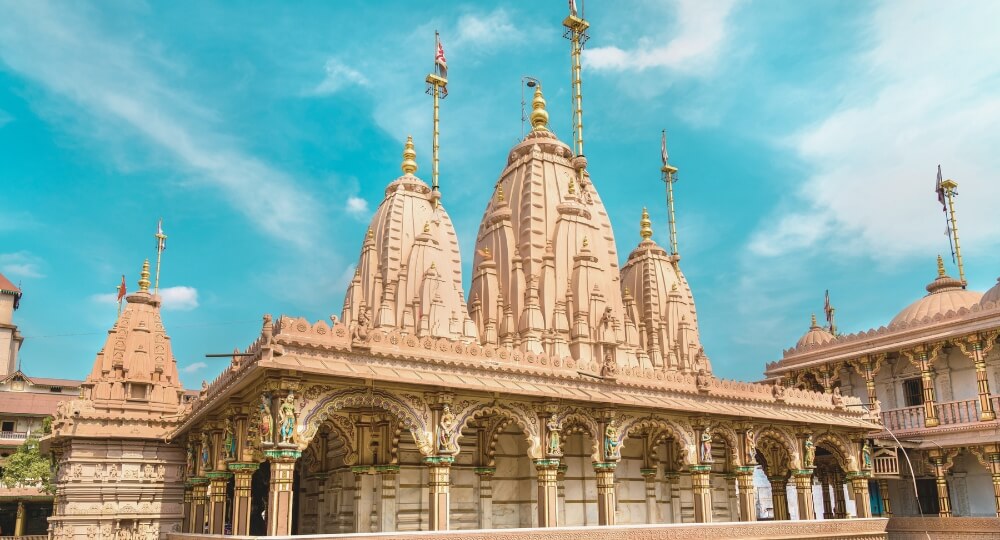
The Swaminarayan Akshardham Temple in Gandhinagar is another beautiful temple widely known for its intricate carving. It is dedicated to Swaminarayan, an 18th-century ascetic who helped revive several Vaishnav traditions and ideas.
Indus Valley Civilisation Sites
The 5000-year-old Indus Valley Civilisation extended into Gujarat with evidence of several Harappan settlements in Kutch and Saurashtra. Each of these cities was well planned, featuring advanced urban planning, sophisticated roads and sewage systems, and burial pits.
Popular Indus Valley Civilisation sites in Gujarat include Dholavira, Bet Dwarka, Bhagatrav, Lothal, Surkotada, and Rangpur.
As tourists, you can explore these sites, covering iconic sites, understanding their lifestyle and exploring different artefacts like animal figurines, seals, religious symbols, jewellery, pottery, and terracotta statues. You will also find bones and remains of animals like horses, cows, sheep, and goats.
Call us at +91 9940882200 to include an Indus Valley Civilisation site tour in your Gujarat tour package itinerary.
Stepwells
Gujarat’s dry, semi-arid landscape has influenced its people’s reverence towards water and water resources. The gift of water was traditionally considered a pious act, with kings, queens, and wealthy patrons funding the construction of stepwells in memory of a loved one or a favourite deity.
These stepwells draw water from an underground aquifer and are filled by catching precious monsoon water. These wells are deep and vertical to protect the water from evaporation and its visitors from the scorching sun. Surprisingly, even when it is hot outside, the temperature inside these stepwells is around 15°C. The stepwells also helped recharge groundwater naturally and ensured that people had access to water even during harsh summers.
Over 3000 stepwells were constructed between the 7th and 19th centuries in Gujarat and Rajasthan. Each of these stepwells was intricately decorated with carvings of deities, feminine figures, and geometric patterns. These stepwells were once the centre of social gatherings, with newlyweds offering prayers and rituals for health and fertility. Different communities had stepwells for their society.
Some of the famous stepwells you can visit with your Gujarat tour packages include Rani ki Vav, Adalaj, Dada Harir ni Vav, Suryakund, and Adi Kadi Vav.
Heritage Sites
Gujarat is home to four UNESCO World Heritage Sites, each unique and reflective of the state’s history and culture. Being on the crossroads of several cultural influences of the Hindus, Muslims, and the British has contributed to Gujarat’s rich architectural landscape. For instance, the Muzaffarid Dynasty built several mosques, forts, and tombs, blending Indian and Islamic architecture – aptly called the Gujarat Sultanate Style of Architecture.
The Sidi Saiyad Mosque is the best example of this style. It is famous for its sandstone tracery work that fills the mosque’s window spaces. The Tree of Life and Parasite motif that make up this design are some of the finest specimens of sandstone latticework.
Other such specimens of the Gujarat Sultanate Style of Architecture include the Champaner Fort, Jama Masjid, Sarkhej Roza, Teen Darwaza, and the Jama Masjid.
Mughal influences in Gujarat’s architecture include several mosques and tombs like the Hazira Maqbara in Vadodara and Mughal Sarai in Surat.
Several Hindu rulers built temples, step wells, and other monuments using the Maru-Gurjara architectural style. The term Maru-Gurjara was recently coined and derives its name from the architecture that emerged in the regions of Maru (ancient Rajasthan) and Gurjara (ancient Gujarat). It is also called the Solanki architectural style, as the ancient Solanki dynasty ruled parts of Rajasthan and Gujarat. Some of the famous monuments of this style include the Adalaj Stepwell, Modhera Sun Temple, Rani ki Vav, and the Rudra Mahalaya Temple.
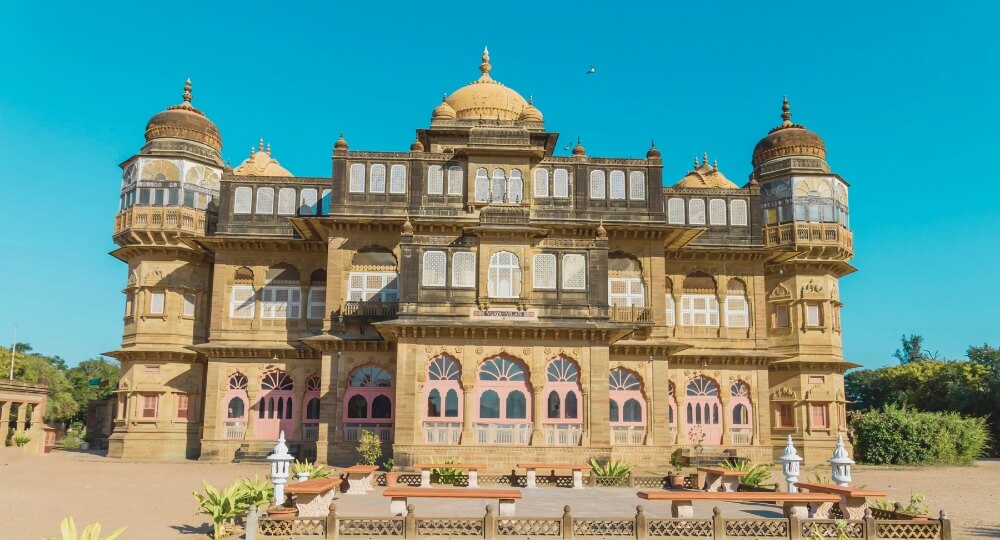
The British brought their influence to Gujarat’s architectural landscape, enriching it with monuments like the Laxmi Vilas Palace in Vadodara, the Vijaya Vilas Palace in Mandvi, and the Prag Mahal.
Ahmedabad’s famous pols or traditional residential neighbourhoods that house ancient havelis built in the Indo-Islamic architectural style, featuring intricate latticework and elaborate woodwork.
Gujarat is also home to the ancient Indus Valley Civilisation with archaeological remnants of ancient cities like Lothal, Dholavira, and Surkotada.
Festivals
Gujarat is a colourful state famous for its vibrant festivals involving song and dance. These festivals showcase the state’s unique culture and traditions. For instance, Lord Krishna is revered in the region as he is believed to have migrated to Dwarka to protect his people from Jarasandha. Janmasthami is celebrated with great pomp and fun. The highlight of the event is the Dahi Handi event, where young boys form a human pyramid to reach and break a pot filled with curd. It is symbolic of the times when Lord Krishna, with his friends, stole curd and butter from such pots hung in people’s homes.
Navaratri is another popular festival and the highlight of every Gujarati’s annual calendar. It is celebrated to commemorate the killing of Mahishashur, a demon who troubled people. Over nine days, different gods and goddesses combined to form the indestructible Goddess Durga. Traditionally, men and women gather to play dandiya (played with long sticks) and garba (played with hand movement), two folk dances in circular motion.
Famous Navratri events in Gujarat include Vadodara’s United Way of Baroda, Udgam na Garba, University of Baroda Navratri Event, and Bhadra Fort Garba.
Diwali, the festival of lights, is a huge event for Gujaratis. It is celebrated for Five Days, beginning with Dhanteras and ending with Bhai Dooj. Gujaratis, especially traders, perform Chopda Pujan, i.e., worshipping of the accounts book on the day after Dhanteras, which is often considered the New Year. This day is regarded as the last day of the financial year, and all business accounts are closed before Laxmi Puja. The New Year’s account begins with the auspicious phrase Shubh Labh, followed by the first notations in the accounts book, typically made with a pen given by a small girl, who is considered to embody the Goddess Laxmi.
Another famous fair/festival that attracts tourists from across the world is the Rann Utsav or the Great Rann of Kutch Festival, arranged by the Government of Gujarat. It is the best time to book Gujarat tour packages.
The International Kite Festival is celebrated during Makar Sankranti to commemorate Uttarayan or the celebration of the sun’s transition to Capricorn. Kite enthusiasts from across the world visit Ahmedabad and other kite festival centres to participate in kite flying competitions and exhibitions.
Gujarat is also home to melas or fairs. The most famous ones include Shamlaji Melo, where devotees visit the Shamlaji Temple to bathe in the waters of the Meshwo River and enjoy the festivities. The Valutha Mela, where animals, especially donkeys, are traded, is another popular fair.
The Land of Gandhi and Sardar Vallabhbhai Patel
Gujarat is home to several historical places that helped shape India’s destiny. For instance, Sabarmati Ashram, on the banks of the Sabarmati River, Ahmedabad, is famous as the first ashram established by Mahatma Gandhi after his return to India. He stayed here until 1933, when he left for Dandi and vowed never to return until India achieved Independence.
Kirti Mandir, the Gandhi family’s ancestral home and the place where the Mahatma was born, is another historical monument. Adjacent to Kirti Mandir is the birthplace of Kasturba Gandhi.
The Statue of Unity, the world’s tallest statue, is dedicated to Sardar Vallabhbhai Patel, the man credited with uniting India and often referred to as India’s Iron Man.
Food
Gujarat is one of the best places for vegetarians. The state is known for its diverse flavours that delicately balance sweet, sour, spice and salt. From Surti Undhiyu to Bajro no Rotlo and Dal Dhokli, there are plenty of vegetarian dishes to tingle your taste buds. However, there is no dearth of traditional non-vegetarian food made by Muslim and Parsi communities. The Dawoodi Bohra community is especially famous for its Khichda, Palidu, Kheema Samosa, and Bohra Biryani. The Parsis are renowned for their delectable Patra ni Machi, Sali Boti, Berry Pulao, Akuri, Chicken Farcha, Mutton Cutlet, and Dhansak.
But nothing can compare to Gujarat’s delicious range of farsan or snacks. From khaman and Dhokla to Dabeli and Surti Locho, there’s so much to sample. Don’t forget the famous Fafda-Jalebi or the Thepla, Patra, and Muthiya from the many streetside shops of Gujarat.
And if you are a dessert lover, there are enough options for everyone. From Basundi and Shrikand to Mohanthal, Gujarat is a haven for those with a sweet tooth.
Call us to include a food tour in your Gujarat tour packages itinerary.
Shopping
Gujarat is famous for its distinctive and colourful fashion with clothes embellished with mirrorwork and beads. The state is renowned for its unique tie-and-dye work, called Bandhani or Bandhej and silver jewellery. It’s also a great place to shop for cotton textiles and handmade leather footwear.
If you love colourful clothes, Gujarat is the place to be. Even today, textile shop owners from across the world visit Surat to buy sarees and dress materials at wholesale prices. You can buy sarees as low as INR 149.
Some of the other things to buy from Gujarat include Khadi textiles, Patola sarees, Kutchi embroidered dress material, Kediyas, Lac bangles, and Pithora paintings.
Each district in Gujarat is famous for its unique handiwork. For instance, Kutch is renowned for Ajrakh prints, quilts, and leather bags, while Jamnagar is well-known for its beadwork and glasswork.
Call us to include shopping in your Gujarat tour packages itinerary.
Top Cities To Explore With Our Gujarat Tour Packages
While Gujarat may look similar to an outsider, every city is unique with different characteristics in terms of culture, economy, history, and landscape. For instance, the Kutch region bordering the Thar Desert has a distinctive dialect that’s different from Gujarati spoken across the state. The food is equally distinct and slightly spicy compared to mainstream Gujarati cuisine. Here are some of the cities included in your Gujarat tour packages. You can always customise the itinerary to include towns or tourist attractions you’d like to explore.
Ahmedabad
Ahmedabad is one of the only two UNESCO World Heritage-listed cities in India. It is famed for its well-preserved architectural marvels, especially from the Gujarat Sultanate period. The city is known for its Pols, or old gated neighbourhoods designed to protect its inhabitants from outside threats. The Pols are also known for their intricate timber-based architecture. The city was founded in the 15th century by Sultan Ahmed Shah on the banks of the Sabarmati River, and continued to flourish as Gujarat’s capital until 1970, when Gandhinagar replaced it as the capital city. Ahmedabad is also associated with India’s freedom struggle, as it was here on the banks of Sabarmati that Gandhiji set his ashram after returning from South Africa.
Some of Ahmedabad’s tourist attractions you can explore with our Gujarat tour packages include:
- Sabarmati Ashram
- Calico Museum of Textiles
- Sidi Saiyyed Mosque
- Kankaria Lake
- Hutheesing Jain Temple
- Jama Masjid
- Sarkhej Roza
- Manek Chowk
- Teen Darwaza
- Jhulta Mandir
- Bai Harir Vav
- Adalaj ni Vav
You can also explore these attractions and much more with our Ahmedabad tour packages.
Vadodara
Vadodara, Gujarat’s third-largest city, was once called Vadpatra due to the abundance of Banyan trees along the Vishwamitri River. The name was later anglicised to Baroda and is now changed to Vadodara. Modern-day Baroda owes much to the Gaekwad Dynasty, especially Maharaja Sayaji Rao Gaekwad III. He established educational and commercial centres and textile factories. Today, the city is famous for its museums, palaces, and exquisite temples, earning the nickname Sanskari Nagari or City of Culture.
Some of the popular tourist attractions you will explore in Vadodara with our Gujarat tour packages include:
- Laxmi Vilas Palace
- Sayaji Baug Zoo
- Kirti Mandir
- Maharaj Fateh Singh Museum
- Mandvi Gate
- Sur Sagar Lake
- Tambekar Wada
It is also approximately 90 km from the Statue of Unity. You can include it in your Vadodara itinerary if your Gujarat tour package itinerary does not include Kevadiya.
Kutch
Kutch or Kachchh is a famous district in Gujarat with a history that dates to the Indus Valley Civilisation. It is now a geographical wonder and known for the Great Rann of Kutch, the world’s largest salt marsh, which now covers about 50% of Kutch’s landscape. Kutch is sandwiched between Kathiawar and Sindh and was called Abhari. To the east of Kutch lies the Little Rann of Kutch, home to the Wild Ass Sanctuary, believed to be one of the few places on earth where wild asses live in their natural habitat.
Kutch is famous for its handicrafts, especially embroidery, leatherwork, batik, Bandhani, woodwork, pottery, Ajrarkh, silverwork, and copper bell making.
Besides the many wildlife sanctuaries and the surreal landscape, Kutch also attracts tourists for its Indus Valley Civilisation sites.
Some of the places you will visit in Kutch with your Gujarat tour packages include:
- Dholavira
- Kalo Dungar
- Little Rann of Kutch Wild Ass Sanctuary
- Kutch Desert Wildlife Sanctuary
- Narayan Sarovar Sanctuary
- Chari-Dhand Wetland Conservation Reserve
- Dhordo
- Nirona
Rajkot
Rajkot, Gujarat’s 4th largest city was once dubbed India’s cleanest city. It is part of the Kathiawar region and the people of Rajkot are called Kathiawadis. The city was founded in the 17th century by Thakorji Vibhaji. The city is a prime industrial area and is known for its textile industries. The city is a major exporter of diesel engines, watch parts, bearings, auto components, and plastic machinery. You must visit Rajkot to explore its colourful markets, street food stalls, and historical monuments.
Some of the places you will visit in Rajkot with your Gujarat tour packages include:
- Watson Museum
- Kaba Gandhi no Delo
- Mahatma Gandhi Museum
- Ranjit Vilas Palace
- Khambhalida Rock
- Hingolgadh Sanctuary
- Naulakha Museum, Gondal
Junagadh
Junagadh was once a princely state in the Kathiawar region, founded on the foothills of Mount Girnar by Mohammed Sher Khan. However, the city’s history dates back hundreds of years, with the Mauryans among its earliest rulers. In fact, the city’s name, Junagadh, means Old Fort, referring to Uperkort Fort, constructed by King Chandragupta Maurya in 319 BC. Junagadh is famous for its heritage sites, Buddhist caves, and temples. Some of the writings and stone carvings on the Buddhist caves date back to 500 BC. Jain and Hindu pilgrims often visit Mount Girnar, a holy site dedicated to Lord Neminath and the Dattatreya Paduka, a temple located on the 9,999th step of the mountain.
Some of the places you will visit in Junagadh with your Gujarat tour packages include:
- Uperkot Fort
- Adi Kadi Vav
- Mount Girna
- Jama Masjid
- Mahabat Maqbara
- Junagadh Museum
- Navghan Kuvo
- Baba Pyare Caves
- Khapara Kodiya Caves
- Damodar Kund
- Sakkarbaug Zoological
Most visits to Junagadh also include a visit to Gir National Park, the only place in the world where you can find Asiatic lions in their natural habitat.
Surat
Surat is India’s Diamond Capital and an important city in South Gujarat. It is the second largest city in the state and is often dubbed the 3rd cleanest city in India. The Surat Diamond Bourse, covering over 6,60,000 sq ft, is the largest in the world, and even mentioned in the Guinness Book of World Records. Situated on the banks of the Tapi River, Surat is believed to have been founded by a Brahmin called Gopi. It was also an important trade hub, attracting tourists from Africa, Europe, and Arabia. Besides diamonds, Surat is famous for textiles and Zari crafting.
Some of the places you will visit in Surat with your Gujarat tour packages include:
- Surat Castle
- Tithal Beach
- Purna Wildlife Sanctuary
- Suvali Beach
- Sarthana Nature Park
Saputara
Saputara is the only hill station in Gujarat and part of the Dang District. This beautiful place, nestled in the Sahyadris, derives its name from the Sarpaganga River. Blessed with natural waterfalls, picturesque scenery, and beautiful gardens, Saputara has been associated with Hindu mythology. Locals believe that Lord Rama spent over 11 years in the forests of Saputara.
Saputara means Abode of Serpents, given to it by the indigenous tribal groups who believe that a mythical serpent lives in the forests.
Some of the best attractions you will explore in Saputara with your Gujarat tour packages include:
- Sunrise Point
- Sunset Point
- Rose Garden
- Lake Garden
- Step Garden
- Gira Waterfalls
- Ambapada
- Girmal Falls
- Vansda National Park
- Echo Point
- Unnai Mata Temple & Hot Spring
The best time to explore Saputara is during the Saputara Monsoon Festival, when the place comes alive with lush greenery.
Bhuj
Bhuj is the headquarters of Kutch district and is known for its vibrant heritage. The city was founded in the 16th century by Rao Khengari and has since faced several ups and downs, including the devastating earthquake that hit the city in 2001. This beautiful heritage city is famed for its palaces, temples, museums, and stepwells. Bhuj is also connected with India’s ancient history through archaeological remnants of the Indus Valley Civilisation, places associated with the Mahabharata, and Alexander’s march to India. Bhuj is also the best place to sample Kutchi cuisine with culinary delights like the Dabeli, Khaman Dhokla, Lehsuni Paratha, and Adadiya Pak.
Some of the places you will explore in Bhuj with our Gujarat tour packages include:
- Pragmahal
- Aaina Mahal
- Kutch Museum
- Chhatardi Bhuj
- Shri Swaminarayan Temple
- Roha Fort
- Kutch’s White Desert
- Lakhpat Fort
- Smritivan Earthquake Memorial and Museum
- Bhujodi Village
- Hamirsar Lake
- Ramkund Stepwell
- Hodka Village
- Kateshwar Buddhist Caves
Bhuj is also considered the gateway to the Rann of Kutch, and often the base city for people looking to explore the Kutch in the day.
Dwarka
Dwarkaa is an important pilgrimage city for the Hindus, especially those from the Vaishnavite traditions. The town has been associated with Lord Krishna, who is believed to have founded it by reclaiming 12 Yojanas of land from the sea. The town, which consisted of beautiful gardens and palaces, supposedly submerged under the sea after Lord Krishna’s death. Archaeologists have found evidence of a submerged city.
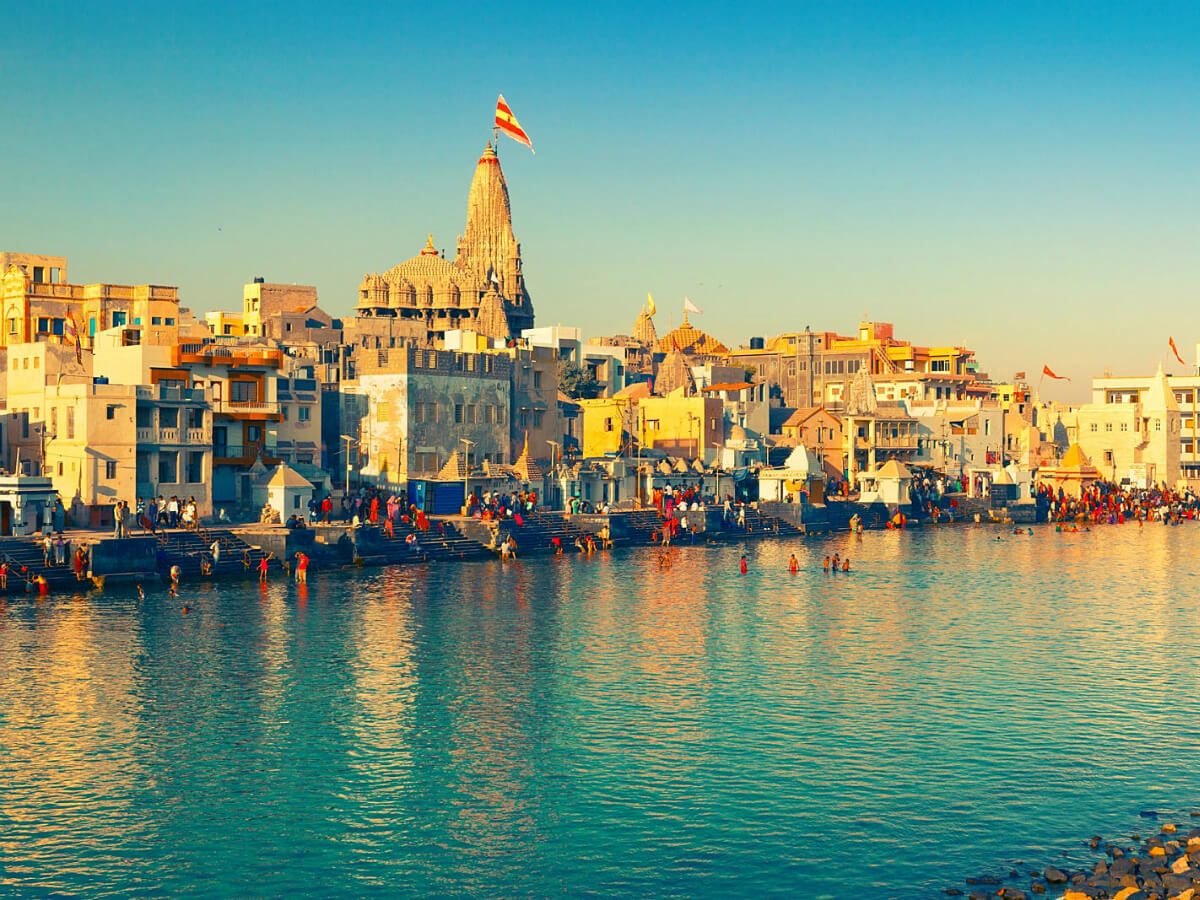
The modern-day city of Dwarka is now part of the Devbhumi Dwarka district and famous for the Dwarkadish Temple, one of the Char Dhams. It was here that Adi Shankaracharya established the Sharda Peeth. The temple was originally believed to have been built by Vajranabha, the great-grandson of Lord Krishna. It was destroyed several times, with the current temple reconstructed in the 15th-16th century.
Some of the places you will visit in Dwarka with our Gujarat tour packages include:
- Dwarkadeesh Temple
- Rukmini Temple
- Beyt Dwarka
- Sudarshan Sethu
- Nageshwar Jyotirlinga
- Gomti Ghat
- Dwarka Beach
- Gaga Wildlife Sanctuary
- Bhadkeshwar Temple
- Shivrajpur Beach
- Darbargadh (Jamnagar)
Mehsana
Mehsana is a beautiful city in Gujarat, famous for its dairy, oil, and natural gas. It is famed for its Mehsana breed of buffalo, known for its high fat content. The city was founded by Mehsaji Chavda in the late 14th century. He built the Toran Gate and a temple dedicated to the Goddess Toran. The city is also associated with the Indus Valley Civilisation, with archaeologists finding evidence to this effect. Mehsana is close to the Taranga and Aravalli hills in its northern end.
Today, Mehsana is home to several educational institutions in areas of engineering, pharmacy, science, and management.
- Modhera Sun Temple
- Rudra Mahalaya
- RajMahal Palace
- Taranga Hill Wildlife Sanctuary
- Thol Wildlife Sanctuary
- Shree Pipleshwar Mahadev Temple
- Boter Kothani Vav
- Rani ki Vav (Patan)
- Patan Patola Heritage Museum
Panch Mahal
Panch Mahal is a popular district in eastern Gujarat. The place gets its name from the five taluks presented to the British by the Maharaja of Gwalior. It is most famous for its archaeological sites and unique history, which revolves around the ancient city of Champaner. Panch Mahal has been part of several empires, including the Guptas, Chalukyas, and the Delhi Sultanate.
Some of the places you will visit in Panch Mahal with our Gujarat tour packages include:
- Champaner-Pavagadh Archaeological Park
- Jambughoda Wildlife Sanctuary
- Jami Mosque
- Helical Stepwell
- Pavagadh Hills
- Kevadia Masjid
- Saat Kaman
- Navlakha Kothar
- Hathni Mata Waterfall
- Caravan Serai
- Sikander Shah’s Tomb
Navsari
Navsari is a historical city for several reasons. For one, it was the birthplace of Sir Jamsetji Tata. It is also one of the earliest Parsi settlements where the holy Iranshah Fire was kept for about 300 years. It is famous today for its heritage buildings and temples.
Some of the places you will visit in Navsari as part of your Gujarat tour packages include:
- BAPS Shri Swaminarayan Temple
- Jamshed Baug
- Dandi Beach
- Vansda National Park
Prabhas Pathan
The city of Prabhas Pathan is part of Gir Somnath District and home to one of the holiest temples for Hindus, the Somnath Jyotirlinga temple. The Somnath Temple is the first of the 12 jyotirlingas, a spot where Lord Shiva is believed to have manifested as a single column of light. While the temple is considered to be thousands of years old, it was destroyed several times by invading rulers and was reconstructed every time. The last reconstruction was completed in 1951 on the initiative of Sardar Vallabhbhai Patel.
Some of the other tourist attractions you can visit besides the Somnath Temple include:
- Prabhas Patan Museum
- Hinglaj Mata Gufa
- Surya Mandir
- Sasan Gir Wildlife Sanctuary
Palitana
This Jain town is one of the first places in India to ban non-vegetarian food due to its significance to the Jain community. Located in Bhavnagar District, Palitana holds one of the holiest sites for Jains. The Palitana Temples are a collection of over 900 shrines dedicated to the many Tirthankaras of Jainism. It is for this reason that the town is named the City of Temples. Pilgrims have to climb over 3750 steps to reach the main temple of Rishabha, the first Tirthankar.
If you do not wish to add Palitana to your itinerary, some of the other places you can include in Bhavnagar to your Gujarat tour packages include Bhavvilas Palace, Barton Library, Blackbuck National Park, Ghogha Beach, and Waghawadi Road.
Mandvi
Mandvi is a beach town in Kutch, once an important city for maritime trade. Rao Khengarji founded the town in the 16th century. In its heyday, Mandvi was protected by its massive fortified walls that protected traders.
Some of the places you will explore in Mandvi with our Gujarat tour packages include:
- Vijay Vilas Palace
- Mandvi Beach
- Mandvi Fort
- Roha Fort
- 72 Jinalaya
Iconic Attractions Included In Your Gujarat Tour Packages
While your Gujarat tour packages will include a lot more tourist attractions, we have listed some of the most popular ones for you below:
Sasan Gir Wildlife Sanctuary
The Sasan Gir Wildlife Sanctuary was established in 1965 and declared a national park in 1975 to protect the Asiatic lion, an endangered species that almost became extinct due to overhunting. Today, Gir is the only place in the world where you can find the Asiatic lions in their natural habitat. Some of the other animals you will find here include giraffes, pygmy woodpeckers, brown fish owls, black bucks, and reptiles.
Modhera Sun Temple
The Modhera Sun Temple is dedicated to Surya Dev, the sun deity. The temple is situated on the banks of the Pushpavati River. It was built in the 11th century during the reign of Bhima I of the Chalukya Dynasty. The temple follows a three-tiered structure, consisting of the Sabha Mandap, Guda Mandap, and the Kund. Another highlight of the temple is the statue of the 12 Adityas.
Rani Ki Vav
Rani ki Vav, or the Queen’s Stepwell, was built on the banks of the Saraswati River as a memorial for King Bhimdev of the Chalukya Dynasty by his wife Rani Udayamati. It is one of the most elaborately constructed stepwells featuring over 800 sculptures. The stepwell is built using the Solanki architectural style and has been listed as a UNESCO World Heritage Site.
Adalaj Stepwell
Located in the village of Adalaj, this beautiful stepwell was built in the 15th century by Rani Rudabai. There’s a tragic yet interesting story behind the stepwell. Apparently, the construction was initiated by Rana Veer Singh, but he was killed in a battle by Mahmud Begada, the Sultan of Gujarat. The Sultan fell in love with Rana Veer Singh’s widow and wanted to marry her. Rani Rudabai agreed to marry him on the condition that he complete the stepwell. He agreed, and then the stepwell was subsequently constructed. On the day it was finished, Rani Rudabai asked a few saints to sanctify the stepwell. She then fell into the well and ended her life. This five-storey stepwell is octagonal and features several design features, including Ami Khumbor, the pot of the water of life and the Kalpavriksha, the tree of life.
Sidi Saiyyed Mosque
The Sidi Saiyyed Mosque is one of Ahmedabad’s most visited heritage monuments. It is famous for its windows that feature exquisite jaliwork depicting the Tree of Life. The design features a single palm tree with fronds that spread out at the top. It also includes a vine with delicate tendrils, flowers, and leaves that fill the rest of the space. The vine emerges from a Makara or mythical tortoise. The creeper pattern is called Rati-Kera, a pattern used in Hindu and Buddhist iconography.
The mosque was built in the 16th century by Sidi Saiyyed, a Habshi, who served Sultan Mahmud Shah. He built this mosque after leaving the Sultan’s army to settle down to a life of piety. The mosque is the last of the Gujarat Sultanate style of architecture, as soon after, the Mughals conquered Gujarat.
Champaner-Pavagadh Archaeological Park
The Champaner-Pavagadh Archaeological Park is a UNESCO World Heritage Site located in the Panch Mahal district. The entire complex features a range of monuments from different periods, including palaces, mosques, temples, stepwells, gateways, fortifications, tombs, and pavilions. It also includes a few prehistoric sites belonging to the Chalcolithic Age. Experts predict that these monuments could have been built between the 8th and 16th centuries.
Some of the famous monuments within the complex include the Kevda Masjid and Mosque, Nagina Masjid, Kalikamata Temple, Jami Masjid, Ek Minar ki Masjid, and the Helical Stepwell.
Statue of Unity
The Statue of Unity is a 182-metre towering monument dedicated to India’s Iron Man, Sardar Vallabhbhai Patel, the man credited with uniting India. It is the world’s tallest monument, located on Sadhu Bet Island on the Narmada River. The statue looks majestic set against the backdrop of the Saputara and Vindhyachal Hills in Kevadia. The highlight of the monument is the Light and Sound show featured every evening, except Mondays. You can enjoy the laser show along with a narration about the life of Sardar Vallabhbhai Patel.
Don’t miss a tour of the Valley of Flowers, spread across 24 acres of land, featuring over 22 lakh plants, including 300 types of flowering plants. Other attractions around the State of Unity include a tour of the Sardar Sarovar Dam, the Nauka Vihar, the Cactus Garden, and the Dino Trail.
Somnath Temple
The Somnath Jyotirlinga Temple is the first of the 12 Jyotirlingas and is one of the most sacred temples dedicated to Lord Shiva. It is believed that Shiva revealed himself as an endless column of light, depicting his infinite and divine nature. The original Somnath Temple is considered to be over 2000 years old, and has been reconstructed several times in the past. The temple gets its name from Somraj, the moon god, who built the original temple. The temple was also reconstructed once around the 5th to 8th centuries, but was later raided by several Muslim invaders, including Muhammad Ghaznavi. The temple has been ransacked and destroyed at least 17 times in the past until it was finally renovated in 1951 under the initiative of Sardar Vallabhbhai Patel.
Hindus revere the Somnath Temple, believing that seeking the blessings of Lord Shiva in Somnath cleanses the soul and paves the way for the soul to attain Mukti. It is also believed that it is from here that Lord Krishna ascended to the sky.
Dwarkadish Temple
The Dwarkadish Temple, dedicated to Lord Krishna, is one of the main attractions of Dwarka town. It is also called Jagat Mandir or Universal Shrine. The original temple is believed to have been constructed in 200 BCE by Vajranabha, Lord Krishna’s great-grandson. It was destroyed by Sultan Mahmud Begada in the 14th century and later rebuilt in the 15th-16th century by Raja Jagat Singh Rathore. Adi Sankaracharya visited the original temple in the 8th century and considered it one of the Char Dham pilgrimage sites. He also established the Sharada Peeth in Dwarka. People especially visit the Dwarkadish Temple during Poornima.
Devotees also visit the Rukmini Devi Temple, dedicated to Lord Krishna’s beloved wife, where water is served as Prasad.
Laxmi Vilas Palace
The Laxmi Vilas Palace in Vadodara is one of the finest examples of Indo-Saracenic architecture. Spanning over 700 acres, it is the world’s largest private residence and is four times the size of Buckingham Palace. The Palace is famed for its elaborate interiors, including grand chandeliers, paintings of Raja Ravi Varma, well-maintained Venetian mosaic floors, and sculptures by the Italian artist Felici. The palace also has a miniature railway line and a zoo within its premises. Some of the attractions within the palace include the Fateh Singh Museum, the Motibaug Palace, and the Golf Club.
Tourists can enjoy a day tour of the palace, from morning to evening, except on Mondays.
Sabarmati Ashram
This historic ashram was Gandhiji’s abode from 1917 to 1930, when he left for Dandi to commence the Salt Satyagraha, vowing not to return until India achieved independence. Unfortunately, he passed away before making it back to the Ashram. The ashram was the setting for many historic decisions during the freedom struggle. Gandhiji had earlier set up an ashram in Kochrab after returning from South Africa, but later moved to the banks of the Sabarmati as he wished to experiment with animal husbandry and handloom weaving.
The highlights within the ashram are the many cottages where different leaders stayed during their visit to Sabarmati. For instance, Gandhiji stayed in Hriday Kunj with his wife Kasturba, a simple cottage with six rooms. Magan Niwas was home to Maganlal Gandhi, the Mahatma’s close associate and nephew. The Vinoba Kutir was home to Acharya Vinoba Bhave, Gandhiji’s most ardent follower.
Sabarmati Riverfront
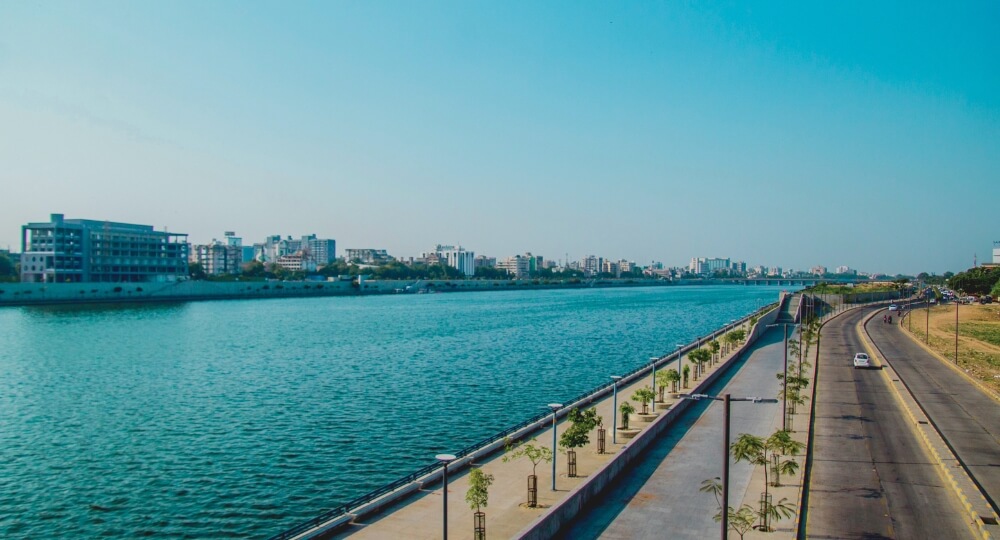
The Sabarmati River, which has always been the lifeline of Ahmedabad for centuries, was once neglected and full of industrial and chemical waste. In some stretches, it was subject to encroachment, causing seasonal floods. The river later became part of a multidimensional project that aimed to clear encroachments and implement a cleanliness drive. While this project is still ongoing and on its second phase, the Riverfront is nevertheless the highlight of Ahmedabad’s nightlife. It has a two-level promenade, with the lower level for cyclists and pedestrians. The 10km riverfront features gardens, amusement parks, golf courses, and water parks. Some of the popular activities on the riverfront include boating, shopping at Ravivari or the Sunday flea market, and visiting the Atal Footover Bridge.
White Kutch
White Kutch refers to the ethereal white desert on the Great Rann of Kutch. This white landscape is the world’s largest salt desert and home to some of the world’s unique wildlife, including the blackbuck, wild boar, and the Indian wild ass. You can explore the Kutch Desert Wildlife Sanctuary and the Chari Dham Bird Sanctuary within the Great Rann.
Lothal
Lothal was once a flourishing port city during the peak of the Indus Valley Civilisation. Archaeologists have found remnants of a massive dockyard on the site, dating back to 2400 BCE. Excavations reveal that the city was probably divided into two parts: the upper part, where the important people lived, and the lower part, where everyone else lived. The entire town has an advanced plumbing system, well-planned roads, and double-storeyed homes with a separate bath area. You can visit this IVC ruin to understand life during the Indus Valley Civilisation and explore the many archaeological remains.
Dholavira
Dholavira is a UNESCO World Heritage site in Khadirbet, Kutch. It was one of the most well-preserved prehistoric urban settlements featuring advanced plumbing and well-planned homes. The site was later abandoned, probably due to prolonged drought. Visitors can now visit the Dholavira site to explore this now-abandoned city, the archaeological museum, the wood fossil park, and admire the flamingos that arrive during migration season.
Little Rann of Kutch
The Little Rann of Kutch is a unique and surreal landscape and home to the Wild Ass Sanctuary, where the last remaining population of the Indian Wild Ass live in their natural habitat. Tourists also visit the sanctuary to view the thousands of migratory birds like flamingos, Eurasian wigeons, common teals, and Demoiselle cranes. Besides the wild ass, you will find desert foxes, wolves, hyenas, and desert cats. You can also get a firsthand experience of the region’s original inhabitants or join a jeep or camel safari.
Food
Gujarati cuisine is characterised by its vegetarian fare and the delicate balance of sweet, tangy, and spicy flavours. A popular feature of Gujarati dishes is that they are mildly sweet due to the jaggery that’s added to them. While this does help balance sour and sweet, there’s another practical reason for this practice. The dry and arid climate of Gujarat causes dehydration and loss of minerals. Sugar combined with salt helps the body absorb electrolytes, thus replenishing lost minerals. Also, sugar helps balance the salt from the region’s brackish waters. What started as a practical culinary adaptation soon became a cultural practice.
But not all Gujarati food is sweet. You must try some of Gujarat’s spicy dishes like sev tamatar nu shaak, khaman, etc. Besides, Kathiawadi cuisine is generally spicy with the generous use of spices, chillies, garlic, and onion.
Gujarati food is also known to be primarily vegetarian, with around 70% of people abstaining from any form of meat, including eggs. This is because of the impact of Jainism and Vaishnavism, which strongly advocate vegetarianism. Caste also plays a huge role in this belief, since people belonging to the Brahmin and Vaishya communities are typically vegetarian, and these communities are comparatively higher in percentage in Gujarat than in other regions.
Also, being a drought-prone area with water scarcity, rearing animals for meat doesn’t make sense. But Gujarat is also home to communities famous for their non-vegetarian fare. The Dawoodi Bohras and Parsis, for example, are famous for their meat and seafood dishes. The Bohri Thaal and Parsi Patri-ni-Machi are renowned for their subtle yet delectable taste.
Gujarat is famous for its snacks (called farsan), usually made from gram flour. Some of the famous snacks include khakra, fafda, khaman, dhokla, muthiya, ghatiya, dabeli, patra, chivda, bhakarwadi, handvo, etc.
There are different regional Gujarati cuisines as well that are distinct in taste and texture. Some of the prominent cuisines include:
Kathiyawadi Cuisine: This cuisine is found in and around places like Bhavnagar, Jamnagar, Rajkot, Junagadh, etc. The food is influenced by Rajasthani cuisine and is typically spicy with generous use of garlic and onion. Some of the famous Kathiyawadi dishes include bajra nu rotlo, Ringan no Oro, Vaghereli Khichadi, Lasaniya Batata, and Sev Tameta nu Shaak.
Surti Cuisine: As the name suggests, Surti cuisine refers to food from the city of Surat. There’s even a popular Gujarati proverb dedicated to food from this region – Surat Nu Jaman, Kashi Nu Maran, meaning eating in Surat and dying in Kashi is the ultimate experience in life. This region is famed for its generous use of vegetables. Some of the region’s popular dishes include Undhiyu, Locho, Khaman, Tameta Puri, Idada, Ponk Wada, and Surti Ghara.
Amdavadi Cuisine: Amdavadi cuisine derives its influence from the various dynasties that ruled here and the people who settled in this beautiful city. While Gujarati staples like Thepla, Khakra, and Dhokla are found everywhere in the city, Ahmedabad is also known for its non-vegetarian fare, especially food of the Khoja and Bohra communities. To sample meat and chicken dishes, head to Juhapura, Bhatiyar Gali, and Kalupur.
Kutchi Cuisine: The cuisine from this arid land is influenced by the locally available ingredients. The food is predominantly vegetarian, using ingredients like legumes, grains, and pickles. If you are looking for non-vegetarian food, consider checking out the Kutchi Memon cuisine, especially their Biryani, which is slightly sweet. The Kutchi Dabeli is the region’s most popular street food, along with Livla Kachori and Lehsooni Paratha. The dishes are spicy, but balanced with a combination of sweet and tangy flavours.
Must Try Food
Some of the dishes you must try with our Gujarat tour packages include:
Gujarati Thali: Thali means plate and refers to a well-balanced lunch or dinner platter. It generally includes two or three varieties of bread, such as Thepla, Bajra no Rotlo, and regular wholewheat roti, daal, different varieties of Shaak or vegetables, Athaanu or pickles, Farsaan like Dhokla, Sambharo or salad, Bhaat or rice, and finally Mithaai or sweets.
Thepla: This is a Gujarati soft roti made using Methi or fenugreek leaves. It is generally served at breakfast with curd or pickle.
Shrikhand: This sweet staple is made using strained yoghurt sweetened with powdered sugar and flavoured with cardamom or saffron. Sometimes, they are flavoured with fruits like mango (called Aamras). It is ideally paired with Puri or Roti.
Basundi: This traditional dessert is made by thickening sweetened milk and flavoured with nuts and cardamom. It is either enjoyed on its own or served with poori, especially on special occasions like Diwali and Ganesh Chaturthi.
Dal Dhokli: This yummy snack/breakfast dish is an Indian version of pasta soup. Thin strips of wholewheat dough are cooked in spicy dal along with peanuts and served with a generous topping of ghee and coriander leaves. Gujaratis often balance this tangy and spicy soup-like dish with a hint of sugar.
Khichdi: Khichdi is the de facto comfort food of most Gujaratis – a go-to dish made when it is hot, raining, or cold. Rice and moong daal are cooked together to a porridge-like consistency and spiced with vegetables, spices, and a generous dollop of ghee. Gujaratis are known for their khichdi variations – from bajra and broken wheat to Mung and Toovar Dal.
Bajra no Rotlo: This extremely nutritious flatbread is made using black pearl millet flour and is very high in protein. It is often the staple bread of choice for most Gujaratis, especially in regions like Kutch and Kathiawar, where wheat isn’t common.
Undhiyu: This winter staple is popular across Gujarat but especially famous in Surat. The mixed vegetable dish is made using seasonal vegetables like eggplant, green beans, green peas, purple yams, Surti Papdi, and green bananas. The dish is prepared in a clay pot and cooked upside down over a fire.
Shopping
Gujaratis are famous for their unique sense of style and fashion, involving bright coloured clothes with mirror and bead work, tie-and-dye prints, and other hand block prints. Gujarat, being the textile hub of India, is known for its cloth markets selling affordable, readymade garments, dress materials, and sarees. The state is also famous for its brass metalwork, snacks, and appliqué work. Here’s what you must know about shopping during your Gujarat tour packages.
What to Buy
Gujarat is a haven for fashion fans. You can buy the best hand block printed textiles, such as Ajrakh, Saudagiri, and Batik, at a lower price. The state is also famous for its Bandhej or tie-and-dye fabrics, Patola silk sarees, and Kutchi embroidered clothes.
If you are a fan of exquisite silver and metal accessories like earrings, anklets, and bangles, Gujarat is a great place for shopping. Being the birthplace of Gandhiji, Gujarat is also a good place to shop for Khadi textiles.
Rogan art is a unique technique practised by Kutchi artisans involving painting intricate patterns on fabrics using natural dyes and castor oil. The art, which probably originated in Persia, has been practised by the Kutchis for over 300 years.
Hand-embroidered Ahir wall hangings are very popular. They’re also used as tablecloths and for religious ceremonies.
Where to Buy
There are several centuries-old markets across Gujarat where you can buy hand-embroidered and block-printed clothes, mirrorwork dress materials, silk sarees, leather goods, and local snacks.
For instance, Manek Chowk in Ahmedabad is a great place to buy affordable jewellery. The Sindhi Market in Ahmedabad is one of the oldest and most popular bazaars in the state and a great place to buy textiles, accessories, and sarees.
Chandni Bazaar in Jamnagar is a great place to buy intricate and antique silver jewellery. Head to Jamnagar’s ancient Willingdon Crescent market to buy Bandhani dress materials and art pieces.
If you are in Kutch, don’t miss shopping in the little villages like Bhujodi, Dhamkada, and Nirona to buy traditional Kutchi embroidery.
If you’d like to buy some of the famous Gujarati snacks for friends and family, consider heading to Manek Chowk or Induben Khakrawala in Ahmedabad.
Art and Culture
Gujarat is famous the world over for its Garba and Dandiya dance style performed during Navratri. Men and women perform these dances wearing colourful chaniya cholis and Kediyas.
Some of the other dance forms practised in Gujarat by tribal communities include Bhavai and Tippani.
Gujarat boasts a rich musical heritage, especially folk music enjoyed by the different communities like Barot, Gadhvi, and Charan. Some of the instruments used by these artisans are unique to Gujarat. For instance, the Sundari is a wind instrument belonging to the Langa community in Kutch, while Bhorrindo is an ancient clay instrument of the Kutch region.
Specialised art and craft can also be found across communities. For instance, the Parsis are popular for their Ghara work, wherein the saree is hand-embroidered and often called painting with a needle.
Activities To Enjoy With Our Gujarat Tour Packages
- Experience the Rann Utsav in Kutch.
- Experience an authentic Garba and Raas event during Navratri.
- Experience the Modhera Dance Festival in Modhera.
- Join a kite flying competition or event during Uttarayan.
Dos And Don’ts Of Visiting Gujarat
- Gujarat doesn’t have a breakfast culture – if you plan on eating breakfast outside your hotel, be prepared for cholesterol-laden fried foods.
- Despite its coastline, seafood isn’t commonly available in restaurants.
- Don’t eat seafood from shady restaurants.
- You need a liquor permit to buy and consume alcohol. Check with your tour manager if you plan on drinking.
- Do not encourage bootleggers, as they could be selling spurious liquor.
- Check with the tour manager if they can help with a taxi if you plan on travelling outside your itinerary, because taxis can be dirty and drivers can be challenging to manage.
- English isn’t common, but a little (although broken) Hindi can go a long way during bargaining.
- If the Statue of Liberty is included in your itinerary, we suggest booking a hotel in Vadodara, as hotels near the Statue of Liberty are expensive.
- Non-vegetarian food is taboo mainly across Gujarat. You will not find non-vegetarian food easily in restaurants, although there are pockets where you can buy non-vegetarian food.
- Eating non-vegetarian food is a picky topic in Gujarat. Do not advocate meat eating with people you do not know well.
View All Gujarat Tour Packages
Travel Tips

Visa Information
Check visa requirements before traveling, ensuring a smooth entry and compliance with destination regulations.

Health and Safety Tips
Prioritize health, stay hydrated, follow safety guidelines, and maintain personal hygiene for a secure journey.

Currency and Tipping
Familiarize with local currency, consider customary tipping practices for respectful and seamless travel experiences.
FAQs:
Book Your Dream Vacay Today!