3

Tour Packages

Home » Tour Packages » India Tour Packages » South India Tour Packages » Rameswaram Tour Packages

Rameswaram Tour Packages

Island Town in Tamil Nadu

SUPER DEAL PRICE

STARTS FROM

per person on twin sharing
Time Zone:
South India’s Sacred Pilgrimage Destination: Rameswaram
South India’s No.1 Travel Brand
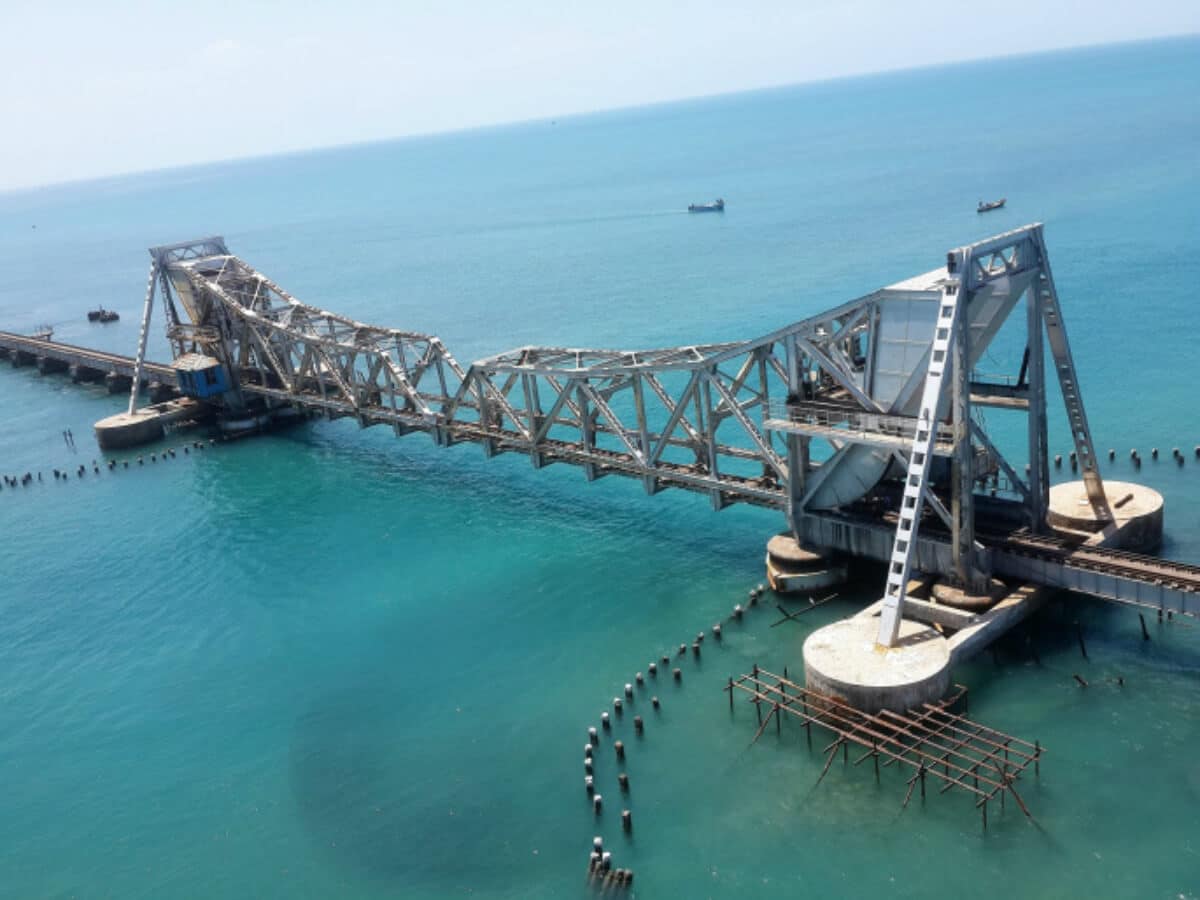
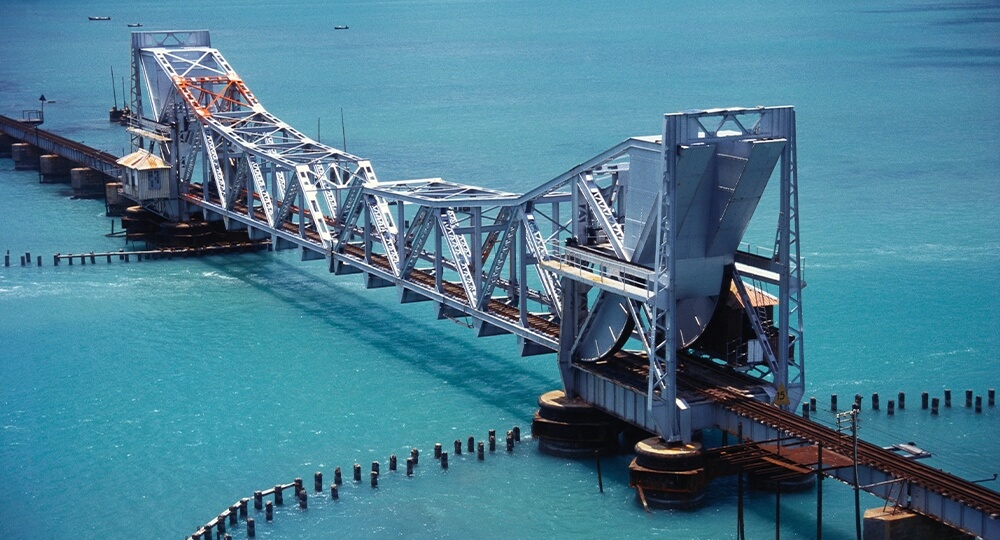
Pamban Bridge
India’s First Sea Bridge
Tamil, English, Hindi
Languages Speaking
Ramanathaswamy Temple
World’s Longest Temple Corridor
December - February
Best Season to Visit Rameswaram
Essential Tips for Travelling to Rameswaram
ATMs

ATMs are easily found in all areas.

Credit Cards

Credit cards are accepted in most shops.

Bank

Many bank branches are available across town.

Drinking

The legal drinking age in Rameswaram is 23.

Safest

Residents of Rameswaram are friendly and welcoming.

Rameswaram - Overview

rameshwaram map

By Purpose

tour package tourism

Couples

For Newlywed Vacations

tour packages business

Family

For Family Vacations

Top Attractions and Nearby Sights

Pamban Bridge

Agni Theertham

Dhanushkodi

Rameswaram Beach

Adam’s Bridge

Villoondi Theertham

Mannar Coast

Ramanathaswamy Temple

Kodandarama Temple

Gandhamadhana Parvatham

Coral Reefs & Marine Life

Annai Indira Gandhi Road Bridge

Everything You Need to Know About Rameswaram

Rameswaram has been a pilgrimage centre for centuries and has been mentioned in several ancient scriptures, including the Ramayana, the Mahabharata, and the Shiva Purana. It is also mentioned in ancient Tamil literature, such as Manimekalai, Tevaram, Ahananoor, and Purananoor. In fact, the great Advaita philosopher and Saint, Sri Adishankaracharya, is believed to have started his Digviyaya Yatra, propagating his philosophy of non-duality from Rameswaram. It is one of the holiest places for Hindus, who consider it one of the Char Dhams. Read on to learn more about this holy city and the surrounding island.

Call us or message us on Instagram to customise your Rameswaram tour package.

Table of Content:

About Rameswaram

Rameswaram is a town on Pamban Island (aka Rameswaram Island) in Ramanathapuram District, Tamil Nadu. It is famous worldwide for the Ramanathaswamy Temple dedicated to Lord Shiva. It is believed to be one of the 12 Jyotirlingas where the Lord appeared as a single pillar of light, displaying his infinite nature. Much of the town’s history is associated with the legends of Ramayana, although other places within the island are unique and worth visiting. Read on to learn more about the island town before choosing the best Rameswaram tour packages.

Rameswaram refers to both the town where the Ramanathaswamy Temple is located and the island itself. Besides the city, the Rameswaram (Pamban) island includes Pamban.

History

Much of the town’s history is closely tied to the Ramanathaswamy Temple and its role as a transit point between India and Sri Lanka. It was even mentioned in several ancient Sangam texts, including the Agananuru and Purananuru, a compilation of poems dating from the 1st to the 5th centuries CE. It is also mentioned in the Thevaram hymns composed by the three Shaivite Saints Appar, Thirugyana Sambandar, and Sundarar.

The Rameswaram Island and Ramanathapuram region were under the protection of the Sethupathis of the Maravar Community. The word Sethupathi is in itself derived from the Rama Sethu (Adam’s Bridge), as in Lord of the Bridge. It was the Sethupati Maravars who were the patrons of the Ramanathaswamy Temple.

While the Sethupathis were initially poligars who ruled on behalf of the Pandyas, Cholas, and Nayaks at various points in history, they later became independent rulers and Zamindars under the British Raj.

Geography

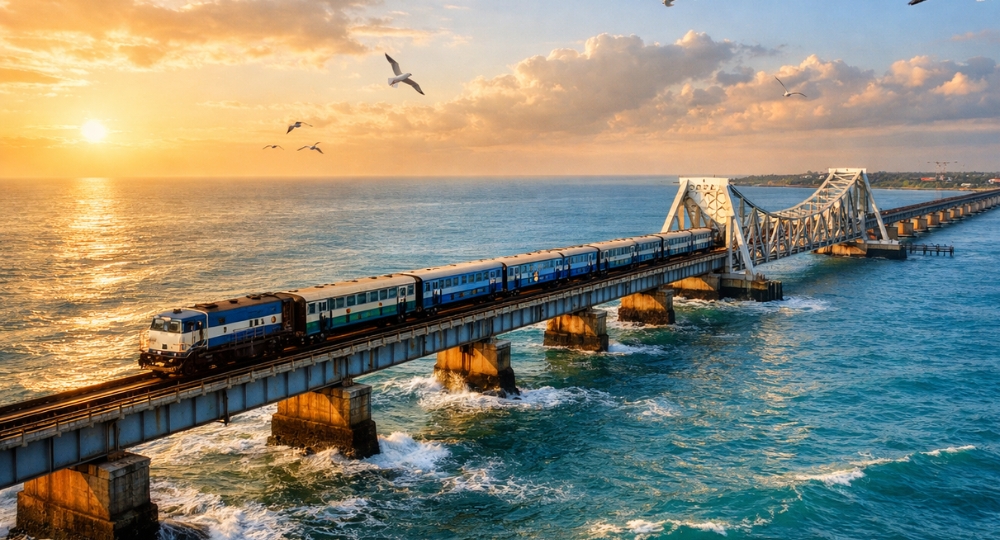
Rameswaram is part of Pamban Island, also known as Rameswaram Island. It is connected to the mainland by the New Pamban Rail Bridge and the Indira Gandhi Road Bridge. To reach Rameswaram, one must cross the rail (or road) bridge from Mandapam in Ramanathapuram. The Bay of Bengal surrounds Rameswaram Island on the north and east, and the Gulf of Mannar in the south. The Gulf of Mannar is part of the Indian Ocean and is a protected marine biosphere reserve. It is home to several thousand marine species like dugongs, whale sharks, various species of dolphins and turtles.

Another highlight of Rameswaram Island is the Palk Strait, which separates Rameswaram from Sri Lanka. The strait connects the Bay of Bengal in the northeast and the Palk Bay in the southwest and includes several tiny islands and reef shoals. These shoals are together called Ram Sethu or Adam’s Bridge. Legend has it that this was once a manmade bridge built by Rama’s Vanar Sena to reach Sri Lanka. The story of Adam’s Bridge refers to the bridge that Adam crossed to reach India, where he fell at Adam’s Peak after being expelled from the Garden of Eden.

Call us at +91 9940882200 to learn more about our Rameswaram tour packages.

Economy

Rameswaram’s economy largely depends on fishing and tourism. Millions of Hindus visit this sacred island every year, believing that taking a holy dip in the 22 sacred wells of the Ramanathaswamy Temple absolves a person of his sins. They also visit here to cleanse themselves from various doshas, such as the Brahmahathi Dosha, Pitra Dosha, and Naga Dosha. It is also part of the sacred Char Dham Yatra.

The confluence of two water bodies, viz., the Bay of Bengal and the Indian Ocean, gives Rameswaram waters a unique salinity, contributing to the taste of the fish available here. The mineral and nutrient-rich waters of the Gulf of Mannar contribute to its sweetness and flavour.

The catch is fresh primarily and sold within 24 hours of being caught. The dry fish industry here is also a source of income. Unlike in other places, the fishermen here coat their fish in turmeric and bury them in the sand. This process makes the fish bone-dry, and the salt from the sea helps preserve its natural flavour. This unique method is called Pattarai Karuvadu and is a speciality of the people from Rameswaram and Mandapam. So much so, the Tamil Nadu government has applied for a GT Tag for this unique method.

Call us at +91 9940882200 to learn more about our Rameswaram tour packages.

Tidbits

  • Rameswaram was once connected to Sri Lanka through the Ram Sethu or Adam’s Bridge.
  • The Pamban Bridge that connects Rameswaram to mainland India is the country’s first sea bridge and the second longest.
  • The floating stones you find across the island are believed by Hindus to be stones built by Rama’s Vanar Sena on his way to Sri Lanka. Geologists claim these are pumice stones formed during volcanic eruptions.
  • The island is part of the Gulf of Mannar, an ecologically fragile bay that’s home to over 4000 marine flora and fauna.
  • Although the distance from Dhanushkodi to Talaimannar in Sri Lanka (the closest points between the two nations) is only 27 km, it takes several hours to cover this distance because the shallow reef-filled waters make it impassable for huge ships.
  • The Adam’s Bridge or Ram Sethu was walkable until 1480, when a massive cyclone submerged most parts of the bridge.

Call us at +91 9940882200 to learn more about our Rameswaram tour packages.

Things To Know Before Choosing Rameswaram Tour Packages

  • If your purpose of visiting Rameswaram is to complete the Kashi-Rameswaram Yatra, you must first visit Rameswaram before visiting Kashi and then return to Rameswaram carrying the holy water from the Ganges to anoint the Shiva Linga.
  • The Kashi-Rameswaram Yatra is elaborate and includes several steps. Make sure to check with someone familiar with the procedure before booking your Rameswaram tour packages.
  • It is especially hot between March and June, with temperatures rising to up to 40°C in May. The humidity adds to the misery.
  • When visiting the temple after bathing in the 22 sacred wells, carry an extra set of clothes, as you will not be allowed inside the temple with wet clothes.
  • Rameswaram can get very crowded; make sure you are attentive to children and the elderly.
  • Pack light cotton clothes as it is hot all through the year, including winter.
  • Dress modestly, especially around the temple precincts.

Call us or send a message on Instagram to learn more about GT Holidays’ Rameswaram tour packages.

Rameswaram At A Glance

  • District: Ramanathapuram
  • High Season: December to February
  • Languages Spoken: Tamil, English, Hindi (only in tourist areas)
  • Famous Tourist Attraction: Ramanathaswamy Temple, Dhanushkodi, Ram Sethu
  • Things to Do: Jet skiing, Kayaking, Banana Boat Riding, Glass-Bottom Boating, Scuba Diving
  • Famous Food: Seafood, Thothal
  • Souvenirs to Buy: Conch, Shell-craft, Crystal Shiva Linga, Bronze Artefacts

Planning a holiday to this sacred island? Call us to learn more about our Rameswaram tour packages.

Top Reasons To Choose Rameswaram Tour Packages

Temples, Legends, and Stories

The island town of Rameswaram finds mention in most Indian epics, including the Ramayana and the Mahabharata. It is mentioned in the Skanda Purana, the Shiva Purana, and the Bhagavata Purana. According to the Ramayana, Rama, along with his Vanar Sena (Monkey Army), built a bridge across the sea to reach Sri Lanka and rescue his consort, Sita, from Ravana.

There are several places in and around Rameswaram associated with the legend. For instance, upon their arrival in Rameswaram, Rama and Sita climbed the Gandhamadhana Hill to view Sri Lanka and strategise their battle plan. The temple on the hill now has an imprint believed to be Lord Rama’s footprint. Some legends also say that Hanuman flew to Sri Lanka from this hill.

Before embarking on his journey, Lord Rama prayed to the Navagrahas and Goddess Durga, praying for victory and asking the Gods to calm the sea. He installed nine sacred stones, now called Navapashanam, which are partly submerged in water. This temple is located in Devipatnam.

Another temple in Thirupullani is dedicated to Lord Vishnu. It is believed that Lord Rama prayed to God Varuna while lying on a bed of darbha grass – hence the name Darbhasayanam Temple.

Rama Sethu is the site where he built the actual bridge to reach Sri Lanka. Until 1480, this bridge was walkable, but a cyclone destroyed it, submerging parts of it.

The Kothandarama Temple is where he anointed Ravana’s brother Vibheeshana as the king of Sri Lanka. It is believed that Lord Rama and Lakshmana stayed here while the bridge was being constructed. This temple is considered to be over 1000 years old and is the only monument to survive the 1964 cyclone that devastated Dhanushkodi.

The main highlight of the island, the Ramanathaswamy Temple, is where Rama installed a Shiva linga during a puja to atone for the sins of killing Ravana, a Brahmin. There are two Lingas in the temple, the Rama Linga, put together by Sita using the sand from the shore, and the Vishwa Linga, which Hanuman bought from Kailasa. Since Hanuman was upset that Lord Rama had already made a Shiva Linga and not used his, the Lord commanded that pilgrims must first pray to the Vishwa Linga before visiting the inner sanctum, where the Rama Linga is placed.

Good to Know: The word Rameswaram means Rama’s Eshwara, referring to the fact that Lord Rama installed the Shiva Linga here. Similarly, Ramanathaswamy means Rama’s Lord or the Lord of Rama, referring to Lord Shiva.

Another legend associated with Rameswaram is that it was here that Lord Rama performed Pitru Puja for his ancestors, making it a powerful place for people to end ancestral burdens and Karmic debts.

It is believed that Adi Shankaracharya began his journey propagating the Advaita philosophy from Rameswaram. He also named the temple as one of the Char Dhams that Hindus must visit to achieve liberation from the cycle of life and death.

Rameswaram is also associated with a heart-wrenching tragedy when over 2000 people died in a devastating cyclone in 1964, wiping out the entire town of Dhanushkodi. The town was later declared uninhabitable and designated a ghost town, and its residents were relocated to Rameswaram. Today, people visit Dhanushkodi to glance through the ruins and admire the town’s natural beauty.

Call us at +91 9940882200 to arrange a special Ramayana trail with your Rameswaram tour packages.

Sacred Wells

Rameswaram is also associated with several Theerthams, where pilgrims must bathe to complete their Dosha Nivrithi Puja and cleanse their minds, bodies, and spirits. There are a total of sixty-four Theerthams, of which twenty-two are located within the temple.

Some of the sacred wells outside the temple, but equally sacred and famous for their association with the Ramayana, include the Villondi Theertham, Sita Kundam, Chakra Tirtham, Jata Thirtham, Lakshmana Theertham, Hanumana Kundam, Brahma Kundam, Amrita Vapi, Mangala Thirtham, and the Vetala Varada Theertham.

There are several legends associated with these Theerthams. For instance, the Villondi Theertham was formed when Lord Rama dug a well with his arrow to quench Sita’s thirst. Similarly, the Amrita Vapi Theertham derives its name from the fact that when Lord Rama drank water from the well, he gave it to Vibheeshana, claiming it tasted as sweet as Amrita.

The twenty-two Theerthams within the temple are equally significant and believed to have been formed by the 22 arrows in Lord Rama’s quiver. Each of these sacred wells is spiritually significant. For instance, the Kodi Theertham, the last of these 22 Theerthams, is where Lord Krishna bathed to atone for the sin of killing Kamsa. Bathing in the Brahmahathi Vimochana Theertham relieves a person from the sin of killing a cow in his present or past life.

Call us at +91 9940882200 if you would like to bathe in all sixty-four Theerthams in your Rameswaram tour packages.

The Land of Abdul Kalam

India’s former and most loved president, Dr A.P.J. Abdul Kalam, was born in Rameswaram in 1931. He was born to devout Muslims who, despite not being wealthy, provided their son with an excellent upbringing, instilling in him a strong sense of morality, self-discipline, and integrity. Dr Kalam carried these lessons throughout his life, endearing him to the masses and to politicians alike.

Dr Kalam is also known as the Missile Man because of his pioneering work in developing India’s missile and nuclear programmes.

He is remembered fondly through several memorials in and around Rameswaram. For instance, his ancestral home on Mosque Street is now an important monument that attracts tourists from across India.

The Dr A.P.J. Abdul Kalam Memorial is another monument maintained by the government exhibiting various artefacts, images, and musical instruments used by the erstwhile President.

Call us at +91 9940882200 to learn more about our Rameswaram tour packages.

Beaches

Being an island town, it is not surprising that Rameswaram is home to several pristine beaches. The island’s unique geography protects it from strong currents, reducing sediment and keeping the waters clear and clean. In some places, you can observe the fish as they swim, making them especially attractive.

The Pamban Beach is not only calm and clean, but also known for its beautiful view of the Pamban Bridge.

The Arichal Munai Beach is the southernmost tip of India, where the Indian Ocean meets the Bay of Bengal. This place is also believed to be the starting point of the Ram Sethu, although you cannot see it from the shore.

The Kunthukal Beach is known for its clear waters and a variety of water sports, including boating and surfing.

Olaikuda Beach attracts migratory birds, such as flamingos, sea gulls, pelicans, storks, herons, and ducks, from Central Asia that forage on the area’s mudflats.

The Villondi Theertham Beach attracts pilgrims and beach enthusiasts who appreciate its calm, serene atmosphere.

Ariyaman Beach is also famous for its gentle atmosphere and picturesque surroundings.

Call us at +91 9940882200 to learn more about GT Holidays’ Rameswaram tour packages.

Water Sports

Rameswaram is an emerging destination for water sport enthusiasts in India. There are several adventure sports companies that offer a range of activities, including boating, windsurfing, coral watching, glass-bottom boat rides, scuba diving, jet-skiing, stand-up paddleboarding, and snorkelling. You can also enjoy group activities such as banana boat rides and bumper rides.

Call us to include water sports in your Rameswaram tour package itinerary.

Eco-tourism

Rameswaram’s rich and diverse marine ecosystem is home to several rare and endangered species. Some of these ecosystems are protected but open to tourists looking for an educational experience. For instance, with prior permission, you can visit Kurusadai Island to observe its unique coral reefs and the colourful fish that inhabit them, as well as various species of turtles, birds, dolphins, dugongs, and other marine animals. The one-hour boat ride offers an expansive lesson on marine life conservation.

The Karankadu Mangrove Reserve is a human-made mangrove forest within the Gulf of Mannar that is now home to several birds and marine species, including herons, kingfishers, and mud crabs. You can take a one-hour boat ride across the mangroves, learning about how Karankadu’s ecosystem provides the perfect nursery and breeding ground for a variety of fish.

The CMFRI Marine Museum is one of the oldest of its kind in India and is dedicated to protecting the flora and fauna of Rameswaram. Besides observing the different specimens, you can also see live species such as the endangered white-spotted eagle ray and sea horses.

If you love snorkelling or scuba diving, head to the Holy Island, Sangumal, or Olaikudda beaches to try them.

There are several bird sanctuaries in and around Rameswaram that are home to a variety of bird species. Some of the famous ones include Chitrangudi, Kanjirankulam, and Selvanoor.

While the Gulf of Mannar Marine Biosphere Reserve extends from Rameswaram to Kanyakumari, you can visit the regions around Rameswaram through a glass boat ride.

Manal Thittu, part of the Gulf of Mannar reserve, is an ecotourism spot known for its clear waters, which allow you to observe coral reefs and fish.

Call now at +91 9940882200 to include these attractions in your Rameswaram tour packages.

Best Time To Choose Rameswaram Tour Packages

Rameswaram, being an island, has a tropical climate with hot and humid summers and pleasant winters. It experiences three seasons: summer, monsoon, and winter, although winters aren’t as cool. The region has a relatively consistent average warm temperature of 31°C, which varies depending on the month. January is the coolest, with average temperatures ranging from 24 °C to 28 °C, while May is the hottest, with average temperatures ranging from 29 °C to 31 °C. While winter is considered the ideal time to book Rameswaram tour packages, people visit the island for several other reasons, regardless of the climate.

Read on to learn about the different seasons and the best time for Rameswaram tour packages.

Summer (March to June)

Summers are hot and humid across the island, making sightseeing difficult during the season. The average temperature ranges from 29 °C to 31 °C between March and June. It is slightly better at night, as the temperature may drop to 27°C. Around June, it not only gets hot but also humid, with a relative humidity of 72%. This is the best time for budget Rameswaram tour packages, as hotel prices are low and there’s less crowd as well.

While it is relatively less crowded in summer, there are some days in these months, such as the Tamil New Year, Shivaratri, Vasantholsavam, and Ramalinga Pratisha Day, when people visit the temple for special puja.

Monsoon (July to September)

Like most of Tamil Nadu, Rameswaram experiences monsoon rains twice, once from July to September, when the Southwest monsoon brings light to moderate rainfall to the island. While the average temperature ranges from 28°C to 30°C, it is very humid. You may experience 2 or 3 days of rainfall each month, with September receiving the most rainfall during the monsoon. This is neither the best nor the worst time to book Rameswaram tour packages.

Some of the festivals celebrated in the Ramanathaswamy Temple include Thirukalyanam and Navaratri.

Post-Monsoon (October and November)

Rameswaram receives most of its rainfall during the post-monsoon season, when the northeast monsoon brings heavy rain and thunderstorms to the island. November is the wettest month of the year, experiencing almost 9 to 10 days of downpour. The average temperature ranges from 27 °C to 29 °C, but the rain could play truant, making the place prone to floods and the beaches inaccessible.

Some of the festivals you can enjoy during this season include Navaratri and Kanda Shasthi.

Winter (December to February)

While most travel agencies suggest winter as the best time to visit Rameswaram, we recommend waiting until January or February for pleasant weather and to avoid the rains. Over the years, Rameswaram has experienced intense rainfall and even cyclones in December. It is during this time that cyclonic storms and depressions in the Bay of Bengal cause heavy downpour in this low-lying island.

January and February are by far the best times to visit the island, with average temperatures ranging from 25 °C to 26 °C. However, you may experience some rainfall in January, so come prepared.

This is the peak season to book Rameswaram tour packages. People also visit the island to experience the Arudhra Darshanam at the Ramanathaswamy Temple and the Uthirakosamangai Temple in mainland Ramanathapuram District.

Top Tourist Attractions In Rameswaram

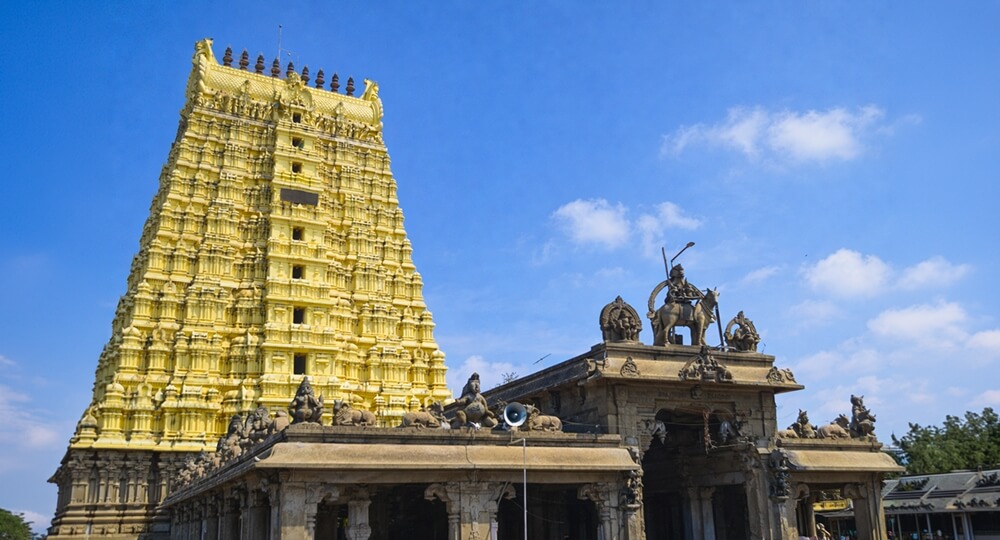
Ramanathaswamy Temple

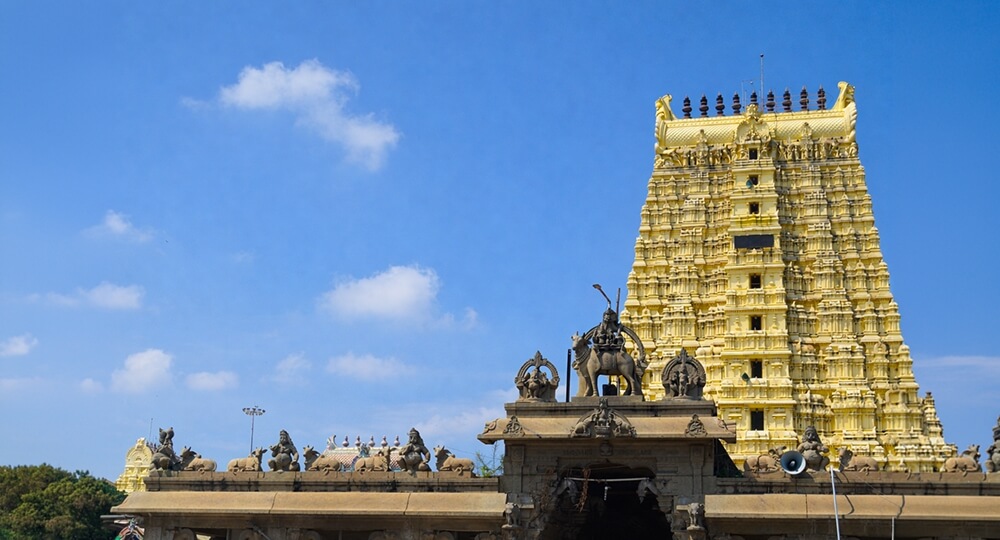
Before the Ramanathaswamy Temple was built in the 12th century by the Pandya Rulers and the Sethupathis, the structure was believed to be a small hut. It was later renovated over the years, with the current structure built during the 17th century by the Sethupathi kings. It is one of the 12 Jyotirlingas and one of the four Char Dhams established by Adi Shankaracharya.

Another legend associated with the temple is that devotees must visit Rameswaram before and after visiting the Kashi Vishwanath Temple. They must first visit Rameswaram, collect the sand from the shore, and then dissolve it at the Triveni Sangam in Varanasi. They must then carry water from the Holy Ganga and offer it to the Shiva Linga as Abhishekam. In fact, the pilgrimage to Kashi is considered incomplete until you return to Rameswaram.

The temple’s highlights are the two Shiva Lingas, the Rama Linga, believed to have been assembled by Sita from sand from the shore, and the Vishwa Linga, believed to have been brought by Hanuman from Kailash. Since Hanuman was upset that his Shiva Linga was not used for the Puja, Lord Rama announced that devotees would first pray to the Vishwa Lingam before visiting the inner sanctum to pray to the Rama Lingam.

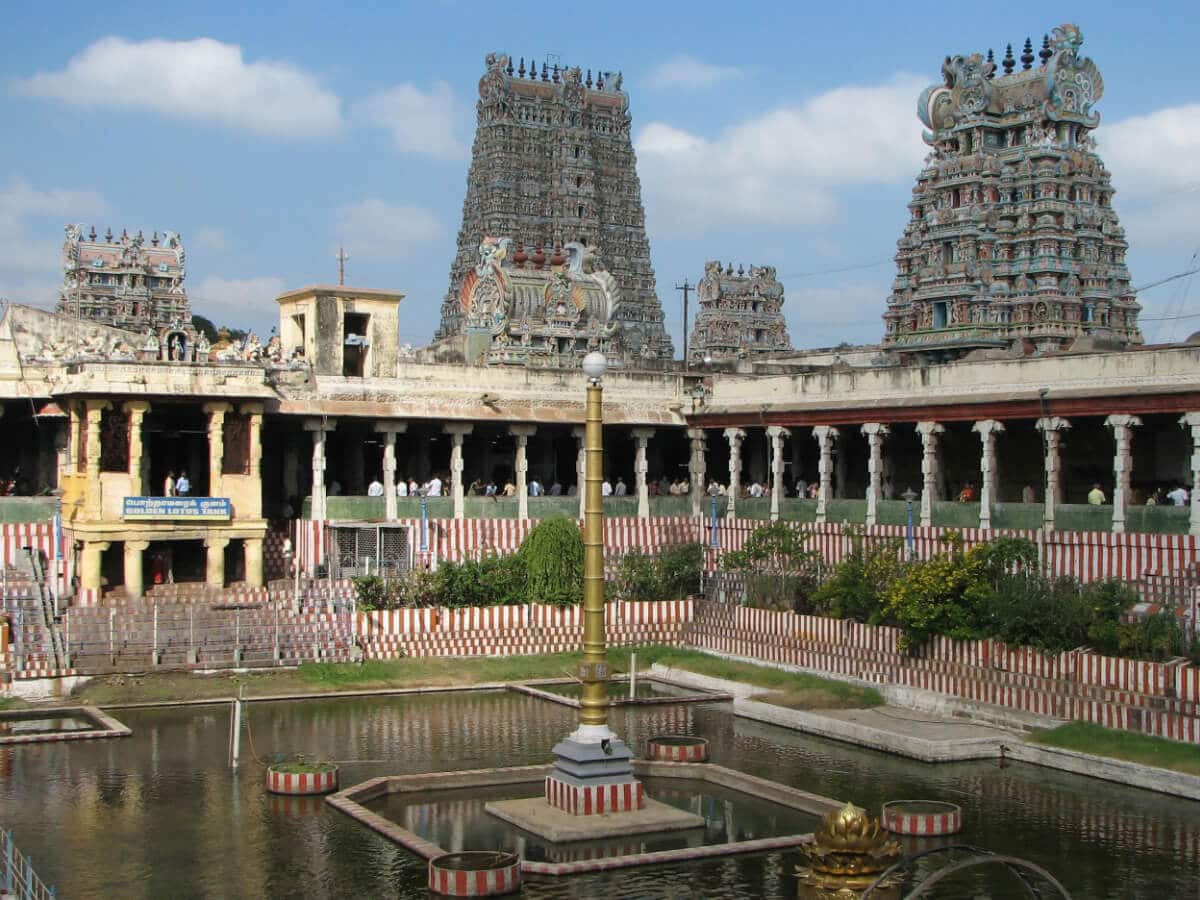
The temple is famous for its long corridors, especially the Third Corridor, the longest in the world, with 1,212 pillars, each standing 30 ft. tall.

Both Vaishnavites and Shaivites revere the Ramanathaswamy Temple; both believe that visiting the temple and bathing in the 22 Theerthams relieve a person from the cycle of rebirth and rid him of his past Karmic debts.

Call now at +91 9940882200 to learn more about our Rameswaram tour packages.

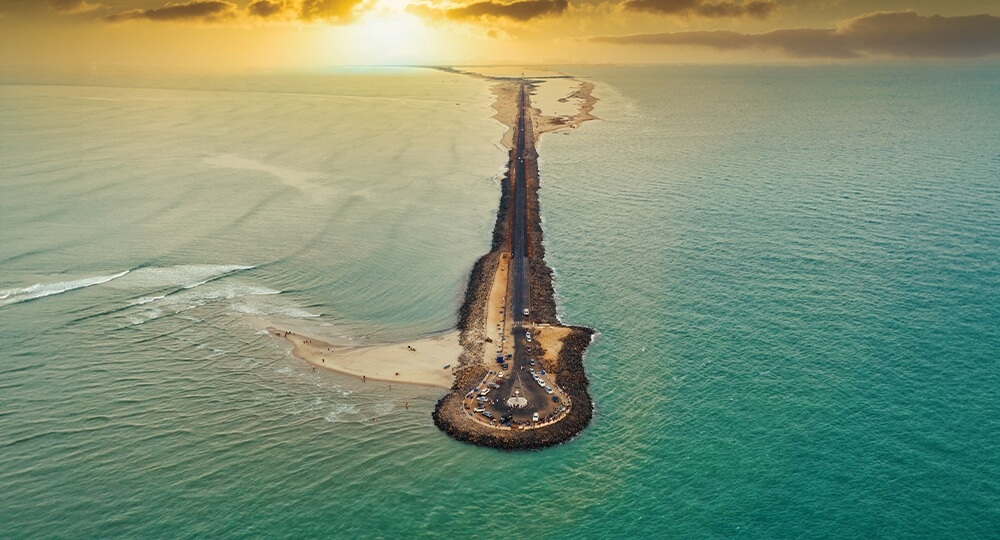
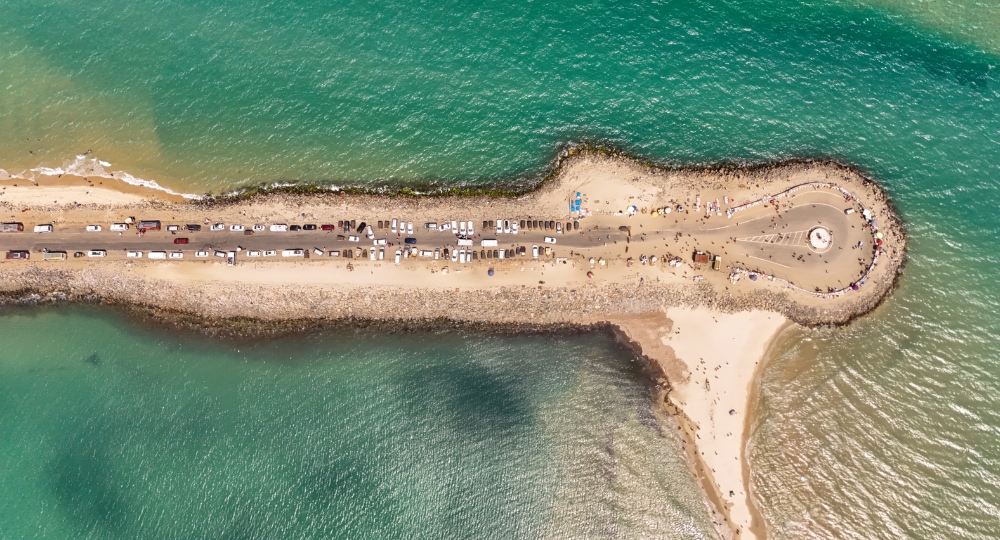
Dhanushkodi (Ram Sethu/Adam’s Bridge)

Dhanushkodi was once a bustling village and a major transit point for passengers travelling from India to Sri Lanka. The December Cyclone of 1964 destroyed the town, killing over 2000 people, including passengers on the Pamban Dhanushkodi Passenger Train. The entire village, including the railway station, churches, post and telegraph office, and school, was damaged.

The Kothandaramaswamy Temple is the only monument that survived the cyclone. It is believed to be over 1000 years old.

The town was deemed uninhabitable and survivors were moved to neighbouring areas, including the main town of Rameswaram. The cyclone also caused severe damage to several coral colonies, some of which took decades to regrow.

Today, the town is a major tourist attraction, with visitors not only exploring the ruins but also enjoying the beautiful coastal scenery and pristine white sands.

Dhanushkodi is also home to Arichal Munai, the southernmost tip of India and the point from where the Ram Sethu (or Adam’s Bridge) is believed to have been built.

Arichal Munai is also where the two water bodies, viz., the Bay of Bengal and the Indian Ocean, meet. You can see the difference in the two waters by their colour and wave patterns.

Call us at +91 9940882200 to learn more about Rameswaram tour packages.

Pamban Beach

Pamban Beach, located at the entrance of the island, is an important fishing village. While this tranquil beach offers a fantastic view of the Pamban Bridge, there are plenty of activities to keep tourists busy. There’s a children’s park and a few seafood restaurants selling fresh catch. You can also sign up for water activities like stand-up paddling and kitesurfing.

Villondi Theertham Beach

The Villondi Theertham is a quaint and charming beach visited for its religious significance and the picturesque scenery. The highlight of the beach is a sweet water well that was supposedly created by Lord Rama by dipping his arrow into the sea – hence the name Villondi, meaning Buried Arrow. He did so to quench Sita’s thirst.

Kothandarama Temple

This was the only structure in Dhanushkodi to survive the 1964 cyclone that devastated the town. The temple is believed to have been built over 1,000 years ago at the same spot where Ravana’s younger brother, Vibhishana, was crowned king of Sri Lanka. The main deity of the temple is Lord Rama, who stands with a bow, Kothandam, giving the temple its name. It also houses idols of Lakshmana, Sita, Hanuman, and Vibhishana.

Gandhamadhana Parvatham

The Gandhamadhana Parvatham is the highest point on Rameswaram Island and offers a panoramic view of the entire island and the surrounding sea. It is believed that upon arriving in Rameswaram, Lord Rama and Lakshmana climbed the mountain for a view of Sri Lanka before strategising on the best route to it. It is also Ramar Padam, referring to the footprints believed to be of Lord Rama. Some legends claim that Hanuman took off to Sri Lanka from this spot.

Ariyaman Beach

This is one of the many quiet and clear beaches on Rameswaram, where you can enjoy the scenery and bathe in peppy waters. The locals called it Kushi Beach because it was the filming location for the popular Tamil movie Kushi, released in the 90s. The beach on Palk Bay is a great spot for picnics and offers plenty of water sports, including parasailing, water-scootering, and windsurfing.

Thirupullani

Pilgrims visit the Adi Jagannatha Perumal Temple in Thirupullani, which is another form of Lord Rama. It is believed that Lord Rama, while searching for Sita, lay on a mat made of Darbha grass. Another highlight of the temple is the sacred Peepal tree, believed to be an incarnation of Ashwatha Narayanan, and is the abode of several snakes.

House of Abdul Kalam

India’s preeminent president, Dr Abdul Kalam, who was also called the country’s Missile Man, was born in Rameswaram to poor Muslim parents who taught him life’s essential values like honesty, integrity, and secularism. The House of Kalam is where the former president was born and spent his initial childhood. It has been converted into a museum by his elder brother, showcasing his childhood and early life. Various medals, honours, and research work are on display at the museum. A visit to the museum is a humbling experience and a must-visit with our Rameswaram tour packages.

Abdul Kalam Memorial

While Dr Abdul Kalam’s family maintains the House of Kalam, this memorial is maintained by the DRDO, where Dr Kalam spent a significant part of his professional life. It is built in the same place where he was buried. The memorial includes replicas of rockets and missiles, his paintings, and other knick-knacks associated with the life of Dr Kalam.

Kunthukal Beach

Kunthukal Beach is in a small fishing village in Kunthukal. This beautiful beach is an excellent place for relaxation and offers a wide range of water sports adventures, including scuba diving and boating.

Nearby Cities You Can Visit with our Rameswaram Tour Packages

Uttarakosamangai

Famous For: Temples

Top Attractions: Mangalanatha Swamy Temple, Maragatha Nataraja Statue made from emerald, Arudra Darisanam.

Keelakarai

Famous For: Rawther cuisine, beaches

Top Attractions: Keelakarai Beach, Kannadi Vapa Beach, Palaiya Jumma Palli

Ramanathapuram

Famous For: Temples, Heritage Monuments

Top Attractions: Erwadi Dargah, Ramanathapuram Palace, Devipatinam

Madurai

Famous For: Temples, Cuisine, Cultural Attractions

Top Attractions: Street Food, Meenakshi Amman Temple, Thirumalai Nayak Palace, Chithirai Thiruvizha, Vandiyur Mariamman Temple, Alaghar Kovil

Alanganallur

Famous For: Cultural Attractions

Top Attractions: Jallikattu during Pongal

Karaikudi

Famous For: Chettinad Heritage, Cuisine, Temples

Top Attractions: Chettinadu Mansions, Athangudi Tiles, Antique Markets, Karpaga Vinayagar Temple

Trichy

Famous For: Temples, Heritage Monuments

Top Attractions: Ranganathaswamy Temple, Jambukeshwarar Temple, Uchi Pillaiyar Kovil, Kallanai Dam, Rock Fort, Samayapuram Mariamman Temple, Pachamalai

Shopping

Rameswaram is a great place to buy shell and shellcraft, including mirrors, keychains, curtains, and other artefacts made from shell. You can also buy crystal products, including Shiva Linga and Mala. The palm trees also help provide the right raw materials for palm products, including palm jaggery and palm leaf fans. You can also shop for pearl products thanks to the region’s millennia-long pearl diving industry here.

Dos and Don’ts of Visiting Rameswaram

  • Do not collect live or dead corals from Rameswaram. It is both illegal and harmful to the environment. If you want them as souvenirs, buy them from shops that sell them legally.
  • Do not throw plastic and other non-biodegradable products indiscriminately in the sea – the Gulf of Mannar is ecologically fragile.
  • Do not dispose of garbage carelessly in Rameswaram – the city being an island, waste can easily contaminate water supplies or harm marine habitats.
  • Do not spit on the road or throw waste – people may have taken a spiritual vow to walk barefoot.
  • Respect local customs, especially when visiting places of worship.
  • Sea surges are common in Rameswaram – do not ignore weather alerts.
  • Do not pollute the different Theerthams by throwing waste while bathing in them.
  • Follow the temple rules – do not carry phones or cameras inside the premises.

Food

Given that Rameswaram is an island, seafood features prominently in the cuisine. Along the way to Dhanushkodi and in the main market, you will find plenty of stalls selling grilled, fried, and curried fish. The fish is freshly caught and prepared on site. You can also sample seafood in the many restaurants on the island.

But Rameswaram offers so much more than seafood. The island city is part of Ramanathapuram District, which lends its influence to Rameswaram’s food culture. You will also find influences from Sri Lanka through desserts like Wattalappam and Thothal (Nudhal).

While vegetarian food is found across the island, you will find several veg-only restaurants catering to the pilgrims visiting the Ramanathaswamy Temple. There are plenty of eateries serving regional delicacies, including Marwari and Punjabi dishes.

Some of Ramanathapuram’s Muslim speciality foods that you can find in Rameswaram include the Vandu Kozhukattai, a cake-like dessert made from coconut milk, rice flour, and eggs; Onion Paniyam, a deep-fried fritter made by combining onion, rice flour, and eggs; Seer Paniyam, a tube-like dessert; and Idiyappam Biryani or String Hopper Biryani. Kozhi Appam, a thin-crepe-like Appam, is also a local speciality served with chicken Salna.

When in Rameswaram, you shouldn’t miss the Panampazham Pappadam, a thin, crispy snack made from drying the pulp of the palm fruit in the sun.

View All Rameswaram Tour Packages

Travel Tips

visa_information_icon

Visa Information

Check visa requirements before traveling, ensuring a smooth entry and compliance with destination regulations.

health and safety tips icon

Health and Safety Tips

Prioritize health, stay hydrated, follow safety guidelines, and maintain personal hygiene for a secure journey.

currency and tipping icon

Currency and Tipping

Familiarize with local currency, consider customary tipping practices for respectful and seamless travel experiences.

Share Your Ideal Tour: Let Us Customize!

FAQs:

What is the best time to choose Rameswaram tour packages?
October to February is the best time to explore Rameswaram, as temperatures drop significantly during these months.
Is Rameswaram a safe place?
Yes, Rameswaram is relatively safe. However, we suggest you follow common-sense tips, such as avoiding travel alone after dark, dressing modestly, and not accepting food from strangers, to ensure personal safety.
How many days do I need for the Rameswaram tour packages to explore the city?
To explore this beautiful coastal city and its surrounding tourist attractions, we suggest a 2-3-day Rameswaram tour package.
Can I customise my Rameswaram tour packages?
Yes, you can always customise your itinerary to include or remove certain tourist attractions.
Do you offer EMI options for tour packages?
We offer easy instalments for select destinations/tour packages. Call us at +91 9940882200 or message us on Instagram to discuss payment plans.
Does Rameswaram offer adventure activities?
Rameswaram is a great place to enjoy water adventures, such as scuba diving, snorkelling, kayaking, and stand-up paddleboarding.
What’s covered in your Rameswaram tour packages?
Your Rameswaram tour package includes accommodation, transfers, activities, sightseeing tickets, food, and a tour guide.
What are some popular souvenirs you can buy from Rameswaram?
Shell, shell-based craft, dry fish, bronze/brass sculptures, coir and coconut-shell-based products, Sphatika (Crystal) Lingam, and other crystal-based items are popular souvenirs from Rameswaram.
Does your package include air tickets?
No, tickets are not included with your all-inclusive Rameswaram tour packages. However, we have long-standing relationships with travel partners who can help you secure a good deal.
How much does your Rameswaram tour package cost?
The cost of your Rameswaram tour package varies based on the itinerary duration, accommodation type, included activities, and any additional requests made during booking.

Book Your Dream Vacay Today!

=

×

Enquire Now

=