1

Tour Package

Home » Tour Packages » India Tour Packages » North East Tour Packages » Meghalaya Tour Packages

Meghalaya Tour Packages

Capital: Shillong

SUPER DEAL PRICE

STARTS FROM

per person on twin sharing
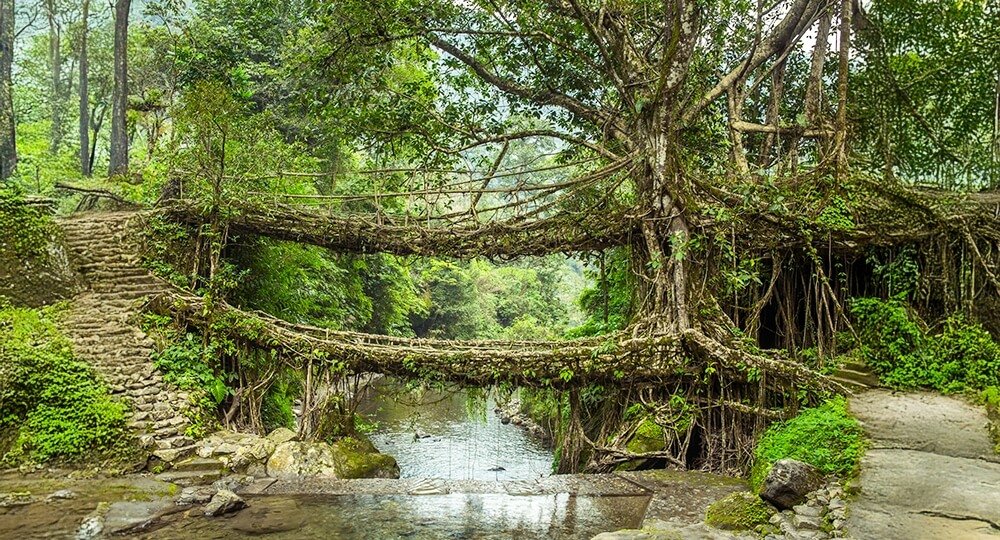
Meghalaya’s Natural Bridge: Double Decker Living Root Bridge
South India’s No.1 Travel Brand
Nohkalikai Falls
India’s Tallest Plunge Waterfall
Krem Liat Prah
Longest Cave in India
English, Khasi, Garo
Languages Speaking
March - May
Best Season to Visit Meghalaya
Essential Tips for Travelling to Meghalaya
ATMs

ATMs are readily available in most major areas.

Credit Cards

Credit cards are widely accepted in many places.

Bank

Finding a bank in Meghalaya is generally easy.

Drinking

The legal drinking age in Meghalaya is 21.

Safest

Residents are famous for their warm hospitality.

Meghalaya - Overview

By Purpose

tour package tourism

Couples

For Newlywed Vacations

tour packages business

Family

For Family Vacations

Top Attractions and Nearby Sights

Ward’s Lake

Elephant Falls

Umiam Lake

Shillong Peak

Nohkalikai Falls

Seven Sisters Falls

Mawsmai Cave

Living Root Bridges

Thangkharang Park

Umngot River

Dawki Bridge

Mawlynnong Village

Krang Suri Falls

Laitlum Canyons

Wei Sawdong Falls

Everything You Need to Know About Meghalaya

The region of Northeast India is brimming with several gems that deserve to be explored by travellers everywhere. One of those precious gems is the state of Meghalaya. In Sanskrit, the name of the state translates to the ‘abode of clouds’. Did you know that two of the world’s wettest regions are located in Meghalaya? Oh yes, it’s true. You can explore both those regions and so much more with our Meghalaya tour packages. Let’s do an interesting deep dive into the art, history, culture, cuisine, shopping scene, and tourist attractions of Meghalaya so you can determine why this state deserves to be on your must-visit list.

Table of Content:

About Meghalaya

History

Most of the local rulers of the region we now know as Meghalaya had submitted to the British by the mid-1830s. Political control was established by the British over the areas which were called the Garrows and Cossiya (Khasi) States back in the day. The tribal communities, however, were mostly left to their own devices, which is why they were able to sustain their traditions and way of life. After India achieved independence in 1947, a policy was developed by Jawaharlal Nehru, who was the prime minister of the country at that time. The policy was intended to protect and preserve the way of life of the region’s tribal communities. The region, along with certain other tribal regions, was granted special protection in the Indian Constitution and continued to maintain its autonomy despite being a part of Assam. In 1960, Assamese was officially declared the language of the state of Assam. This triggered a desire for self-rule and autonomy among the people of the region. While movements in several other hilly parts of northeastern India were mostly filled with unrest, this particular movement remained peaceful. Meghalaya was granted statehood in January 1972.

Economy

Agriculture forms the backbone of the economy of Meghalaya. The primary crops cultivated in the state include corn, millets, maize, cotton, chillies, pepper, vegetables, fruits, jute, ginger, betel nuts, and potatoes. Meghalaya has an abundance of natural resources, but it continues to remain untapped. This includes limestone, coal, quartz, kaolin, bauxite, feldspar, gypsum, and mica. The state is said to have the best sillimanite deposits in the world.

Tidbits

  • Forests cover almost 70% of the total geographical area of Meghalaya.
  • Meghalaya has one of the strongest matrilineal societies in the world.
  • There is a geological age named after Meghalaya, known as the Meghalayan Age.
  • The official language of Meghalaya is English.
  • Meghalaya has one of the highest literacy rates in India.
  • The longest natural cave in India, called Krem Liat Prah, is located in Meghalaya.
  • The state is home to the country’s highest plunge waterfall, which is the Nohkalikai Falls.
  • About 75% of the population of Meghalaya follows Christianity.
  • Tourists are not allowed to take anything from the Mawphlang Sacred Forest, even if it’s something as seemingly small as a pebble, leaf, or twig.
  • The village of Mawlynnong in Meghalaya is known to be the cleanest village in Asia.

Essential Tips To Know Before Travelling To Meghalaya

  • Avoid drinking tap water. Instead, always carry bottled water when you’re out.
  • Public transportation is limited in the remote regions, so remember to book your private cabs or shared taxis in advance.
  • Since Meghalaya is home to two of the wettest places in the world, make sure to carry rainproof clothes and gear. Check the weather forecast in advance so you know which of the routes to avoid.
  • Airtel and Jio are usually said to provide the best network coverage in Meghalaya.
  • The only operational airport in Meghalaya is the Shillong Airport.
  • Accessing Google Maps or making online payments may not always be possible in rural areas because of poor connectivity.
  • The smaller villages and towns may not always have many ATMs or accept online payments, which is why it’s essential to carry cash.

Meghalaya At A Glance

Category Details
State Meghalaya
Currency The Indian Rupee (INR)
Capital City Shillong
High season March to May
State Flower Lady’s slipper orchid
Standard Voltage 230 volts
State Animal The clouded leopard
Languages Official: English ; unofficial: Khasi, Garo, Pnar
Famous Tourist Attractions Umiam Lake, Double Decker Living Root Bridge, Elephant Falls, Mawphlang Sacred Forest, Nohkalikai Falls, Mawsmai Cave, Balpakram National Park, Don Bosco Museum
Things To Do Caving, trekking, boating, camping, paragliding, river rafting, kayaking, waterfall rappelling, ziplining, jet skiing
Famous Food Jadoh, nakham bitchi, dohkhlieh, pumaloi, tungtap, pudoh, minil songa
Places To Visit Shillong, Cherrapunji, Mawlynnong, Dawki
Souvenirs To Buy Handmade shawls, jewellery, bamboo products, handmade paper items, food-based products

Top Reasons To Visit Meghalaya

Mesmerising Natural Landscapes

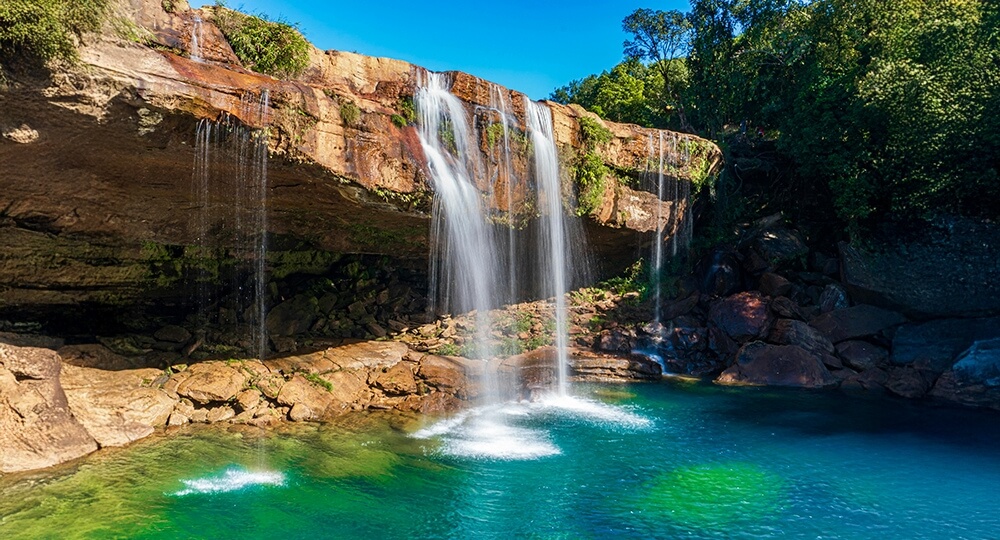
The fact that Meghalaya is a magnet for travellers owing to its mesmerising natural landscapes is known to all, and rightfully so. The state has several notable waterfalls, such as the Nohkalikai Falls, Seven Sisters Falls, Krang Suri Falls, and Elephant Falls. There are also many waterbodies whose beauty you can experience, including the Umiam Lake and Umngot River. Make sure to visit the Double Decker Living Root Bridge in Cherrapunji, the Mawphlang Sacred Forest, and the Mawsmai Cave.

A Foodie’s Delight

The food of Meghalaya is undoubtedly one of the best reasons to visit Meghalaya. You will find numerous rice-based dishes, such as pumaloi and pudoh, since rice is a staple in almost every Meghalayan meal. On one hand are unique concoctions like tungtap and minil songa, and on the other hand are meat-based dishes like jadoh and nakham bitchi.

Paradise For Shoppers

The phrase, “Shop till you drop!” certainly holds true for the shopping scene in Meghalaya. Filled with vibrant markets, you will be spoilt for choice when it comes to souvenir shopping. From handmade products such as paper objects and shawls, to jewellery, bamboo items, and edible products of various kinds, there is a plethora of things to check out.

Eclectic Destinations

Meghalaya is home to multiple eclectic destinations for you to visit with our Meghalaya tour packages. There is, of course, the capital city of Shillong, which is known as the ‘Scotland of the East’ due to its similarity with the Scottish Highlands. This is because of the rolling hills, welcoming climate, and lush green meadows of the city. You will get to explore two of the wettest regions in the world, namely Mawsynram and Cherrapunji. During this trip, tourists can also visit the village of Mawlynnong, which has earned the tag of the ‘cleanest village in Asia’.

Best Time To Visit Meghalaya

The climate of Meghalaya is influenced by its altitude, the south-west monsoon winds, and the fact that it’s located near the Bay of Bengal. Most of the rainfall in the state is caused by the south-west monsoon winds. The weather in the Khasi and Jaintia Hills remains mostly pleasant. In the Garo Hills, on the other hand, the summers are warm and humid, and the winters are pleasant. The region of Mawsynram in Meghalaya is said to be the wettest place on Earth and receives the highest rainfall in India. The northern part of Meghalaya usually receives an average annual rainfall between 250 and 300 cm. While the central region experiences anywhere between 300 and 400 cm, the southwestern part experiences approximately 400 cm of average annual rainfall. Let’s take a look at what each season in the state is like so you can accordingly decide when to book our Meghalaya tour packages:

Meghalaya In Summer (April To June)

During the summer season, the temperature in Meghalaya ranges between 16 degrees Celsius and 31 degrees Celsius. The summer days in Meghalaya are more pleasant when compared to most parts of the country. There could be occasional rainfall, but the days are mostly breezy, which is why it’s the perfect time to go outdoors and participate in adventure activities. Make sure to pack a mix of summer and warm clothes, along with sunglasses and sunscreen. Since the rainfall can make the paths slippery and wet, it’s always advisable to look up the weather forecast before venturing out. Remember to book our Meghalaya tour packages in advance so you can grab the best deals. Some of the festivals to experience in Meghalaya during this time include Shad Suk Mynsiem and the Strawberry Festival.

Meghalaya In Monsoon (July To September)

The range of temperature in Meghalaya during the monsoon season oscillates between 15 degrees Celsius and 25 degrees Celsius. Meghalaya is known to have two of the wettest places in the world, namely Mawsynram and Cherrapunji. During this season, the region is filled with misty mornings, lush and dewy landscapes, and the sight of streaming waterfalls. This is not the ideal time to visit the state, as the slippery roads and risk of landslides make the journey tricky. However, if you wish to relax in the hills or spend time at cosy cafes, then you can book our Meghalaya tour packages for this period. Make sure to pack umbrellas, waterproof clothes, raincoats, sports shoes, and mosquito repellents. You could get some discounts on bookings and accommodations at this time. Behdienkhlam is a festival that occurs during this season.

Meghalaya In Autumn (October To November)

The temperature range you can expect in Meghalaya during the autumn months is between 10 degrees Celsius and 25 degrees Celsius. The greenery left behind from the monsoon season continues to linger on, making it a great time to explore the natural beauty of the state and partake in the outdoor activities. The skies mostly remain clear around this time, thereby offering beautiful views of the valleys, forests, and hills. You will need light woollen clothes during this period. Tourists can witness the beauty of the Cherry Blossom Festival at this time with our Meghalaya tour packages.

Meghalaya In Winter (December To February)

The range of temperature during the winter season in Meghalaya fluctuates between 4 degrees Celsius and 16 degrees Celsius. It’s comfortably cold in the state at this time, with the days being warm and the nights bringing about cold winds. This is the perfect time to go sightseeing and participate in activities like trekking. Book our Meghalaya tour packages well in advance to get the best deals and accommodations. Make sure to carry woollen clothes, mufflers, shawls, and jackets for the winter months. The Ahaia Winter Festival takes place in the state during this period.

Top Cities And Towns To Visit In Meghalaya

Shillong

Shillong is the capital city of Meghalaya. It has been given the title of ‘Eastern Scotland’ due to the resemblance it displays to the Scottish Highlands, owing to its marvellous natural landscapes, rolling green hills, and old-world charm. The hill station is regarded as a paradise for trekkers because of the David Scott Trail that offers panoramic views of the East Khasi Hills. Shillong is a place where various cultures coexist harmoniously, including the Khasi, Jaintia, and Garo tribes. Due to its thriving and vibrant music scene and the numerous musical performances that take place in the hill station, Shillong is called the ‘Rock Capital of India’. Some of the many popular tourist attractions to visit in Shillong with GT Holidays’ Meghalaya tour packages include the Umiam Lake, Elephant Falls, and Shillong Peak.

Cherrapunji

Cherrapunji is a town located in the East Khasi Hills district of Meghalaya. The town is locally known as Sohra. During the colonial rule, however, the name was mispronounced by the Britishers as ‘Cherra’. The term ‘punji’ was added by the people belonging to the plains, which means ‘a cluster of villages’ in Bengali. Eventually, the town came to be called Cherrapunji. Some believe that the meaning of the name is ‘the land of oranges’. It’s known to be one of the wettest regions in the world and has one of the world’s highest average annual precipitation levels. When you visit Cherrapunji with our Meghalaya tour packages, make sure to explore the Double Decker Living Root Bridge, Nohkalikai Falls, and Seven Sisters Falls.

Mawlynnong

Mawlynnong is a village in Meghalaya’s East Khasi Hills district. It’s situated about 80 km from the city of Shillong. The village is known as ‘God’s own garden’ because of the lush greenery that envelops Mawlynnong. It holds the accolade of being bestowed the title of the ‘cleanest village in Asia’, awarded to Mawlynnong by the Discover India magazine in 2003. This title is certainly well-deserved because the community works together collectively to keep the cleanliness standards high at all times. Water is recycled by the residents, plastic is banned, and the village is strictly a no-smoking zone. The places to visit in Mawlynnong with our Meghalaya tour packages include the Riwai Living Root Bridge, Balancing Rock, and Sky Walk.

Dawki

Dawki is a town situated in Meghalaya’s West Jaintia Hills district. An interesting geographical feature of the town is that it’s located on the border between India and Bangladesh. It’s home to the Umngot River, which is also known as the Dawki River. Renowned for its crystal-clear waters, it’s said to be one of the cleanest rivers in the country. The other spots to visit in the town include the Jaflong Zero Point, Dawki Bridge, and Byrdaw Falls.

Top Things To Do In Meghalaya

With our Meghalaya tour packages, there are multiple tourist attractions you will get to explore and activities you can participate in. Some of those places and adventurous activities to look into are as follows:

Things To Do As A Family

Umiam Lake

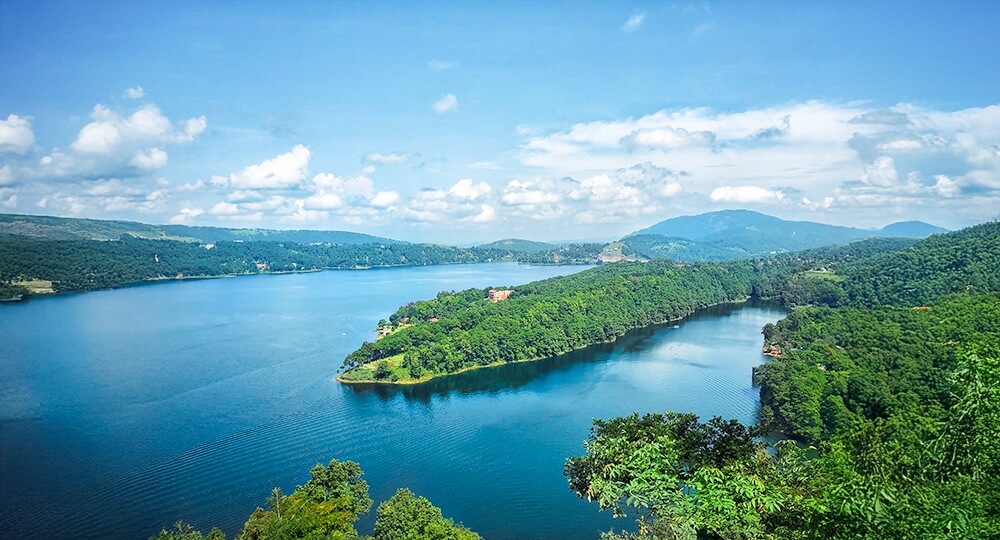
The Umiam Lake is a reservoir situated approximately 15 km north of Shillong. Also known as Barapani Lake, it was formed when the Umiam Dam was built in the early 1960s. Spread over an area of about 220 sq km, there are numerous activities that visitors can relish at this location, such as boating, kayaking, and water skiing. There is a popular picnic spot known as the Lum Nehru Park which is located near the lake. It’s also frequented by the locals and travellers for nature walks and photography sessions. You can book a stay at the Orchid Lake Resort, which is a lakeside luxury retreat located on the banks of the Umium Lake.

Double Decker Living Root Bridge

The Double Decker Living Root Bridge is located in Meghalaya’s Nongriat village. These were created from the aerial roots of the Ficus elastica or rubber fig tree by the Khasi and Jaintia tribes. The very name of the bridge explains its nature as this structure was not built, but rather grown. Made up of two levels of intertwined roots, it’s a two-tiered, strong bridge which makes its way through the rivers and streams of Meghalaya.

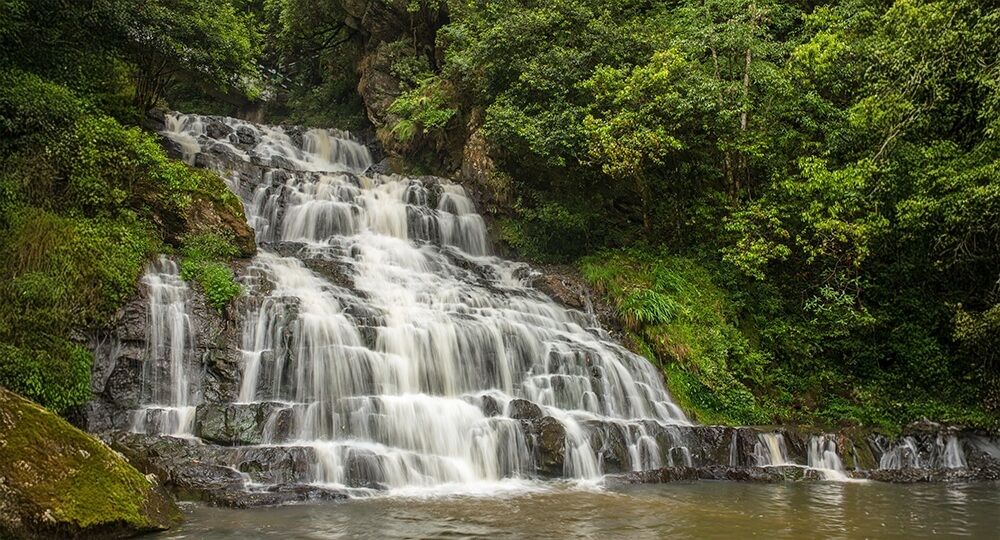
Elephant Falls

The Elephant Falls is situated at a distance of 12 km from the city of Shillong in Meghalaya. The local Khasi people refer to it as ‘Ka Kshaid Lai Pateng Khohsiew’, which translates to ‘the three-step waterfall’. This refers to the three successive falls, the first of which is broad and can be found nestled amidst the dense trees. The second waterfall displays delicate strands of water and is almost inconsequential during the winter season. The third waterfall is the tallest and most visible of the three waterfalls. The Elephant Falls were uncovered by the British colonial authorities during the 19th century, who then declared it a must-visit tourist spot. Tourists are required to navigate a flight of about 150 steps in order to reach the Elephant Falls. These could be a bit difficult to climb for children and elderly citizens, as the steps are pretty steep and slippery. However, there are benches located around the first and second tiers of the waterfall where you can relax and enjoy the view.

Mawphlang Sacred Forest

The Mawphlang Sacred Forest is located 25 km from the city of Shillong. It’s said to be the largest and oldest forest existing for the Khasi tribals. The forest is locally known as ‘law kyntang’, and the Khasi people believe that the forest is where the guardian spirit, Labasa, resides. The people believe that the deity takes on the form of animals to communicate with the community. The forest is said to be home to around 400 species of flora and fauna, which includes 25 different types of orchids. Visitors must remember that there is nothing they can take from this forest, be it a leaf or even a pebble. This is because the locals believe that anyone who removes anything from this forest will have to face the consequences from the forest’s deity.

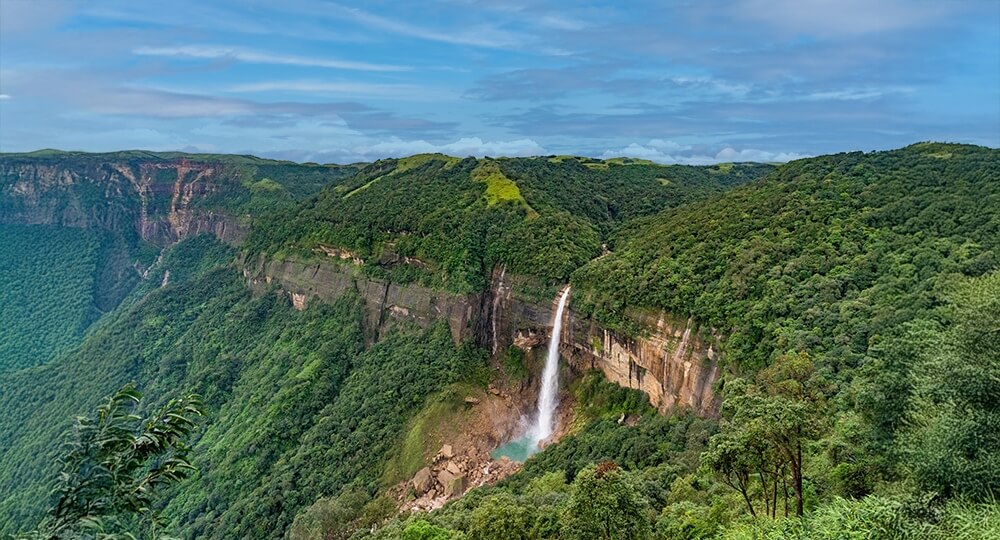
Nohkalikai Falls

The Nohkalikai Falls are situated about 5 km away from the town of Cherrapunji. It’s reputed to be the highest plunge waterfall in the country and the 4th highest one in the world. The name of the waterfall translates to ‘the leap of Likai’. It plunges down from a height of 1,115 feet, and the best time to visit the Nohkalikai Falls is between June and September. The legend behind this popular tourist attraction is quite tragic, as it’s said to be named after a grieving mother named Ka Likai who jumped off a cliff after losing her child. It’s this cliff where the waterfall now falls from.

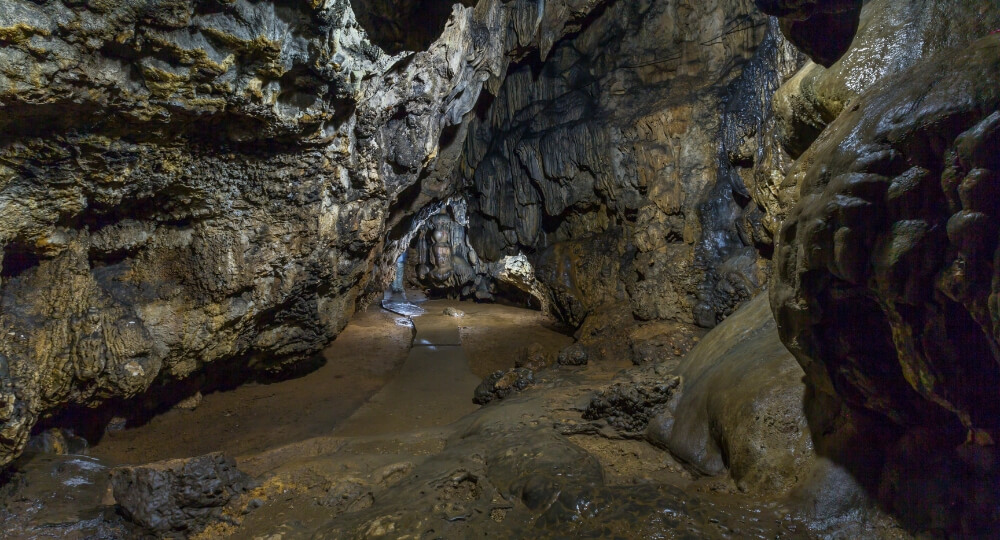
Mawsmai Cave

The Mawsmai Cave is located near Cherrapunji in Meghalaya. Thousands of years of natural processes led to the formation of the cave, particularly the rainwater, causing the chemical weathering of the limestone. While some of the openings in the cave are spacious and large enough, some are so tiny that visitors must kneel and bend their heads. Although the caves are pretty long, the area that’s accessible to tourists is a total of 150 metres.

Balpakram National Park

The Balpakram National Park is located in the South Garo Hills district of Meghalaya. Also known as ‘the land of perpetual winds’, the name of the park translates to ‘the abode of spirits’ as the locals believe it to be a spiritual gateway for the dead. The months between October and March are considered to be the best time to visit the Balpakram National Park. Sprawled over an area of 220 sq km, it was declared a national park in 1987. Some of the animals you can spot at this park are the Asian elephant, Bengal tiger, red pandas, the Indian bison, and clouded leopards.

Don Bosco Museum

The Don Bosco Museum, also known as the Don Bosco Centre for Indigenous Cultures, is located about 4 km away from the centre of Shillong. The institution is a combination of a research and publication centre and a museum. The structure is hexagonal-shaped and contains seven storeys. Spread out over 17 galleries, you will come across artefacts that reflect the history and culture of Northeast India. The Don Bosco Museum houses musical instruments, weapons, costumes, ornaments, utensils, fibreglass figures, and so much more. The research centre is known as the North Eastern Institute for Research in Anthropology (NEIRA), and serves as a treasure trove of knowledge regarding Northeast India’s traditions, culture, and heritage.

Things To Do For Adventure Lovers

  • Caving in Mawsmai Cave
  • Trekking to Double Decker Living Root Bridge
  • Boating, cliff jumping, river rafting, and kayaking in Umngot River
  • Ziplining at Mawkdok Valley
  • Waterfall rappelling at Elephant Falls
  • Jet Skiing at Umiam Lake
  • Camping at Nongriat

Shopping In Meghalaya

When you’re not busy sightseeing in Meghalaya, you can spend your time exploring its markets that boast of alluring souvenirs. Some of the items to check out with our Meghalaya tour packages and places to shop from are as listed below:

What To Buy

Shawls

The handwoven shawls from Shillong are some of the most exquisite souvenirs to grab while in Meghalaya. These are handwoven using traditional techniques that are passed down across generations of people belonging mostly to the Khasi and Jaintia tribes. With their intricate patterns and bright colours, these shawls are a symbol of the region’s rich cultural heritage. Available in silk, wool, and cotton, the shawls are perfect to be gifted to your loved ones. The motifs and designs featured in such shawls are often related to nature, tribal symbols, and history.

Jewellery

The jewellery lovers out there will be delighted at the sight of the intricate traditional jewellery available in the state. Most of the traditional jewellery found in Meghalaya is handmade by tribal artisans. Featuring intricate details, these are usually made using beads, stones, shells, and silver. Tribal patterns and designs of flora and fauna are often visible on these pieces of jewellery.

Bamboo Products

Bamboo products form a significant part of Meghalaya’s culture, depicting the state’s strong bond with nature. You will find a variety of bamboo-based products in the markets of Meghalaya, ranging from kitchenware and musical instruments to furniture, wall hangings, lampshades, and other home décor items. By purchasing these bamboo products, not only can you follow the sustainable mode of shopping, but you can also support the state’s local artisans.

Edible Items

One absolutely cannot leave Meghalaya without purchasing the numerous food-related and edible items the state has to offer. This wide range includes tea, spices, and organic food products. Some of the spices you can pick from the Meghalayan markets are cardamom, cinnamon, turmeric, black pepper, and bay leaves. The organic products you can explore in the state include honey, fruits, vegetables, jams, and jellies.

Handmade Paper Objects

Fans of stationery must visit the markets of Meghalaya because they have some wonderful handmade paper objects. These include notebooks, journals, diaries, greeting cards, and so on. The paper products are also available in the form of home décor pieces, such as photo frames and wall hangings. You will often find unique elements in these handmade paper objects, including flowers, motifs, and pressed leaves.

Where To Shop

  • Police Bazaar (Shillong): For handicrafts, accessories, shawls.
  • Bara Bazaar (Shillong): For local produce, handicrafts, jewellery.
  • Lew Sohra Bazaar (Cherrapunji): For jewellery, local produce, handicrafts.
  • OB Shopping Mall (Shillong): For clothes, branded items, books.

Things To Remember When Shopping In Meghalaya

  • Many of the local stores in Meghalaya don’t accept cards or online payments. Therefore, make sure to carry sufficient cash when you go shopping.
  • The artefacts of the state have deep historical and cultural significance, which is why you must handle them respectfully and ask the vendors if you wish to take pictures of the items.
  • Buying handmade products or items made by the local artisans helps in supporting their livelihoods. Try to keep this in mind when you’re looking for souvenirs.
  • Bargaining is common in the markets of Meghalaya, but be respectful as you negotiate.
  • Bring along reusable shopping bags to preserve the state’s eco-conscious nature.
  • When buying items such as shawls or bamboo products, ask the vendors to pack them well and securely so that they don’t get damaged when you travel back home.

Dos and Don’ts For Indian Travellers

  • Greet the locals respectfully and display an interest in learning about the local culture.
  • Always dress modestly while visiting the rural areas and places of worship. Carry a shawl or scarf in case you’re asked to cover yourself properly.
  • Avoid using plastic and make sure to carry reusable water bottles.
  • The region of Meghalaya is filled with pristine natural beauty, so ensure to maintain the cleanliness of the state. Throw off any garbage only when you spot a garbage bin.
  • Don’t take a bath in a sacred stream.
  • Always ask for permission before taking someone’s photograph, especially that of a woman.
  • Don’t use your left hand while eating, handing things to other people, or pointing at others.
  • Stay away from public displays of affection.
  • Don’t smoke or drink alcohol in public.
  • Avoid discussing politics or religion with the people of the state.
  • Don’t shake hands with people of the opposite sex unless they offer first.
  • Always ask for permission and remove your shoes before entering someone’s home.

Foods To Try Out In Meghalaya

The cuisine of Meghalaya is influenced by the hunting-gathering and agrarian traditions of the state. Rice is the staple food of the region and is usually served with vegetables, fish, and meat. Visitors will find a variety of locally-sourced ingredients in Meghalayan dishes, including wild mushrooms, bamboo shoots, and a bunch of herbs and greens. Eclectic kinds of meat are used in the state’s cuisine, including chicken, fish, pork, wild boar, and deer. You will notice that Meghalaya’s food is usually spicy, with garlic, ginger, and chilli peppers being used generously. The region’s cuisine also has a lot of fermented foods, adding some delightful sourness to the concoctions. Let’s take a look at some of the most delicious dishes you can try out during your trip with our Meghalaya tour packages:

Jadoh

Jadoh is one of the most popular dishes of Meghalaya, particularly among the Khasi community. Rice is the primary ingredient of this dish, and the meat that’s used is either chicken or pork. Some of the other ingredients that go into making jadoh are onions, ginger, green chillies, bay leaves, turmeric, and black pepper.

Nakham Bitchi

Nakham bitchi is a traditional soup found in Meghalaya and is especially popular among the Garo community. It’s made from a sun-dried and fermented fish known as nakham. It has a spicy and tangy taste and is particularly a favourite during the winter season. The inclusion of pepper and chillies amplifies the taste of this soup.

Dohkhlieh

If you’re in the mood to have a salad with a twist, then dohkhlieh is what you should be going for. It’s usually made with either pork or chicken, and is flavoured with ingredients such as onions, peppers, herbs, and local spices. Typically served as an appetiser or side dish, many like to consume dohkhlieh with rice. It’s an extremely nutritious and high-protein salad.

Pumaloi

As stated earlier, rice is a staple presence in the meals of Meghalaya and is consumed in numerous ways. One of the most interesting forms of rice you will find in the state is pumaloi. It’s a steamed rice cake that’s commonly eaten during festivals, family gatherings, and special occasions. The dish is made using powdered rice, which is boiled in a unique earthen pot known as khiew ranei. It’s cooked on medium heat while paying special attention to the amount of water being used.

Tungtap

Tungtap is an example of just how creative the people of Meghalaya can get with their food. It’s basically a dry fish chutney which is often served as a side dish or condiment. In order to make this chutney, a paste is made using the fermented dry fish. This paste is then mixed with ingredients like onions, green chillies, and spices.

Pudoh

Pudoh is a dish that is similar to Pumaloi since both make use of steamed rice. Think of a mixture containing powdered rice and pork, and that’s what forms the base of pudoh. A mixture of pork and powdered rice is steamed together, allowing the rich flavour of the pork to penetrate the rice completely. It’s usually served alongside a sauce that’s made using tomatoes, green chillies, onions, and garlic.

Minil Songa

Minil songa is a sticky rice dish that belongs to the Garo tribe of Meghalaya. It’s particularly eaten during festive occasions. The sticky rice is mixed with ingredients like ginger, turmeric, chillies, coriander, and lemongrass. The rice mixture is first stuffed into bamboo tubes, and the tubes are then steamed. The resulting dish has a rich and nutty flavour.

Art And Culture In Meghalaya

Art And Craft

The art and craft of Meghalaya is so extensive that you will find them taking the shape and form of delightful and unique souvenirs. This includes the art of making bamboo and cane products, as practised by the Khasi, Garo, and Jaintia communities. The art of making handmade products, too, is very prevalent in the state, as is visible from the delicate handmade shawls and handmade paper products you will find in the markets of Meghalaya.

Folk Dance

The folk dances of Meghalaya are of various kinds, ranging from agricultural and ceremonial dances to religious dances that are dedicated to gods and goddesses. Some of the folk dances are also performed simply to celebrate the art of being free-spirited. The people of Meghalaya seem to have a dance for almost every occasion and occurrence, be it festivals, weddings, births, or even death.

Behdienkhlam is the most prominent dance festival of the Jaintia tribe of Meghalaya. It’s celebrated every year in July during the onset of the monsoon season, wherein people pray to the deity for a healthy harvest. The nongkrem dance is a significant folk dance belonging to Meghalaya’s Khasi tribe. It’s celebrated during the autumn season, when people offer prayers hoping for prosperity and an abundant harvest. Some of the other folk dances of the state you can witness with our Meghalaya tour packages include shad suk mynsiem, wangala dance, and doregata dance.

Festivals

The festivals of Meghalaya often intertwine with the region’s folk dances, with both sectors forming a huge part of the state’s celebrations. The shad suk mynsiem festival, which is also known as the ‘dance of the joyful hearts’, is an annual 3-day festival held by the Khasi tribe of Meghalaya during springtime. There is the wangala festival, which is usually celebrated in November by the Garo tribe of Meghalaya. Also known as the ‘100 drums festival’, the people thank the Sun God for a good harvest during this festival. The other festivals you could experience with GT Holidays’ Meghalaya tour packages are the nongkrem festival, behdienkhlam festival, shad sukra, and the strawberry festival.

Travel Tips

visa_information_icon

Visa Information

Check visa requirements before traveling, ensuring a smooth entry and compliance with destination regulations.

health and safety tips icon

Health and Safety Tips

Prioritize health, stay hydrated, follow safety guidelines, and maintain personal hygiene for a secure journey.

currency and tipping icon

Currency and Tipping

Familiarize with local currency, consider customary tipping practices for respectful and seamless travel experiences.

Share Your Ideal Tour: Let Us Customize!

FAQs:

Does Meghalaya experience snowfall?
No, Meghalaya doesn’t experience snowfall.
What is the emblem of Meghalaya?
The official emblem of Meghalaya is a circular seal featuring three mountain peaks that take on an ‘M’ shape, referencing the Khasi, Jaintia, and Garo hills.
What is Meghalaya famous for?
Meghalaya is known for its stunning natural landscapes, such as lush forests and gorgeous waterfalls, unique living root bridges, and for being home to one of the wettest places in the world.
Does Meghalaya have a matrilineal society?
Yes, the Khasi, Garo, and Jaintia tribes of Meghalaya have a matrilineal society.
How long does it take to drive from Shillong to Cherrapunji?
It takes around two hours to drive from Shillong to Cherrapunji.
How many days are sufficient for a trip to Meghalaya?
We recommend you set aside at least five days for a trip to Meghalaya.
How far away is Dawki from Mawlynnong?
The distance between Dawki and Mawlynnong is about 35 km.
Does Meghalaya have any UNESCO sites?
Although Meghalaya does not have any UNESCO sites at the moment, it does have two on the UNESCO World Heritage Tentative List, which are the Living Root Bridges and the Garo Hills Conservation Area.
What are some of the popular hill stations in Meghalaya?
Some of the popular hill stations in Meghalaya include Shillong, Cherrapunji, and Mawsynram.
Was Meghalaya a part of Assam?
Yes, Meghalaya was a part of Assam until it became a full-fledged state on 21st January 1972.

Book Your Dream Vacay Today!

=

×

Enquire Now

=