3

Tour Packages

Home » Tour Packages » India Tour Packages » South India Tour Packages » Kanyakumari Tour Packages

Kanyakumari Tour Packages

Southernmost Point of Mainland India

SUPER DEAL PRICE

STARTS FROM

per person on twin sharing
Time Zone:
Richest District in Tamil Nadu: Kanyakumari
South India’s No.1 Travel Brand
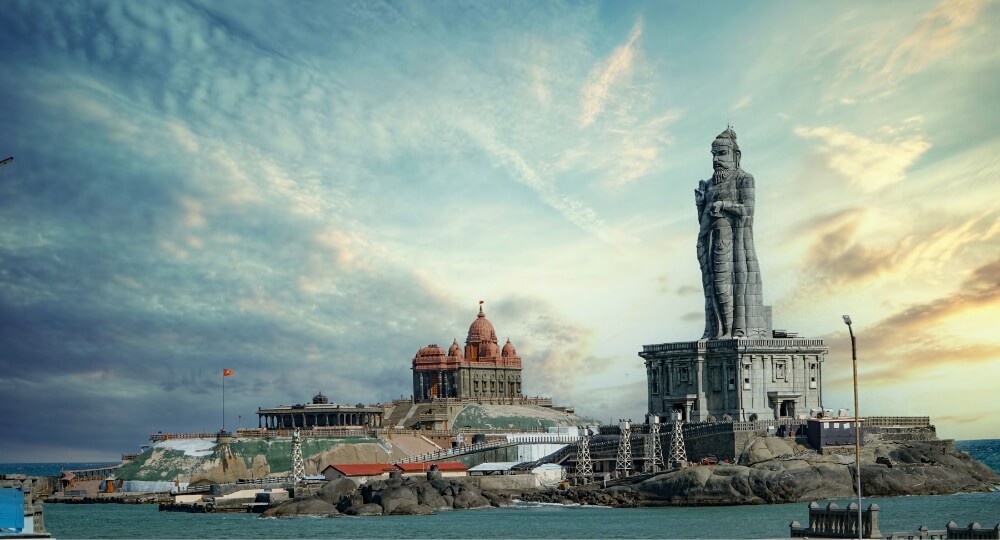
Thiruvalluvar Statue
One of the Tallest Statues in India
Kanyakumari Glass bridge
India’s First Glass Bridge
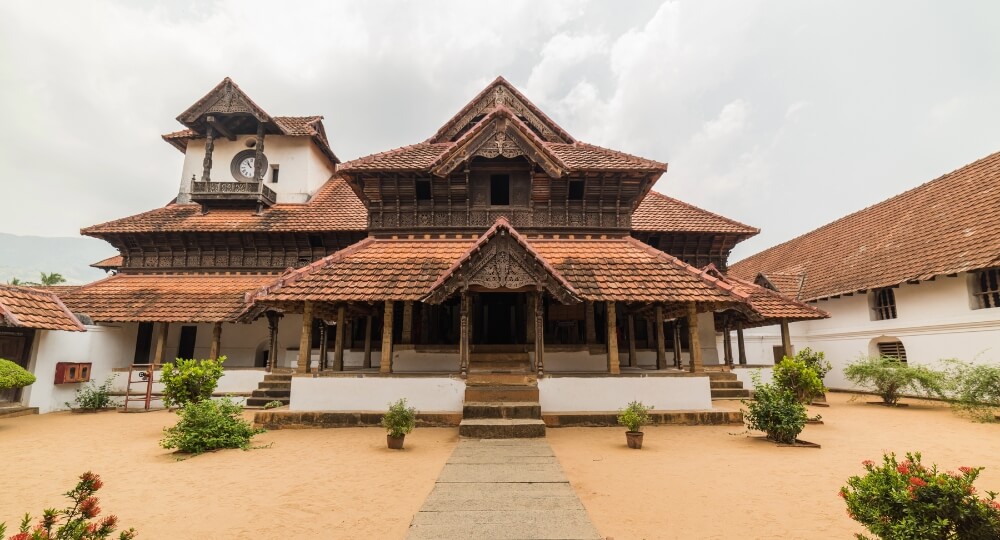
Padmanabhapuram Palace
Asia’s Largest Wooden Palace
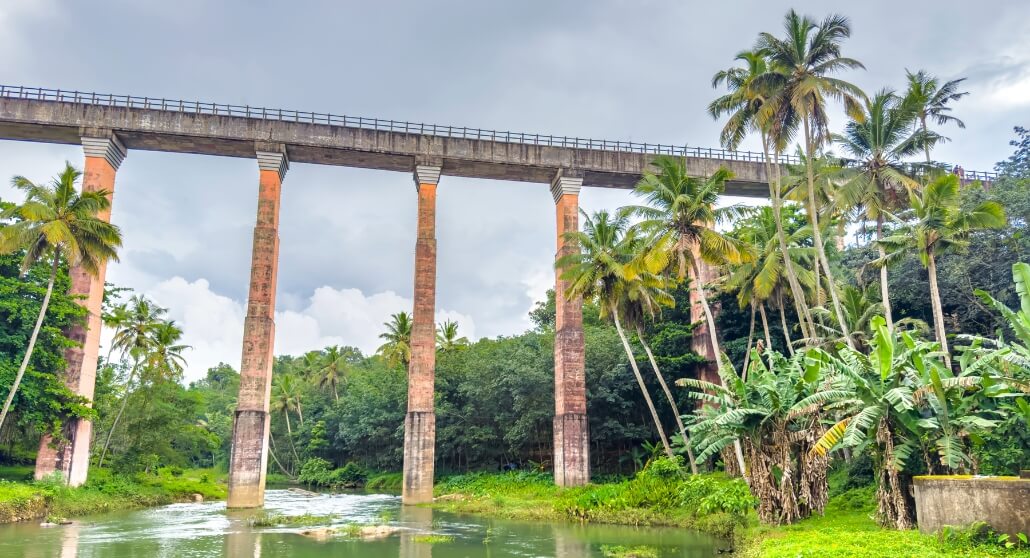
Tallest Aqueducts in Asia
Mathur Aqueduct
Discover the magic of Kanyakumari with GT Holidays
sea icon

The beautiful place in India where three seas unite.

spiritual icon

Vivekananda Rock Memorial stands for spiritual power.

sunrise icon

Witness both a beautiful sunrise and sunset here.
beach icon

Beautiful scenic beaches at Sanguthurai and Chothavilai.

bhagavathi amman temple icon

Bhagavathi Amman Temple is a sacred ancient shrine.

Kanyakumari - Overview
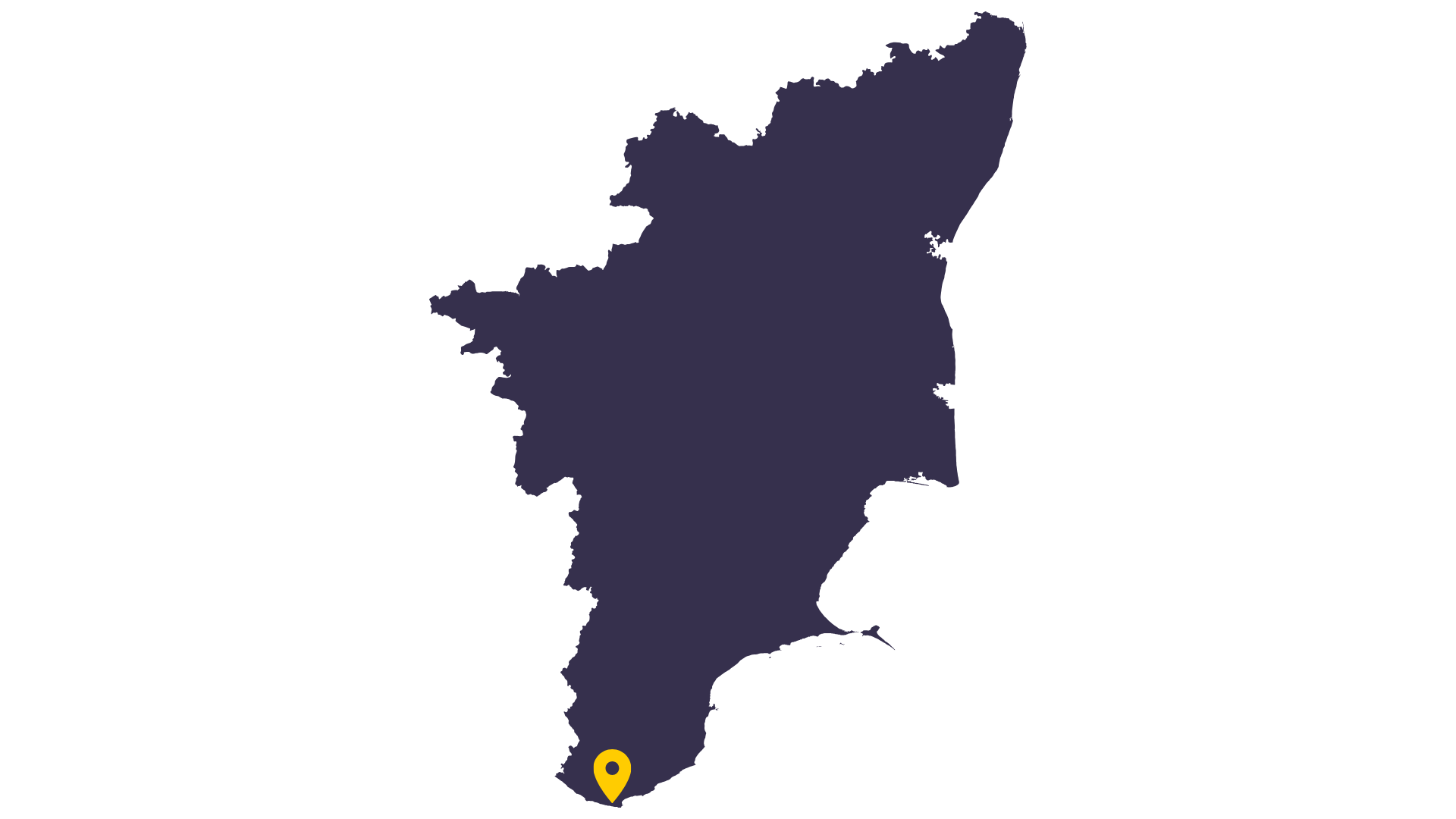
kanyakumari location map

By Purpose

tour package tourism

Couples

For Newlywed Vacations

tour packages business

Family

For Family Vacations

Top Attractions and Nearby Sights

Thiruvalluvar Statue

Suchindram Temple

Muttom Beach

Vattakottai Fort

Sanguthurai Beach

Chothavilai Beach

Mathur Aqueduct

Sunrise and Sunset Points

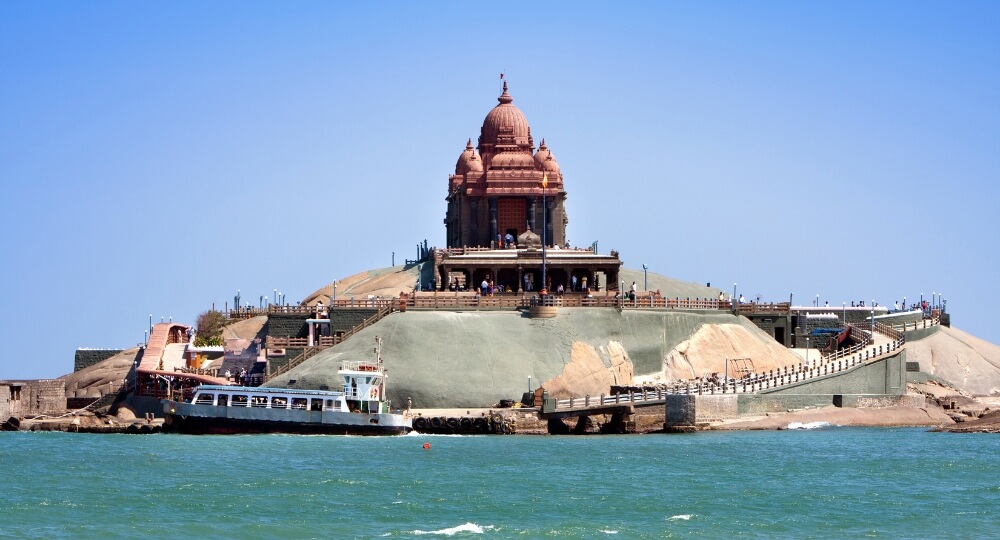
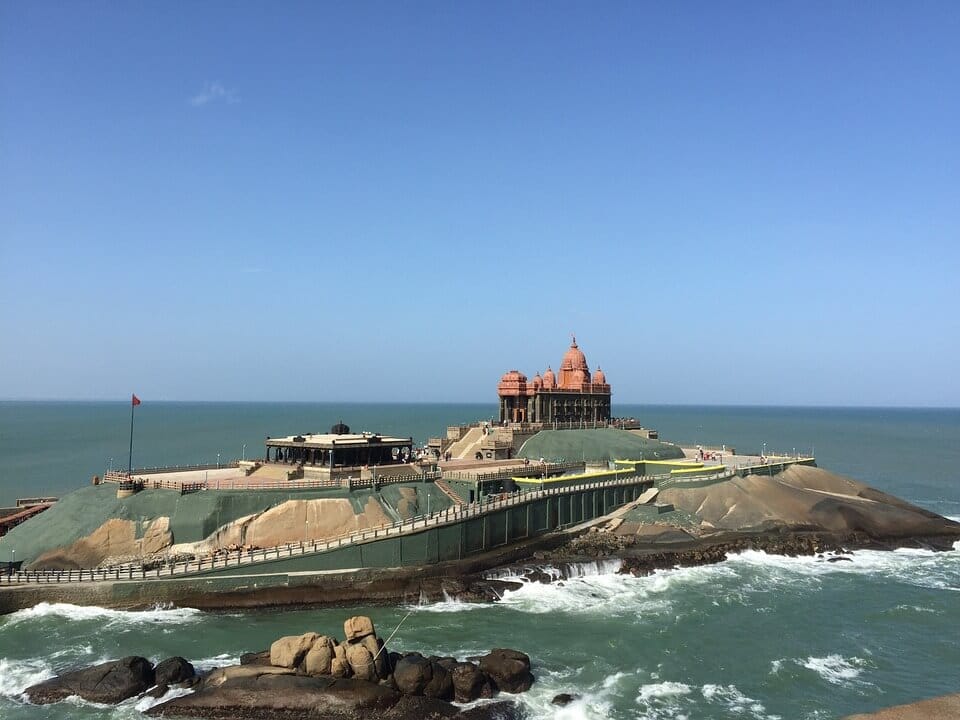
Vivekananda Rock Memorial

Kanyakumari Glass Bridge

Gandhi Memorial Mandapam

Padmanabhapuram Palace

Bhagavathi Amman Temple

Our Lady of Ransom Church

Kanyakumari Wax Museum

Everything You Need to Know About Kanyakumari

Located in the southernmost part of the country, Kanyakumari is often referred to as the Land’s End. However, Kanyakumari refers to both the district and the coastal town of the same name. For the purpose of this article, we will be referring to the entire district as the region has so much more to offer than its coastal namesake. It is the land of temples and beaches, and is abundant in natural beauty thanks to the Western Ghats. Read on to learn more about the region and its specialities.

Call us or send a message on Instagram to customise your Kanyakumari tour package.

Table of Content:

About Kanyakumari

Kanyakumari is a beautiful city famed for its lush greenery, pristine beaches, verdant paddy fields, and heritage monuments. It is one of the wealthiest districts in Tamil Nadu, known for its high per capita income and excellent Human Development Index. The city gets its name from the Hindu Goddess Kanyakumari, a manifestation of Goddess Shakti. It is believed that the Goddess Adi Parashakti manifested as an adolescent girl to slay the demon Banasura, who was wreaking havoc upon mankind. The goddess is intrinsically linked to the district and the town of Kanyakumari, situated on the southernmost tip of India.

Parts of Kanyakumari are known as Nanjil Nadu, as they were distinct in their paddy cultivation, cuisine, and dialect.

Read on to learn more about the city and our Kanyakumari tour packages.

History

Over 180 million years ago, Kanyakumari was believed to have been part of the Gondwanaland supercontinent, which encompassed present-day South America, Arabia, India, Madagascar, Australia, and Antarctica. In fact, some geologists believe that the Sripada Rock may have been the Gondwana Junction that connected India with Sri Lanka, Madagascar, and other countries. There is also evidence of human civilisation believed to be over 4000 years old. It was even mentioned by several ancient geographers and travellers, such as Ptolemy and Marco Polo, who noted the place as a significant centre for pearl fishing and global trade.

Over the years, Kanyakumari was ruled by several dynasties, including the Ays, Cheras, Cholas, and the Pandyas. The region was one of the earliest adopters of the Abrahamic religions, including Islam and Christianity. Islam is believed to have been adopted as early as the 9th century when Arab traders visited Kanyakumari through maritime trade. St. Thomas the Apostle is believed to have built a church in Thiruvithamcode for the Brahmins who fled Mylapore from persecution for converting to Christianity.

The Kingdom was ruled by the Venad chieftains from the 12th century until about 400 years later, when it was captured by the Nayaks of Madurai. The region, which we now call Kanyakumari, later fell into the hands of the Venad rulers during the reign of Anizham Thirunal Marthanda Varma. The Venad rulers, later known as the Travancore Dynasty, ruled the region until India gained independence. Later, under agitation by locals who wanted the district to be merged with Tamil Nadu, Kanyakumari was transferred to the state.

Call us at +91 9940882200 to learn more about our Kanyakumari tour packages.

Geography

Sandwiched between the Arabian Sea in the west and the Western Ghats in the north, the city boasts a distinct yet varied topography. It is one of the very few places that experiences the five landscapes mentioned in ancient Tamil Literature: Kurinji (mountains), Mullai (pastoral land), Marudham (agricultural land), Neidhal (coasts) and Palai (desert).

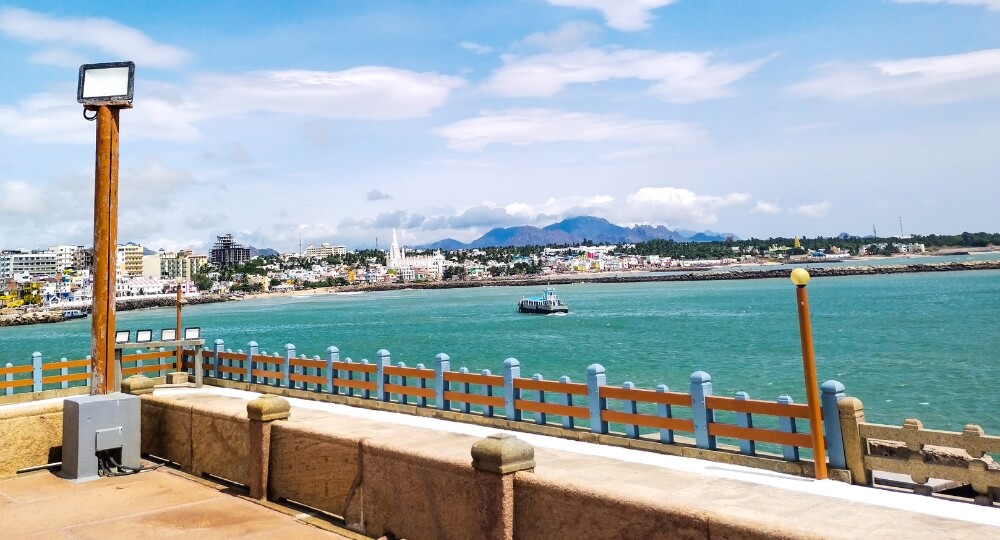
The highlight of Kanyakumari is its southernmost tip, where the three seas, the Laccadive Sea, the Arabian Sea, and the Indian Ocean, converge. Towards the northern side of the region are the Western Ghats, which are home to quaint waterfalls, lush forests, and an abundance of wildlife.

The city has a tropical climate with temperatures hovering around 32°C throughout the year.

Call us at +91 9940882200 to learn more about our Kanyakumari tour packages.

Economy

The fertile soils of Kanyakumari and favourable monsoons make the city suitable for growing a diverse range of crops, including cash crops like cashews, spices, and rubber, along with Kharif crops like rice, groundnuts, and tapioca. It is also a major producer of fruits like mango, coconut, jackfruit, and banana, along with flower crops like jasmine and tuberose.

The city is also home to several schools and colleges, making it a major educational hub in the state.

Tidbits

  • Kanyakumari was once part of the Travancore Kingdom and only joined Tamil Nadu in 1956 when states were reorganised based on linguistic majority.
  • Kanyakumari is spiritually relevant as the Triveni Sangam (confluence of three water bodies) is believed to ensure freedom from the cycle of rebirth.
  • The region is the country’s largest producer of cloves, which also holds a GI Tag.
  • The St Mary’s Church in Thiruvithamcode, popularly called Thomaiyar Kovil, was established by St Thomas the Apostle in 63 CE.
  • The Maruthvazhmalai in Kanyakumari is believed to be a part of the Sanjeevni Mountain carried by Hanuman to Sri Lanka.
  • The Spripada Rock in Kanyakumari was part of the Gondwana Land and could be over 180 million years old.
  • The glass bridge in Kanyakumari, built in 2024, is India’s first glass bridge built over the sea.
  • Swami Vivekananda is believed to have obtained his vision about a new emerging India when performing penance on the Sripada Rock.
  • Kanyakumari has the highest literacy rate in Tamil Nadu. Its literacy rate of 91.75% is higher than the state literacy rate of 80.09% and the national literacy rate of 77.7%.
  • The Muppandal Wind Farm is the largest wind farm in India and the third-largest in the world, and home to over 3000 windmills.
  • The Padmanabhapuram Palace in Kanyakumari is Asia’s largest wooden palace.

Call us at +91 9940882200 to learn more about our Kanyakumari tour packages.

Things To Know Before Choosing Kanyakumari Tour Packages

  • Kanyakumari has a moderate to hot tropical climate. Carry light cotton clothes even when you are travelling in winter.
  • Carry an umbrella with you as it can get very hot during the day, irrespective of the season.
  • Carry a bottle of water to stay hydrated and drink plenty of juices.

Kanyakumari At A Glance

  • High Season – October to March
  • Languages Spoken – Tamil, Malayalam, English, Hindi (only in tourist areas)
  • Famous Tourist Attractions – Kanyakumari Beach, Bhagavathi Amman Temple, Vivekananda Rock Memorial, Thiruvalluvar Statue, Suchindrum Temple, Thiruparappu Falls, Padmanabhapuram Palace, Adi Keshava Perumal Temple
  • Things To Do – Boating, Trekking, Witnessing Sunrise and Sunset, Jet skiing, Banana Boat Riding, Parasailing.
  • Famous Food – Beef and Parotta, Fish Fry and Meals, Vegetarian Sadya, Banana Chips, Jackfruit Chips, Tapioca Chips, Pazha Sarbath, Nannari Sarbath, Kothu Parotta
  • Souvenirs to Buy – Banana Chips, Jackfruit and Tapioca Chips, Handloom Sarees, Temple Jewellery, Coir Products, Brass and Bronze Items, Lacework, Wooden Handicrafts, Shellcrafts.

Planning a holiday to Land’s End? Call us to learn more about our Kanyakumari tour packages.

Top Reasons To Choose Kanyakumari Tour Packages

Temples

With Tamil Nadu being the Land of Temples, it is not surprising to find a plethora of temples, mosques, and churches in the city. The Bhagavathi Amman Temple is one of the city’s most important temples, with the presiding deity, Kanyakumari Amman, giving the town its name.

The Adi Keshava Perumal Temple in Thiruvattaru is famous for its intricate carvings on doors and panels as well as its paintings and stone sculptures. The temple’s deity, Ananthapadmanabhaswamy, is similar to the Padmanabhaswamy Temple in Thiruvananthapuram.

The Nagaraja Temple is another famous temple that gives the district’s capital, Nagercoil, its name. The temple is known to alleviate people of various sarpa-related doshas, such as Kaalasarpa Dosha and Naga Dosha.

The Suchindrum Temple is believed to be over 1000 years old and is one of the few places in the world dedicated to the Trinity, i.e., Brahma, Vishnu, and Mahesh. Legend has it that Lord Indra was relieved of his curse in this temple – hence the name Suchi (pure) Indram (Lord Indra).

The Mandaikadu Temple is often referred to as the women’s Sabarimala due to a unique legend in which women visit the temple after observing a 41-day fast and carry the Irumudi to the temple.

The Parthasarathy Temple in Parvathipuram is not as famous as its counterparts, but it is unique because of its architecture and antiquity. The temple was believed to have been built in the 9th century and is protected by the ASI.

The Kollemcode Bhadrakali Temple is another famous Devi temple, renowned for its Thooku Festival, where devotees are suspended from a wooden beam as a gesture of gratitude to the Devi for fulfilling their wishes.

Some of the popular churches in the district include the St. Xavier’s Cathedral, Our Lady of Ransom Church in Kanyakumari, and the St. Catherine’s Church in Thuthur. The St. Mary’s Church in Thiruvithamcode, also known as Thomaiyar Kovil, is one of the oldest churches in Tamil Nadu, believed to have been built by St. Thomas the Apostle in 63 CE.

Waterfalls

With the Western Ghats on its northern border, it is not surprising to find quaint waterfalls across the district. Some of these are popular tourist spots, while others are known only to the locals. Some are in the middle of the forest and can only be visited with permission from the Forest Department.

The Thirparappu Falls is a manmade waterfall with water flowing for almost eight months of the year. The waterfalls receive their water from the Pechiparai Dam on the Kodayar River, which supplies water to the neighbouring paddy fields.

The Vattaparai Falls are situated within the Keeriparai Reserve Forest and are less crowded than Thirparappu, as they are only known to the locals.

Kalikesam is another beautiful waterfall amidst the lush green forests of the Veerapuli Reserved Forest. The Kalikesam River meanders through the forests, forming natural waterfalls in select areas while flowing gently in others.

There are several other waterfalls, like Karumparai, Olakkuaruvi, and Vallichunai Falls, that are known among the locals. To explore these lesser-known places with your Kanyakumari tour packages, call us at +91 9940882200.

Beaches

Kanyakumari is surrounded by the sea on all sides, ensuring that you can enjoy evenings at one of the many beautiful beaches. The most famous beach of all is the Kanyakumari Beach, which is also home to the Triveni Sangam, where the three seas: the Laccadive Sea, the Arabian Sea, and the Indian Ocean meet. It is believed that taking a dip at the Sangam absolves one of any sins and ensures freedom from the cycle of rebirth.

The Twin Beach near Kanyakumari is an ideal spot to observe the sunrise and sunset. Unlike the main beach, this place is not crowded, making it the perfect way to enjoy the panoramic coastline.

Another beach close to Kanyakumari is the Vattakottai Beach. What makes this beach even more beautiful is the fort adjacent to it. This is also less crowded when compared to other mainstream beaches.

Some of the other beaches popular among locals include Muttom, Sanghuthurai, Sothavilai, Thengapattinam, Lemur, and Chinnathurai.

Call us at +91 9940882200 to learn more about our Kanyakumari tour packages.

Lush Greenery

The Western Ghats add beauty and greenery to the city, making it a favourite of nature lovers. On the one hand, you have thick rubber plantations and spice plantations, while on the other, the district is known for its paddy fields, banana plantains, tapioca farms, and flower orchards. As you move away from the city, you will be mesmerised by the long stretches of greenery and abundant ponds and lakes along the road. Lotus flowers are cultivated in most of these ponds and lakes, adding to the scenic beauty. You will also find thick forests abundant with wildlife and unique flora.

Cuisine

Kanyakumari cuisine is distinct from that of any other region in Tamil Nadu. It is a blend of Kerala and Tamil Nadu influences and ingredients. For instance, coconut features prominently in Kanyakumari cuisine. Even the food is cooked in coconut oil. Unlike other cities in Tamil Nadu, beef is commonly consumed here. In fact, it is more common than other expensive protein sources, such as mutton.

Fish is another popular protein source and is eaten almost every day. Some people eat fish six days a week, and on the seventh day, they include dry fish in their meals.

Parotta is another popular food eaten with beef, chicken, or mutton. The salna, or empty gravy, is a favourite accompaniment to Parotta and is complementary.

The city is renowned for its vegetarian cuisine, which is available in almost every restaurant. A typical lunch menu would include rice with over five types of curries, such as Dal, Sambhar, Puzhiseri, Rasam, and Sambharam, along with side dishes like Avial, various types of pachadis (pickles) and kichadis (curd-based gravies), Papad, and Upperi. And for dessert, you can sample some of Kanyakumari’s different Payasams, aka Pradhamans, like Ada Pradhaman, Paal Pradhaman, Chakka (Jackfruit) Pradhaman, and Pazham (Banana) Pradhaman.

Call us at +91 9940882200 to learn more about our Kanyakumari tour packages.

Heritage Monuments

Kanyakumari is renowned for its rich heritage, featuring a variety of monuments, including palaces, memorials, and cave temples. The Vivekananda Memorial in Kanyakumari is perhaps the most popular of all, dedicated to Swami Vivekananda, who attained enlightenment on the rock where the memorial is built. The adjacent Thiruvalluvar Statue is another popular monument dedicated to Sage Thiruvalluvar, who is believed to have composed the Thirukkural, a composition of over 1330 couplets.

The Padmanabhapuram Palace is another legendary monument, built in the 17th century. It is the world’s largest wooden palace, covering over 6.5 acres and features intricate woodwork and Kerala-style architecture.

Chitharal is a Jain cave temple believed to have been built in the 9th century by Jain monks who visited here to meditate. Today, it is an important trekking trail that offers a picturesque view of the surrounding plains.

The Mahatma Gandhi Memorial is built in honour of the Father of the Nation. When the Mahatma’s ashes were brought to Kanyakumari for immersion, it was kept in this place to allow people to pay their last respects. Every year, on 2nd October, the sun’s rays pass through the ceiling to fall on the exact spot where the ashes were kept.

Call us at +91 9940882200 to learn more about our Kanyakumari tour packages.

Best Time To Choose Kanyakumari Tour Packages

Kanyakumari’s tropical climate makes the city warm throughout the year, especially during the months of March to May. The city experiences two distinct seasons: Summer and Monsoon. There’s also a post-monsoon season when the region experiences moderate to high rainfall thanks to the northeast monsoon. Although it is not cold enough to be classified as winter, temperatures in the post-monsoon season (October to March) remain pleasantly cool. Read on to learn more about the different seasons and the best time to book Kanyakumari tour packages.

Summer (March to May)

While Kanyakumari experiences summer between March and May, the surrounding seas help prevent extreme temperature highs, unlike other regions of Tamil Nadu, where the temperature can reach up to 45°C. The average summer temperature in this region ranges from 32°C to 38°C. However, the high humidity makes it unbearable for tourists to travel during the day. Evenings are pleasant and cool with temperatures dropping to around 28°C.

It is a good time to explore budget Kanyakumari tour packages as the hot weather keeps tourists away from the city. May, however, is a busy season, thanks to summer vacation, when families visit the place with their children.

If you are visiting the city during this time, we suggest you don’t miss the Chitra Poornima Festival in Kanyakumari when the sun and moon can be seen from the same horizon. The Mandaikadu Thiruvila is another 10-day festival celebrated around summer when the deity is taken on a procession around the temple streets. Call us if you are looking for summer Kanyakumari tour packages.

Monsoon (June to September)

The city experiences southwest monsoon clouds-induced rains between June and September. The rains provide a much-needed respite from the hot summer sun, lowering the temperatures to a pleasant 28°C. They also paint the region a verdant green, making the city pleasing to the senses. However, the city is also prone to floods during the season. Hence, we suggest you check the climate and weather before booking the Kanyakumari tour packages.

It is also a great time to book budget Kanyakumari tour packages, as people tend to avoid visiting the city during the humid and rainy season. Rains also prevent tourists from exploring the wildlife sanctuaries and forests, as the incessant rains could cause flash floods, making it dangerous for visitors. It’s also not a great time to explore the beaches.

You can participate in various cultural activities, such as the Vavubali Exhibition and Festival in Kuzhithurai.

Post-Monsoon (October to December)

The residual northeast monsoon clouds bring rain to certain regions, such as Kanyakumari and Tirunelveli. These rains are crucial for agriculture, accounting for 60% to 80% of the region’s annual rainfall. The rains bring temperatures down to a pleasant 28°C, with temperatures even lower during the night, when they can drop as low as 25°C. The rains are, however, short and intense and could even lead to cyclones. It is a great time to explore the city and enjoy some of its post-monsoon cultural offerings.

This is an ideal time to book Kanyakumari tour packages, as the rains bring down the temperatures. However, we suggest checking the weather before booking holiday packages to avoid being caught off guard by sudden rain.

January and February are pleasant, making them the best time to book Kanyakumari tour packages. The climate is pleasant and the temperatures are low. It is also a great time to experience some of the city’s unique festivals, like the Soora Samharam Festival and the Suchindrum Temple Car Festival. The St Xavier’s Festival is also very popular among the locals.

Vivekananda Rock Memorial

Top Tourist Attractions In Kanyakumari

The Vivekananda Rock Memorial was built to commemorate Swami Vivekananda’s spiritual enlightenment and the vision he received for India’s future. It was built in 1970 on the same rock where he attained enlightenment. The memorial includes a meditation centre called Dhyana Mandapam along with an inner and outer prakaram. Adjacent to the monument is the Sripada Rock, where the goddess’s feet are believed to be imprinted. The best aspect of the memorial is the view from the monument, which offers a panoramic vista of the ocean.

Thiruvalluvar Statue

The Thiruvalluvar Statue was erected on January 1, 2000, at the dawn of the new millennium. This statue stands at a height of 133 feet, symbolising the 133 chapters of Thirukural. It is divided into sections: the actual statue is 95 feet, signifying the 95 chapters related to Porul and Inbam, and the pedestal stands at 38 feet, signifying the 38 chapters of Aram. You can travel from the Vivekananda Memorial to the statue through the glass bridge constructed between the two.

Call us at +91 9940882200 to learn more about our Kanyakumari tour packages.

Bhagavathi Amman Temple

The Bhagavathi Amman Temple is also called Devi Kanyakumari. This eponymous temple is situated on the shores of the Kanyakumari Beach and is believed to have been consecrated by Lord Parasurama. It is one of the 51 Shakti Peethas, believed to be the spot where Goddess Sati’s spine and right shoulder fell. The deity is considered a manifestation of the Goddess Adi Parashakti. The Goddess Shakti took the form of an adolescent child to slay the demon Banasura, who was wreaking havoc on earth. The virgin goddess is believed to be the deity of penance – anyone who wished to achieve Sanyas would visit the temple in ancient times.

While the temple is believed to be over 3000 years old, it was rebuilt several times, including by the Pandyas and the Nayaks, who expanded it.

The Glass Bridge of Kanyakumari

The glass bridge connecting the Thiruvalluvar Statue and Vivekananda Memorial is India’s first footover glass bridge constructed over the sea. It is open for tourists from 6 am to 9 pm every day. You can get a 360-degree view of the ocean from the bridge and watch the sea from the glass.

Suchindrum Temple

The Thanumalayan Temple is dedicated to the Trinity of Brahma, Vishnu, and Mahesh in the village called Suchindrum, about 14 km from the town of Kanyakumari. The town derives its name from a curse associated with Lord Indra. Apparently, Lord Indra was relieved of his curse by worshipping the Trinity Linga of the temple – thus, Suchi, meaning “purify,” and Indram, signifying Indra.

There are several inscriptions dating back to the early Pandya and medieval Chola eras, including one from the 10th century, which belongs to a Pandya king. The temple was later renovated by the Madurai Nayaks and the Travancore Kings. It features Dravidian and Kerala architecture and is renowned for its intricate sculptures, including the musical pillars carved from a single stone.

Another highlight of the temple is the 22-foot Anjaneya statue, which was initially buried in the 18th century but was discovered in 1930 and later displayed for public viewing.

Nagaraja Temple

The Nagaraja Temple is located in Nagercoil, the district capital of Kanyakumari. The town derives its name from Lord Nagaraja, the presiding deity of the temple. It is believed that it was a Jain temple, which later became a revered site for Hindus. There are several legends associated with the deity, including one where a girl cutting grass on the grounds around the present temple found blood oozing from a stone. A saintly person passing by recognised the idol as the five-hooded serpent Nagaraja and requested the villagers to build a temple in honour of Nagaraja. It is believed that to date, no one surrounding the temple precincts has died from a snake bite. The temple is popularly visited during the Tamil month of Avani, when thousands of pilgrims visit on a Sunday to offer milk and turmeric to the snake idols.

Praying to Nagaraja is believed to cure people of Naga doshas, including Kaalasarpa Dosha and alleviate problems related to marriage and fertility.

Call us at +91 9940882200 to learn more about our Kanyakumari tour packages.

Kanyakumari Beach

This is one of Kanyakumari’s main tourist attractions, with several monuments lined across the shore. The Bhagavathi Amman Temple is the most significant on the shore, alongside other notable landmarks, including the Tsunami Monument, Gandhi Mandapam, and the Kanyakumari Pier. The beach is a popular spot for locals who love to sample some of the many street-side snacks and browse the numerous stalls selling shell crafts, spices, toys, and handicrafts. Don’t miss trying the chilli bhajji and masala puri, which are sold on the beach.

People also visit the Triveni Sangam because it is believed that taking a dip at the confluence relieves people of their sins and ensures freedom from the cycle of rebirth.

Swimming is prohibited on the beach due to its rocky and rough terrain. You can, however, enjoy the views of the ocean from the shore and play on the beach.

A popular activity on Kanyakumari Beach is watching the sunrise and sunset from the shore. You can either view it on the main beach or take an auto to Sunset Point, which is a 5-minute ride away.

Mattur Thottipalam

The Mattur Aqueduct is Asia’s longest and tallest trough carrying water for irrigation to the taluks of Vilavankode and Kalkulam. The bridge is built over the Parali River and spans a distance of over 1 km. Tourists can walk up to the bridge via stairs and stroll along the channel to the other end of the bridge, admiring the surrounding banana and pineapple fields, plantain farms, and paddy fields. The entire scenery looks magical and mesmerising. You can also purchase pineapple slices, tender coconut juice, and tapioca chips from local vendors.

Thiruparappu Falls

The Thiruparappu Falls are located a few kilometres from Kanyakumari and are renowned for their artificial waterfall. The cascades are formed where the Kodayar River descends into an artificial riverbed, falling from a height of over 50 ft. The water from this weir is used to irrigate paddy fields in the neighbouring villages. There are various descents to choose from, depending on your age, with a separate descent specifically designed for children. The waterfall is surrounded by lush greenery, which is contributed to by the rubber and teak plantations in the surrounding area. People also visit the nearby temple dedicated to Lord Shiva.

Call us at +91 9940882200 to learn more about our Kanyakumari tour packages.

Padmanabhapuram Palace

Kanyakumari was once part of the Travancore State and ruled by the Travancore Royal Family. While Thiruvananthapuram was its capital, Padmanabhapuram was its erstwhile capital until 1795, when Karthika Thirunal Rama Varma moved the capital to Thiruvananthapuram. The Palace, which was built in the 17th century by Iravi Varma Kulashekhara Perumal, served as the primary residence of all Venad rulers. It is Asia’s largest wooden palace, covering over 6.5 acres and is now maintained by the Kerala Government.

The Palace is renowned for its intricate woodwork and black, polished flooring crafted from organic materials, including hibiscus flowers, coconut oil, and eggshells. The floor features a marble-like finish, providing a cooling effect. The palace compound also houses an archaeological museum with ancient stone inscriptions, weapons, copper plates, Chinese jars, Belgian mirrors, and old coins.

Adi Keshava Perumal Temple

The Adi Keshava Perumal Temple is an important Vaishnavite temple dedicated to Lord Vishnu and is one of the 108 Divya Desams. The temple is surrounded by three rivers – Thamirabharani, Kothaiyar, and Paraliaar. The deity resides in a reclining position, just like the deity in the Padmanabhaswamy Temple. However, unlike the latter, the Adi Keshava Temple deity is larger, with its feet facing north and its head facing south. The temple is renowned for its intricate woodwork, stunning sculptures, and exquisite panelwork. The deity here must be viewed from three doors and is made from 16008 Saligram stones.

Vattakottai Fort

The Vattakottai Fort was once a majestic defence point constructed during the reign of King Marthanda Varma. While Vattakottai means ‘circular,’ the fort is rectangular and spans over 3.5 acres of land, surrounded by large walls that are over 25-26 feet high. The view from the fort is splendid, offering a panoramic vista of the sea.

Call us at +91 9940882200 to learn more about our Kanyakumari tour packages.

Chitharal Jain Temple

The Chitharal Jain Temple is located in Chitharal, a small village in Kanyakumari district. The cave temple is protected by the ASI and can be reached by trekking through the hills. The temple features sculptures of Thirthankaras that were probably carved in the 9th century. Later, the cave was converted into a Bhagavathi Temple when the influence of Jainism subsided. The view from the temple is truly mesmerising as it offers a panoramic view of the surrounding plains.

Nearby Cities You Can Visit With Our Kanyakumari Tour Packages

Thiruvananthapuram

Famous For: Temples, Beaches, Houseboat Experiences, Lakes, Wildlife Sanctuaries.

Top Attractions: Padmanabhaswamy Temple, Poovar, Varkala, Pazhavangady Mahaganapati Temple, Napier Museum, Shangumugam Beach, Kovalam Beach, Lulu Mall.

Tirunelveli

Famous For: Temples, Waterfalls, Rivers, Dams

Top Attractions: Nellaiappar Temple, Agasthiyar Falls, Manimutharu Falls, Papanasam, Sivasailam Temple, Manjolai, Mundanthurai Tiger Reserve, Thalaianai Falls, Kalakkadu Wildlife Sanctuary, Ambasamudram, Kallidaikurichi

Call us at +91 9940882200 to learn more about our Kanyakumari tour packages.

Tuticorin

Famous For: Temples, Churches, Beaches, Heritage Monuments

Top Attractions: Ettayapuram Palace, Panchalankurichi, Srivaikuntam Temple, Thiruchendur Murugan Temple, Kalugumalai, Manapad Beach, Our Lady of Snows Basilica, Kovilpatti

Tenkasi

Famous for: Temples, Waterfalls, Dams

Top Attractions: Courtallam, Five Falls, Sankarankovil Temple, Thirumalaikumaraswamy Temple

Madurai

Famous For: Temples, Cuisine, Heritage Monuments, Markets

Top Attractions: Meenakshi Amman Temple, Thirumalai Nayakar Palace, Azhagar Temple, Vandiyur Mariamman Temple, Thiruparakundram Murugan Temple, Chithirai Thiruvizha, Samanar Hills, Madurai Night Markets, Alagar Hills, Gandhi Memorial Museum, Saint Mary’s Cathedral.

Call us at +91 9940882200 to learn more about our Kanyakumari tour packages.

Shopping

Kanyakumari is the best place to purchase traditional South Indian handicrafts, including brass statues and lamps, as well as decorative items made from copper and bronze.

The city is also famous for its shell crafts, which can be purchased at various shops in Kanyakumari Bazaar. You can also buy them from the street stalls across the beach. Common shell crafts include conches, shell curtains, shell mirrors, and shell lanterns.

Some of the handicrafts you can buy in Kanyakumari Bazaar include coir and coconut shell products, spices, bamboo articles, wooden handicrafts, palm-leaf items and handloom sarees.

Kanyakumari is a great place to buy edible souvenirs, such as banana chips, jackfruit and tapioca chips, spices like cloves and pepper, handmade murukku, and mundhirikothu, a traditional sweet made from palm jaggery and mung beans.

Call us at +91 9940882200 to learn more about our Kanyakumari tour packages.

Dos and Don’ts of Visiting Kanyakumari

  • Consuming beef is a common cultural practice in Kanyakumari and is not looked down upon. Do not make judgments about other people’s culinary choices if you are not accustomed to eating beef or other meat.
  • Do not insist on people speaking to you in Hindi, although most shopkeepers, especially in Kanyakumari town, are well versed in Hindi and English. The locals do not like any language to be imposed on them.
  • Do not start the language debate or other political debate with strangers. Kanyakumari is a multicultural society with people from different faiths calling it home.
  • Most temples have strict rules regarding dress and timings. Please follow them if you wish to enter temples. This includes men removing their upper garments and women dressing modestly.
  • Most beaches are clean – please do not litter them or carelessly throw plastic around.
  • Do not carry plastic, alcohol, or other prohibited items to environmentally sensitive places like waterfalls and forests.
  • Do not mock Tamil actors or politicians, as locals are very vocal about supporting their favourite superstars and do not take kindly to people insulting them.

Call us at +91 9940882200 to learn more about our Kanyakumari tour packages.

Food

Kanyakumari’s food culture is colloquially referred to as the cuisine of Nanjil Nadu. It is distinctive when compared to the cuisine of other districts in Tamil Nadu, as it draws inspiration from the culinary influences of its neighbouring state, Kerala, both in terms of ingredients and cooking style. For instance, coconut is used generously in Nanjil Nadu cuisine as a base for gravies, as oil, and as a garnish over vegetable stir-fry dishes.

Beef is not taboo, unlike in other parts of Tamil Nadu. While they are occasionally served in restaurants in other parts of the state, here, in Kanyakumari, they are a preferred choice of protein in many homes every Sunday, almost on par with mutton and poultry.

Many dishes, such as Avial, Theeyal, Kichadi, Pachadi, Puzhiseri, etc., are similar to Kerala cuisine, with slight variations. For instance, the Travancore style of Avial is slightly different from the Avial found in other regions in Kerala, in the sense that it is not watery but rather a semi-gravy made using only traditional vegetables like yam, cluster beans, raw plantain, snake gourd, winter melon, moringa drumsticks, and Madras cucumber.

Even the desserts are similar, with people relishing Paruppu Pradaman, Ada Pradaman, Chakka Pradaman (Jackfruit Kheer), and Nendran Pazham Pradaman (Plantain Kheer). The jaggery used to make these sweets is also different, with people preferring Kottayam (or Central Travancore) jaggery, which is darker and sweeter than regular jaggery, giving the Pradamans a typical darker and stronger colour. The best place to sample a vegetarian Sadya is at weddings, celebrations like Onam, Pongal, and Vishnu, or by visiting one of the many vegetarian restaurants in Kanyakumari.

A typical vegetarian Sadya in Kanyakumari would include rice served with different gravies like dal, sambhar, Puzhiseri, Rasam, and spiced buttermilk (all served in order they are mentioned here), along with different varieties of side dishes called Kichadis (aka instant pickle) and Pachadis (curd-based) made from different vegetables like okra, Madras cucumber, mango, beetroot, and citron. The meal concludes with almost three different varieties of Payasams, also known as Pradhamans. Some meals would include Olan, a semi-gravy made from black eyed peas and winter melons, Kalan, a yoghurt-based dish made using yams or plantains, and Erissery, made from pumpkin, lentils, beans, and a flavourful coconut paste. And of course, every meal includes generous servings of Papadam, Upperi, and Vada.

Fish is a main staple of most Kanyakumari locals, eaten almost every day. In some homes, when fresh fish isn’t available on Sundays, dry fish is the main dish on the menu. Unlike in other regions, fish gravies are prepared using a coconut base and fried in coconut oil. Fish Avial, also called Fish Peera, is another delicacy you will find only in Kanyakumari.

Some of the dishes you must try with our Kanyakumari tour packages include:

Must Try Food

Banana Chips

Semi-ripe plantains fried in coconut or vegetable oil with salt and pepper added for flavour are a favourite tea-time snack of locals.

Jackfruit Chips

Semi-ripe jackfruit chips fried in coconut or vegetable oil and spiced with chilli powder and salt are perfect for evenings with tea and coffee.

Tapioca Chips

Tapioca cut into thin slices or into sticks are fried in coconut or vegetable oil and spiced with chilli powder and salt are a popular snack. Another version of tapioca chips is made by drying boiled tapioca and then fried to be served with black tea and coffee or Sukku coffee.

Macarons

This is a Tuticorin sweet made from cashews, egg whites and sugar and baked. It is commonly found in bakeries across Kanyakumari.

Pazha Bhajji (Pazhampori)

Ripe plantains are dipped in a batter made from maida, sugar, baking soda, and water, and then deep-fried. They are a popular tea-time snack.

Pazhampori and Beef Curry

This is a relatively new favourite found in some of Kanyakumari’s tea shops. Hot pazhampori is eaten with beef curry. Another variation is when Pazhampori and beef curry are rolled inside a Parotta and eaten like a roll.

Parotta

This is a favourite flatbread commonly eaten across South India, especially in Kerala and Tamil Nadu. It is eaten in the evening, either with chicken or meat gravies, or Salna, a thin gravy made from discarded meat parts, such as neck bones and offal.

Beef Curry

This is popularly sold across parotta stalls and restaurants in Kanyakumari. Some of the popular dishes include beef roast, beef Ularthiyathu, and beef Perattu, among others.

Matti Banana

This variety is found only in Kanyakumari and is known for its health benefits.

Nannari

This is a local favourite made using Nannari syrup and lemon. Nannari syrup is an extract derived from the roots of the Indian Sarsaparilla plant, known for its cooling and digestive properties. Another variation of the Sarbath is the Pazham Sarbath, which combines palm fruits with Nannari Sarbath. You can also purchase the Elaneer Sarbath, which combines coconut juice with tender coconut shavings, and the Nannari Sarbath, along with Sabja seeds.

Vegetarian Lunch

A typical vegetarian meal includes various types of gravies, chutneys, papadams, vadas, and keers.

Fish Meals

This is a popular lunch menu found across restaurants in Kanyakumari. A typical fish meal includes several varieties of fish curry, fish avial, fish fry, pickle and rice.

Kinnathuappam

This is a slightly sweet snack made by steaming rice batter with jaggery and coconut milk.

Kothuparotta

This dish is made by shredding parotta and mixing it with gravy, chicken fry, and chicken gravy to create a mashed dish that’s bursting with flavours. The dish gets its name from the process of pounding the parotta and other ingredients with a spatula, a technique known as Kothu, which means pounding.

Morning Breakfast Varieties

Popular Tamil breakfast varieties, such as Idli, Dosa, Pongal, and Rava Dosa, are widely available across Kanyakumari. They are healthy and tasty.

Call us at +91 9940882200 to learn more about our Kanyakumari tour packages.

Art and Culture

Kanyakumari is renowned for its art and crafts, including wooden carvings, temple jewellery, and lacework. The temple jewellery in Vadasery is renowned worldwide and has received a GI Tag. It dates back to the 9th century, during the reign of the Cholas, and was adorned on temple idols across Tamil Nadu. Even today, there are over 60 families in Vadasery that have dedicated themselves to the craft.

Kanyakumari is home to a flourishing lace-making cottage industry, introduced by Belgian nuns. It was taught in charitable schools and convents across the district. In fact, Kanyakumari was one of the oldest clusters of bobbin lace makers.

Call us at +91 9940882200 to learn more about our Kanyakumari tour packages.

View All Kanyakumari Tour Packages

Travel Tips

visa_information_icon

Visa Information

Check visa requirements before traveling, ensuring a smooth entry and compliance with destination regulations.

health and safety tips icon

Health and Safety Tips

Prioritize health, stay hydrated, follow safety guidelines, and maintain personal hygiene for a secure journey.

currency and tipping icon

Currency and Tipping

Familiarize with local currency, consider customary tipping practices for respectful and seamless travel experiences.

Share Your Ideal Tour: Let Us Customize!

FAQs:

How many days do I need to explore Kanyakumari?
We suggest you choose 2-3 days of Kanyakumari tour packages to experience the beauty of this fascinating region and its neighbouring places.
Do you offer exclusive Kanyakumari tour packages, or is it clubbed with other tour packages?
We do offer exclusive Kanyakumari tour packages where you can explore the city and its neighbouring places. But we can also combine the place with a broader Tamil Nadu tour package or Kerala tour package, ensuring a day or two in this coastal town.
Is Kanyakumari a safe place?
Yes, Kanyakumari is very safe for women and solo travellers. However, we suggest you take common safety tips and precautions. This includes not travelling alone after dark and taking care of your belongings, especially in crowded areas.
When is peak season in Kanyakumari?
October to March is peak season in Kanyakumari.
What is the most popular place to visit in Kanyakumari?
The Kanyakumari Beach is the most popular destination in Kanyakumari.
What are some popular souvenirs you can buy from Kanyakumari?
You can buy plantain, jackfruit, and tapioca chips, macarons, handloom sarees, coir products, and palmyra products from Kanyakumari as souvenirs.
What are some must-try foods in Kanyakumari?
Some of Kanyakumari’s popular foods include beef and parotta, fish fry, vegetarian sadya, matti banana variety, red banana variety, pazha sarbath, and pazham pori.
Does your tour guide speak only Tamil?
Our tour guides are proficient in both Tamil and English, and can also understand Hindi and various South Indian languages, including Malayalam, Telugu, and Kannada.

Book Your Dream Vacay Today!

=

×

Enquire Now

=