1

Tour Packages

Amritsar Tour Packages

Second Largest City in Punjab

SUPER DEAL PRICE

STARTS FROM

per person on twin sharing

Time Zone:
Major Pilgrimage Site of India: Amritsar
South India’s No.1 Travel Brand
Golden Temple
One of the Most Sacred Temples
Wagah Border
One of the Most Famous Attractions
October - March
Best Time to Visit Amritsar
Punjabi, Hindi, English
Languages Speaking
Essential Tips for Travelling to Amritsar
ATMs

ATMs are widely available in most areas.

Credit Cards

Credit cards are accepted at major places.

Bank

Banks are easily available in Amritsar.

Drinking

The legal drinking age in Amritsar is 25.

Safest

Residents of Amritsar are warm and hospitable.

Amritsar - Overview

amritsar location map

By Purpose

tour package tourism

Couples

For Newlywed Vacations

tour packages business

Family

For Family Vacations

Top Attractions and Nearby Sights

Golden Temple

Jallianwala Bagh

Wagah Border

Partition Museum

Khalsa Campus

Ram Tirath Temple

Gobindgarh Fort

Durgiana Temple

Sadda Pind

Harike Wetland

Maharaja Ranjit Singh Museum

Kartarpur Sahib Corridor

Tarn Taran Sahib

Kapurthala

Goindwal Sahib

Everything You Need to Know About Amritsar

Most people visiting Amritsar do not have more than the Golden Temple and the Wagah Border on their agenda. But Punjab’s heartland, Amritsar, has so much more to offer. For one, its people radiate warmth and compassion. They embody the true spirit of Sikhism, which includes sharing one’s resources with those in need and selfless service. Amritsar is also known for its flavourful street food, like the Amritsari Kulcha and Jalebi. Read on to learn more about this fascinating city, its history, and culture.

Call us or message us on Instagram to customise your Amritsar tour package.

Table of Content:

About Amritsar

Amritsar is Punjab’s second-largest city, renowned for its pilgrimage sites, historical monuments, and rich cultural heritage. The city’s personality has been shaped by its remarkable past, including its proximity to Pakistan. Did you know that Amritsar was at the centre of a horrendous riot during the partition? Amritsar derives its name from the sacred lake within the Golden Temple complex, known as Amrit Sarovar or Amrit Saras.

Also known as the Golden City, Amritsar has much to offer beyond its famous temples. For one, it is the hub of India’s woollen industry and a major producer of woollen shawls, blankets, and thermals.

For customised Punjab tour packages that include Amritsar, please message us on Instagram.

History

Amritsar was once a dense forest with several lakes and part of a village called Tung. It was founded by Guru Ram Das, the fourth Sikh Guru, following the death of his father-in-law, the third Guru, Guru Amar Das. He invited fifty-two traders from neighbouring places, such as Kasur and Patti, to settle in the new land. They set up the first thirty-two shops in a street that is now called Batisi Hatta and still stand there. Guru Ram Das himself moved to live with these traders, giving the city its earlier name, Ramdaspur.

Guru Ram Das also started the construction of the Amrit Sarovar, the holy tank from which the city gets its present name. His son, the fifth Guru, Guru Arjan Das, completed the construction and installed a copy of the Guru Granth Sahib, thereby establishing the city as the central place for Sikhism.

The city was under the control of several Misls or groups at different times in history. Maharaja Ranjit Singh later brought Amritsar under his control when he defeated the reigning Misl and modernised the city. He is responsible for building several monuments and even covered the Harmindar Sahib Gurudwara in gold, giving it the appearance we see today.

The city later came under British control until India’s independence and partition. Amritsar was at the centre of a terrible riot, given its proximity to Pakistan, experiencing a huge influx of Hindu and Silk migrants who shifted to India, living in refugee camps, thereby becoming a centre for rehabilitation.

Call us at +91 9940882200 to learn more about our Amritsar tour packages.

Geography

Amritsar is in the northwestern part of Punjab, in the Majha region. It is situated between the Beas and Ravi rivers. The city is bordered by the Beas River to its east, the Ravi to the northwest, and the Attari-Wagah border in the west and north. Amritsar typically has a dry and hot climate, with winters being cold and pleasant.

Economy

While Amritsar accounts for more than half of the tourists who visit the city, it is also known for its chemical and textile industries. It is India’s largest manufacturer of woollen garments, including shawls and blankets. The city is also a major centre for agro-processing, sports goods manufacturing, agricultural equipment, and pharmaceutical products.

Call us at +91 9940882200 to learn more about our Amritsar tour packages.

Tidbits

  • The world’s largest community kitchen is the Langar service at the Golden Temple, Amritsar.
  • Amritsar was earlier called Ramdaspur, named after its founder, Guru Ram Das.
  • The city gets its name from the lake surrounding the Golden Temple, Amrit Sarovar.
  • The Attari-Wagah Border has one of the world’s most interesting ceremonies – Beating the Retreat.
  • Guru Bazaar is India’s oldest jewellery market.
  • The Guru ka Langar at the Golden Temple has never closed since it was opened in 1604.

Amritsar is known as the World’s Cradle for Shawls, thanks to the huge volumes of woollen garments produced here. Call us at +91 9940882200 to learn more about our Amritsar tour packages.

Things To Know Before Choosing Amritsar Tour Packages

  • Amritsar is well-known for its spiritual tourism. Make sure you dress modestly when visiting the city.
  • Arrive at the Wagah Border early to secure good seats
  • A heritage walk is a good way to appreciate the city. Check if your Amritsar tour packages include one in your itinerary.
  • Check if your package includes Langar experience, allowing you to sample some great food within the Golden Temple.
  • Pack clothes according to the weather when you’re travelling.
  • Carry a basic first-aid kit along with some anti-diarrhoea medication – food poisoning is not uncommon with the street food.

Call us or send a message on Instagram to learn more about GT Holidays’ Amritsar tour packages.

Amritsar At A Glance

Category Details
State Punjab
High Season October to March
Languages Spoken Punjabi, Hindi
Famous Tourist Attraction Golden Temple, Wagah Border, Jallianwala Bagh, Partition Museum
Famous Food Amritsari Khulcha, Chole Bhatura, Paratha, Lassi, Makki di Roti, Sarson da Saag, Butter Chicken, Aloo Tikki
Souvenirs to Buy Phulkari Dupatta, Jutti, Metal Handicrafts, Papad, Wadis, Shawl

Planning a holiday to the Land of the Golden Temple? Call us to learn more about our Amritsar tour packages.

Top Reasons to Choose Amritsar Tour Packages

If you cannot visit the entire Punjab, visiting Amritsar is more than enough – the city is the entire Punjab in a nutshell. It is vibrant, full of joy, and energetic, just like its people, who are known for their warm hospitality. Here are some reasons why you should choose our Amritsar tour packages to explore the city.

Places of Worship

Amritsar is the spiritual centre for the Sikh religion, famous not only for the Golden Temple but also for many other prominent Gurudwaras and temples.

The Harminder Sahib, also known as the Golden Temple, is one of the most important pilgrimage sites for Sikhs. It is known for its golden dome and the Guru Granth Sahib that Guru Arjan Dev Ji installed in the temple.

The Durgiana Temple is a Hindu temple dedicated to Goddess Durga, and it also houses shrines for Lord Hanuman, Lord Krishna, and Goddess Lakshmi. It bears a resemblance to the Golden Temple in style and architecture.

Some of the other Gurudwaras within the city include Gurudwara Baba Atal, Gurudwara Dukh Bhanjani Sahib, Gurudwara Baba Deep Singh, Gurudwara Pipli Sahib, and Gurudwara Kaulsar Sahib.

Langar

Although a Persian word, Langar is at the root of Sikhism’s core teaching – equality and selfless service. Langar literally means an alms-house, but has come to represent the Sikh practice of a community kitchen. Guru Nanak Dev Ji, the founder of Sikhism, first introduced this system, but it was later established as a tenet of Sikhism by his successors, who introduced the concept of Pangat Sangat, i.e., everyone must sit in the same row (Pangat) and eat together in the congregation (Sangat).

Today, the practice of serving Langar, a free meal, is part of every Gurudwara in the world. But nowhere is it done at such a large scale as the one at the Harmindar Sahib. It is the world’s largest community kitchen, serving over 100,000 people every day, and approximately 200,000 people on special occasions such as Gurpurab and Baisakhi.

The system of Langar operates uniquely – meals are prepared and served by volunteers, and the funds for the ingredients come in various forms, including monetary donations. The entire system operates on a volunteer basis – pilgrims offer to cook, clean, serve, and perform every menial task in the Langar. This is done without regard to caste, clan, or socioeconomic status.

Devotees who eat in the Langar give back to the system by donating money or buying ingredients. If you cannot visit the Langar in the Golden Temple, we suggest you participate in a Langar anywhere in your community at least once in your life.

Old Markets

Amritsar is renowned for its vibrant markets, which sell a wide range of items, including handcrafted Phulkari shawls and Juttis, as well as brass and copper vessels crafted by the city’s Thateras. In fact, the Thathera craft is listed among UNESCO’s Intangible Cultural Heritage.

Hall Bazar in Katra, Amritsar, is one of the city’s premier shopping destinations. Located near the Golden Temple, this is a great place to purchase Phulkari Dupattas, Patiala suits, and Juttis.

Guru Bazar is an old market that sells traditional jewellery, including Kundan jewellery made from semi-precious and precious stones.

The Katra Jaimal Singh Market is located close to Guru Bazar Road and is famous for traditional Punjabi items like Juttis, Phulkari Dupattas, Jewellery, and Punjabi suits.

And if you are looking for dresses at cheap prices, head to Shastri Market. It is a great wholesale market selling a range of things from Juttis to ethnic wear.

The Lahori Gate Market is a great place to shop for local favourites like Papads, Wadiyas, Achars, and Masalas. You can also buy Salwar Kameez, Patiala Suits, and other traditional garments at this market.

Shopping

With its old markets and snazzy malls, Amritsar is a shopaholic’s paradise. If you love shopping for traditional Indian attire and accessories, the city has so much to offer. The city is renowned for its Phulkari embroidery. Phulkari, which literally means ‘flower work,’ refers to intricate and brightly coloured motifs created using the darn stitch method on Dupattas and Shawls. It is one of the best things to buy in the city.

Another favourite is the Jutti, or handmade Punjabi shoe made from leather. These Juttis are decorated with interesting motifs, mirror-work, beads, and threads.

Amritsar is famous for Thathera work, the local art of crafting brass and copper vessels, as well as other decorative items such as bowls, lamps, and trays.

The city is also famous for its woollen shawls and garments, along with Kundan jewellery and other traditional pieces, such as Maang Tika and Chand Baali.

Historical Monuments

Amritsar was at the centre of the Indian independence movement and home to several freedom fighters like Udham Singh and Dr Satyapal. It was at one of its parks that over a thousand people were shot dead while gathering for a peaceful protest at Jallianwala Bagh. Today, the Jallianwala Bagh is one of the most poignant symbols of British imperialism and India’s resistance to an oppressive regime.

The city was also at the centre of an ugly riot because of a partition that displaced millions and killed thousands of people, both in India and in Pakistan. The 1947 Amritsar Train Massacre was one of the worst repercussions of the Partition, wherein over 3000 people, mostly Muslims, were killed and over 1000 wounded. The Partition Museum was built in the city as a memorial to remember the many victims who lost their lives and livelihood during the Partition.

The Maharaja Ranjit Singh War Museum was once the summer palace of the king, but was later converted into a museum to preserve and display artefacts, art, arms and armour of Maharaja Ranjit Singh.

Call us at +91 9940882200 to include the Maharaja Ranjit Singh War Memorial in your Amritsar tour packages itinerary.

Food

Food is at the centre of Punjab’s cultural legacy and a powerful symbol of the state’s agricultural abundance. The Punjabis are known for their warm hospitality and community values. Amritsar is renowned for its lacto-vegetarian cuisine, particularly the Amritsari Khulcha and Lassi. Staples like Sarson da Saag and Makki di Roti (corn bread and mustard greens curry), and Pindi Chole with Bhature (chickpea curry with fried fluffy bread) are a favourite and a must-try in the city.

However, the city is also renowned for its non-vegetarian fare, particularly dishes cooked in a Tandoor, a traditional clay oven. While you can eat Tandoori chicken, Amritsari fish, chicken tikka, and kebabs across India, they differ in Punjab, especially Amritsar.

Not to mention butter chicken, Gobi Paratha, Aloo Paratha, Dal Makhani, and the evergreen dessert Kada Prashad, offered at Gurudwaras.

Would you like to experience an exclusive food tour that explores the street food offerings in Amritsar? Call us to include one in your Amritsar tour packages.

Heritage Tours

The bylanes of this 400-year-old city have so much to offer, from Katras and Akhara Bungas to Havelis and Hattis. Amritsar is renowned for its colonial buildings, age-old Havelis, and quaint, narrow alleyways that are too small for vehicles. The stretch around the Golden Temple is called Heritage Street and is filled with centuries-old buildings featuring frescoes and ornate Jharokas, as well as Mughal-era structures.

Don’t miss the Ahluwalia Qila that was once home to merchants from Peshawar selling textiles sourced from the Grand Trunk Road. Today, you can explore the ornate havelis and shops and even visit the famous Jalebiwala Chowk.

The Gobindgarh Fort, a historic fort built in the 18th century by the Bhangi Misl, is famous for its many owners, including Maharaja Ranjit Singh.

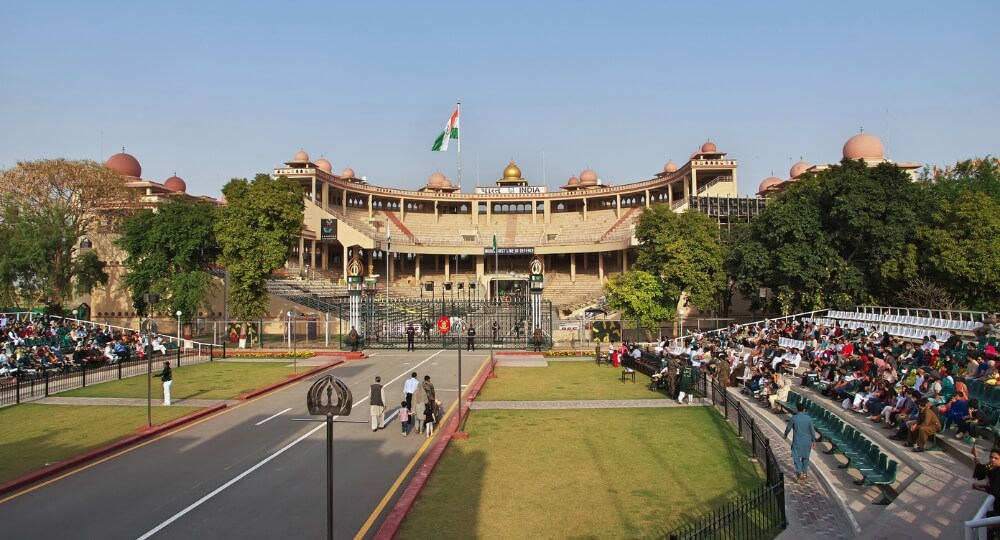
Beating the Retreat Ceremony

The Beating the Retreat Ceremony is one of the most interesting border ceremonies where border security forces of both countries perform a dramatic, high-energy drill that includes aggressive foot stomping and ends with them lowering their respective flags at sunset.

It is a treat to watch the vibrant and patriotic atmosphere with people from both sides cheering for their country and clapping as the ceremony unfolds.

Call us at +91 9940882200 to learn more about our Amritsar tour packages.

Best Time To Choose Amritsar Tour Packages

Amritsar experiences a subtropical climate with dry and hot summers and mild winters. The city has three distinct seasons: Summer, Monsoon, and Winter. The average annual temperature ranges from 23°C to 30°C, with an average yearly rainfall of 541 mm. Read on to learn more about the different seasons in the city and the best time to choose Amritsar tour packages.

Summer (April to June)

Summer starts by the last week of March and continues until June, when the climate is hot, dry, and humid. The temperature ranges from 34°C to 40°C and could even go up to 45°C during the peak of summer. What adds to the soaring temperatures is the hot, dust-laden winds blowing during the afternoons.

This is the best time to choose Amritsar tour packages, as accommodation costs are the lowest and tourist places are less crowded. The best time to visit Amritsar during summer is probably early April when Punjabis celebrate the harvest festival of Baisakhi. If you’re interested in participating in the Langar services, we suggest visiting the Golden Temple in June, when Sikhs celebrate Shaheedi Diwas to commemorate the martyrdom of Guru Arjan Dev.

Monsoon (July to September)

The monsoon in Amritsar is hot and humid during both day and night, thanks to the increased moisture in the air. However, nights become progressively cooler when the monsoon begins to withdraw in the later weeks of September. The average temperature during the monsoon ranges from 30°C to 35°C.

You can visit the city during the monsoon if you don’t mind the rain and humidity. Additionally, hotels offer discounts during the rains, and the crowds at the Golden Temple are fewer, making it easier to obtain darshan. The city, especially the outskirts, looks greener and cleaner. It’s also a great time to sample hot masala chai and pakode.

While there aren’t many festivals around the monsoon, women celebrate Teej, a festival where they gather together to sing and perform Giddha, and visit their parental homes.

October is the autumn season in Amritsar, and it is a pleasant time to visit the city. The temperature ranges from 25°C to 30°C, making it a perfect time to explore the outdoors. Be prepared for cool mornings and crisp evenings when celebrating some of the best autumn-related festivals in the city, including Karva Chauth, Sharad Purnima, and Dussehra, with Ravan Dahan as a highlight, when a massive effigy of Ravan is burned in an open ground.

Winter (November to February)

This is the best time to choose Amritsar tour packages, thanks to the pleasant weather and the cool climate. The temperature during this time ranges from 17°C to 7°C. The beautiful climate encourages tourists and locals to explore the city and its old markets.

Some of the festivals celebrated during winter include Gurpurab, commemorating the birth anniversary of Guru Nanak Dev Ji, the founder of Sikhism; Lohri; and Basant Panchami, a spring festival.

Top Tourist Attractions In Amritsar

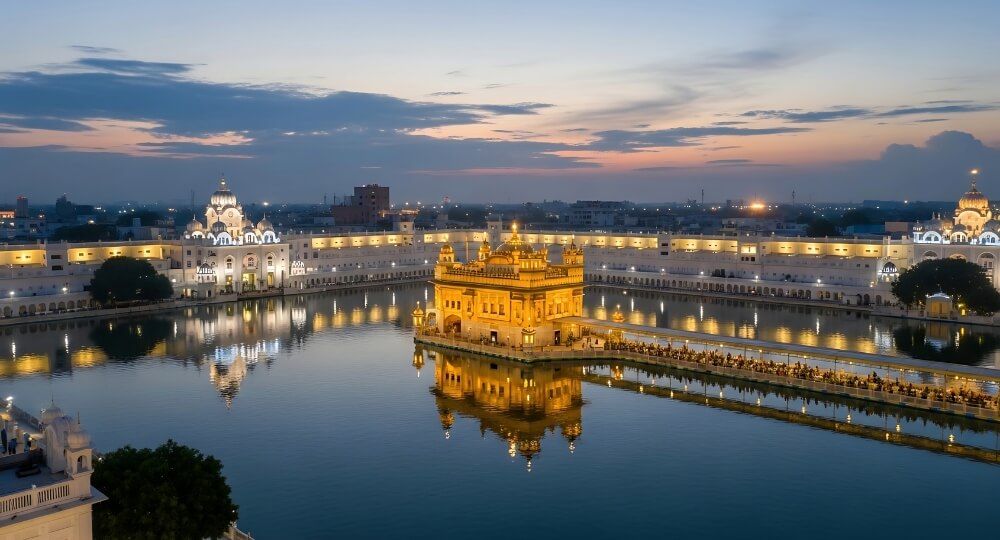
Golden Temple

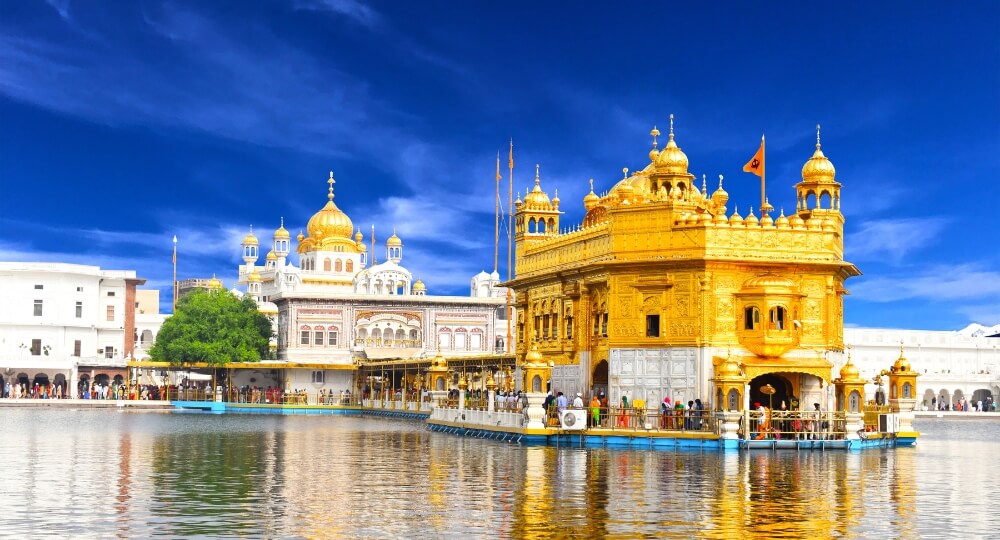
The Golden Temple is one of the most spiritual places for Sikhism and is actually called Sri Harmindar Sahib. Construction of the temple began in 1581 under the guidance of Guru Ram Das and was completed by the fifth Guru, Guru Arjan Dev, in 1604.

The temple is filled with symbols that are at the heart of Sikh teachings. For instance, Guru Arjan Das wanted the temple to be placed lower than the city to emphasise humility and submission. The four doors of the Golden Temple, with each door facing a cardinal direction, emphasise Sikhism’s core principle of openness and acceptance to people from all religions, castes, creeds, and economic statuses. The single causeway that leads to the temple through the Amrit Sarovar indicates that there’s only one path that leads to the divine. The reflective pool encourages introspection and looking inwards.

The temple boasts of detailed woodwork that narrates stories from Sikh history. Another highlight of the Golden Temple (besides the golden dome) is the intricately carved walls featuring Pietra Dura, an art in which marble is inlaid with coloured stones.

Contact us if you’d like to include a detailed tour of the Golden Temple’s architecture as part of your Amritsar tour packages.

Wagah-Attari Border

The Radcliffe Line, which divides India and Pakistan, passes through three Indian states and the Union Territory of Jammu and Kashmir. The Wagah- Attari border, which separates the erstwhile province of Punjab, is the most famous transit point, popular for its Beating the Retreat Ceremony.

Witnessing soldiers from both sides of the border lowering their flags is a must in our Amritsar tour packages. It is a treat to watch the spirited parade where soldiers from India and Pakistan perform a high-performance drill that includes staring fiercely at each other and twirling of moustaches.

The high-energy theatrics are cheered by thousands of visitors from both sides who shout Pakistan Zindabad or Jai Hind, depending on which side of the border you are watching from.

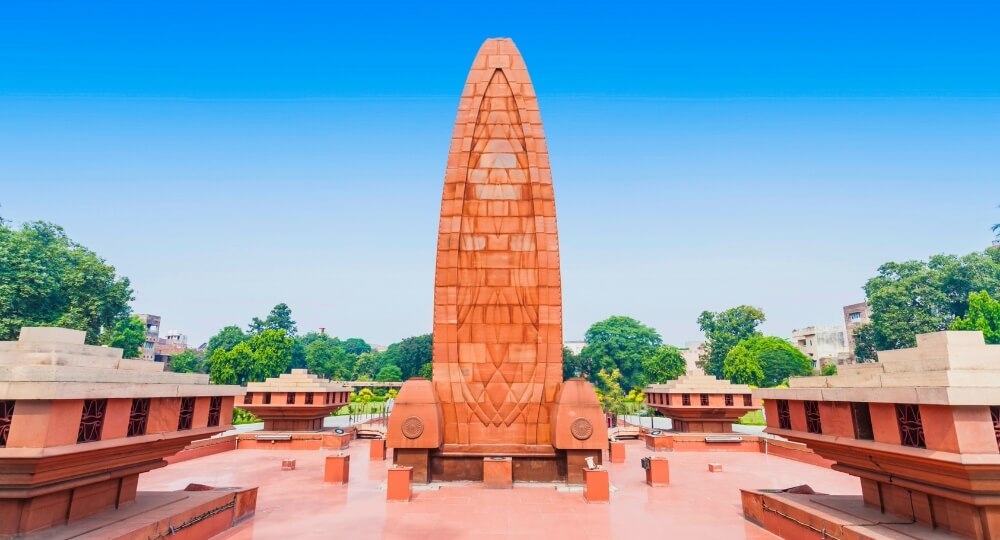
Jallianwala Bagh Memorial

This memorial was built and inaugurated in 1961 on the site where over 1000 peaceful protestors were shot dead on Baisakhi Day. These protestors had gathered to protest against the arrest of Dr Satyapal and Dr Saifudeen Kitchlew, who were, in turn, protesting the Rowlatt Act.

The highlight of the memorial is a flame-shaped, Flame of Liberty monument that rises 30 feet and is crafted from red stone. The surface is covered with over 300 slabs carved with the Ashoka Chakra and the faces, along with the names of the victims, immortalised in stone.

There’s also a flame that burns eternally to symbolise the enduring spirit of freedom and resilience.

Another poignant memory of the event is the narrow entrance that prevented people from escaping, and had soldiers at the end firing at the protestors.

A well, aptly called the Matry’s Well, tells the story of how hundreds of people fell into it to avoid the British soldiers randomly firing at them. One can also spot the bullet marks on the walls that missed the victims.

Call us at +91 9940882200 to learn more about our Amritsar tour packages.
Partition Museum

The Partition was undoubtedly one of the bloodiest events of independent India, affecting millions of people. The Partition Museum in Amritsar offers a comprehensive narrative of the events that led to the carnage, along with oral accounts from people who witnessed the event firsthand, and practical belongings donated by survivors and their families. One must visit this museum, especially if you are visiting with young children, to help them connect with events that shaped India’s history and appreciate the freedom that we all enjoy today.

Khalsa Campus

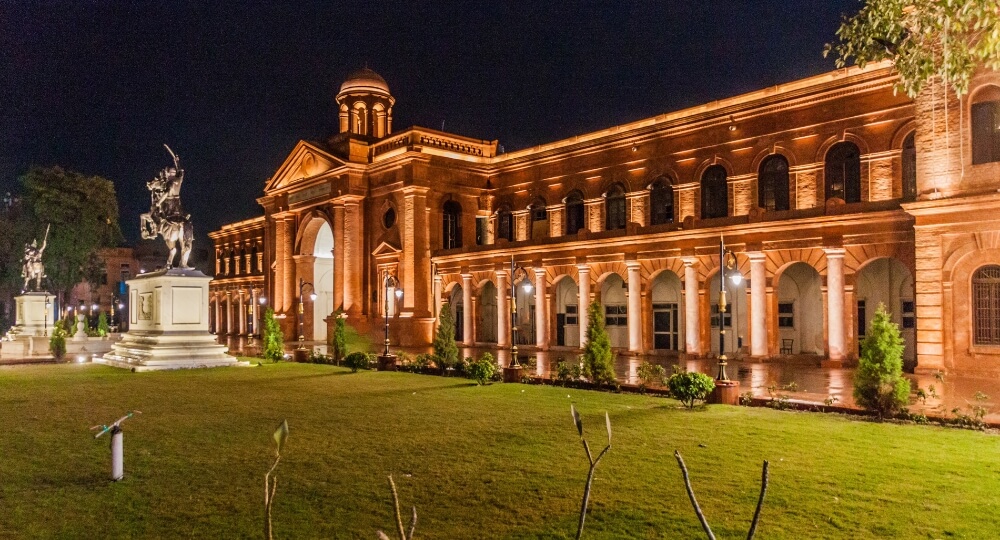
The Khala College in Amritsar was built in 1892 and designed by Bhai Ram Singh. The impressive architecture blends Sikh and British Colonial style design, looking nothing short of a grand Indian palace. It was granted the status of a heritage monument in 2017 due to its long history and exquisite architecture, including the grand windows and intricately carved pillars, the Jali Work on the entrance windows, and the multiple domed Chattris on the buildings. It also features a small museum with over 1500 artefacts depicting Sikh history, including weapons, books, and manuscripts.

Maharaja Ranjit Singh Museum

Maharaja Ranjit Singh was the founder of a powerful Sikh Empire, which at its height, extended from the Khyber Pass in the west to Tibet in the east, Kashmir in the north, and Sindh in the south. It was the last major power in the Indian sub-continent. The Maharaja Ranjit Singh Museum is an ode to the Lion of Punjab, who was just and kind to his subjects, yet fierce towards his enemies.

It offers glimpses of the king’s life, his conquests, along with artefacts like weapons, paintings, coins, and ornaments.

The building hosting the museum, the Ram Bagh Palace, which was his summer residence, is equally impressive.

Ram Tirath Temple

The legend of the Ramayana lives on in Punjab through the Ram Thirath Temple, also known as Valmiki Tirath Sthal. It is believed that the Sage Valmiki sheltered Sita and her twin sons, Luv and Kush, at his ashram at the very place where the temple is now built.

The temple features an ancient tank, along with numerous shrines, and a stairwell where Sita Devi is believed to have taken a bath. There’s also a hut that’s supposed to be the place where Sita Devi gave birth to her twin sons.

Batisi Hatta

Battisi Hatta refers to a street with 32 shops, established by the first group of people who settled in the newly founded city of Ramdaspur (now known as Amritsar), at the request of Guru Ram Das, the fourth Sikh Guru. The shops still stand there and can be explored during a Heritage Walk with our Amritsar tour packages.

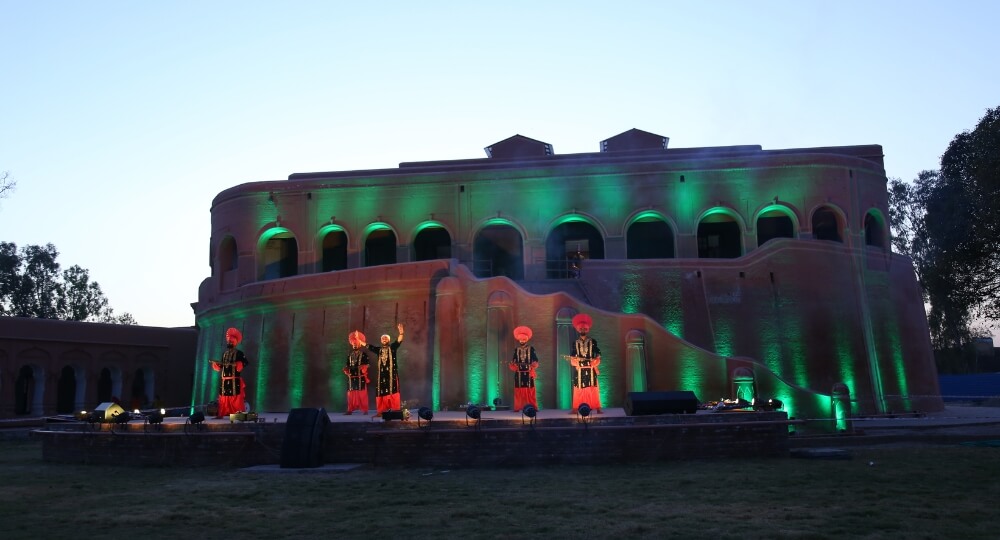
Gobindgarh Fort

This imposing 18th-century fort was built by Sardar Gujar Singh Bhangi and was once famous for housing the Koh-i-noor diamond. It was once called Bhangian da Kila, after its founder. The fort was later captured and renovated by Maharaja Ranjit Singh, who renamed it Gobindgarh in honour of the 10th Sikh Guru, Guru Gobind Singh.

The fort was also used as a refugee shelter during Partition when thousands of refugees fled from Pakistan.

Today, it houses several museums, art galleries, and rare artefacts belonging to the erstwhile Sikh empire.

Durgiana Temple

Located at the heart of Amritsar and built in 1921, the Durgiana Temple is modelled after the Golden Temple. It is one of the most important Hindu temples in Amritsar. Within the complex, the temple features dedicated shrines for Goddess Durga, Lord Krishna, and Laxmi-Narayan. It is believed that Lord Rama visited here during the Ashwamedha Yagna.

Hall Bazaar

Hall Bazaar is one of the best places to enjoy street shopping in Amritsar. This bustling market, located at the heart of the city, offers a diverse range of shopping and dining options. You can choose from handmade Phulkari Dupattas, Juttis, Salwar Suits, woollen garments, hand-painted pottery, and leather goods. There are numerous shops selling electronics and books, as well as wooden furniture and brassware.

And if you’re a foodie, there are several restaurants and street food stalls selling Amritsari Kulcha, Aloo Tikki, and Chole Bhature.

Katra Jaimal Singh Market

The Katra Jaimal Singh Market is one of the premier shopping destinations in Amritsar, featuring a diverse array of retail outlets and food stalls. You can buy Pashmina Shawls, embroidered Dupattas, tailored suits, and silk ties. Punjabi street food favourites like Chicken Tandoori and Parathas.

Lahori Gate Market

This is another landmark market with several showrooms selling cotton suits, dressing materials, and Pashmina Shawls. It is also a great place to shop for eatables like Wadiyan, Amritsari Papad, and pickles.

Heritage Street

The stretch that leads to the Golden Temple from Town Hall is called Heritage Street and is a great way to understand Amritsar’s history. The street, which was once shabby and littered with billboards, neon signs, and electrical wire meshes hanging overhead, has been transformed into a beautiful heritage site, offering a glimpse of Amritsar as it existed 400 years ago. The building facades were refurbished, public lighting spaces were revamped, the area was cleaned, and tiled pathways were laid. The revamped Heritage Street now feels like an Eastern European boulevard with statues of historic leaders, tiled pavements, bright lampposts, and old Indo-Saracenic style buildings with their Jharokas and Chatris.

Sadda Pind

This is a live cultural museum that offers visitors a glimpse of a typical Punjabi life. It includes culinary experiences, accommodation options, Bhangra and Gidda sessions, and even fun activities like riding on a tractor.

Nearby Cities You Can Visit in Amritsar Tour Packages

Jalandhar

Famous Attractions: Temples, Sports Goods Industry, Street Food, Markets

Top Tourist Places: Devi Talab Mandir, Baba Sodal Temple, Wonderland, Baba Nihal Singh Ji Gurudwara

Pathankot

Famous Attractions: Temples, Forts, Wildlife Sanctuary

Top Tourist Places: Kathlour Kushlian Wildlife Sanctuary, Ranjit Sagar Dam, Mukteshwar Dham Temple, Shani Dev Mandir, Shahpurkandi Fort

Jammu

Famous For: Temples, Gardens, Shopping, Palace

Top Tourist Places: Vaishno Devi Temple, Raghunath Temple, Peer Baba Dargah, Bahu Fort, Mubarak Mandi Palace.

Ludhiana

Famous Attractions: Museum, Fort, Gurudwara, Mall

Top Tourist Places: Gurudwara Dukh Niwaran Sahib, Gurudwara Nanaksar Sahib, Lodhi Fort, Maharaja Ranjit Singh Museum, Rakh Bagh Park, Phillaur Fort

Dalhousie

Famous For: Mountain Peaks, Trekking, Wildlife Sanctuary, Lakes

Top Tourist Places: Khajjiar, Kalatop Wildlife Sanctuary, Dainkund Peak, Panchpula, Chamera Lake, Tibetan Handicrafts Market, Satdhara Falls

Una

Famous For: Temples, Lake, Fort

Top Tourist Attractions: Dera Baba Vadbhag Singh Ji, Chintpuri Temple, Sheetla Mata Mandir, Dharamshala Mahanta

Shopping

  • As Punjab’s cultural capital, Amritsar offers an immersive shopping experience. It is one of the best places to shop for traditional Punjabi handicrafts and food staples of Punjabi cuisine. Some of Punjab’s markets, like Hall Bazaar, are centuries old and an excellent place for bargain lovers.
  • Phulkari Dupattas are traditional Punjabi hand-embroidered shawls made using the darn technique using silk threads on cotton cloth. They look rich and are almost wearable art.
  • You cannot leave Punjab without shopping for Punjabi Juttis, available in vibrant colours and handcrafted using quality leather.
  • And if you love Punjabi cuisine, don’t forget to shop for the ingredients that make it special. This includes Papads, Wadiyan, Pickles, and the special Masalas from some of the old shops in Amritsar.
  • Amritsar is also a great place to shop for traditional Punjabi jewellery like Maang Tikkas, Kadas, and Rani Haars.
  • Some of the places you can buy these items include Hall Bazaar, Lahori Gate Market, Katra Jaimal Singh Market, Guru Bazaar, Shastri Market, and Rani ka Bazaar.

Call us to learn more about our Amritsar tour packages.
Dos and Don’ts of Visiting Amritsar

  • Do not discuss political issues like Khalistan, separatism, etc., as they are sensitive subjects.
  • Dress modestly when you visit Amritsar’s Gurudwaras and do not visit these places under the influence.
  • Do not be late for the Wagah Border Ceremony, as it can get very crowded and there are multiple checkpoints on the way to the border.
  • The locals are friendly and helpful, but if you’re travelling alone, it’s better to be safe than sorry.
  • Don’t miss Amritsar’s iconic street food. However, avoid tap water – we recommend sticking to bottled water instead.
  • If you have the time, do volunteer at the Harminder Sahib – it’s a once-in-a-lifetime experience.
  • There’s plenty of chaos in Amritsar’s streets – we suggest keeping an open mind when experiencing the city’s culture.

Call us at +91 9940882200 to learn more about Amritsar tour packages.

Food

If you’re a foodie, there’s no better place to be than Amritsar. The city is renowned for its exceptional Punjabi cuisine, which is both delicious and affordable. You can sample some of the best Mutton Chaap, Amritsari Fish Tikka, Khulcha, Gobi and Aloo Paratha, Tandoori Chicken, Chole Bhature, Paneer Dishes, Hot Jalebi and Gulab Jamun, Samosa, Petha, and Lassi.

Some of the famous foods you must try with your Amritsar tour packages include:

  • Amritsari Khulcha: This is a legendary breakfast served with sweetened curd, pickle, tangy chutney, and Chole Curry.
  • Tandoori Chicken: Tandoors or clay ovens are a popular kitchen equipment that can cook chicken, along with fish, Paneer, Roti, and Naan.
  • Aloo Tikki is a popular snack made using spiced potatoes and shallow-fried until crisp.
  • Jalebi: A sweet and syrupy dessert made by frying batter in oil and dipping it in sugar syrup.

Some of the best places to sample the city’s rich culinary specialities include the Kesar da Dhaba Lane, Lawrence Road, Galliara, and Hall Bazaar.

Travel Tips

visa_information_icon

Visa Information

Check visa requirements before traveling, ensuring a smooth entry and compliance with destination regulations.

health and safety tips icon

Health and Safety Tips

Prioritize health, stay hydrated, follow safety guidelines, and maintain personal hygiene for a secure journey.

currency and tipping icon

Currency and Tipping

Familiarize with local currency, consider customary tipping practices for respectful and seamless travel experiences.

Share Your Ideal Tour: Let Us Customize!

FAQs:

What is the best time to choose Amritsar tour packages?
October to March is the best time to explore Amritsar, as the weather is cool and pleasant. December to February can be cold with daytime temperatures averaging at 20°C and nighttime temperatures dropping to 7°C.
How many days do I need to explore Amritsar?
Amritsar is typically included in our broader Punjab tour packages or North India tour packages, and the trip typically lasts 1 to 2 days. But if you are looking for exclusive Amritsar tour packages, we suggest staying here for 2-3 days.
Can I customise my Amritsar tour packages?
Yes, you can always customise your itinerary to include or remove certain attractions.
What should I know before visiting the Golden Temple?
Men and women must cover their heads and dress modestly, taking care to cover their shoulders and knees when visiting the Golden Temple. They must also refrain from wearing shoes and socks within the temple.
What should I buy from Amritsar?
Phulkari dupattas, Juttis, Patiala suits, Kundan jewellery, and masalas.
What are some popular street foods I must try in Amritsar?
Amritsari Khulcha, Makki di Roti and Sarson da Saag, Aloo Tikki, Chole Puri, Gobi Parathe, Lassi
Are there vegetarian options in Amritsar?
Yes, there are plenty of vegetarian options in Amritsar thanks to the city’s strong vegetarian culture. But if you’re vegan, it’s important to mention this beforehand, as Punjabi food is heavy on cream and ghee.
Can you stay within the Golden Temple?
Yes, you can stay within the Golden Temple Complex by booking one of the many free dormitories and lodgings. But the amenities are minimal yet clean. However, you must dress modestly and not use tobacco, alcohol, or other intoxicants.

Book Your Dream Vacay Today!

=
×

Enquire Now

=