1

Tour Package

Badami Tour Packages

Ancient Cave Temple Capital of Karnataka

SUPER DEAL PRICE

STARTS FROM

per person on twin sharing
Time Zone:
One of Karnataka’s Historic Towns: Badami
South India’s No.1 Travel Brand
Badami Fort
Ancient hilltop fort in Karnataka
October - March
Best Time to Visit Badami
Badami Cave Temples
Four rock-cut caves in Karnataka
Kannada, English
Languages Speaking
Essential Tips for Travelling to Badami
ATMs

ATMs are available in major market areas.

Credit Cards

UPI and cash are widely accepted.

Bank

Banking facilities are available in the main areas.

languages

English is understood in most tourist areas.

Safest

The people of Badami are known for their hospitality.

Badami - Overview

badami karnataka map

By Purpose

tour package tourism

Couples

For Newlywed Vacations

tour packages business

Family

For Family Vacations

Top Attractions and Nearby Sights

Aihole

Agastya Lake

Bhutanatha Temple

Badami Fort

Mallikarjuna Temple

Pattadakal

Malegitti Shivalaya

Upper Shivalaya

Banashankari Temple

Badami Cave Temples

Mahakuta Group of Temples

Archaeological Museum Badami

Everything You Need to Know About Badami

The ancient city of Vatapi (now called Badami) was, in its heyday, a rich and powerful city and the capital of the Chalukyas until the 8th century. It is believed that traders sold diamonds, pearls, and other precious stones in markets alongside other everyday goods. It was also the battleground of a brutal war fought between the two influential dynasties of the century, the Chalukyas and Pallavas. But that’s not why the town attracts tourists today. The Chalukyas made Badami forever memorable by building elaborate rock-cut Hindu and Jain temples. Badami is now part of the Pattadakal-Aihole-Hampi tourist circuit, a premier heritage circuit in North Karnataka. To learn more about Vatapi’s architectural heritage, check out our Badami tour packages.

Table of Content:

About Badami

Badami is now a nondescript town in the Bagalkot District of North Karnataka, surrounded by red sandstone cliffs and rock-cut cave temples. But during its heyday, the city of Vatapi (as Badami was once called) was rich and influential, and the capital of the powerful Chalukya dynasty. The Chalukyas ruled Badami from 543 CE to 753 CE, when the last ruler Kirtivarman II was overthrown by the Rashtrakutas. The Chalukyas are credited with introducing the Vesara style of architecture, which beautifully blends Dravidian and Nagara elements, bringing together South Indian and North Indian temple architectural styles. It is these temples that are now attracting tourists from across the world to Badami.

History

As mentioned earlier, Badami, or Vatapi, was the capital of the great Chalukya Dynasty. Pulakeshin I, the founder of the Chalukya Dynasty, who was a feudal chief of the Kadambas, broke free from them and established the Vatapi Chalukya Dynasty. He chose Vatapi as the capital because of its strategic location. The city was surrounded by towering sandstone hills that naturally fortified the city and protected it against invasions. Pulakeshin I is known for building the Vatapi Fort above the town and also initiated construction of temples and cave temples, which were later completed by his sons. Pulakeshin I’s sons, Kirtivarman I and Mangalesha, are also believed to have constructed the Agastya Lake to ensure a water supply to this parched land.

While the cave temples were built by Pulakeshin I’s successors, such as Pulakeshin II, Mangalesha, and Kirtivarman, other significant temples, such as the Bhutanatha temple, were renovated during the time of the Kalyani Chalukyas in the 11th century.

The Yellamma Devi Gudi was also built much later in the 12th century during the reign of the Kalyani Chalukya king Jagadekamall II.

Badami was the capital of the Chalukyas until the 8th century, when the Rashtrakutas defeated Kirtivarman II, the last Chalukya ruler. The town remained an important cultural centre, passing under the control of the Kalyani Chalukyas, Hoysalas, Vijayanagara Kings, and even the Adil Shah dynasty. It finally fell under British rule after they took control of Vatapi from the Marathas.

Geography

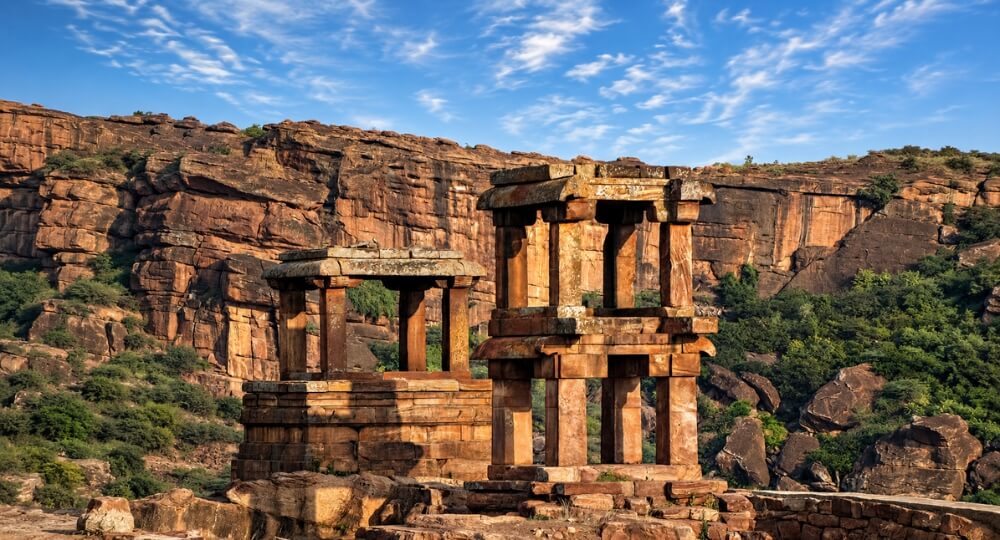
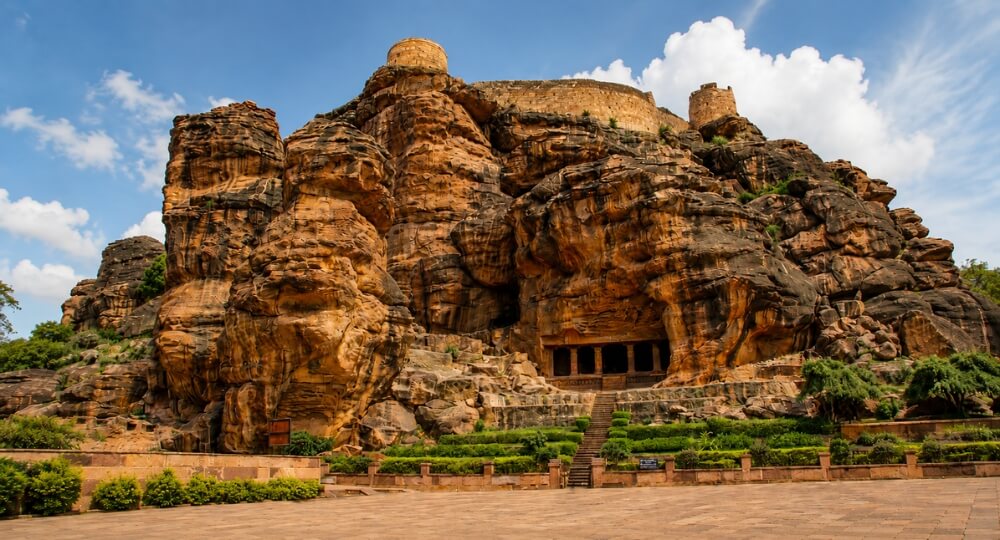
Badami is an upland region in the Bagalkot District, characterised by its arid, rocky terrain. The town is known for its natural landscapes – monumental red sandstone cliffs that stood like eternal guardians, protecting it from the Pallavas to the south and the Rashtrakutas to the north.

The region receives little rainfall. In fact, there have been times when the season’s first rainfall did not start until August. It is very common for June and July to remain dry, even as the rest of the country reels under monsoon rains.

It is for this reason that the Chalukya kings constructed the Agastya Tank, also called Agastya Theertham – it helped harvest every drop of rainwater that fell from the cliffs. Even in places where the water would otherwise flow into another valley, embankments were built to redirect it into the Agastya Lake. As a result, you will never find the tank dry, even during peak summer. An hour’s worth of rain in the neighbouring areas is sure to raise the tank’s water level by a foot.

Economy

Tourism is the main source of employment in this small town. It also supports tourism-related trades such as hospitality, transportation, food and beverage, entertainment, and local artisanal retail. While agriculture isn’t as common, locals do cultivate drought-resistant crops such as jowar, bajra, groundnuts, and green gram. Sunflower cultivation is also prominent in regions around Badami.

Tidbits About Badami

  • Badami is over 1000 years older than Hampi, although the latter is a UNESCO World Heritage Site.
  • Some believe that Badami gets its name from the Badam (almond) coloured red sandstone rocks that dot the landscape.
  • The Agastya Lake is a manmade lake carved out of sandstone around the 5th to 7th century.
  • The famous Carnatic Kriti Vatapi Ganapatim is based on the Vatapi Ganapati statue bought to Tiruchenkattankudi by the Pallava general Paranjothi.
  • Vatapi is associated with the myth of the demon Vatapi, who was killed by Sage Agastya.
  • The city was inhabited even before the Chalukyas established their capital here. This can be attested by the presence of several prehistoric dolmens.
  • Cave No. 3 in Badami is South India’s oldest dated cave temple, dating back to 578 CE.

Things to know Before Booking Badami Tour Packages

  • Badami is part of the North Karnataka UNESCO Heritage Sites Circuit, covering Hampi, Aihole, and Pattadakal as well. Check if these destinations are included in your itinerary.
  • It is best to book Badami tour packages in winter as temperatures could soar up to 40°C. The rocky landscape only exacerbates the heat.
  • Even during the winter months, prioritise early morning or late evening visits to the cave temples.
  • Prepare yourself for long walks and trekking on uneven terrain when exploring the cave temples and the Badami Fort.
  • Don’t forget to hire a local guide to explain the history and architecture of the 6th -7th century monuments.
  • To avoid long queues, we suggest booking tickets to the cave temples. Scan the QR code at the counter and enjoy your tour.
  • Carry bottled water during your Badami tour. The heat can be insufferable.

Badami At A Glance

Category Details
State Karnataka
High Season October to March
Languages Spoken Kannada, English
Famous Tourist Attractions Agastya Lake, Badami Fort, Sri Bhootanatha Temple, Cave Temples, Archaeological Museum, Mallikarjuna Temple
Things To Do Trekking, Rock Climbing, Photography
Famous Food Jolada Rotti, Garlic Chutney, Badanekayi Ennegayi
Souvenirs To Buy Lambani Handicraft, Stone Sculpture/Lamps, Banana Fibre Handicrafts, Ikkal Handlooms, Kasuti Embroidery

Top Reasons To Choose Badami Tour Packages

Cave Temples

Caves 1 to 4 are one of the main attractions of Badami, carved between the sixth to eighth centuries and dedicated to Hindu and Jain gods. These cave temples are home to some intricately carved sculptures.

Cave 1 is dedicated to Lord Shiva and features an 18-armed Nataraja statue along with his son Ganesha and the Nandi beside him. Other intricate sculptures include an image of Harihara, a deity representing half-Shiva and half-Vishnu.

Cave 2 is dedicated to the Vaishnavite tradition and includes sculptures of various forms of Vishnu, including Vamana, Varaha and Trivikrama. You will also find friezes depicting mythological stories like the Samudramanthan in the cave.

Cave 3 is the oldest and is dedicated to Vishnu with images of Trivikrama, Narasimha, and Varaha. You will find friezes depicting the wedding of Shiva and Parvati. This cave also features frescoes depicting deities.

Cave 4: This may have been a Jain shrine featuring Jaina icons and deities such as Bahubali. The pillars are lavishly decorated and feature images of Mahavira and Parshavnath.

There is also a fifth cave that some believe is of Buddha, while others claim it is of Vishnu.

Manmade Tank

The Agastya Lake is a manmade reservoir built to preserve whatever little rain Badami receives. The tank is designed so that every drop of rainwater that falls on the surrounding cliffs flows into it. Even in areas where rainwater is likely to flow into other valleys, embankments have been built to divert it to the tank. This has helped the Chalukyas maintain a flourishing city even when water was scarce. In fact, an hour of heavy rainfall is enough to fill the tank.

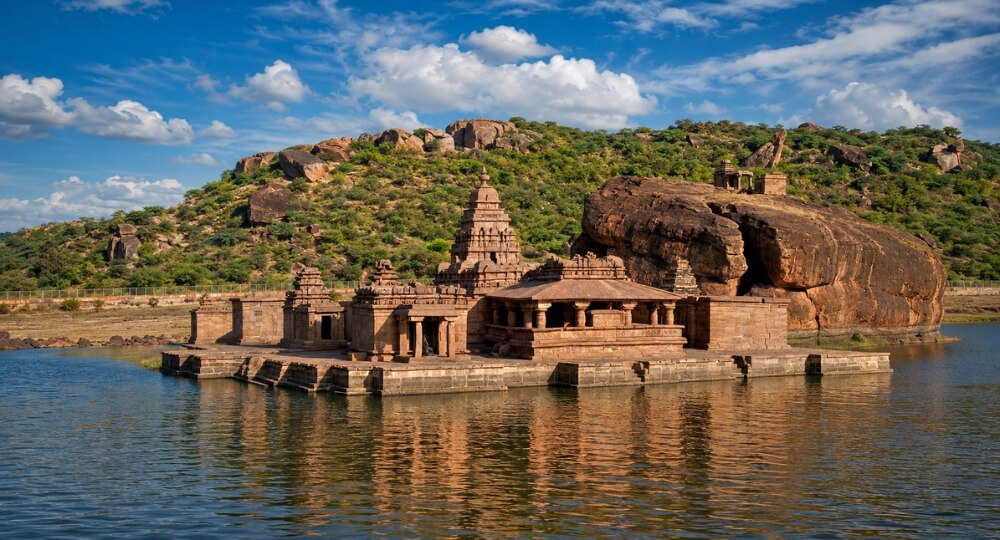
It is considered a holy tank, and is also called Agastya Theertha by locals, who believe that it has healing properties. The tank, which could easily be over 1300 years old, also offers a picturesque view of the surrounding landscape, especially of the Bhutanatha Temple, dedicated to Lord Shiva.

Landscape

What makes Badami so magical are the beautiful red sandstone cliffs that contrast with the algae-ridden Agastya Lake. The rugged terrain and dramatic cliffs look especially impressive during the monsoon, when the surrounding shrubs are lush and vibrant.

In fact, Badami is nestled within the steep, craggy hills that form a horseshoe-shaped valley that once protected the city from invaders. The cliffs of Badami were inhabited long before Pulakeshin I made them his capital. Even today, you can find dolmens that probably date back to the Lower Palaeolithic Age.

Trekking

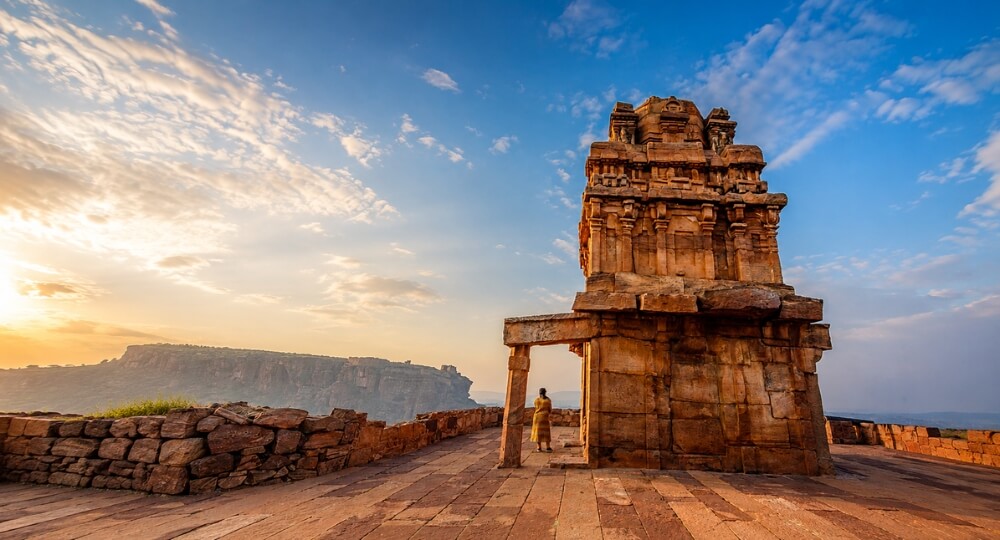
One of the best ways to enjoy the rock-cave temples of Badami is by trekking up the Northern Hills through the pathways between the rocks. If you love trekking or rock climbing, let us know in advance when booking your Badami tour packages. Our tour manager can connect you with professional trekkers who will take you on one of Vatapi’s many trails. The Shivalaya Gudi trail takes you to a set of three temples built between the 6th and 8th centuries.

Trekking in the Northern Hills offers a panoramic view of the caves and temples. You can also trek up to the Southern Hills to explore 4 rock-cut caves.

The Upper Shivalaya trek is safe and easy, especially for older people. It offers a view of the surrounding forests.

Or head to Mahakuta, a village approximately 17 km from Badami, famous for its 6th-7th-century temples. You can trek from Agastya Lake, following the trail to reach Mahakuta. The highlight of the trek is a dip in the Vishnu Pushkarni and the Papavinasha Tirtha.

Historic Structures

The cave temples are not the only tourist attraction in Badami. For instance, the Badami Fort was built in the 6th century by Pulakeshin I, the founder of the Badami Chalukya dynasty. It served as the capital of the Chalukyas until the 8th century. The fort was also occupied by Tipu Sultan in the 18th century during his conflict with the Marathas and the British.

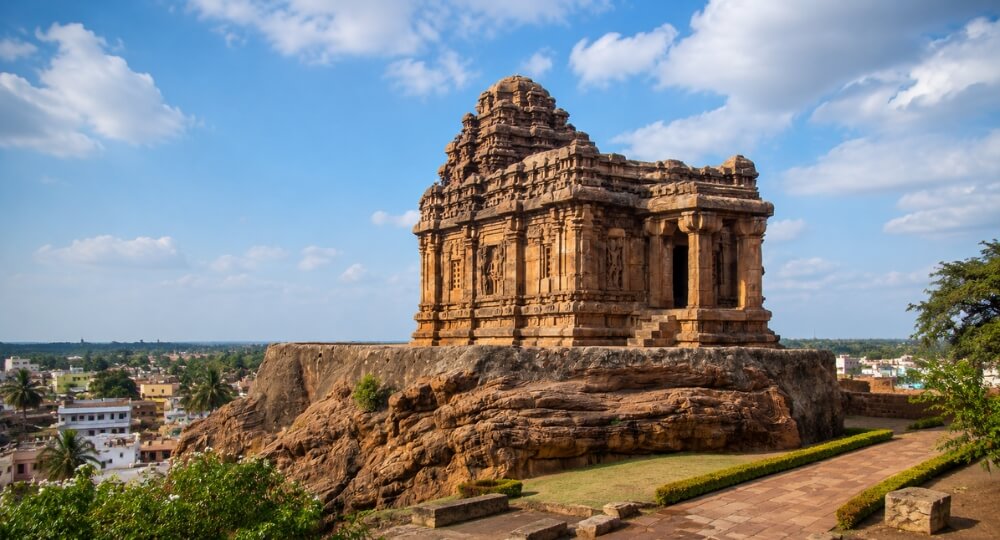
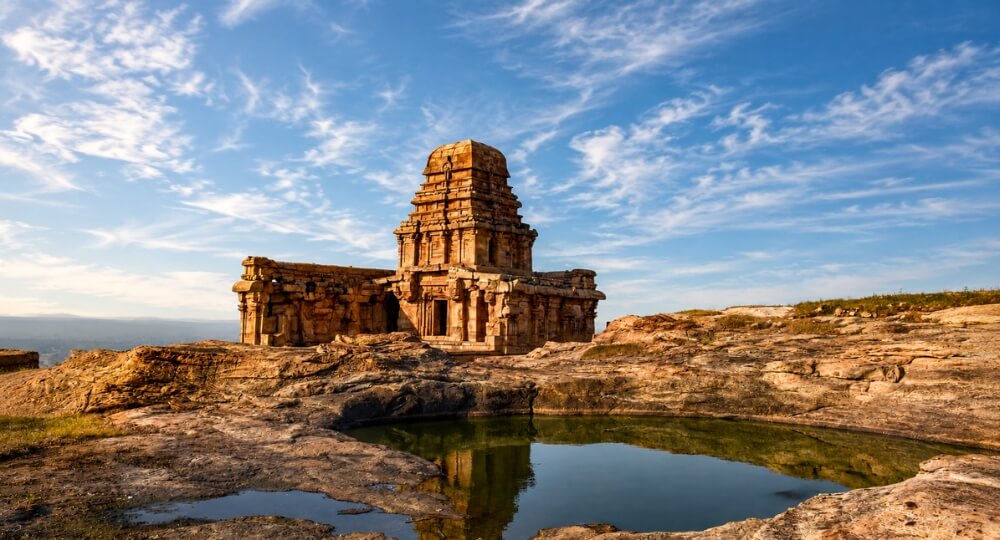
The Malegitti Shiva Temple, perched atop a huge boulder overlooking Agastya Lake, is one of the earliest temples in Badami and features Dravidian architecture. You will find intricate carvings of dancers, deities, and other mythological figures.

The Bhutanatha Temple, dedicated to Lord Shiva, is located on the banks of the Agastya Lake and features architecture that blends early Badami Chalukya and later Kalyani Chalukya influences.

UNESCO World Heritage Sites

The regions of Badami – Pattadakal – Aihole are recognised by UNESCO for their contribution towards the evolution of temple architecture. While Badami isn’t per se on the UNESCO World Heritage List, the neighbouring Pattadakal and Aihole are recognised for their Chalukyan architecture, which harmoniously blends Dravidian and Nagara styles.

Pattadakal is a group of Hindu and Jain temples on the Malaprabha River. It is home to the famed Virupaksha Temple that inspired the Kailasa Temple of Ellora and the Mallikarjuna Temple, built in the 8th century.

Aihole, another heritage site that shares its UNESCO World Heritage status with Pattadakal, is famed for its sandstone Hindu and Jain temples built between the 5th and 12th centuries. The architecture here blends Dravidian and Nagara styles and depicts stories from mythologies through sculptures and rockcut panels.

Part of North Karnataka’s Heritage Circuit

Badami is just one of the many heritage towns in North Karnataka, famous for its architectural marvels. For instance, Hampi features the ruins of the Vijayanagara Empire, offering a glimpse of this erstwhile glorious kingdom. Pattadakal and Aihole are equally famous and are often called the Cradle of Indian Temple Architecture for their group of temples that blend Dravidian and Nagara architectural styles.

Bijapur is another famous town known for its Islamic architectural marvels, such as the Gol Gumbaz and the Jamiya Masjid.

Hubbali and Dharwad are known for the Banashankari Temple and the Kittur Fort, respectively.

Belagavi is famous for its Suvarna Falls and the historic Belagavi Fort.

Best Time To Choose Badami Tour Packages

Badami experiences a tropical and arid climate with hot summers, mild winters, and moderate monsoons. The region does not receive much rainfall – in fact, it is common for Badami to not receive its first rainfall until August. Read on to learn more about the different seasons in this heritage town and the best time to choose our Badami tour packages.

Summer (March to July)

Badami’s arid geography leads to intense heat, with average temperatures around 37°C. It is far inland and surrounded by sandstone cliffs with very little green cover. This makes it almost impossible to explore the cave temples during the day. Sometimes, temperatures can reach 40°C during the day in summer. Although it is slightly pleasant during early mornings and late evenings, the caves are likely to be crowded at these times, as everyone wants to make the most of the cooler temperatures. If you do not mind spending the day within the resort and exploring Badami and neighbouring Pattadakal and Aihole in the evenings (or mornings), consider booking Badami tour packages in summer.

Early summers, i.e., late March to early April, is a great time to explore Badami as you can combine the visit with the Virupaksha Festival in Hampi. It is also a great time to witness Ugadi festivities, a spring-summer festival celebrated across Karnataka and Andhra Pradesh.

Monsoon (August to September)

While the rest of the country experiences monsoon from June, it is not uncommon for Badami to experience the season’s first rain showers in August. But rain does transform Badami’s rocky landscape. For one, rain brings some of Badami’s seasonal waterfalls, like the Akka-Thangi cascades, to life. High winds during the rains only add to the dramatic effect, as the water seems to flow upwards.

Rain also brings the shrubs to life, turning them lush green and offering a stark contrast to the red sandstone cliffs. The neighbouring towns of Pattadakal and Aihole are equally beautiful during the monsoon. The average temperature during the monsoon in these regions ranges from 29°C to 32°C, making it moderately pleasant to visit Badami, though we suggest checking for heavy rain forecasts when booking Badami tour packages during the monsoon.

Winter (October to February)

This is one of the best times to book Badami tour packages, thanks to the pleasant weather, with temperatures ranging from 27°C to 31°C and dropping to 16°C at night. It is also a great time to explore this heritage town, as many events are held during this period.

The Chalukya Utsava is one of the most prominent festivals celebrated in Pattadakal in January to celebrate the architectural contribution of the Chalukyas. The Hampi festival is held in February and features music, dance, and puppetry. Head to Badami if you’d like to experience the Banashankari Devi Jatra in January. The Mallikarjuna Temple festival is also celebrated during this time.

Top Tourist Attractions In Badami

Cave Temples

The four cave temples of Badami are famous for their intricate red sandstone sculptures. These cave temples represent some of the earliest examples of Hindu temples in the Deccan Plateau region. The caves are arranged from one to four and represent different sects like Shaivism and Vaishnavism. You will also find a cave dedicated to revered figures in Jainism, which shows the Chalukyas’ secular nature.

Cave 1 is known for its fantastic 18-armed Nataraja statue with his son Ganesha and the Nandi beside him. Inside the cave, you will find interesting images of Harihara, i.e., half-Vishnu and half-Shiva, Laxmi, Parvati, Ganesha, and Karthikeya.

Cave 2 lies above Cave 1 and was sculpted between the 6th and the 7th century. There are 62 steps leading to the cave with sculptures of Vishnu and his avatars, including Trivikrama and Varaha. You will find friezes representing major Hindu texts like the Samudramanthan and the birth of Krishna.

Cave 3 is the oldest, carved between 575 and 585 CE, and bearing the inscriptions of Mangalesha, the third ruler of the Chalukya dynasty. This cave is also dedicated to Vishnu and features multiple avatars of the lord, including Trivikarma and Narasimha. Don’t miss the rare depiction of the four-armed Sheshanaga in Cave 3 along with fresco paintings on the walls, ceilings, and pillars.

The fourth cave is dedicated to Jain icons and was probably carved in the 7th century and renovated around the 11th century. The pillars are lavishly decorated and feature images of Parshavnath, Mahavira, and Bahubali.

There’s also a fifth cave, probably dedicated to Buddhist icons, but it is often considered controversial because many believe it represents Lord Vishnu.

Agastya Lake

This is South India’s largest man-made tank, constructed around the 5th century to harvest the scant rainfall from the surrounding hilly terrain. In fact, the tank is so well designed that water from nearby hillocks is also diverted to the Agastya tank through embankments. An hour’s amount of good rain, even in the surrounding areas, is enough to fill the tank during the monsoon. On the banks of the lake are the Bhutanatha and Mallikarjuna temples.

Bhutanatha Temple

The Bhutanatha Temple is dedicated to Lord Shiva and includes a cluster of temples built in the 7th century by the Kalyani Chalukyas, blending Dravida and Nagara architectural styles. Within the temple, you will find a Shiva Linga along with the Nandi, carvings of Yamuna and Ganga riding their respective vehicles, the tortoise and the crocodile. You will also find images of Ganesha and Mahishasuramardini along with inscriptions announcing gifts from wealthy families. This beautiful masterpiece of the Kalyani Chalukyas looks even more mesmerising against the backdrop of the red sandstone cliffs that surround it.

Malegitti Temple

The Malegitti Shivalaya is a 6th-century rock-cut temple built during the Chalukya dynasty. The temple is carved from a single monolithic rock, using nothing but hammers and chisels. The temple is dedicated to Lord Shiva, depicted through a Shiva Linga. It also features intricately carved deities, mythological figures and friezes from the Ramayana and Mahabharata. Also called Upper Shivalaya, the temple is about a kilometre from the Badami Cave Complex and involves a moderate hike that requires climbing a series of uneven stones. But the trek to the temple is worth it, offering panoramic views of Agastya Lake and the town.

Badami Fort

There are two forts in Badami, both built by Pulakeshin I in the 6th century. While the lower fort encloses the city, the upper fort is built on a cliff and houses two temples, the Upper Shivalaya and the Lower Shivalaya. It was destroyed by the Pallavas but later rebuilt by Tipu Sultan, who fortified it with double walls and even constructed a mosque-like structure.

Yellama Gudi Temple

The Yellama Gudi is located near Agastya Lake and is one of the many standalone temples built by the later Chalukyas. It is dedicated to Goddess Yellamma, also known as Renuka Devi, a manifestation of Goddess Parvati. It was built by the later Chalukyas, known as the Kalyani Chalukyas, after they regained Badami from the Pallavas. The temple features an architectural style peculiar to the Chalukyas, which blends Nagara and Dravidian styles.

Mahakuta

Mahakuta is a quaint village a few kilometres from Badami. It is famous for its group of temples dedicated to Lord Shiva and built between the 6th and 7th centuries by the Badami Chalukyas. The temples are also called Dakshina Kashi, i.e., Varanasi of the South, and are known for their Mahashivratri celebrations. Within the temple complex, you will also find a large tank, called Vishnu Pushkarani, that feeds water from the nearby spring. There’s also another ablution tank, called the Papavinasha Tirtha, where devotees take a dip before.

Archaeological Museum

Established in 1982, the Archaeological Museum in Badami helps curious tourists understand the impact of the Chalukyas on the development of the region’s temple architecture. The museum houses several artefacts like sculptures, ancient coins, iron implements, and panels depicting stories from ancient mythologies. You will also find a large-scale model of the prehistoric cave at Sidlaphadi.

Akka Tangi Falls

This seasonal waterfall is best visited between July and October, when the monsoon causes the water to flow dramatically from a height of 170 metres, offering a picturesque view for tourists. Rain causes water from the cliff, making it a popular spot for tourists and animals alike.

Aihole

Pattadakal is a UNESCO World Heritage Site, known for its cluster of temples built around the 7th century by the Badami Chalukyas. Located on the banks of the Malaprabha River, Pattadakal gets its name from its association with the Chalukya kings’ coronations. It was also culturally significant and home to several Hindu and Jain temples. Sangamesvara is the oldest temple dedicated to Vijayaditya Satyasraya from the late 7th century. Other notable temples in Pattadakal include the Kadasiddheswara and the Jambukeshwara deities.

The Galaganatha Temple was built later in the Nagara and Dravidian architectural styles. Similarly, other temples like the Kasivisvesvara temple were also built later, as was the Mallikarjuna Temple built by Rani Trilokyamahadevi to celebrate Vikramaditya’s victory over the Pallavas.

The highlight of Pattadakal is the Virupaksha Temple, which influenced the Rashtrakuta King Krishna I to build the Kailasa Temple in Ellora. The Rashtrakuta King Krisha II built Jaina monuments in the 11th century.

Banashankari Amma Temple

The Banashankari Temple in Badami was built around the 7th century by the Chalukyas. It is dedicated to Goddess Banashankari, an incarnation of Goddess Durga, who served as the divine patron of the Chalukyas. The temple is especially popular during the Banashankari Devi Jatra held between January and February.

Places Near Badami You Must Visit With Your Badami Tour Packages

Hampi

Famous For: Ruins of Vijayanagara Empire, Temples, Unique Landscape

Top Tourist Attractions: Virupaksha Temple, Vittala Temple, Matanga Hills, Anjadri Hills, Hazara Rama Temple, Achyutaraya Temple, Lotus Mahal, Sanapur Lake

Bijapur

Famous For: Indo-Islamic Architecture, Handicrafts

Top Tourist Attractions: Gol Gumbaz, Jamiya Masjid, Ibrahim Rauza, Shivagiri Temple, Bara Kaman, Bijapur Fort, Mahtar Mahal

Hubli

Famous For: Temples, Cuisine, Handicrafts

Top Tourist Attractions: Chandramauleshwara Temple, Siddaroodha Swami Matha, Nrupatunga Betta, Unkal Lake, Agadi Thota

Dandeli

Famous For: Adventure Activities, Wildlife Sanctuary, Natural Landscape, Eco-Tourism

Top Tourist Attractions: Dandeli Wildlife Sanctuary, Shiroli Peak, Moulangi Eco Park, Syntheri Rocks, Kali River, Dandelappa Temple, Kulgi Nature Camp, Sathodi Falls, Kavala Caves, Dandeli River, Anshi National Park

Koppal

Famous For: Historical Sites, Temples, Cuisine

Top Tourist Attractions: Male Malleshwara Temple, Ashoka Inscriptions in Palkigundu, Mahadeva Temple, Koppal Fort, Huligemma Temple, Navabrindavanam, Gavisiddeshwara Temple, Malakasamudra Bird Sanctuary, Anegundi, Sanapur Lake, Kanakagiri Fort

Dharwad

Famous For: Cuisine, Temples

Top Tourist Attractions: Dharwad Fort, Kelagiri Lake, Agadi Thota, Chandramauleshwara Temple, Utsav Rock Garden

Hospet

Famous For: Temples, Cuisine, Handloom

Top Tourist Attractions: Tungabhadra Dam, Jambunatha Temple, Virupaksha Temple, Ankasamudra Temple

Bellary

Famous For: Temples, Cuisine, Historic Sites, Natural Attractions, Handicrafts

Top Tourist Attractions: Sandur, Narihalla Dam, Ballari Fort, Kaladham, Ankasamudra Bird Sanctuary, Shivavilas Palace, Kuntegadda Park, Bellary Cantonment

Shopping

Ancient travellers have recorded that diamonds, pearls, and other precious stones were once sold by the kilo in the bustling bazaars of Badami and Aihole. While Badami is a far cry from its glory days of yore, you can still buy interesting souvenirs for friends and family. Read on to learn more about the things you can purchase during your Badami tour packages.

If you love stone sculptures, check some of Badami’s handicraft shops selling replicas of the sculptures you will find within the rock-cut caves.

It is also a great place to shop for incense sticks, perfumes, and rosewood sculptures. Look out for handcrafted stone lamps that are slightly heavy but not very expensive, and perfect for your home. You will also find stone figures of Nandi, Ganesha, and Shiva Linga on the many bazaars and stalls of Badami.

Badami is part of North Karnataka, a region famous for the Lambani (Banjara) community, known for its vibrant, embroidered clothes featuring mirror work and beads. You can shop for colourful bags, belts, trinkets, and other accessories featuring Lambani embroidery in the many markets of Badami. The community also sells handcrafted home décor items like quilts, cushion covers, and wall panels.

The regions around Badami are famous for leather products, especially handmade Kolhapuri chappals and purses. You can find them for a steal in the markets of Badami as well, thanks to its proximity to popular leather markets like Kolhapur, Dharwad, and Hubbali.

Badami is very close to Ikkal, a town in Bagalkot District, famous for its exquisite handloom sarees dating back to the 8th century. Ikkal sarees are made from fabric that blends cotton and silk; the body is usually made of breathable cotton, while the borders feature silk. But what makes Ikkal sarees special is the unique Tope Teni technique, in which the body and Pallu are woven separately and then joined with a series of intricate loops.

Another GI-tagged product famous in Badami is the Guledgudd Khana, a traditional handwoven blouse fabric with a distinct honeycomb pattern.

If you love hand embroidery, you must check out Kasuti embroidery – an ancient and intricate art form that does not use knots, making the front and back sides of the embroidery almost identical.

Badami is also famous for its mangoes, which have even earned the GI Tag. Badami’s proximity to Anegudi also makes it a popular place to buy banana fibre handicrafts, including bags and baskets, and even cushion covers.

Food

Badami is part of North Karnataka, known for its rustic, spicy cuisine. Unlike South Karnataka, which is known for its rice and coconut-based dishes, millets like jowar are the predominant carb here.

Jowar Roti, also called Jolada Roti, is indispensable, although rice and other millets like Bajra and wheat are also common. Rice is a popular carb, but it does not feature as much as Jolada Roti. This flatbread, made from jowar, is oil-free and served with meat, vegetables, and spicy chutneys. Groundnut chutney is a particularly popular. A signature accompaniment to Jolada Roti is Badanekai Yennegai, a stuffed brinjal curry made with peanuts, red chillies, and sesame seeds.

Vegetable preparations are called Palya and often include greens along with seasonal legumes, while curries are called Saaru. The typical Badami Thali would also include Koshimbir, a yoghurt-based raita to cool off the heat.

And if you love non-vegetarian food, don’t miss the spicy Nati Kozhi Saaru or country chicken curry, or Tahari, a spicy Biryani-like dish cooked with tender mutton. When in Badami, don’t forget to sample authentic food at one of the Khanavalis or the military hotels.

If you are visiting Bangalore with our Bangalore tour packages (link to page, you can still try North Karnataka cuisine at one of the city’s many military hotels or Ootas in Rajaji Nagar, Jayanagar, or Malleshwaram.

Dos and Don’ts of Visiting Badami

  • Be very careful of your belongings, particularly around the Badami Cave Temples. The place is infested with plenty of monkeys that can be quite bold and aggressive.
  • Avoid feeding the monkeys, as they could grab your bottles, phones, bags, or food packets if you feed them, forcing you to keep feeding them.
  • Avoid visiting Badami during the summer as it can be unbearably hot.
  • Don’t limit your Badami visit to the cave temples alone. Visit Pattadakal, Bijapur, Aihole, and Hampi as well.
  • The road conditions can be tricky – we suggest you take a cab instead of an auto.
  • Avoid the touts who also often double up as autorickshaw drivers. They may tell you that your car cannot reach the Archaeology Museum or the Bhutanatha Temple, and force you to accept their service.
  • Check with your tour manager about a tour guide when booking Badami tour packages. The ones you hire at the entrance do not justify their high prices.

Travel Tips

visa_information_icon

Visa Information

Check visa requirements before traveling, ensuring a smooth entry and compliance with destination regulations.

health and safety tips icon

Health and Safety Tips

Prioritize health, stay hydrated, follow safety guidelines, and maintain personal hygiene for a secure journey.

currency and tipping icon

Currency and Tipping

Familiarize with local currency, consider customary tipping practices for respectful and seamless travel experiences.

Share Your Ideal Tour: Let Us Customize!

FAQs:

What is the best time to choose Badami tour packages?
October to March is the best time to explore Badami when the average temperature ranges from 19°C to 28°C.
Is Badami a safe city?
Badami is a generally safe and friendly town. But we suggest you take necessary precautions, especially if you are travelling alone.
How many days do I need to explore Badami?
We suggest 2-3 days to explore Badami and its surroundings. But if you also need to explore Hampi, we suggest you book tours for 3-4 days.
What souvenirs do I buy for friends and family from Badami?
Badami is famous for its stone artefacts, Lambani crafts, leather accessories, banana fibre handicrafts, Bijapur jewellery, and handloom.
Is there a dress code one must follow when visiting the temples in Badami?
While there is no dress code per se, we suggest that visitors dress modestly when visiting the temples. This includes avoiding shorts, short skirts, or ripped jeans.
Can I customise my Badami tour package?
Yes, you can always customise your Badami tour package to include or exclude places from your itinerary.
How much do Badami tour packages cost?
The cost of Badami tour packages varies depending on the itinerary, the number of people in your group, and accommodation options.
Can I include Hampi in my Badami tour packages?
Yes, Badami is generally included in most Hampi tour packages as they are relatively close to each other.
Do you need a tour guide for Badami?
A tour guide will surely enhance your Badami experience, offering historical insights as you visit the cave temples.
Is Badami worth it for children?
Badami is worth visiting if you’d like to introduce children to India’s heritage monuments and history. They will surely enjoy Badami’s rock-cut temples, forts, and may find the place exciting because of the light hiking involved.

Book Your Dream Vacay Today!

=
×

Enquire Now

=