1

Tour Package

Lucknow Tour Packages

Capital and Largest City of Uttar Pradesh

SUPER DEAL PRICE

STARTS FROM

per person on twin sharing
Time Zone:
India’s Second Happiest City: Lucknow
South India’s No.1 Travel Brand
October - March
Best Time to Visit Lucknow
Bara Imambara
World’s Second Largest Imambara
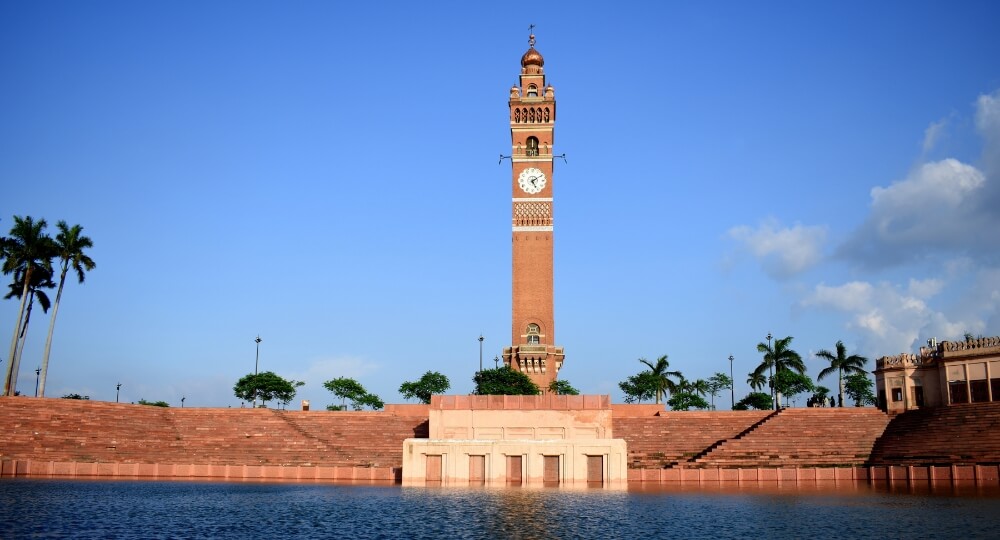
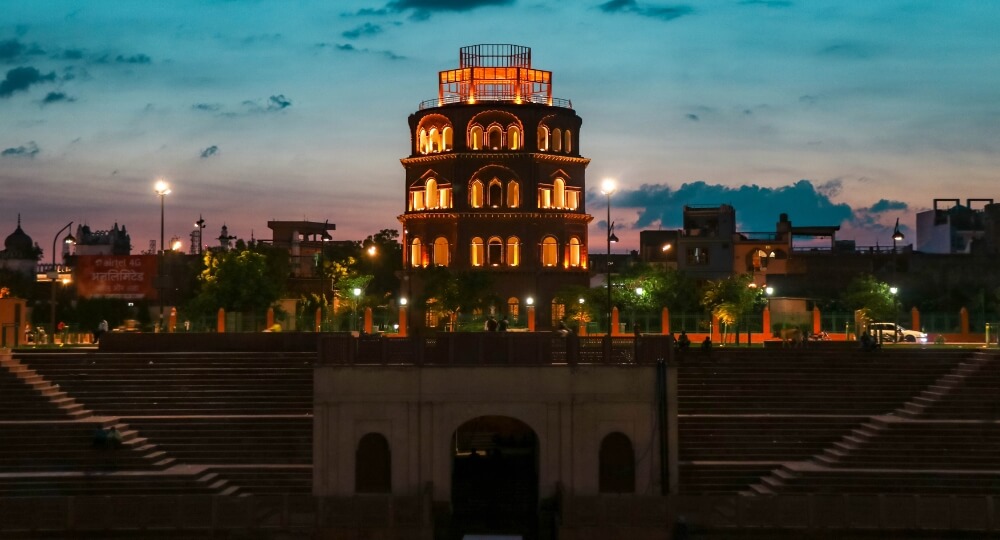
Husainabad Clock Tower
India’s Tallest Clock Tower
Hindi, Urdu, English
Languages Speaking
Essential Tips for Travelling to Lucknow
ATMs

ATMs are widely available across the main areas.

Credit Cards

Credit cards are accepted in major cities.

Bank

Banks are easily accessible throughout the city.

Drinking

The legal drinking age in Lucknow is 21.

Safest

Residents are warm, polite, and very hospitable.

Lucknow - Overview

lucknow vector map

By Purpose

tour package tourism

Couples

For Newlywed Vacations

tour packages business

Family

For Family Vacations

Top Attractions

Bara Imambara

Rumi Darwaza

Chota Imambara

Hazratganj

Aminabad

Chowk

The Residency

Lucknow Zoo

Gomti Riverfront

Chattar Manzil

Janeshwar Mishra Park

Husainabad Clock Tower

Everything You Need to Know About Lucknow

Lucknow, the capital of Uttar Pradesh, goes by many names. The city is called Nawabon Ki Nagari because of the significant influence of the Awadh Nawabs, who transformed Lucknow into a centre for refined art, craft, cuisine, and grand architecture. No wonder it was also called Shiraz-e-Hind, i.e., Shiraz of India. To the uninitiated, Shiraz in erstwhile Persia is famous for its roses, gardens, literature, and culture. It was in the royal kitchens of Awadh that the famous Galouti Kebabs (invented by Tunday Kababi) originated, along with Nihari and Malai Paan. If you’d like to experience the slow yet rich cultural life of this ancient city firsthand, check out our Lucknow tour packages.

Call us or message us on Instagram to customise your Lucknow tour package.

Table of Content:

About Lucknow

Lucknow is a charming city famous for its Tehzeeb and Adab, i.e., etiquette and manners. It is the city of graces where people use exalted forms of address when speaking to each other. The city is known for its Ganga-Jamuni Tehzeeb, a syncretic Hindu-Muslim culture that emerged from centuries of interaction between the two communities. This Ganga-Jamuni Tehzeeb is reflected through its crafts, weaves, food, and poetry.

Even its architecture reflects the city’s rich history, blending Mughal, Persian, and colonial styles to create a unique Indo-Saracenic look. Some of the buildings are sure to impress heritage lovers with their calligraphy, stucco work, and decorative motifs. To learn more about the city and its history, read on. And to book our Lucknow tour packages, call us +91 9940882200.

History

Lucknow’s history can be traced back to the Ramayana. Apparently, the city was named after Lakshmanpur or Lakhanpur, after Lord Rama’s younger brother Lakshmana. It is believed that Lord Rama gifted the town to Lakshmana in gratitude for his staying by the Lord’s side during the exile. The city was a major part of the Mahajanapada of Kosal, ruled by the Ikshvaku Dynasty.

Later, the region came under the influence of various dynasties, including the Delhi Sultanate, the Sharqi Sultanate, and, finally, the Mughals, who ruled the area through the Nawabs of Awadh. It became the capital of the Awadh State in 1775 when Nawab Asaf-ud-Daula moved the capital from Faizabad. It was finally annexed by the British in 1856 and remained under their rule until independence in 1947.

The name Lucknow is an anglicised version of Lakhnau, the term which came to be associated with the city since the times of the Delhi Sultanate.

Call us at +91 9940882200 to learn more about our Lucknow tour packages.

Geography

Lucknow is situated on the banks of the Gomti River, a major tributary of the Ganges. It is located 123 metres above sea level, leading to an uneven weather characterised by extreme winters and summers. The Gomti River meanders through the city, dividing it into two regions: trans-Gomti and Cis-Gomti. Lucknow is situated in the middle of the Indo-Gangetic Plains and is surrounded by several rural towns and villages, including Kakori, Barabanki, and Raebareli.

Economy

Lucknow is an important financial base of Uttar Pradesh and is a prominent trading city. The city’s economy is driven by its thriving handicrafts sector, and it has a strong presence of small and medium enterprises. In fact, Chikan and Zardozi, along with other handicrafts and textiles, make up about 60% of Uttar Pradesh’s total exports.

Lucknow is also a primary wholesale market for mangoes (especially Dasheri), melons, and food grains, grown in the surrounding areas. Some of the other sectors flourishing in Lucknow include tourism, education, aerospace, pharmaceuticals, and electronics.

It is also a major R&D centre with major R&D centres located in and around Lucknow, viz., the Central Drug Research Institute, the National Dairy Development Board, Industrial Toxicology Research Centre, and the National Botanical Research Centre Institute.

Call us at +91 9940882200 to learn more about our Lucknow tour packages.

Tidbits

  • The Husainabad Clock Tower is India’s tallest clock tower.
  • The Bara Imambara is the world’s second-largest Imambara (Shia congregation hall)
  • The City Montessori School holds the Guinness record as the world’s largest school in terms of pupil size.
  • Lucknow is the anglicised name for Lakshmanpur, a city named after Lakshmana, from the epic Ramayana.
  • It was recently recognised as India’s second-happiest city.
  • Lucknow’s Awadhi cuisine was designated a UNESCO Creative City of Gastronomy.
  • India’s first STD call (long-distance call) was made between Lucknow and Kanpur in 1960.

Call us at +91 9940882200 to learn more about our Lucknow tour packages.

Things To Know Before Choosing Lucknow Tour Packages

  • Winter is the best time to choose Lucknow tour packages when the weather is cool and pleasant.
  • When booking your package, remember to include a food tour and a heritage walk, as many of the city’s attractions are connected to its cuisine and heritage monuments.
  • Carry bottled water and common OTC medications, as street food can sometimes be a hit or miss, especially if you aren’t used to eating street food.

Call us or send a message on Instagram to learn more about GT Holidays’ Lucknow tour packages.

Lucknow At A Glance

Category Details
State Uttar Pradesh (Capital City)
High Season October to March
Languages Spoken Hindi, Urdu, English, Awadhi
Famous Tourist Attraction Rumi Darwaza, Chota Imambara, Bara Imambara, Hazratganj
Famous Food Biryani, Kebabs, Nihari, Korma, Malai Makhan, Sheermal
Souvenirs to Buy Chikankari clothes, Ittar, Zardosi, Zarbuland Work, Gomti Chakra

Planning a holiday to the City of Nawabs? Call us to learn more about our Lucknow tour packages.

Top Reasons to Choose Lucknow Tour Packages

Food

Lucknow was recently designated as a UNESCO Creative City of Gastronomy, an ode to its rich Awadhi cuisine and deep-rooted food traditions. The city is considered the seat of Awadhi cuisine, which, in turn, derives its name from the Awadh Kingdom of North India. Some of the iconic Awadhi dishes that we know today originated from the royal kitchens of the Awadh Nawabs during the 17th-18th centuries.

It is a common myth that Awadhi and Mughlai cuisine are the same; they are, however, slightly different, as Awadhi food blends Mughlai, Persian, and Indian influences. One major difference is that while Mughlai cuisine is rich in spices, nuts, milk, and cream, Awadhi food is known for its subtle aroma and nuanced use of spices.

Another critical aspect of the food is the different cooking techniques, viz., Dum Pukht, in which food is slow-cooked in a heavy-bottomed vessel with the lid sealed in dough. The food is cooked in its own steam, allowing the spices and other ingredients to infuse and impart their own aroma.

Some other techniques unique to Awadhi cuisine are Gile Hikmat, i.e., meat or vegetables stuffed with nuts and spices, wrapped in a banana leaf and covered in clay and buried under the ground with a low simmering fire over it, and Dhungar, which involves infusing the aroma of charcoal into a dish by placing charcoal inside the dish and pouring ghee over it.

The spice blends used to prepare dishes were a family secret and have been maintained to this day by families whose ancestors once cooked in the royal kitchens.

While Awadhi cuisine was rich and heavy, modern cooks have toned down the richness to suit modern dietary preferences.

Besides the famous Galouti Kebab, Biryani, Nihari, Sheermal, Sheekh Kebab, and Korma, we suggest you plan a food walk with our Lucknow tour packages to relish some of the hidden gems of this cuisine. From the delicate Mutanjan and Qewami Sewai to Anadarse ki Goli, Malai ki Gilori, Majlisi Kebab, Bun Kebab, Kakori Kebab, Pasandha, and Gudamba.

The cuisine also boasts a wide spread of breads, from the usual Naan, Khulcha, and Bhatura to the unique Sheermal, Rumali, Baqarkhani, Gau Zabaan, Nimish, Taftan, and the Khamiri Roti.

Heritage Buildings

Awadh, being an exceptionally wealthy kingdom, even loaned money to the British East India Company. The Nawabs were connoisseurs of art and architecture, and built grand monuments for posterity and to display their extravagant wealth. The construction employed the poor during famines, served as places of worship, and even indirectly promoted harmony between Hindus and Muslims, the two major religious groups in erstwhile Awadh.

The best way to enjoy the buildings and explore their rich history is by signing up for a heritage walk when booking our Lucknow tour packages. Some of the buildings you will visit during the tour include the Bara Imambara, built in the 18th century to employ over 20,000 people during a horrible famine.

Other significant monuments in the city include the Chota Imambara, Tara Wali Kothi, Lal Baradari, Gulistan-e-Iram, Rumi Gate, Khusro Bagh, and ancient markets like Hazratganj and Aminabad.

The English also left their architectural imprint on the city, given that it was the administrative capital of the provinces of Agra and Oudh. Some of the memorable buildings they constructed include the Residency, La Martiniere College, All Saints Garrison Church, the King George Medical College, and the beautiful Lucknow Railway Station.

Through the heritage walk, you will explore the different Tolas, i.e., community-specific housing areas with homes that feature elaborate facades, Kothas, where courtesans of the Nawab era lived, and the many Ittar markets across the city.

The Chowk, Lucknow’s oldest and most historic market in North India, is known for its shops selling intricate jewellery, traditional footwear, zardozi, ittar, and handcrafted home décor.

Lucknow is also home to beautiful modern architecture, such as Janeshwar Mishra Park, which spans over 400 acres and is famous for its well-manicured lawns, winding pathways, and waterbodies.

Embroidery & Handicraft

Lucknow was once known for its sophistication and refinement, which reflected in its clothes and crafts. Some of these are still thriving and are even a major source of income for their people. The Nawabs of Awadh have always promoted fine arts and crafts that are found nowhere else.

For instance, Chikankari, Lucknow’s ancient embroidery, was introduced by Nur Jahan, the wife of Emperor Jehangir. It involves a variety of intricate stitches on fabrics like cotton, silk, muslin, organza, and chiffon.

Zardozi, another of India’s famous sartorial legacies, originated in Persia but gained immense popularity in the country thanks to the Nawabs, who patronised the art. The word Zardozi is derived from two Persian words, Zar, meaning gold and Dozi, meaning embroidery. Thus, Zardozi translates to “gold embroidery,” referring to the technique of using gold or silver wires on fabrics such as silk, velvet, and brocade. Given the cost of precious metals, today, artisans use copper and steel wires coated in gold or silver. There are different types of wires, like Kora (dull) and Chikna (lustrous), depending on the design. Zardozi work also uses metallic threads along with stones, sequins, beads, and pearls.

Another famous handicraft from Lucknow, Zarbuland work, is a slight modification of the Bidri work and involves coating one metal over another to create beautiful souvenirs.

While Attar or Ittar making is famous in Unnao, you can also buy high-quality perfumes in Lucknow. It is believed that the courtesans who performed Kathak for the Nawabs and other wealthy merchants sweated profusely and helped promote the art in the city. Some famous Lucknowi fragrances include Khus, Ghulab, Sandalwood, Agar, and Chameli.

If you’ve seen the beautiful, rosy-hued heritage buildings like Bara Imambara and Rumi Darwaza, you may have noticed the Lahkauri bricks, made from mud from the Gomti River and baked in massive Pajawa.

Hand-printing is another famous craft from the city, featuring mango-shaped Paisley designs.

Some of the other Lucknow-based handicrafts include Mukaish work, Catapatti work, Minakari jewellery, Naqqashi work, Kalai work, and Kundan work.

Call us at +91 9940882200 if you’d like to explore the city’s handicrafts in depth with your Lucknow tour packages.

Ancient Markets

If you’re a connoisseur of fine arts and crafts, Lucknow could be your dream city, leaving you in awe of the ancient markets selling some of the finest handicrafts. But these markets sell a lot more, from rare spices and snacks to papads, achars, and even vintage furniture.

Chowk Market, one of North India’s oldest markets, is a local favourite. It extends from Gol Darwaza to Akbari Darwaza and is full of opulent Havelis and mosques. The 500-odd shops in the market sell everything from intricate jewellery to Chikankari and Zardozi dresses, Ittars, handcrafted home décor, and sumptuous food like Kebabs and Niharis. The famous Idris Biryani is at the Raja Market within Chowk.

Located in the heart of the city, Hazratganj was established in 1810 by Nawab Saadat Ali Khan and modelled after the Champs-Élysées in Paris and Oxford Street in London. The market features grand boulevards, heritage buildings, cafes, and boutiques selling everything from big-name brands to contemporary and traditional Indian goods.

Aminabad is in stark contrast to Harzatganj’s vibe, yet it’s still one of the best ways to experience Lucknow. You can buy anything, including brassware, textiles, home décor items, Chikankari, Zardozi, and Kamdani to Ittar. At the heart of Lucknow’s commercial trading, Aminabad is home to several shops, including a 200-year-old Ittar shop. Aminabad was once a posh residential area and home to wealthy families that did business here. It is also an excellent place for foodies, home to the famous Tunday Kababi.

Janpath Nagar, a tinier version of Aminabad, is famous for its handbags, Chikankari, Ittars, and Minakari jewellery. And if you are a fan of exclusively handcrafted home décor, head to Kapoorthala Market, renowned for embroidered bedsheets, fancy accessories, and embroidered dresses.

Some other markets you can explore with our Lucknow tour packages include Nakhas Market, Yahiyaganj, and Naka Hindola.

Culture

When Nawab Asaf-ud-Daula shifted the capital of the Awadh Kingdom from Faizabad to Lucknow, he intended to create a one-of-a-kind city with majestic mansions, palatial residences, wide avenues, and expansive gardens. But that was not all – the Nawabs wanted the city to be the cultural hub of North India. With the continuing decline of the Mughal Empire, its artists and artisans shifted their base to the city, thanks to Nawab Asaf-ud-Daula, who personally invited them, promising royal patronage and respect for their art and lineage.

Thus, the city became a prominent place for dance, music, poetry, culinary art, handicrafts, and even language. The Lucknow Gharana of Kathak emerged alongside other art forms such as Ghazal, Qawwali, Thumri, and Shayari.

The Ganga-Jamuni Tehzeeb is another highlight of the city’s cultural ethos, referring to the synergy of Hindu-Muslim practices in which each community adopted and respected the other’s practices.

Even today, you will find Lucknow locals cringing when addressed disrespectfully or when outsiders use Tu-Tadak (Hindi term for unceremonious conversations) when speaking.

Best Time To Choose Lucknow Tour Packages

Lucknow experiences a humid subtropical climate with three distinct seasons. The summers and winters are extreme, while the monsoon season is characterised by heavy to moderate rainfall. Read on to learn more about the different seasons and the best (or worst) time to book your Lucknow tour packages.

Summer (April to June)

As mentioned earlier, Lucknow experiences extreme summers, with temperatures ranging from 38°C to 40°C and sometimes reaching 45°C. The city also experiences hot winds, locally known as Loo, which cause intense heat and make it impossible for tourists to travel during the day. Towards the end of the summer season, intense humidity is also common, adding to the discomfort. June is the hottest month of the year, with average temperatures of 39°C.

Despite the sweltering heat, summer is a great time to enjoy the mango season. The area around Lucknow is famous for the Dusheri, Chausa, Langda, and Safeda varieties. The Lucknow Mango Festival, celebrated in Barabanki, is a great opportunity to taste these varieties.

Monsoon (July to September)

While the monsoon brings much-needed respite from the scorching summers, it remains humid and hot, especially in July, when it begins to rain. Temperatures drop to around 35°C, and the city receives about 270 mm of rainfall during this season, thanks to the southwest monsoon. July and August are the rainiest months of the year, while retreating towards the end of September. Temperatures continue to drop till October, with October and November being the transition months.

The city experiences heavy rainfall and even thunderstorms on some occasions. The heavy rains also cause waterlogging and traffic jams, especially when the Gomti River overflows, submerging key areas.

Monsoon is, however, a great time to experience some of the city’s festivals like Teej, Raksha Bandhan, and Ganesh Chaturthi.

October and November are transition months as the southwest monsoon clouds retreat from the region. This time is characterised by continually decreasing temperatures, dropping from 22°C to 10 °C during these months.

Winter (November to February)

Winter officially starts around December, though November can also be cold and dry. It is also the best time to choose Lucknow tour packages as the weather is pleasant and the temperatures range from 22°C to 7°C. While it is not bitterly cold during these months, there may be days when it is very chilly due to cold winds from the Himalayas. Winters are also marked by mist and fog. January is the coldest month of the year, with temperatures dropping below 10°C.

It is the time of the year when major cultural events are held, and festivals are celebrated. Lucknow Mahotsav, a 10-day cultural festival celebrating Awadhi heritage, is held in November and December. You can enjoy Awadhi cuisine, Kathak performances, Sitar recitals, Qawwalis, Thumris, and other performances during the event. The Lucknow Literature Festival is also celebrated during this season, where poetry enthusiasts gather for Shayari recitals, book fairs, new book launches, and even debates on literary topics.

Top Tourist Attractions In Lucknow

Bara Imambara

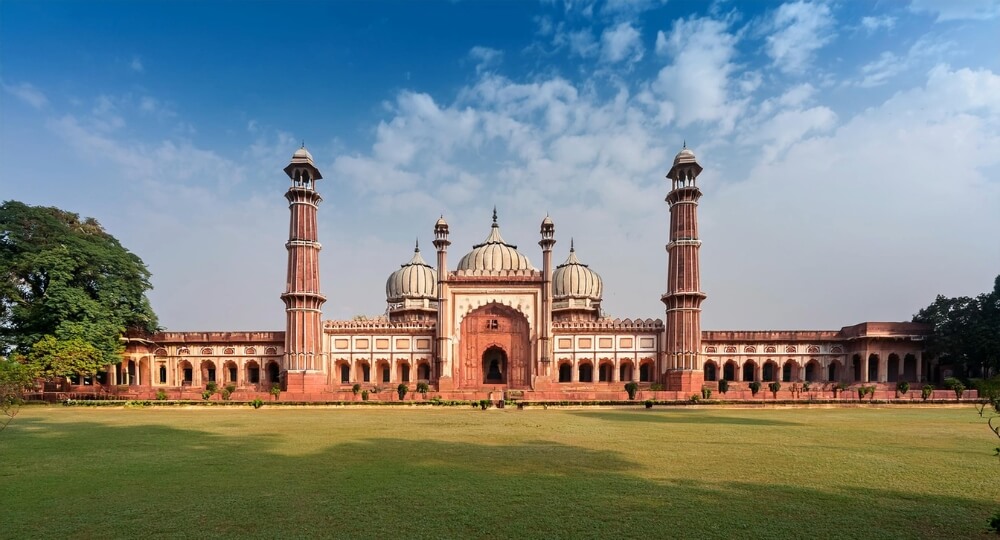
This is the second-largest Imambara in the country and was constructed in 1784 by Nawab Asaf-ud Daula during one of the region’s worst famines to employ over 20,000 starving people. The vast complex also features a mosque and a Boali, or a stepwell. An Imambara refers to a Shia congregation hall where Muslims gather for festivals, especially Muharram.

The ground floor houses the central hall, which is the most striking feature of the Imambara. Also called Persian Hall, it is 52 metres long, 17 metres wide, and 15 metres tall. It has a huge roof, supported by no supports or beams. It also contains the tombs of Nawab Asaf-ud-Daula and his wife. The ground floor also features the China and Kharbooza Halls, each with a unique design. For instance, the China Hall is square-shaped, while the Kharbooza Hall is shaped like a melon.

The second floor is known for its unique acoustics, wherein you can listen to the slightest sound at one end of the hall clearly at the other.

The third floor is the famous labyrinth, aptly called Bhul Bhulaiyya (a place where you can get lost). This labyrinth, with 1000 passages and 489 exact-looking doorways, was intentionally included in the design to provide structural stability to a pillar-less building.

The rooftop offers a beautiful glimpse of the entire complex, including the surrounding garden, the Asafi Mosque and the Shahi Baoli.

The complex was built with Lakhnaui bricks (made with lime plaster), and sealed with an organic mixture of sugarcane, urad dal, jaggery, etc.

It took 11 years and over a million rupees for the Nawab to build this complex. The long duration was because when ordinary men built the complex during the day, the Nawab ordered the noblemen to raise the structure during the day, thereby ensuring continuous employment to the labourers.

Call us at +91 9940882200 to learn more about our Lucknow tour packages.

Chota Imambara

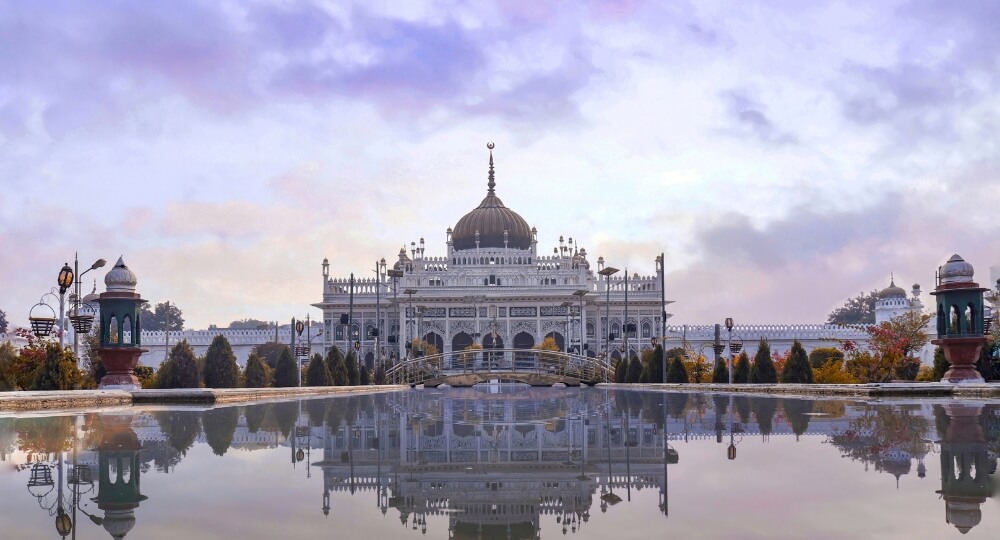
The Hussainabad Imambara in old Lucknow is small when compared to the Bara Imambara, but it is known for its ornate interiors, including Belgian chandeliers, intricate calligraphy, and colourful stucco work. It was built by Mohammad Ali Shah in 1838 and modelled after the Taj Mahal. During Muharram, the chandeliers are lit, leading to locals calling it the Palace of Light.

The Imambara also houses the mausoleums of Mohammad Ali Shah and his mother, which are ornately decorated and surrounded by lush gardens and water fountains.

The entrance to the congregation hall features a tripodal structure that leads to the beautiful interiors. Another feature of the Imambara is the intricate calligraphy, called Khattati or Kitabat, which uses different styles and is written in Arabic, Persian, and Urdu.

The Chota Imambara complex also includes a Hamam (public bath), Aabdar Khana (water storage system), Chabutra (platform), Azakhana (main hall), and the Shahnashin (a platform with arches).

Rumi Darwaza

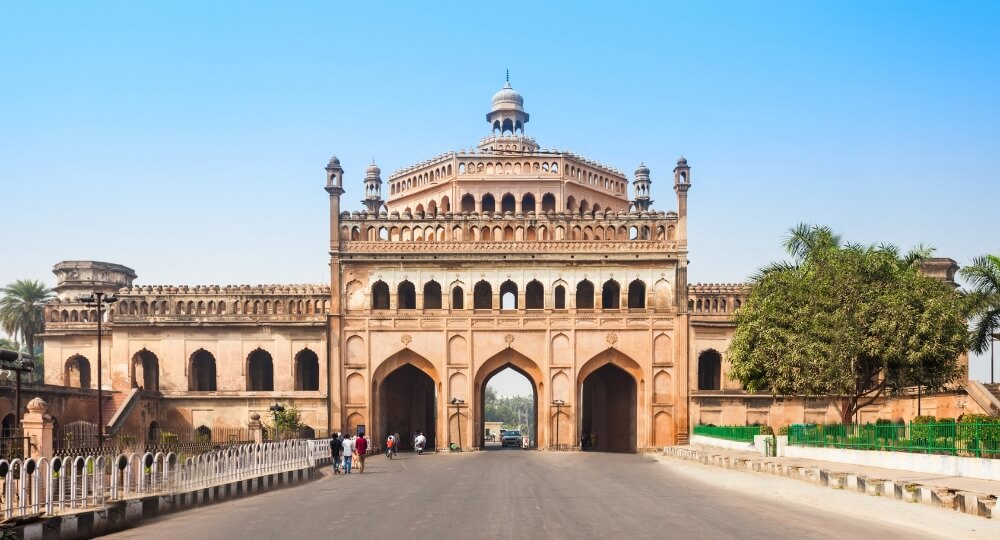
The Rumi Darwaza, also called the Turkish Gate, was built by Nawab Asaf-ud-Daula in 1784. The majestic gateway is an icon of Lucknow and stands strong and ever imposing. It was modelled after the Sublime Porte in Istanbul, Turkey. The gateway is intricately decorated and features an umbrella-shaped dome illuminated by a huge lantern, ornate stucco work using mother-of-pearl shell to create a shine richer than marble, and exquisite floral carvings.

Unlike other Lucknow buildings, the Rumi Darwaza was built in the Nawabi style rather than the Mughal style.

Hazratganj

Hazratganj Market is located in central Lucknow and is the city’s prime shopping destination. The market’s history dates back 200 years, to when Nawab Nasiruddin Haider Shah, the second Nawab of Awadh, envisioned a grand avenue in the style of the Champs-Élysées in Paris and Oxford Street in London. It was later renamed Hazratganj in honour of Nawab Amjad Ali Shah, who was called Hazrat.

When it started, the Ganj (as it is locally known in Lucknow) stocked goods from China, Japan, and Belgium, catering to the city’s wealthy clientele.

When the British took over Lucknow, they remodelled the market along Queen Street lines and restricted access to Indians. Today, the old Kothis still stand, but are now covered with shops selling everything from handicrafts to fine China and international brands.

Hazratganj was recently renovated to celebrate its bicentennial, with buildings painted, stone pavements laid, and vintage street lamps and Victorian-style balustrades installed. The government also initiated the Ganjing Carnival, held on the second Sunday of every month, during which the market is turned into a pedestrian zone with various cultural activities.

Today, you can shop for antiques, handicrafts, books, snacks, and unique accessories. It is also a great place to enjoy the city’s café culture. Call us at +91 9940882200 to include a market tour in your Lucknow tour packages.

Aminabad

Lucknow’s chaotic Aminabad isn’t for everyone, but it is definitely worth visiting if you can tune out the crowd and noise because the market is one of the best places to shop for Chikankari and Zardozi. Aminabad was started in the late 18th century during the reign of Nawab Saadat Khan. It is home to the Padain ki Masjid, an 18th-century mosque constructed by Rani Jai Kunwar Pandey for the Nawab’s wife, Khadija Khanum. The market developed around the mosque, slowly becoming a commercial centre.

The market is known for its famous shops, especially the legendary Tunday Kababi and Prakash Kulfi. You’ll also find odd-named shops like Purane Kabra ke Pas Wali Dukaan, or the Shop Near The Old Grave.

If you’re good at bargaining, check the many Chikankari shops, jewellery stores selling Minakari, Kundan, and Polki jewellery, Ittars, books, antique items, and even spices.

Chowk Market

The Chowk Market is one of North India’s oldest markets and among the best places in the city for affordable shopping. The market starts at Gol Darwaza and ends at Akbari Darwaza, spanning 500 metres and housing over 500 shops selling everything from handicrafts and antiques to electronics and perfumes.

And if you’re a foodie, don’t forget to sample Lucknow’s street food like the luscious Malaiyoo, the iconic Malai Pan, and the delectable Shahi Tukda. Some of the iconic shops in the street include Ram Ashre, Raja ki Thandai, Radhey Lal Sweets, and the OG Tunday Kababi.

Kaiserbagh

Kaiserbagh is one of the three palaces built by the Awadh Nawabs and the most elaborate of them all. It was built by Nawab Wajid Ali Shah, the last Nawab of Awadh, between 1848 and 1850. While it was grand when built, the British destroyed most of the buildings as they believed it to be the epicentre of the 1857 mutiny. The British officers also ran wild after they took control of the palace, looting valuable artefacts like marble statues, furniture, and jade bowls.

The palace gets its name from the saffron coloured buildings and an elaborate garden – Kesar Bagh. The garden was modelled on the Persian gardens of Char Bagh. The palace can be divided into three sections: the outermost section, consisting of bazars, mosques, and halls; the second section, which includes the Nawab’s residence; and the Zenana, or the ladies’ area, where the queen lived with her servants.

Lucknow Zoo

The Nawab Wajid Ali Shah Prani Udyan, commonly known as the Lucknow Zoo, was established in 1921 to commemorate the arrival of the Prince of Wales in Lucknow. The zoo covers over 72 acres and is home to a wide range of animals and birds, including the Royal Bengal tiger, the rare white tiger, the rhinoceros, and the hippopotamus.

The Residency

If you’ve ever wanted to learn more about the 1857 Revolt, you must visit the Residency, the official residence of the British Resident to the Court of Awadh. Built between 1780 and 1800 by Nawab Saadat Ali Khan, the complex included multiple buildings that served as offices, residential quarters, and an armoury. It was also at the centre of India’s first freedom struggle movement when Indian rebels led by Begum Hazrat Mahal laid siege to the building for several months, trapping hundreds of soldiers and civilians, including women and children.

While British relief forces eventually overpowered the rebels, the complex was left in ruins. Today, the ruined buildings, surrounded by lawns and flowerbeds, are managed by the Archaeological Survey of India, which provides detailed explanations of the events that unfolded during the 1857 freedom struggle.

Call us at +91 9940882200 to learn more about our Lucknow tour packages.

Janeshwar Mishra Park

Located in the heart of the city, this beautiful park covers over 376 acres and is dedicated to Shri Janeshwar Mishra, a socialist and former Union Minister of India. The park is a local favourite for its lush greenery, peaceful ambience, and activities such as cycling, jogging, and walking.

Clock Tower

The Hussainabad Clock Tower, standing at 221 feet, is a grand structure commissioned by Nawab Nasir-ud-Din Haider to commemorate the arrival of Sir George Cooper, the Lieutenant Governor of the Province of Oudh. It is India’s tallest clock tower, designed in the Victorian Gothic style and characterised by ornamental details such as arched windows and decorative spires.

Even the mechanism that runs the clock was way ahead of its time, blending art with engineering and using components made using wrought-iron sides, gunmetal wheels, and hardened steel pinions.

La Martiniere College

Established in 1845, La Martiniere is one of the oldest institutions in the country. It was founded by Claude Martin, a French major general, who initially built it as his residence on the banks of the Gomti River. While the house was built much earlier, it was only in 1845 that the place was converted into an educational institution, honouring his last wish.

The place also serves as a tourist destination, welcoming visitors who want to admire the beautiful French-inspired architecture, featuring life-sized statues, elegantly decorated plaster plaques, and intricate stucco work.

Chattar Manzil

Situated on the banks of the Gomti River, Chattar Manzil is a historical palace commissioned by Nawab Ghazi-ud-Haider and completed by his successor, Nawab Nasir-Ud-din Haider. The palace gets its name from its umbrella-shaped domes, called Chattris. It blends Indo-European, Mughal, and Nawabi architectural styles, featuring octagonal pavilions, grand halls, and detailed Jali work.

The complex was recently renovated by the UP State Archaeology Department and now serves as the Central Drug Research Institute’s office. Although access is limited, you can explore some aspects of the building through a heritage walk in our Lucknow tour packages.

Chunhat Kothi

The Chunhat Kothi was built by Nawab Asaf-ud-Daula as his luxurious country residence for hunting and relaxation. You can now visit this Kothi, along with other majestic palaces such as Tare Wali Kothi, Darshan Vilas, Bibiyapur Kothi, Dilkusha Palace, and Kothi Farhat Bakhsh, during a heritage walk with our Lucknow tour packages.

State Museum

Located in Hazratganj, the State Museum is situated in the premises of the Lucknow Zoo and is home to several rare artefacts, dating back to the Stone Age. The four-storey museum has numerous galleries, including the Jain art gallery, the Indian sculpture gallery, the archaeological gallery, and the art and coins gallery, among others. You can find sculptures dating back to the Nalanda School of Art and Tradition, statues belonging to the Indus Valley Civilisation, and hundreds of antiquities from ancient and medieval India.

Dilkusha Kothi

This eighteenth-century grand hunting lodge was built for Nawab Saadat Ali in the English Baroque style by the Nawab’s British friend Major Gore Ouseley. While most of the house is in ruins, it is surrounded by well-manicured lawns and is historically significant.

Sikandar Bagh

Sikandar Bagh is located in Lucknow’s Civil Lines and was built by the last Nawab, Wajid Ali Shah, for his favourite wife, Sikandar Mahal Begum. The building complex cost 5 lakh rupees and featured a beautiful garden, a central house, a mosque, and a wooden pavilion. While most of the palace was destroyed during the Great Revolt of 1857, you can still view the ruins, including the ornately decorated entrance gate.

Call us at +91 9940882200 to learn more about our Lucknow tour packages.

Gomti Riverfront

Also called Marine Drive, the Gomti River Front features well-maintained pathways, gardens, jogging tracks, and sitting areas, along with amphitheatres for cultural events. You can also admire the well-maintained flowerbeds and beautiful landscapes.

Banke Bihari Mandir

The Banke Bihari Temple, built to replicate the famous eponymous temple of Vrindavan, is over 250 years old. It was built by the treasurer of the Nawab of Awadh and is dedicated to Lord Krishna.

Dwarkadheesh Temple

The Dwarkadheesh Temple, located at the Chowk, is believed to be over 400 years old and dedicated to Lord Krishna. The temple features Chalukya-style architecture and was probably built by Vajranagh, Lord Krishna’s great-grandson. The temple is frequented by locals, especially during Janmashtami.

Call us at +91 9940882200 to learn more about our Lucknow tour packages.

Nearby Cities You Can Visit In Lucknow Tour Packages

Ayodhya

Famous Attractions: Temples, Riverfront

Top Tourist Sites: Shri Ram Janmabhoomi Temple, Hanuman Garhi, Kanak Bhavan, Sita ki Rasoi, Sarayu Ghat Aarti, Gulab Bari, Valmiki Bhavan.

Allahabad (Prayagraj)

Famous Attractions: Temples, Riverfront, Historical Monuments, Food

Top Tourist Sites: Triveni Sangam, Anand Bhavan, Khusro Bagh, Kumbh Mela, Swaraj Bhavan, and Allahabad Fort.

Kanpur

Famous Attractions: Temples, Food, Gardens

Top Tourist Sites: Kanpur Zoological Park, Green Park, ISKCON Temple, JK Temple, All Souls’ Church.

Bithoor

Famous Attractions: Temples, Historical Monuments

Top Tourist Sites: Brahmavrat Ghat, ISKCON Temple, Nana Rao Peshwa Park, Valmiki Ashram, Allen Forest Zoo.

Shravasti

Famous Attractions: Religious Monuments

Top Tourist Sites: Jetavana, Angulimala Stupa, Vibhuti Nath Temple, Orajhar, Jain Shobhnath Temple, Anathapindika Stupa, Maheth, and Angulimala Temple.

Suhelwa

Famous Attractions: Wildlife Sanctuary

Top Tourist Sites: Suhaildev Wildlife Sanctuary

Shopping

You cannot visit Lucknow without buying some of its exquisite handicrafts. The city is full of old and quaint streets full of shops selling some of Awadh’s finest artwork and craft.

Some of the things you can buy during our Lucknow tour packages include:

Chikankari

This is a delicate hand embroidery famous in Lucknow, in which white thread is embroidered on a light-coloured muslin or cotton fabric. Craftsmen use over 36 types of stitches, ranging from simple to complex stitches.

The best places to buy Chikankari include Chowk Market, Hazratganj, and Aminabad.

Zardozi Work

This is traditional hand embroidery using metallic threads, embellished with sequins and beads, on luxurious fabrics like velvet, silk, and satin.

You can buy them for an affordable price at Aminabad or the Nakhas Market.

Attar

Ittar or Attar is a highly concentrated perfume oil derived from natural sources like flowers, spices, wood, and herbs, using traditional steam distillation techniques. They are alcohol free and do not contain synthetic chemicals. While Unnao is famous for its Ittars, it is popular in Lucknow as well.

Some of the best places to buy Ittar include Attar Bazaar in Chowk Market, Nakhas Market, and Hazratganj.

Jewellery

The rich Nawabi culture has helped create a rich history of intricate jewellery design style. This includes Jadau necklaces, Kundan jewellery, Minakari, and Polki jewellery.

Some of the best places to buy this jewellery include Aminabad and Hazratganj.

Zarbuland Work

Zarbuland was developed in Lucknow and resembles the Tanjore metalwork or Bidri ware. However, unlike Bidri, which involves an inlay technique, Zarbuland designs are raised above the surface. The design is used to create beautiful artworks, including jewellery boxes, Hookahs, and human figures.

You can buy them at the Chowk Market.

Mukaish Work

This age-old art form originated in Lucknow and uses metallic stitches to create intricate patterns. You can easily identify the design by the dotted pattern in silver or gold in lightweight fabric.

You can buy sarees, kurtas, and dress materials with Mukaish work at Aminabad and Hazratganj.

Naqqashi Work

Lucknow is famous for its Nakashi work, thanks to the Nawabs who patronised the art form. The technique involves sculpting patterns on metal.

The best place to buy Nakashi work is Yahiyaganj, where you will find artisans continuing the craft for generations.

Dos and Don’ts of Visiting Lucknow

  • Lucknowites (people from Lucknow) are known for being soft-spoken and courteous. Use the same tone when speaking to them.
  • While UP is now relatively safe, we suggest you do not venture out after dark, especially to crowded places like Aminabad and Hazratganj.
  • Since Lucknow is a conservative city, we recommend dressing modestly to avoid unwanted stares.
  • Digital payments are widely accepted, but we suggest carrying sufficient cash, especially when eating at small eateries.
  • Public buses are cheap but crowded and don’t always provide a pleasant experience.
  • Autos don’t always use meters; stick to Ola or Uber if you have to travel across the city.

Food

The charm of Lucknow lies in its heritage monuments, its etiquette, and most importantly, its culinary history. The Nawabs were great connoisseurs of fine food and were instrumental in developing some of India’s iconic dishes. They also helped develop various cooking techniques, such as Dum Pukht, Gile Hikhmat, Bhunao, Galawat, and Dhungar.

Unlike Mughlai cuisine, which is rich in cream, nuts, and pungent spices, Awadhi cuisine uses spices subtly and is known for its elegant cooking techniques. A simple dish like Galouti Kebab uses dozens of spice blends, including rare spices like Khus root, Paan root, and long pepper.

It was in the Nawab’s royal kitchens that India’s iconic dishes, such as Galouti Kebab, Makhan Malai, Malai Paan, Nihari, and Lucknowi Biryani, were invented.

The cuisine is also known for its complex cooking rules. For instance, earlier, garlic was never used in a dish that used saffron. Similarly, garlic and ginger were never ground together; they were prepared separately.

Unlike other biryanis, Lucknowi Biryani is known for its fragrance derived from ingredients like Meetha Ittar, Kewra, rose water, and long pepper.

Some of the iconic Non-Vegetarian Awadhi dishes you must try in Lucknow include:

Gauloti Kebab

This famous Awadhi Kebab was invented in Lucknow in the 19th century by Haji Murad Ali for the Nawab, who had lost his teeth due to old age, but couldn’t give up his love for Kebabs. Murali Ali used a blend of over 160 spices, including Khus root, rose petals, Paan roots, and Kebab Chini and minced the meat into a paste-like consistency to create a uniquely flavoured Kebab. The Kebab gets its name from the fine papaya paste (called Gilawat) that is mixed with the meat, giving it that melt-in-the-mouth consistency. Since Murad Ali had lost one of his arms, he was called Tunday (one-armed) Kebabi. This name stuck, and today, Tunday Kebab or Galouti Kebabs from Tunday Kebabi are world famous.

Tunday Kababi shops can be found in Aminabad and the Chowk Market.

Nihari

This iconic dish originated in the Awadh region and was originally fed to labourers in the morning to keep them energised throughout the day. In fact, its name originates from the Arabic word Nahar, meaning morning. The hearty, protein-rich stew is made by cooking lamb or beef shank along with the bone marrow overnight. It is simmered until the marrow melts into the stew, thereby creating a collagen-rich gravy that’s served with bread. The meat is stewed with whole spices like fennel seeds, long pepper, cardamom, mace, etc. and served with ginger slivers, lemon wedges, and fried onions, called Barista.

The best place to enjoy a Nihari is at the Chowk Market, especially Rahim ki Nihari, near Akbari Gate.

Sheermal

This mildly sweet but beautifully flavoured bread is infused with saffron and Kewra and served with Nihari or tea. It also tastes excellent with chicken or mutton korma or other vegetarian dishes. The bread originated in Persia and derives its name from the use of Sheer (milk) to soften it.

The bread is baked in an iron tandoor at a low temperature, allowing the fat to cook the Sheermal. Call us to include Sheermal and Nihari in your breakfast during your Lucknow tour packages itinerary.

Kebabs

Kebabs are an integral part of Awadhi cuisine. While Galouti is the queen of Kebabs, the cuisine is also famous for its different minced meat varieties. Popular among these include the Sheekh Kebab, Kakori Kebab, Tangdi Kebab, Boti Kebab, Pasanda Kebab, Majlisi Kebab, and Shami Kebab. To an untrained palate, a lot of these Kebabs may look or taste similar, but they vary a lot in terms of the spices used, the texture of the minced meat, the part of the animal used, the changes in fat content, and the method of cooking. All of these variations help create a unique taste.

There are different stalls across the city selling Kebabs. For instance, Shakhawat sells the best Shami Kebabs while Kakori tastes best at Dastarkhwan. And if you’d like to sample the gravy-like Majlisi or Ghutwa Kebab, you must visit Naushijaan.

Biryani

The Awadhi Biryani is one of the richest variants and was invented in the royal kitchens of the Awadh Kingdom. Meat and spices are slow-cooked with rice using a slow-cooking or Dum Pukht method to release the flavours of the ingredients. Traditionally served on special occasions and festivals, Awadhi biryani has become the cuisine’s most famous food.

While Idris Biryani in Chowk Market is the most famous, you can still sample some great biryani at Lalla’s, Tunday Kababi, and Dastarkhwaan in Kaiserbagh.

Korma

Kormas were invented in the royal kitchens of the Mughals, deriving from Turkic, Persian, and Central Asian kitchen techniques that involve cooking meat or vegetables over low heat in a rich yoghurt/cream or nut-based gravy. The method spread to the Awadh kitchens as well, adapting to the refined tastes of the Nawabs.

Mughlai Korma dishes may seem similar to their Awadhi counterparts, but they differ in the sense that the latter is subtly spiced with rose water, saffron, etc. and has a mild flavour.

Some of the popular Korma-based dishes include Murgh Awadhi Korma, Ghost Korma, Arbi ka Korma, and Paneer Kundan Kaliyan.

Some Of The Iconic Vegetarian Dishes You Must Try In Lucknow Include:

Aloo Matar ki Kachori

It is a common misconception that Lucknow can be disappointing to vegetarians. The city is known for its chaats, snacks, and desserts that are delectable and affordable. For instance, the Aloo Matar ki Kachori is a crispy, flaky, and spicy snack that’s only available for a few months from Diwali to Holi.

Nimona

This is another winter delicacy made using fresh, ground green peas. This soupy gravy is served with Roti or rice and is available across the streets of the city.

Basket Chaat

This is a popular chaat in the city and basically consists of a basket made by shaping deep-fried potatoes and topped with Chole, Aloo Tikki, different chutneys, curd, and some mixture for that crunch.

While there are plenty of chaat corners specialising in Basket Chaat, you can try them at Royal Café or Jain Chaat in Lalbagh.

Breads

While Sheermal is the most famous bread in Lucknow, Awadhi cuisine has plenty of bread variants. Some of the popular ones include Bhakharkhani, Naan, Taftaan, Khulcha, Rumali Roti, Paratha, Bhatura, Bedmi Puri, and Tandoori Roti. They serve as the perfect cutlery to scoop delicious Kebabs, Niharis, and vegetarian and non-vegetarian Kormas.

The best place to sample all of these is the Rotiwali Gali in old Lucknow.

Shahi Tukda

This dessert tastes and looks royal and probably originated in Central Asia or Persia, from where it was adapted by the Mughals, and later the Awadh Nawabs. The dish involves deep-frying bread in Ghee and soaking it in a fragrant syrup made by slowly cooking milk (Rabri) infused with rose water and cardamom. The dessert is then served with nuts, dried fruits, and edible silver as toppings.

Some of the best places serving Shahi Tukda include Dastarkhwan and Tunday Kababi.

Call us at +91 9940882200 to book our Lucknow tour packages.

Awadhi Kheer

Lucknow is famous for its various Kheers or rice puddings that are rich, aromatic, and decadent. The most unique of all is the Benami Kheer made using garlic as a secret ingredient. The Khansamas who originally made this dish did not want to reveal its secret ingredient and hence preferred to call it Benami, or Nameless.

Some of the other kheers popular in the region include Zaffrani Kheer (enriched with saffron), Gulab ki Kheer (made using rose petals), Matar ki Kheer (Green Peas Kheer) and Kaddu ki Kheer (made using pumpkin).

Paan ki Gilouri

This exquisite dessert is made with thin sheets of Malai (milk cream) stuffed with nuts, Mewa, and Mishri (rock sugar), and wrapped in the shape of a Paan. It was presented to Nawab Wajid Ali Shah in 1805 by Ram Asrey to persuade him to give up his habit of chewing tobacco. The shop stands still today in Paan Wali Gali and serves some of the best Malai Paan.

Malai Makhan

Also called Nimish and Malaiyo, this winter delicacy is popular across North India, especially in Lucknow, Varanasi, and Delhi, where it is known as Daulat ki Chaat. It is called so as it resembles a cloud of sweetened cream. The cream is flavoured with saffron, cardamom, and rosewater, and garnished with pistachios.

The best thing about this dessert is that it is available only from November to March, making winters the best time to choose our Lucknow tour packages.

Kathal ke Kebab

This vegetarian Kebab is made using raw jackfruit and is available across Lucknow.

Zarda

This is a traditional dessert and is also called Meethe Chawal. The dish is made with Basmati rice, cooked in Ghee and flavoured with saffron and cardamom. It is especially served at weddings and other special occasions, like Eid.

Some of the other delicacies you can enjoy in Lucknow besides the above include Matar Chaat, Aloo ki Tikki, and Kulfi.

Travel Tips

visa_information_icon

Visa Information

Check visa requirements before traveling, ensuring a smooth entry and compliance with destination regulations.

health and safety tips icon

Health and Safety Tips

Prioritize health, stay hydrated, follow safety guidelines, and maintain personal hygiene for a secure journey.

currency and tipping icon

Currency and Tipping

Familiarize with local currency, consider customary tipping practices for respectful and seamless travel experiences.

Share Your Ideal Tour: Let Us Customize!

FAQs:

What is the best time to choose Lucknow tour packages?
Winter is the best time to explore Lucknow, thanks to its pleasant, cool climate. Temperatures range from 8°C to 20°C, allowing you to enjoy the city's heritage monuments and cuisine.
Is Lucknow a safe place?
Yes, Lucknow is relatively safe. However, we suggest you follow general precautions, such as avoiding travelling alone after dark or to crowded places like Aminabad. We also recommend that you dress modestly to avoid attracting stares.
How many days do I need to explore Lucknow?
Lucknow is typically included in our Uttar Pradesh tour packages or in an Ayodhya-Kashi tour. But if you plan to tour the city exclusively, we suggest spending 2-3 days to explore this heritage city and its cuisine. You can also include the city in your North India tour package.
Can I customise my Lucknow tour packages?
Yes, you can always customise your itinerary to include (or exclude) specific attractions.
Is Lucknow a good place for vegetarians?
While Awadhi cuisine is known for its non-vegetarian fare, the city has some interesting vegetarian dishes as well. This includes chaats like Matar ki Kachori, Pani ke Batashe, and the winter delicacy, Maliyo or Malai Makhan.
What should I buy from Lucknow?
Chikankari dress material is one of the most popular souvenirs from Lucknow, besides Zardozi and Ittar.
What are some popular street foods I must try in Lucknow?
The city is famous for its Awadhi cuisine, viz., Biryani, Nalli Nihari, and is even the birthplace of the famous Galouti Kebabs. The famous Kakori Kebabs were invented in Kakori, a small town near Lucknow.
Are there tourist attractions near Lucknow?
Yes, Lucknow is close to several tourist cities, such as Allahabad and Ayodhya.
Did Kathak originate in Lucknow?
No, Kathak did not originate in Lucknow, but it did develop and flourish there, becoming one of the three main Gharanas (traditions), viz., Jaipur, Lucknow, and Benares.

Book Your Dream Vacay Today!

=

×

Enquire Now

=