3

Tour Packages

Srinagar Tour Packages

Garden City of Kashmir

SUPER DEAL PRICE

STARTS FROM

per person on twin sharing
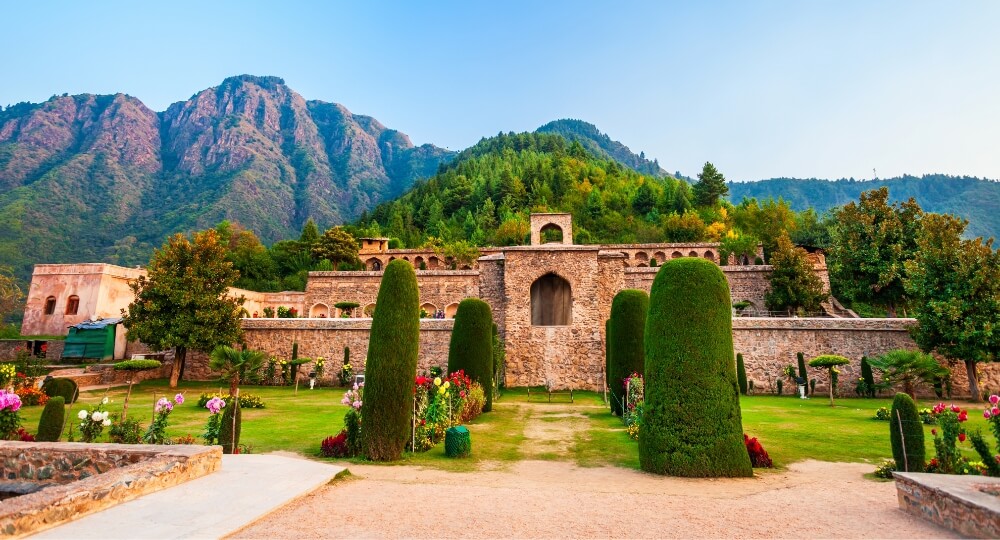
Palace of Fairies: Pari Mahal
Historic Fort in Srinagar: Hari Parbat Fort
South India’s No.1 Travel Brand
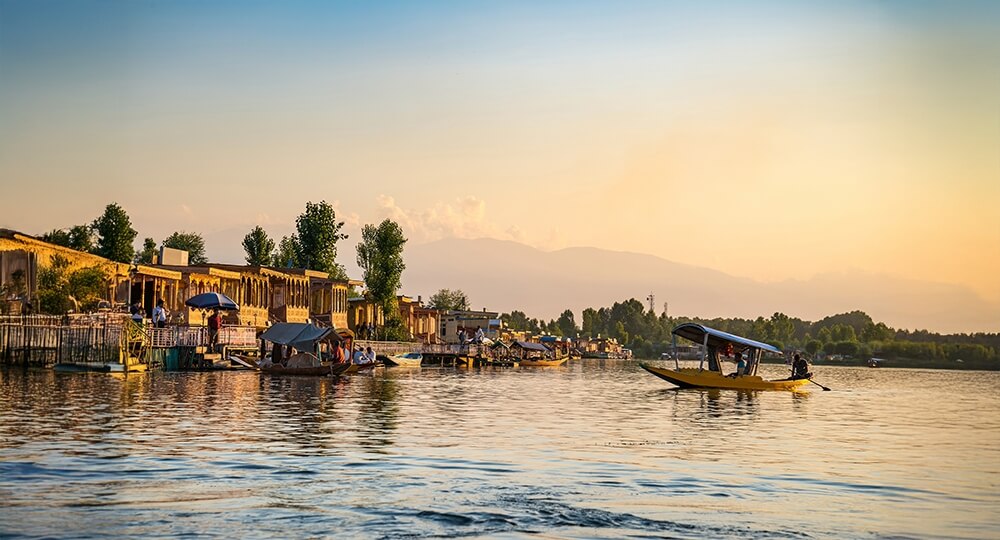
Dal Lake
Heart of Srinagar
March - June
Best Time to Visit Srinagar
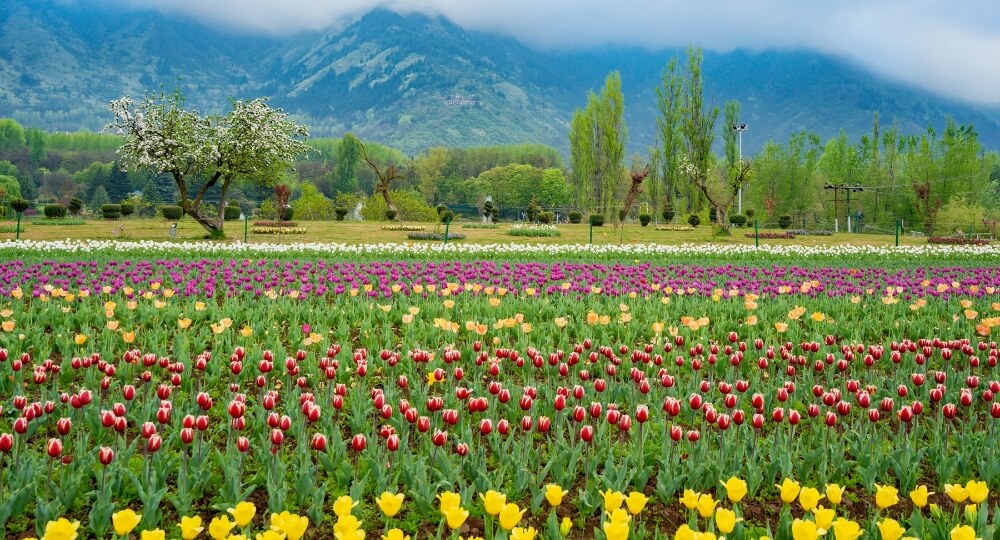
Indira Gandhi Memorial Tulip Garden
Asia’s Largest Tulip Garden
Kashmiri, Hindi, Urdu, English
Languages Speaking
Essential Tips for Travelling to Srinagar
ATMs

ATMs are readily accessible in cities.

Credit Cards

Credit cards are widely accepted in Srinagar.

Bank

Banks are available in cities, scarce in villages.

Drinking

The legal drinking age in Srinagar is 21.

Safest

Residents are famous for their warm hospitality.

Srinagar - Overview

srinagar map

By Purpose

tour package tourism

Couples

For Newlywed Vacations

tour packages business

Family

For Family Vacations

Top Attractions and Nearby Sights

Dal Lake

Hazratbal Shrine

Mughal Gardens

Manasbal Lake

Nigeen Lakes

Old City

Badamwari Park

Wular Lake

Gulmarg

Sonamarg

Yusmarg

Mahadev Peak

Shankaracharya Temple

Pandrethan Shiva Temple

Indira Gandhi Memorial Tulip Garden

Everything You Need to Know About Srinagar

Jammu and Kashmir is undoubtedly a destination that is on every traveller’s bucket list, owing to its unique and spellbindingly beautiful natural landscapes. One of the cities in this union territory that deserves the most attention from tourists is Srinagar. Not only is it the summer capital of Jammu and Kashmir, but it is also its largest city. Its vibrant markets, scrumptious food, intriguing culture, and beckoning beauty are some of the numerous reasons to book our Srinagar tour packages. Let’s do a deep dive into the art, history, culture, cuisine, shopping scene, and tourist attractions of Srinagar so you can gauge why booking a trip to this city is a once-in-a-lifetime adventure.

Table of Content:

About Srinagar

The earliest recorded history of Srinagar can be traced back to the 3rd century BCE when Emperor Ashoka is said to have discovered in Srinagar. With time, it eventually developed into the largest urban centre in the Himalayan region. Until the 14th century, Srinagar was primarily ruled over by Buddhist and Hindu rulers, and soon enough, the Mughals took over the region. During the Mughal era, Srinagar saw immense architectural and cultural developments. The Mughal emperors were spellbound by the natural landscapes of the region, particularly Akbar, Jahangir, and Shah Jahan. In 1819, Kashmir was captured by Maharaja Ranjit Singh. The city of Srinagar played a major role during the British era, which is when it became a popular summer retreat for the British officials and elites. In the current era, it serves as the summer capital of Jammu and Kashmir.

Tourism is among the most integral aspects of Srinagar’s economy. Tourists from all around the world come to visit the city owing to its many attractive aspects. The foundation of tourism has been strengthened over the years through the establishment of restaurants, cafes, eateries, handicraft and handloom stores, and so on. Another department that contributes significantly to the economy of Srinagar is the dairy business.

Tidbits

  • Emperor Ashoka is credited with being the founder of the city of Srinagar.
  • The Tulip Garden in Srinagar is the largest tulip garden in Asia.
  • Srinagar is the summer capital of Jammu and Kashmir.
  • The Floating Vegetable Market in Srinagar is the only one of its kind in India.
  • The Dal Lake in Srinagar is the second-largest lake in Jammu and Kashmir.
  • The Hazratbal Shrine in Srinagar is known to house the Moi-e-Muqqadas, a sacred relic that’s believed to be a hair strand from Prophet Muhammad’s beard.

Essential Tips To Know Before Travelling To Srinagar

  • The main airport in Srinagar is the Srinagar International Airport (SXR), also known as Sheikh ul-Alam International Airport.
  • Remember to pack plenty of warm layers, including sweaters, jackets, boots, scarves, gloves, and so on.
  • The region often experiences power cuts, which is why it’s imperative to carry a power bank.
  • Prepaid SIM cards from outside of Jammu and Kashmir don’t work due to security reasons, which is why you will have to buy a local SIM card during your trip.
  • Wearing a headscarf is important for women while visiting a religious institution or holy place.
  • On the occasions of Republic Day and Independence Day, it’s better to avoid staying in Srinagar as mobile internet services are usually suspended on those days due to security reasons.

Our Best Budget Srinagar Tour Packages

Srinagar Tour Packages Duration Highlights
Charming Srinagar Gulmarg Tour 5 Nights 6 Days Mughal Gardens, Thajiwas Glacier, Amarnath Cave Temple, Mattan Temple, Chandanwari
Combo Kashmir Package 7 Nights 8 Days Vaishno Devi Temple, Chandanwari, Amarnath Cave Temple, Dal Lake
Heaven On Earth Package 4 Nights 5 Days Dal Lake, Gulmarg Gondola, Shankaracharya Temple

Srinagar At A Glance

Category Details
City Srinagar
Currency The Indian Rupee (INR)
High season March to June
State flower of Jammu and Kashmir Common rhododendron
Standard Voltage 230 volts
State animal of Jammu and Kashmir Kashmir Stag/Hangul
Languages Kashmiri, Dogri, Hindi, English, and Urdu
Famous Tourist Attractions Dal Lake, Indira Gandhi Memorial Tulip Garden, Shalimar Bagh, Nishat Bagh, Chashme Shahi, Pari Mahal, Shankaracharya Temple, Nigeen Lake, Hari Parbat Fort, Hazratbal Shrine
Things To Do Shikara rides, houseboat stay, trekking, hiking, mountain biking, white water rafting, hot air ballooning
Famous Food Rogan josh, yakhni lamb curry, modur pulao, dum aloo, goshtaba, aab gosht
Places To Visit Gulmarg, Sonamarg, Pahalgam, Yusmarg
Souvenirs To Buy Pashmina shawls, carpets, papier mache products, Kashmiri tea, wooden objects, Kashmiri spices, copperware

Top Reasons To Visit Srinagar

Listed below are the top reasons to book our Srinagar tour packages:

Enthralling Natural Landscapes

We’re all aware of how Jammu and Kashmir is known as ‘heaven on earth’ because of its never-ending natural beauty, and you will find plenty of these enthralling natural landscapes in Srinagar. The city is home to lakes such as Dal Lake and Nigeen Lake, while also housing the towering Zabarwan Range. The blooming and lush green Mughal gardens add to the captivating scenery of Srinagar. Everywhere you look in the city, it feels like a postcard has come to life.

Delicious Cuisine

Kashmiri cuisine is a mix of Indian, Mughal, Persian, and Central Asian influences. The dishes created in Srinagar make use of a lot of spices, such as saffron, cloves, cinnamon, cardamom, fennel, and ginger. On one hand are the delectable non-vegetarian dishes, such as rogan josh, yakhni lamb curry, goshtaba and muji gaad. On the other hand, there are the vegetarian delicacies like Kashmiri pulao, dum aloo, and modur pulao.

Thrilling Outdoor Adventures

The fact that Srinagar’s landscape includes lakes as well as mountains means that there is a plethora of outdoor adventures you can enjoy with GT Holidays’ Srinagar tour packages. Whether you wish to relish the beauty of the mountains through hiking, trekking, and mountain biking, or go boating in Dal Lake, you will never run out of adrenaline-filled activities to enjoy in the city.

Vibrant Markets

The rich cultural heritage of Srinagar is evident through its arts and crafts, which take the form of enticing souvenirs in the bustling markets of the city. These shopping destinations are brimming with locals and travellers hoping to get their hands on eclectic objects at the best prices. From Kashmiri carpets and pashmina shawls to spices and wooden objects, there is much to catch your eye in the markets of Srinagar.

Fascinating Getaways

A bonus privilege of booking our Srinagar tour packages is that you will also get to visit the many quaint towns and villages located nearby. This includes destinations like Gulmarg, Sonamarg, Pahalgam, and Yusmarg. Situated just a couple of hours away, these getaways are filled with lush green valleys, snow-clad peaks, the thrill of skiing, and much more.

Best Time To Visit Srinagar

Srinagar has a humid subtropical climate. Let’s take a look at what each season in Srinagar is like so you can accordingly decide when to book our Srinagar tour packages:

Srinagar In Summer (March To June)

During the summer season, the temperature range in Srinagar oscillates between 14 degrees Celsius and 30 degrees Celsius. This is when the city comes alive with blooming flowers and lush greenery. It’s also the perfect time to explore the natural landscapes and experience the outdoor adventures, such as boating, trekking, and camping. During this season, look up the weather forecast in advance so you can book your holiday at a time when the temperature is towards the lower end. Some of the festivals you can enjoy in the city with our Srinagar tour packages during these months include Baisakhi, the Tulip Festival, and the Shikara Festival.

Srinagar In Monsoon (July To September)

The temperature range during the monsoon season in Srinagar oscillates between 12 degrees Celsius and 25 degrees Celsius. While July to September is considered to be the monsoon season in Srinagar, there is also a relatively short-lived autumn season this city experiences, which usually lasts from September to November. These autumn months are usually dry, pleasant, and have a crisp breeze in the air. This is when you can witness the gorgeous chinar trees changing colours, with hues of red, gold, and rust all around. If you’re hoping to enjoy outdoor picnics with our Srinagar tour packages, this is the right season to book your trip. The city experiences little rainfall and mostly clear skies. Remember to pack light layers as the nights can get chilly.

Srinagar In Winter (October To February)

During the winter season, the temperature range usually stays between -2 degrees Celsius and 15 degrees Celsius. This is when Srinagar transforms into a winter wonderland, with snow-capped mountains and a partially frozen Dal Lake. While the evenings and nights are cold, the mornings are pleasant, with the sun embracing your face softly. However, the snowfall can lead to road closures and flight cancellations. This is why if you book our Srinagar tour packages for this period, remember to keep monitoring the travel schedules. Make sure to carry plenty of woollen clothes for this time, including sweaters, jackets, scarves, gloves, and socks. The festivals that usually take place during the wintertime in Srinagar are Maha Shivaratri, Lohri, and Christmas.

Top Things To Do In Srinagar

The following are some of the top tourist attractions to visit in Srinagar and outdoor adventures to partake in with our Srinagar tour packages:

Things To Do As A Family

Dal Lake

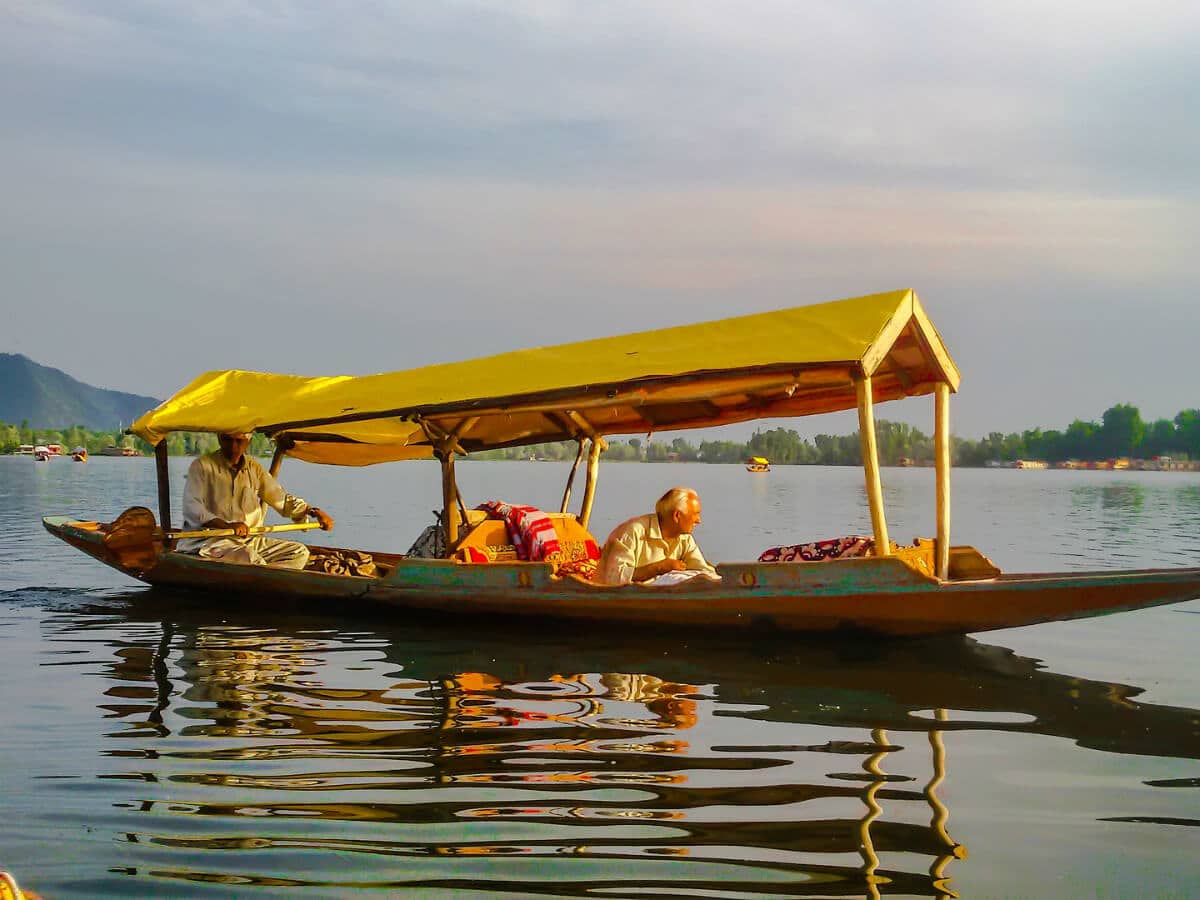
Dal Lake, also known as the ‘Lake of Flowers’ or ‘Jewel of Srinagar’, is an urban lake located in the eastern part of Srinagar. It’s known to be the second-largest lake in Jammu and Kashmir. Sprawled over an area of 18 sq km, it forms a part of a natural wetland, which includes its floating gardens. These gardens are called ‘raad’ in the local language and have beautiful blooming lotus flowers during the months of July and August. You can enjoy spellbinding views of Dal Lake from the popular Mughal Gardens, such as Nishat Bagh and Shalimar Bagh. Travellers can opt for peaceful houseboat stays and shikara rides on this lake.

Indira Gandhi Memorial Tulip Garden

The Indira Gandhi Memorial Tulip Garden in Srinagar, also simply known as the Tulip Garden, is reputed for being the largest tulip garden in Asia. It covers an area of about 30 hectares and was opened in 2007. The garden hosts an annual Tulip Festival, which usually lasts from mid-March to mid-April. Some of the other flowers that you will come across at the Indira Gandhi Memorial Tulip Garden include daffodils, hyacinths, and ranunculus. This seven-terraced garden is known to house 48 varieties of tulips.

Shalimar Bagh

The Shalimar Bagh in Srinagar was built by Emperor Jahangir in the 17th century. The purpose of this garden was to serve as a royal retreat for his wife, Empress Nur Jahan. Regarded as a shining example of Mughal horticulture, the garden is a cornucopia of lush greenery, gushing fountains, and elegant pavilions. Often referred to as the ‘crown of Srinagar’, the garden now stands as a public park. The name of the park is derived from the Sanskrit word ‘Shalimar’, which translates to ‘abode of love’, thereby referring to the strong relationship between the Mughal monarch and his empress.

Nishat Bagh

Nishat Bagh is a Mughal garden located on the eastern side of Dal Lake. It’s popular for being the second-largest Mughal garden in the Kashmir Valley, following the Shalimar Bagh. The Zabarwan Range serves as the stunning background for this garden. It was designed in 1633 by Asif Khan, who was the older brother of Nur Jahan. The name of the garden is derived from the Urdu language, translating to ‘garden of joy’. Spread over an area of 46 acres, the garden has 12 terraces, representing the 12 zodiac signs.

Shankaracharya Temple

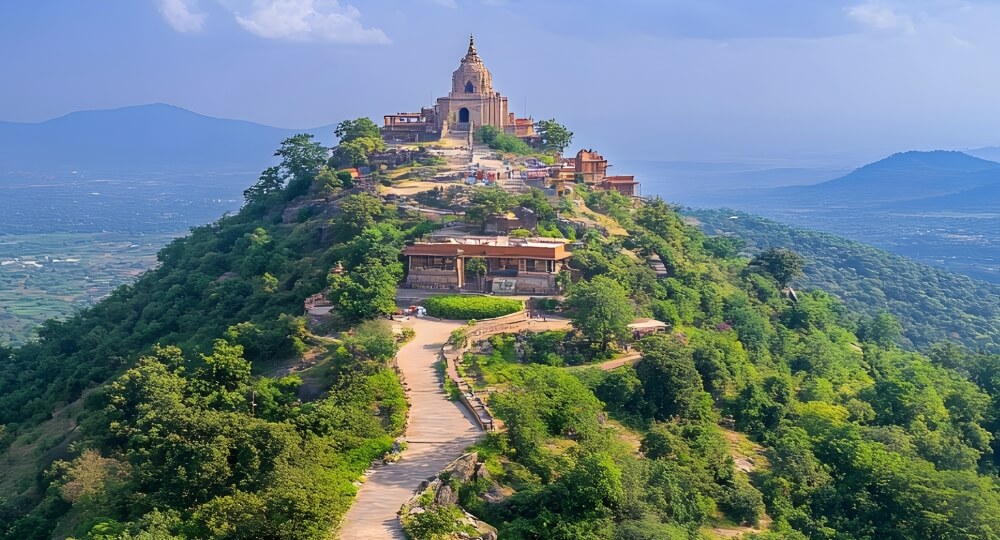
The Shankaracharya Temple in Srinagar is dedicated to Lord Shiva. It was named after the Indian philosopher, Adi Shankaracharya, who is believed to have visited the city during his time. Located at a height of 1,000 feet, the temple houses a big, oval-shaped Shiva Linga made from reddish black stone. It was constructed by Jaluka, who was the son of Emperor Ashoka, in 200 BC. The main structure of this holy place is supported on a 20-foot-tall octagonal base.

Hari Parbat Fort

The Hari Parbat Fort, which is also known as Koh-e-Maran, is perched on a hill that shares the same name. Emperor Akbar built an outer wall for the fort in 1590. The current structure of the fort was constructed by Atta Mohammad Khan, the Afghan governor, during the late 18th or early 19th century. It is surrounded by structures related to different faiths and religions, which is why the fort is revered by Hindus, Muslims, and Sikhs. The structure is maintained by the Archaeological Survey of India (ASI).

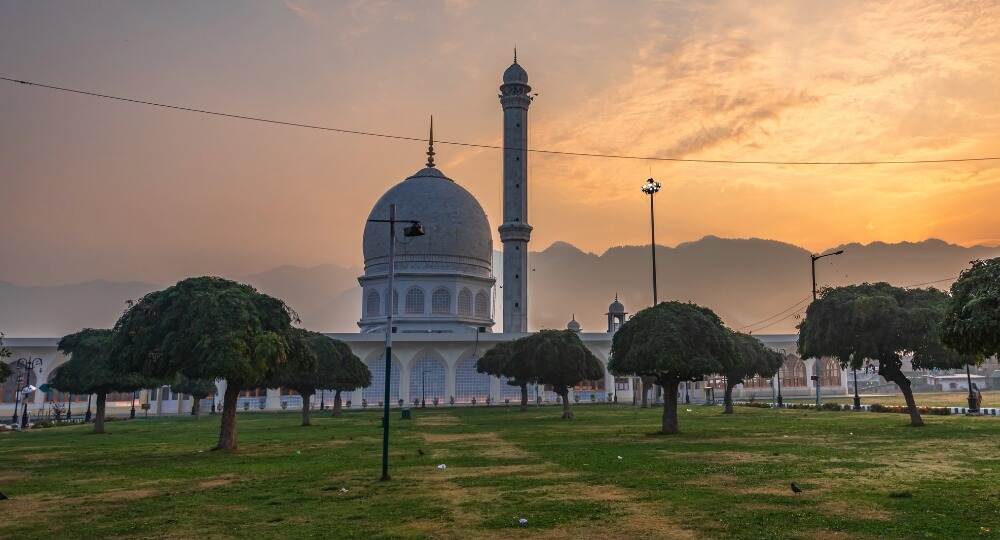
Hazratbal Shrine

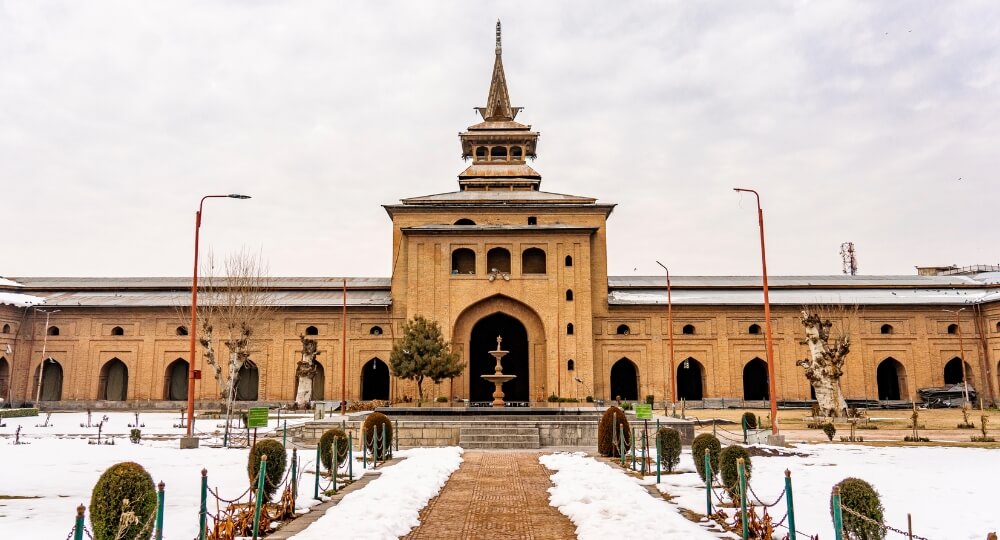
The Hazratbal Shrine, or Hazratbal Mosque, is revered as the most sacred Muslim shrine in Kashmir. The mosque is particularly renowned for housing the holy relic known as Moi-e-Muqqadas. It refers to a strand of the Prophet Muhammad’s beard. The construction of the Hazratbal Shrine was initiated in 1968 under the guidance of Sheikh Mohammad Abdullah. In 1979, the construction of the mosque was completed. Before the mosque was established, the spot was held by Ishrat Mahal, which was a pleasure house that belonged to Subedar Sadiq Khan. It was later converted into a holy shrine under the order of the Mughal Emperor Shah Jahan.

Things To Do For Adventure Lovers

  • Shikara rides on Dal Lake
  • Houseboat stay in Dal Lake
  • White water rafting in Lidder River
  • Water skiing in Dal Lake
  • Trekking in the Zabarwan Range
  • Mountain biking from Srinagar to Pahalgam
  • Hot air ballooning at Zabarwan Park

Best Getaways From Srinagar

Gulmarg

Gulmarg is a town located in the Baramulla district of Jammu and Kashmir. Perched at an altitude of 2,650 metres, this hill station sits comfortably in the Pir Panjal Range of the Himalayas. Owing to its high-class snowboarding and skiing activities, Gulmarg holds the title of being the ‘heartland of winter sports in India’. The town is home to the Apharwat Peak, which is the longest ski slope in Asia. This is where you can enjoy snow-based outdoor activities, such as snowboarding, sleighing, and skiing. While you’re in Gulmarg, remember to experience the Gulmarg Gondola Ride, which is known worldwide as the highest and longest cable car ride in Asia. Apart from this adventure, some of the other places to visit in this town are the Gulmarg Golf Course, Alpather Lake, Strawberry Valley, and St. Mary’s Church.

Sonamarg

Sonamarg (also known as Sonmarg or Sonamarag) is a quaint town whose name translates to ‘meadow of gold’. Located in the Ganderbal district of Jammu and Kashmir, it’s nestled at an altitude of approximately 2,730 meters above sea level. The town is home to various serene lakes and sublime glaciers that add to its natural beauty. This includes the majestic Thajiwas Glacier, where you can enjoy activities such as pony rides, sledging, and hiking. It’s also a popular spot among trekkers, as this is where you can embark upon the thrilling Kashmir Great Lakes Trek. Some of the places you could explore in Sonamarg with our Srinagar tour packages are Zoji La Pass, Gadsar Lake, Gangabal Lake, and Vishansar Lake.

Yusmarg

Yusmarg is a hill station in the Badgam district of Jammu and Kashmir. It has been given the title of the ‘Meadow of Jesus’. This is because there is a belief among the region’s Ahmadiyya Muslim community that Jesus visited or passed through the area. Various trekking trails start from this town, such as the Sunset Peak Trek, Tatakooti Peak Trek, Danizab Meadow Trek, and Silent Meadows Trek. When you’re in Yusmarg, you can witness the Doodh Ganga River (translating to ‘the River of Milk), which is known for its milky white waters. The other famous tourist places to witness include the Nilnag Lake, Charar-e- Sharif Dargah, Sang-e-Safed Valley, and Pakherpora Shrine. With its snow-covered peaks, clear streams, lush forests, and meadows coated with wildflowers, Yusmarg almost seems like a land born right out of a fairytale, providing you with an escape from city life.

Pahalgam

Pahalgam is a town whose name is pretty well-known to Bollywood fans, in particular. Do you know why? It’s because this hill station has served as the shooting location for numerous Hindi movies, such as Haider, Jab Tak Hai Jaan, Silsila, and Laila Majnu. Located in the Anantnag District of Jammu and Kashmir, Pahalgam is populated with bright valleys and lush meadows, with the picturesque Lidder River as its backdrop.

In the Kashmiri language, the name of the town translates to ‘village of shepherds’. The reason this town is known as the ‘valley of shepherds’ is that nomadic shepherd communities, such as the Gujjars and Bakarwals, once lived in Pahalgam. It is also the base camp of the revered Amarnath Yatra. When you visit Pahalgam with our Srinagar tour packages, make sure to explore the Betaab Valley, Aru Valley, Mamleshwar Temple, Hajan Valley, and Chandanwari.

Shopping In Srinagar

Here are the best souvenirs to purchase from Srinagar and the markets to shop from with our Srinagar tour packages:

What To Buy

Pashmina Shawls

The word ‘pashmina’ is derived from the Persian word ‘pashm’, meaning ‘wool’. Pashmina shawls are the pride of Kashmir’s art and craft industry. If there is one thing you must gift yourself from Srinagar, it’s a pashmina shawl. Made from the fine wool of Changthangi goats, also known as pashmina goats or Changra goats, these shawls are known for their intricate craftsmanship and incredibly soft material. They are lightweight and cosy and available in vibrant hues. The breed of goats from which these shawls are derived is native to the region of Ladakh. In the olden days, pashmina was mainly worn by the royalty and nobility, thereby giving this material an even more opulent quality.

Carpets

Kashmiri carpets are hand-knotted beauties that are often created using wool or silk. Featuring designs inspired by nature, Persian motifs, and Mughal art, they are known worldwide for their exquisite designs, bright colours, and detailed craftsmanship. The reason these carpets are durable and strong is due to the hand-knotting technique applied to create them.

Papier Mache Products

The art of papier mache was brought to Kashmir by the Persian artist named Mir Sayyid Ali Hamadani during the 14th century. These products are created using paper pulp and are usually decorated with birds, floral motifs, and geometric patterns. The process of making papier mache products involves moulding paper pulp into different shapes and sizes.

Kashmiri Tea

If you’re a tea connoisseur, you may have had various kinds of tea, but Kashmiri tea has its own charm. Moving away from the common black tea or milk tea, Kashmiri tea is available in two varieties, namely Kashmiri kahwa and noon chai (also known as ‘pink tea’). The noon chai of Kashmir is made with gunpowder tea and includes baking soda, milk, and salt. Sugar is optional in Kashmir’s pink tea. Kashmiri kahwa, on the other hand, is a traditional Kashmiri green tea made using spices such as saffron, cardamom, and cinnamon.

Wooden Objects

One of the most popular souvenirs to buy from Srinagar is wooden items made from walnut wood. Available as jewellery boxes, lamps, trays, bowls, and candelabras, these will serve as great gifts for your loved ones. The wood used to make these objects is used only when the tree turns 300 years old. The minute and intricate details seen on these wooden items are designed by the skilled craftsmen of Jammu and Kashmir.

Kashmiri Spices

The cuisine of Srinagar, or Kashmir in general, generously makes use of spices to elevate the taste and texture of their dishes. One such spice that you absolutely must take back home with you is saffron. Did you know that Kashmir is the country’s main producer of saffron? Yes, this adds to the reason to pile up on this beautiful spice during your trip. Some of the other spices you can purchase from Srinagar are Kashmiri red chilli powder, garam masala, asafoetida, and fennel powder.

Copperware

In the Kashmiri language, copperware is known as ‘traam’, and it represents royalty and elegance. Featuring geometric patterns, calligraphy, and floral elements, this handcrafted art form reflects Kashmir’s deep-rooted cultural heritage. Samovars are some of the most sought-after products to buy from this category. These are traditional kettles that are used to brew Kashmiri tea. Other kinds of copperware to get from Srinagar include glasses, bowls, plates, and trays.

Where To Shop

  • Zaina Kadal Market: For clothes, handicrafts, jewellery.
  • Floating Market: For carpets, wooden items, handicrafts, flowers, fruits, vegetables, jewellery, shawls, spices.
  • Lal Chowk: For wooden items, shawls, handicrafts, Kashmiri carpets, jewellery, saffron, copperware.
  • Residency Road: For dry fruits, jewellery, handicrafts, sweets.

Things To Remember When Shopping In Srinagar

  • Bargaining is quite common in the markets of Srinagar. Make sure to be respectful of the vendors as you bargain while trying to reach a price point that suits both parties.
  • Refrain from bargaining at the government emporiums in the city.
  • The smaller stores in Srinagar may not have online payments available through UPI methods or credit and debit cards. Hence, it’s better to carry sufficient cash when you go shopping.

Dos and Don’ts For Indian Travellers

  • Make sure to remove your shoes before you enter someone’s home.
  • Always ask for permission before taking someone’s photograph, especially when it comes to religious locations and women.
  • Stay away from public displays of affection.
  • Don’t engage in discussions related to the politics or complex history of the region.
  • When you meet someone, remember to say ‘adab’ as it shows kindness and politeness.
  • The culture in Jammu and Kashmir is pretty conservative, so remember to dress modestly while visiting the remote areas and religious/spiritual sites. Women might want to keep their knees and shoulders covered, and people of all genders should avoid wearing revealing clothes.
  • Avoid discussing politics or the complex history of the region.
  • Stay away from the areas in Srinagar that are sensitive or restricted. Always follow the rules and tips provided by your tour guide.
  • Srinagar is filled with natural beauty that includes lakes, flora, and fauna. Keep in mind not to disturb its natural landscapes in any manner. This includes protecting the wildlife and vegetation.
  • Proper disposal of waste is of utmost importance. Don’t litter, and make sure to dispose of any garbage only when you spot a garbage bin.

Foods To Try Out In Srinagar

The culinary richness of Srinagar is as diverse as the beauty of its natural landscapes. Srinagar’s food makes use of fresh ingredients, fragrant spices, and techniques that have been passed down across generations. Jammu and Kashmir’s cuisine is mainly influenced by the Mughals and Persians.

Food isn’t just meant for sustenance in this region, but instead is a celebration of its rich culture. One such cultural element you will notice in Srinagar is that of wazwan. This refers to a traditional multicourse meal reflecting the Kashmiri culture. It’s commonly seen during weddings and other special gatherings. Although such a meal is mostly meat-heavy, it does include certain vegetarian dishes as well. While the number of items in a wazwan depends on the occasion and the number of guests, a typical wazwan usually consists of anywhere between 24 and 36 dishes. When it comes to more lavish gatherings, such as weddings, a wazwan can also have as many as 72 dishes. In addition to celebratory gatherings, a wazwan is observed during funerals, where a minimum of seven dishes is usually made. This traditional multicourse meal is particularly common among the Kashmiri Muslims, as it emphasises a communal style of eating. Some of the dishes that are a common part of a Kashmiri wazwan are goshtaba, rogan josh, yakhni, and tabak maaz.

Another integral aspect of Srinagar or Jammu and Kashmir’s cuisine is the presence of Kashmiri Pandits. They are one of the few Brahmin communities in India that consume non-vegetarian food, along with Goan and Bengali Brahmins. Mutton is a common presence in their meals. The Kashmiri Pandits of the older generations are said to have avoided eggs, chicken, tomatoes, garlic, and onions. They did, however, consume fish and lamb. Their dishes make use of a lot of asafoetida, yoghurt, and turmeric powder. When it comes to vegetarian food, Kashmiri Pandits use various vegetables and cottage cheese to make their curries. Some of the vegetarian dishes you can try out in Srinagar are tsok wangun, chaman kaliya, dum aloo, and nadru monje.

The Kashmiri cuisine in Srinagar generously makes use of spices, including dry ginger, fennel, and saffron. The region’s food uses a lot of nuts, dried fruits, and yoghurt, thereby giving its cuisine a certain richness. Let us tell you about the foods you absolutely must try out during your trip with our Srinagar tour packages:

Rogan Josh

One simply cannot leave Srinagar without tasting the delicacy that is rogan josh. It’s said that this traditional Kashmiri lamb (or mutton) curry was introduced to the land by the Mughals. Yoghurt is used to achieve the creaminess of this curry, and the signature red colour of the dish is derived from Kashmiri red chilli powder. Some of the spices that go into making this beloved concoction include cardamom, cinnamon, cumin, ginger, cloves, and bay leaves. A spice known as ratan jot (or alkanet root) is also used to give rogan josh its dark crimson hue. The dish is typically eaten with rice or naan.

Yakhni Lamb Curry

Another non-vegetarian dish that’s a crowning jewel in the cuisine of this region is the yakhni lamb curry. It consists of tender pieces of lamb cooked in a yoghurt-based gravy. The pieces of lamb are simmered till they turn soft, and the creamy consistency of the dish comes from the mixture of yoghurt and aromatic spices. Some of the ingredients used to make this dish are mawal flowers, cardamom, fennel seeds, onion paste, dry mint leaves, cloves, cinnamon, bay leaves, ginger, and garlic. You can eat yakhni lamb curry with both rice and roti.

Modur Pulao

Rice lovers, listen up, because the modur pulao in Srinagar deserves your special attention. It’s a sweetened Kashmiri rice dish that’s commonly made during special occasions and festivals, thereby reflecting the city’s opulent culinary traditions. Along with rice, the central ingredients used for this pulao are the spices, such as cinnamon, saffron, and cardamom. The other elements that go into creating this popular, fragrant dish are ghee, milk, and dry fruits like cashews, almonds, and raisins. The concoction is not priced high in Kashmir since the saffron that goes into modur pulao is grown in the region.

Dum Aloo

Looking for a delightful vegetarian dish while in Srinagar? We’ve got you covered with the Kashmiri dum aloo, also known as dum olav, which features baby potatoes in a rich and creamy gravy. These succulent pieces of potatoes are slow-cooked in an aromatic gravy. The ingredients used to make this curry include yoghurt, fennel powder, cardamom, cinnamon, ginger powder, and Kashmiri red chilli powder. You can have it with roti, naan, or parathas.

Goshtaba

Goshtaba is the Kashmiri version of meatballs, with the twist being that it is cooked in a yoghurt-based gravy. The Mughal emperors, with their fondness for meat-based dishes, are said to have introduced this dish to the Kashmiri land. It’s a common dish to be included in the multicourse Kashmiri meal known as wazwan. In order to make this meatball curry, you will need ingredients like cloves, cardamom, ginger powder, fennel powder, and asafoetida.

Aab Gosht

Aab gosht is a traditional Kashmiri milk-based mutton or lamb curry. The ingredients needed to make this decadent dish include lamb, milk, cinnamon, cloves, cardamom, ghee, ginger-garlic paste, salt, black peppercorns, and fennel. After cutting the lamb into pieces, it’s then made to simmer along with salt, ginger, and garlic. Once the meat is sufficiently firm, it is properly drained and kept aside. The milk is thickened by boiling it with a bit of cardamom. The meat and remaining ingredients are then added to the mix. After the meat becomes completely tender, the dish is eaten along with rice.

Art And Culture In Srinagar

Arts And Crafts

The arts and crafts that permeate Kashmir are visible through the handicrafts and souvenirs sold in the region. This includes the vibrantly hued Kashmiri carpets, the colourful and soft pashmina shawls, the high-quality wooden items carved out of walnut wood, and the intricate papier mache products.

Festivals

There are several festivals celebrated in Jammu and Kashmir throughout the year, and some of the festivals are particularly popular in Srinagar. All of these festivals reflect the cultural diversity of the region. Some of the common festivals that are celebrated with immense pomp and glory include Baishakhi, Lohri, and Eid-ul-Fitr. The Tulip Festival, which is usually held during the months of March and April in Srinagar, showcases the blooming of millions of flowers. There is the Kheer Bhawani Festival, which is celebrated at the Kheer Bhawani Temple, whose presiding deity is Goddess Ragnya Devi, who is another form of Goddess Durga.

Music

Sufiana Kalam, which became popular in Kashmir during the 15th century, is the primary classical music of the region. A musical instrument that is the most visible in the music of Jammu and Kashmir is the santoor. Having ties to Sufi music, such songs speak of devotion, love, and a deep connection with the divine. Some of the other important musical instruments featured in the folk music of the region include rabab, sitar, nagara, and dukra.

View All Srinagar Tour Packages

Travel Tips

visa_information_icon

Visa Information

Check visa requirements before traveling, ensuring a smooth entry and compliance with destination regulations.

health and safety tips icon

Health and Safety Tips

Prioritize health, stay hydrated, follow safety guidelines, and maintain personal hygiene for a secure journey.

currency and tipping icon

Currency and Tipping

Familiarize with local currency, consider customary tipping practices for respectful and seamless travel experiences.

Share Your Ideal Tour: Let Us Customize!

FAQs:

How long does it take to drive from Srinagar to Gulmarg?
It takes anywhere between 1.5 and 2 hours to drive from Srinagar to Gulmarg.
Are private cars allowed in Srinagar?
Yes, private cars are allowed in Srinagar.
What are some of the popular fruits in Srinagar?
Some of the popular fruits in Srinagar are apples, plums, cherries, pears, and apricots.
What is Srinagar known for?
Srinagar is known for many things, such as its natural landscapes, delicious food, beautiful handicrafts, gorgeous lakes, outdoor adventures, and historical sites.
How many days are sufficient for a trip to Srinagar?
We recommend you set aside at least four days for a trip to Srinagar.
Does it snow in Srinagar?
Yes, it does snow in Srinagar, usually from November to February.
Which is the coldest month in Srinagar?
The coldest month in Srinagar is usually January.
Is it possible to drive from Srinagar to Pahalgam?
Yes, you can drive from Srinagar to Pahalgam. It takes between 2 to 3 hours to cover the distance by road.
Can we wear shorts in Srinagar?
Yes, you can wear shorts in Srinagar during the summer season when the temperature is high. However, it is advised to dress more modestly while visiting the holy or religious places.
Do postpaid SIM cards work in Srinagar?
Yes, postpaid SIM cards do work in Srinagar.

Book Your Dream Vacay Today!

=

×

Enquire Now

=