
Tour Packages
Karnataka Tour Packages
SUPER DEAL PRICE
STARTS FROM
per person on twin sharing
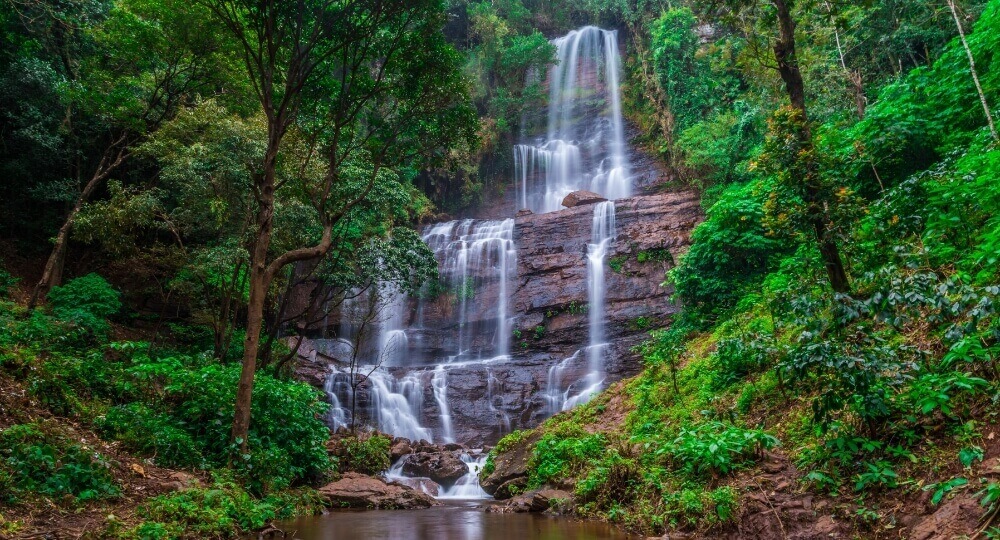
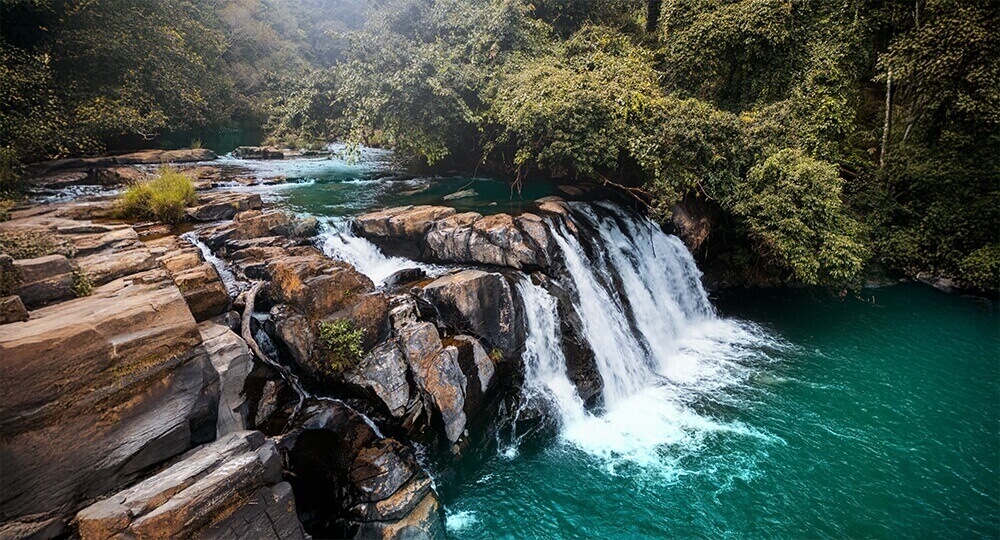

Jog Falls is one of India’s highest waterfalls.

Nandi Hills offers a famous sunrise viewpoint.

Chikmagalur is famous for its coffee plantations.

Bandipur Wildlife Sanctuary is a famous tiger reserve.
Badami Cave Temples are famous for their rock-cut art.

Cubbon Park is a famous green park in Bangalore.
Karnataka - Overview
By Purpose

Couples
For Newlywed Vacations

Family
For Family Vacations
Top Attractions
Hampi
Mysore Palace
Coorg
Chikmagalur
Jog Falls
Nandi Hills
Cubbon Park
Gokarna Beach
Pattadakal Temples
Hoysala Temples
Bandipur Wildlife Sanctuary
Nagarhole National Park
Lalbagh Botanical Garden
Udupi Sri Krishna Matha
Badami Cave Temples
Everything You Need to Know About Karnataka
Karnataka, the land of sandalwood and silk, is also renowned for its heritage monuments, the majestic and beautiful Western Ghats, pristine beaches, and delicious cuisine. From being the largest coffee-producing state to being India’s biggest tech hub, Karnataka has achieved overall growth and is now one of the most economically developed states. Besides its natural abundance and cultural heritage, Karnataka is also renowned for its people – the Kannadigas are humble, friendly, and deeply connected to their language and culture. Read on to learn more about the state, its people, and some of its tourist attractions.
Call us or send a message on Instagram to customise your Karnataka tour packages.
Table of Content:
- About Karnataka
- Tidbits
- Things To Know Before Choosing Karnataka Tour Packages
- Karnataka At A Glance
- Top Reasons To Choose Karnataka Tour Packages
- Best Time To Choose Karnataka Tour Packages
- Top Tourist Attractions In Karnataka
- Top Cities to Visit In Karnataka
- Shopping
- Dos and Don’ts of Visiting Karnataka
- Food
- Art and Culture
About Karnataka
There are different theories about the origin of the name Karnataka. Some suggest that the name was derived from Karu, meaning black soil, and Nadu, meaning land – thus, the land of black soil. Others suggest that the name is derived from two tribes: Karna and Nata. Irrespective of the backstory, there’s no denying that Karnataka is one of the most beautiful and culturally rich states in India, with a rich forest cover (21.2%) and a ₹30 trillion economy. The state is also home to the legendary Carnatic style of music, which, although it originated during the Vedic times, flourished during the Vijayanagara rule.
A visit to Karnataka will leave you in awe of its countless heritage monuments, temples, cosmopolitan cities, cuisine, wildlife sanctuaries, hill stations, palaces, and, not to mention, the awesome people. Kannadigas are some of the most loving and welcoming people. Read on to learn more about the state. Call us at +91 9940882200 to learn more about Karnataka tour packages.
History
The State of Karnataka was formed in 1956 when the Kannada-speaking regions merged and the limits of Mysore state were redrawn. However, Karnataka’s history dates back several centuries, when it was ruled by powerful dynasties such as the Mauryas, Nandas, and Chalukyas.
Karnataka’s prehistoric culture is often referred to as the hand-axe culture, thanks to the quartz and quartzite hand axes produced during the Palaeolithic age. You will find Megalithic and Neolithic sites with evidence of people living with domesticated animals like dogs, sheep, and cows.
While several dynasties ruled Kannada-speaking regions, a few, like the Hoysalas, the Vijayanagara Rulers, and the Bahamani Sultans, remain etched in time. The Vijayanagara Empire was one of the largest and most powerful empires of medieval India. Its rulers helped protect South India from Mughal/Muslim invasion from the north. They also promoted art and architecture, evidenced by the beautiful ruins of Hampi city. During their reign, Carnatic music grew into prominence, along with languages like Kannada, Telugu, and Sanskrit.
The Bahamani rulers who succeeded the Vijayanagara Empire promoted Indo-Islamic architecture through the construction of tombs and mosques. They also encourage handicrafts like Bidriware and Deccan painting.
The Hoysala kings are known even today for their temple architecture – even today, there are hundreds of temples scattered across Karnataka.
Modern Karnataka history encompasses the rule of dynasties such as the Wodeyars, the Nayakas of Keladi, and the Sultanate of Srirangapattana.
Geography
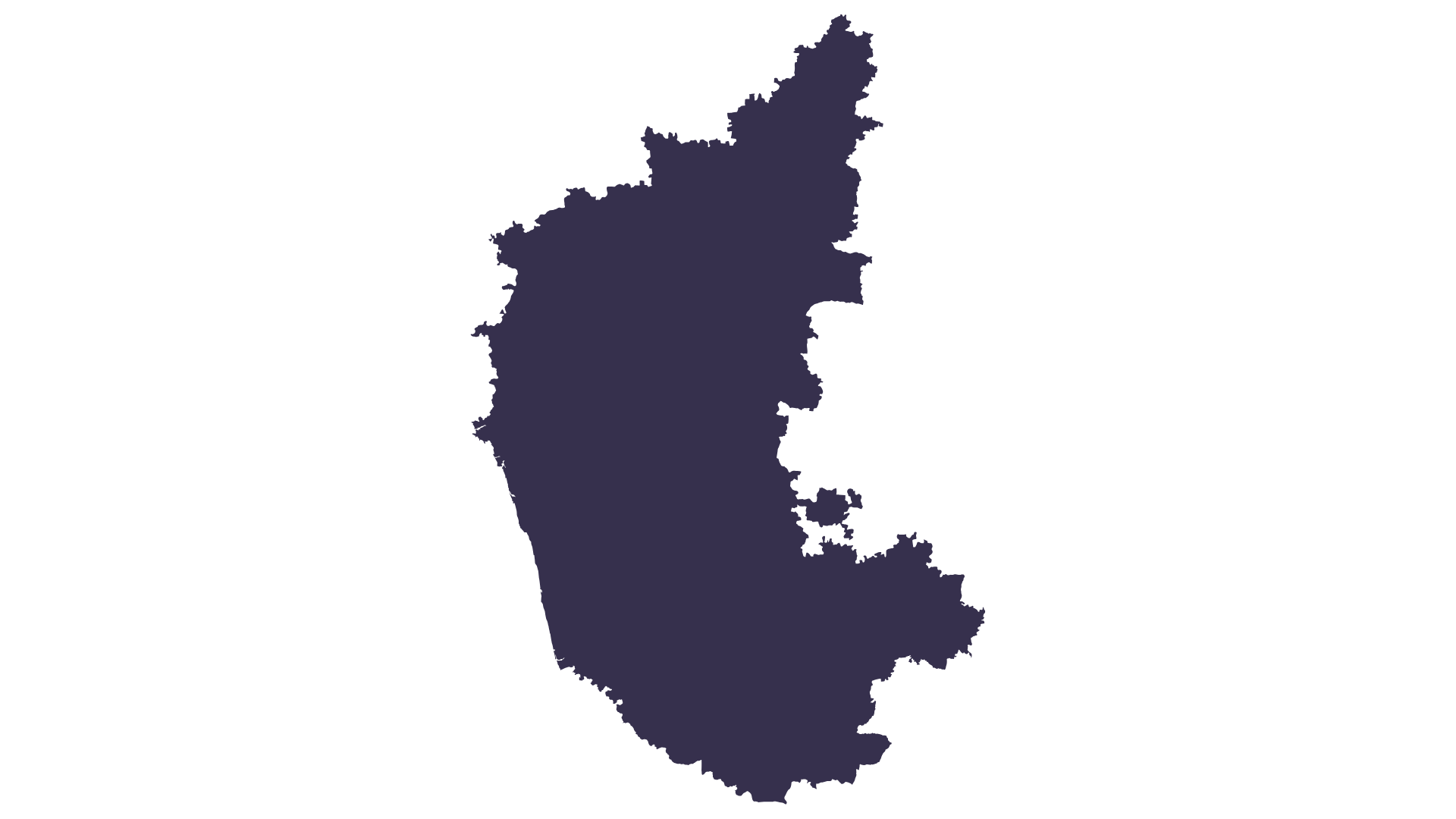
Karnataka shares borders with Maharashtra and Goa in the north, Kerala and Tamil Nadu in the south, and Andhra and Telangana in the east, and the Arabian Sea in the west. The state is divided into different geographical regions. For instance, coastal Karnataka is often referred to as Karavali or Canara and includes districts such as Udupi, Uttara Kannada, and Dakshina Kannada. Similarly, Malnad (also known as Malenad) encompasses parts of the Western and Eastern Ghats, including districts such as Chikkamagaluru, Kodagu, and Shivamogga.
Each region varies in terms of soil, flora and fauna, topography, and weather. For instance, the northern regions, such as Kalaburagi (Gulbarga), Bijapur, and Bidar, along the Deccan Plateau, have black soil suitable for crops like cotton, sunflower, and maize. However, the climate and topography of Coorg make it ideal for coffee and spices.
Similarly, Bengaluru has an average temperature of 28°C across the year, while the average annual temperatures in northern regions are around 33°C.
Call us at +91 9940882200 to learn more about our Karnataka tour packages.
Economy
Karnataka ranks third in terms of GDP and is even set to become a trillion-dollar economy in a few years. Besides the IT industry and the services sector, the state is a major agricultural producer. Karnataka is the highest coffee-producing state in India. It also produces a majority of cash crops like oil seeds, rice, millets like ragi, jowar, and maize, and fruits like bananas, mangoes, and sugarcane. Karnataka is also famous for its raw silk production and is India’s major supplier of sandalwood. In fact, the Bellary region is renowned for its Bellary onions, a pungent variety known for its durability. Karnataka is also a key producer of gold, iron ore, manganese, limestone, chromite, and bauxite.
Tidbits
- Karnataka is home to 6 UNESCO World Heritage Sites
- Karnataka is the highest producer of coffee, silk, coconuts, sandalwood and ragi
- The most Jnanpith Award recipients are from Karnataka – 8, in total.
- Mattur in Shivamogga is one of the few living Sanskrit villages in the world where the language is used for daily communication.
- Gol Gumbaz in Bijapur is the largest dome in India.
- The oldest manuscript of the Arthashastra by Kautilya is preserved in the Oriental Research Institute, Mysuru.
- Unchalli Falls in Shivamogga, Karnataka, is the highest waterfall in India.
- Bengaluru was the first city to have electric street lamps in India.
Things To Know Before Choosing Karnataka Tour Packages
- Bengaluru is notorious for its traffic congestion – plan in advance if your Karnataka tour package itinerary includes the city.
- Karnataka is vast and varied – you cannot explore the entire state in one go. We suggest you choose Karnataka tour packages that match your interests.
- Do not judge the climate of Karnataka based on Bengaluru’s climate alone – some parts of the state can be very hot and humid.
- Keep medicines, sanitation wipes, and mosquito repellents handy, especially in hill stations.
- If you’re interested in trekking and camping, book Karnataka tour packages through reputable tour agents. A lot of wildlife and forest-related activities need prior permission.
- Do not venture into private estates to enjoy the waterfalls without ensuring that the tour guide has proper permission.
- We suggest booking a homestay in hill stations like Coorg and Sakleshpura to experience living amidst the vast spice and coffee plantations.
- Given Karnataka’s diverse climate, some parts of the state can always be visited. The best time to choose Karnataka tour packages depends on what you’d like to explore.
- If you’re travelling from North India and are used to a wheat-based diet, carry ready-to-eat snacks. Karnataka cuisine is largely millet and rice-based, especially in the interiors.
Karnataka At A Glance
| Category | Details |
| Capital City | Bengaluru |
| Languages Spoken | Kannada (Official) Unofficial: English, Tamil, Hindi |
| High season | October to March |
| State flower | Lotus |
| State Animal | Asian Elephant |
| State Tree | Sandalwood |
| Top Cities | Bengaluru, Mysuru, Mangaluru, Hubbali-Dharwad, Hampi, Udipi |
| Top Tourist Attractions | Hampi, Coorg, Badami Cave Temples, Temples of Hoysala Kings, Bandipur Wildlife Sanctuary, Nagarhole National Park, Pattadakal Temples, Chikmagalur, Udipi Temples & more. |
| Famous Food | Benne Dose, Masala Dose, Bisibele Bath, Mysore Pak, Kori Gassi, Neer Dose, Jolada Roti |
| Souvenirs to Buy | Sandalwood, Mysore Silk Saree, Chennapatna Toys. Coffee, Dharwad Peda, Bidriware |
Planning a holiday to the land of sandalwood and silk? Call us to learn more about Karnataka tour packages?
Top Reasons To Choose Karnataka Tour Packages
Karnataka is a beautiful state, filled with stunning natural scenery, hiking trails, scenic waterfalls, heritage monuments, and spiritual sites. The region is so vast that it is impossible to explore the entire state in one go. We suggest you create customised Karnataka tour package itineraries exploring one region at a time. Some of the reasons to explore Sandalwood Land include:
Heritage Sites
Karnataka is home to four UNESCO World Heritage Sites, three of which showcase the state’s rich architectural history. The ruins of Hampi showcase life during the Vijayanagara Empire between the 14th and 16th centuries. The Sri Virupaksha Temple, with its intricate carvings, dates back to the 7th century and is one of Hampi’s major highlights.
The Pattadakal ruins in the Bagalakote District exhibit the architectural magnificence of the Chalukya kings. Located on the banks of the Malaprabha River, the entire complex consists of 10 major temples featuring intricate carvings and was even documented by Ptolemy in the 2nd century. Some of the iconic monuments in Pattadakal include the Virupaksha and Mallikarjuna temples, along with shrines dedicated to Shiva.
Hassan district is famous for its Hoysala temples in Belur and Halebidu towns. While there are plenty of temples, the most famous among these are the Chennakesava Temple and the Hoysaleshwara Temple. These are famous for their intricate carvings and beautiful sculptures.
Hassan is also home to the Lord Gomteshwara statue in Shravanabelagola, along with the Sankareshwari Temple.
The rock-cut cave temples of Badami tell stories of the Chalukya empire, with the most famous ones built in the 7th century AD. There are 4 rock-cut caves carved out of red sandstone, overlooking the Agastya Lake, along with the Bhutanatha temples. The caves are dedicated to Lord Shiva, Lord Vishnu, and Jain Tirthankaras.
Aihole is another heritage site and home to over 125 Chalukya temples and structures, along with Buddhist monuments.
Kalaburagi, Bidar and Bijapur are home to monuments built by rulers of the Deccan Sultanate, including the famous Gol Gumbaz and Bara Kaman. If you visit Badami as part of your Karnataka tour packages, don’t miss the Kalyana Chalukya Temple in the Jalasangvi village, dedicated to Lord Shiva. Similarly, Ashtoor in Bidar is home to the tombs of the Bahamani kings.
Temples
While several dynasties built temples across Karnataka, credit goes to the Vijayanagara kings for establishing Karnataka as a state rich in temples.
The Udipi Sri Krishna Temple is definitely the most famous of all, dedicated to Lord Balakrishna. The temple and the adjacent Matha (monastery) were built by Saint Madhavacharya in the 13th century.
Another popular temple that attracts devotees from across the world is the Kukke Subramanya Temple dedicated to Lord Subramanya. It is especially popular for its Sarpa Dosha Parihara, helping devotees get rid of the curses associated with snakes.
Sringeri is home to the Sharada Peetham, established by Adi Shankaracharya in the 8th century and is famous for the Sharadamba Temple dedicated to Goddess Saraswati. The Vidya Shankara Temple, dedicated to Lord Shiva, is equally famous.
The Murudeshwara Temple in Bhatkal is home to the world’s second-largest statue of Lord Shiva. The Chennakesava Temple is not only an architectural marvel but also a holy site for Vaishnavites.
The Kollur Moogambika Temple in Udipi is dedicated to Adi Parashakti and considered significant for worshipers of Shakti.
The Ranganathaswamy Temple in Srirangapatna is located on an island in the Kaveri River and dedicated to Lord Vishnu.
The Chamundeshwari Temple in Mysore is another famous shrine dedicated to Goddess Durga. She is the patron deity of the Mysore royal family and is considered one of the 18 Shaktipeethas.
But Karnataka isn’t only famous for temples. The state is home to several churches renowned for their distinctive architecture and festive celebrations. For instance, the St. Mary’s Basilica in Shivaji Nagar is a minor basilica, famous for the annual St Mary’s Feast. Similarly, St. Philomena’s Church is famous for its Gothic architecture and stained-glass windows.
Hill Stations
With the Western and Eastern Ghats passing through Karnataka, it is not surprising that the state is home to several beautiful hill stations with dense evergreen forests and abundant wildlife. Some of these hill stations are coffee and spice plantations, and a paradise for nature lovers. Coorg or Kodagu is undoubtedly one of the most popular hill stations included in our Karnataka tour packages. Often dubbed the Scotland of India, Coorg is famous for its coffee and spice plantations and is the perfect place to explore the culture of the local Kodava community. Don’t miss visiting Talakaveri, believed to be the birthplace of the Kaveri River.
Nandi Hills is the favourite destination of Bengalurians and is famous for its breathtaking sunrise and sunset views. Chikmagaluru is another popular hill station famous for its natural landscapes, coffee plantations, and adventure activities.
Monsoon is the perfect time to visit Agumbe, often called the Cherrapunji of South India. It is covered in lush rainforest and is famous for its many waterfalls and scenic viewpoints.
Kemmanagudi, another popular hill station near Chikmagalur, is famous for its scenic valleys and coffee and tea plantations.
Sakleshpura in the Malnad region is a popular hill station famous for its scenic viewpoints and waterfalls.
Some of the other hill stations you can explore with your Karnataka tour packages include BR Hills, Kudremukh, Male Mahadeshwara Betta, and Sirsi.
Wildlife Sanctuaries
Karnataka is home to five national parks and over thirty wildlife sanctuaries. Each of these offers a unique experience to tourists in terms of activities, flora, and fauna. The Bandipur National Park is one of the oldest in India and was even designated as a tiger reserve under Project Tiger. Besides tigers, you can witness an array of endangered animals like the hornbill, sloth bear, and over 200 species of birds.
Nagarhole, another national park, is famous for its huge population of birds and animals like the Indian leopard, Asian palm civet, and sambar deer.
Bannerghatta has been a wildlife corridor for elephants connecting the Biligirirangana Hills and Sathyamangalam forests. The national park also houses a zoo, a butterfly enclosure, and a snake house.
Head to the Anshi National Park and the Dandeli Wildlife Sanctuary to explore some of its major fauna, including the black panther, Bengal tiger, and the Malabar civet.
The Kudremukh National Park is home to Malabar giant squirrels, Malabar civets, and lion-tailed macaques.
Some of the other wildlife sanctuaries included in your Karnataka tour packages includes the Arabithittu Wildlife Sanctuary, Brahmagiri Wildlife Sanctuary, Cauvery Wildlife Sanctuary, and the Talakaveri Wildlife Sanctuary.
Beaches
To the west of Karnataka lies the vast Arabian Sea, ensuring beautiful and scenic beaches that are popular among tourists. The Kanara Coast or Karavali Coast covers the regions of Mangalore and Karwar and is home to some of the most picturesque beaches.
Gokarna, one of Karnataka’s most scenic beach destinations, is famous for its Om Beach, Paradise Beach, and Kudle Beach. Gokarna is also famous for its Mahabaleshwar Temple.
In Udipi, you must visit Malpe Beach, famous for its laidback charm and St. Mary’s Island. Other beaches in Udipi include Maravanthe and Kaup. The Padubidri Beach in Udipi is one of the only two Blue Flag beaches in Karnataka. The Panambur Beach in Mangalore is a famous picnic spot for locals and tourists alike, while Tannirbhavi is famous for being clean and well-maintained. Some of the other beaches in Mangalore include Someshwara and Ullal.
The Kasargod Beach is another certified Blue Flag beach offering a stunning view of the surroundings.
Murdeshwar is famous for the Murudeshwar Beach and the Bhatkal Beach.
Besides enjoying the aesthetic beauty of these beaches, you can enjoy activities like windsurfing, swimming, and white water rafting with our Karnataka tour packages. Don’t miss the Mattu Beach, a bioluminescent beach known to glow at night.
Cultural Attractions
Karnataka is known for its diverse festivals and celebrations. As tourists, you can enjoy Yakshagana, a traditional dance performance celebrated in several coastal districts like Dakshina Kannada, Udipi, Kasargod, and Uttara Kannada. Another beautiful cultural attraction of Karnataka, especially Tulunadu, is Bhootha Aradhana, also called Bhoota Kola. Bhoota Kola rituals are performed to honour forest spirits, called Bhootas. There are different forms of Kolas performed for different local deities. Each of these performances helps preserve oral histories and educate the younger generation about Karnataka’s culture and folklore.
Karnataka is also popular for the 10-day Dussehra Festival that begins on the first day of Navratri and culminates on Vijayadashami. The highlight of the festival is the Jamboo Savari, or the grand procession of Goddess Chamundeshwari.
Cuisine
Karnataka is renowned for its diverse and flavorful regional cuisine, which is made using locally available ingredients. For instance, coastal Karnataka is famous for its seafood, while North Karnataka is known for its millet-based dishes like Jolada Roti and Ragi Mudde. Some of the popular dishes you must try with your Karnataka tour packages include Benne Dose, Masala Dose, Mysore Pak, Neer Dose and Korri Rotti sampled with Chicken Gassi, Bisi Bele Bath, Maddur Vade and Mangalore Bun. Don’t miss the many Biryanis of Karnataka, like the Donne Biryani from Hoskote, Bhatkali Biryani from Bhatkal, and the Beary Biryani from Mangalore.
Waterfalls
Karnataka has some of the best waterfalls in India, thanks to the heavy rains that cascade dramatically from the high mountains of the Western Ghats. Jog Falls, also called Gersoppa Falls, is the second-highest and most beautiful waterfall in India.
The Irupu Falls in Kodagu are also called the Lakshman Tirtha and pass through the Brahmagiri Hills. Some of the other falls in Coorg include Abbey Falls. Some of the other falls in Karnataka include Achankanya Falls in Shimoga, Bandaaje Arbi Falls in Chikmagalur, Benne Hole Falls in Karwar, and Kadambi Falls in Kudremukh.
Best Time To Choose Karnataka Tour Packages
Karnataka has a subtropical to arid tropical climate, characterised by four distinct seasons: summer, monsoon, post-monsoon, and winter. However, the state’s dynamic weather changes from region to region, varying from arid to semi-arid in the plateaus, and sub-humid to humid in the Western Ghats and tropical in the coastal plains. The best time to choose Karnataka tour packages largely depends on the places included in the itinerary. For instance, you can explore places like Bengaluru, Coorg, and Chikmagalur all through the year. However, places like Hampi, Badami, and Bijapur are extremely hot in summer. Read on to learn more about the different seasons and the best time to choose Karnataka tour packages.
Summer (March to May)
Summer in Karnataka is hot and dry, with temperatures peaking at around 35°C across most regions. However, some areas, such as North Karnataka, are extremely hot, with temperatures hovering around 40°C. This region includes districts like Bijapur, Bidar, Kalaburagi, Raichur, and Bellary. To escape the heat, tourists often head to South Karnataka regions like Coorg, Chikmagalur, Bengaluru, Shimoga, and Hassan. While coastal cities like Udipi and Mangalore are warm, their proximity to the Arabian Sea helps moderate temperatures.
This the best time to explore Karnataka’s rich cultural heritage through festivals like Ugadi. The unique Kambala race season, where water buffaloes are raced across paddy fields, also concludes in March. The Vairamudi Festival in Melkote Cheluvanarayana Swamy Temple is also celebrated in summer, between March and April.
Monsoon (June to September)
Monsoons are typically hot and humid in Karnataka. The southwest monsoon winds bring rain to the state, but more importantly, ensure that its many waterfalls are brimming with water, showcasing their full power and splendour. Monsoon also brings fog and mist to these waterfalls, creating a breathtaking experience. At GT Holidays, we recommend exploring Agumbe, especially during the monsoon, as it is often dubbed ‘Cherrapunji of the South’ as the region receives the most rainfall, thereby transforming its landscape. Coastal places like Gokarna, Udipi, Mangalore, etc., look dramatic during the rainy season. However, we suggest you check with our tour planners before booking your Karnataka tour packages to the coastal cities.
If you are visiting Karnataka during this season, don’t forget to enjoy the many waterfalls in Shimoga, Chikmagaluru, and Sakleshpura.
Winter (October to February)
October to December is generally considered the post-monsoon season in Karnataka, but it’s nevertheless pleasant and not as humid. Some districts like Mysuru, Bengaluru, and Hassan experience northeast monsoon rains between October and December. Winter is the best time to choose our Karnataka tour packages as the weather is pleasant across the state. January and February are the coldest months with temperatures ranging from 15°C to 30°C. In places like Bengaluru, Mysuru, Coorg, etc., temperatures can drop as low as 10°C. Even in the hot northern plains, the temperature remains at a manageable 25°C.
This is the best time to experience Karnataka’s favourite festivals, including the 10-day Dussehra festival in Mysuru, the Kambala Race in Coastal Karnataka (Tulu Nadu), and the Hampi Festival arranged by the Karnataka government.
Top Tourist Attractions In Karnataka
Heritage Monuments of Hampi
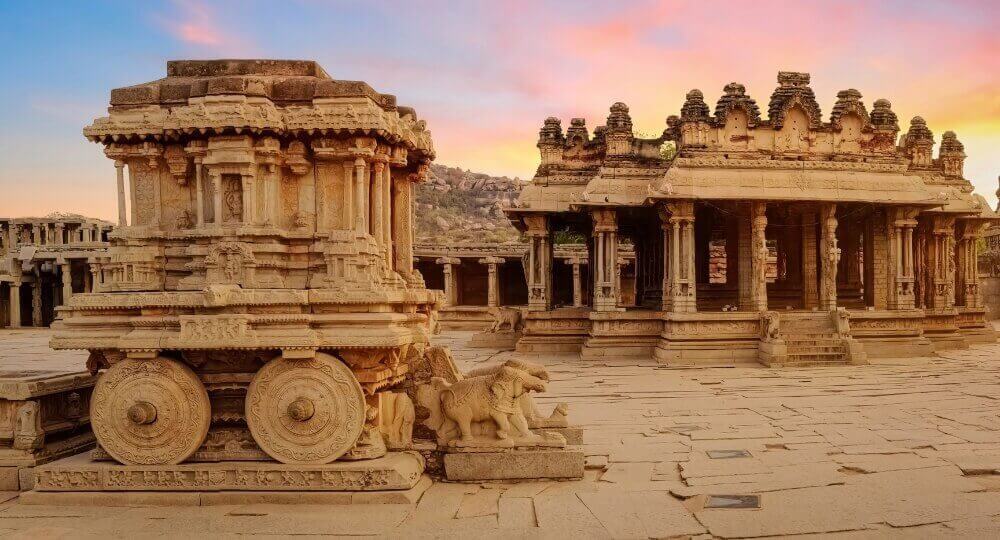
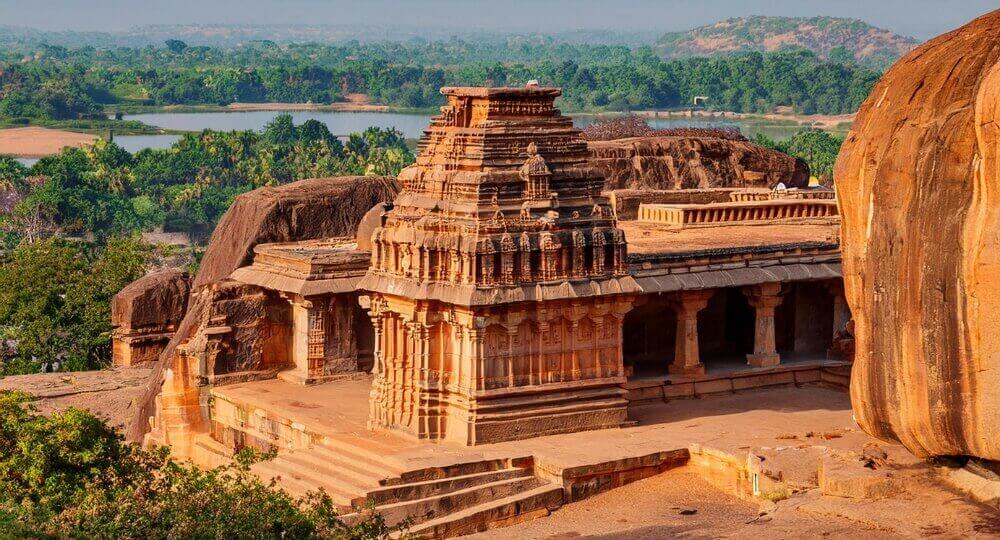
Hampi was once the capital of the Vijayanagara rulers, who built several monuments during their reign. Although most of the city was ransacked and destroyed, over 1600 surviving structures, including temples, granaries, and palaces, have survived. While a lot of these were constructed over their 200-year reign, a majority of them were constructed by Krishnadevaraya. Some of the famous Hampi monuments include the Virupaksha Temple, Hampi Bazaar, Hazara Rama Temple, and the Mahanavami Dibba.
Sharavanabelagola, Hassan
Shravanabelagola is an important pilgrimage centre for the Jains. The highlight of the place is the 57-foot statue of Lord Gommateshwara or Bahubali, constructed in the 10th century by Chamundaraya. The statue carved out of a single granite block is believed to be the world’s tallest monolithic. The most famous event in Shravanabelonga is the Mahamasthakabhisheka, where Jain priests anoint the statue with curd, milk, honey, etc.
Pattadakal Heritage Monuments, Bijapur
Pattadakal, situated on the banks of the Mahaprabha River in Bijapur, is a group of Chalukyan monuments that combine various architectural styles, including the Rekha, Nagara, and Dravida. The oldest of these monuments is the Sangamesvara Temple, built in the 7th century, while the Kasivisvesvara Temple was the last to be built. The Virupaksha Temple here is believed to have inspired the Rashtrakuta King Krishna I to carve the Great Kailasa Temple in Ellora.
Chennakesava Temple, Belur
The Chennakesava Temple in Belur, Hassan, is dedicated to Lord Vishu and famed for its intricate carvings and stone sculptures. The temple was commissioned in the 12th century by the great Hoysala king Vishnuvardhana and took 103 years to build. It is now a UNESCO World Heritage Site thanks to its invaluable artwork, including the Gravity Pillar, a sculpture carved out of a single rock but not touching the ground, so much so that you can pass a paper across it.
Hoysaleshwara Temple, Halebidu
The 12th century Sri Hoysaleshwara Temple in Halebidu is one of the largest Shiva temples built by the Hoysalas. The temple is built on a star-shaped base and features twin shrines. What makes the temple an art lover’s delight are the many intricate carvings of Hindu deities, ornate doorways, and the highly polished lathe-turned pillars. The temple also houses an archaeological museum with over 1500 sculptures of the Hoysala era.
Shri Kedareshwara Temple, Halebidu
The Halebidu Kedareshwara Temple was built in the 12th century by the Hoysala King Veeraballala II. Dedicated to Lord Shiva, the temple is famed for its beautiful architecture and intricate carvings depicting Hindu deities. It is a protected monument under the Archaeological Survey of India because of the beautiful sculptures and artwork.
Mysuru Palace, Mysuru
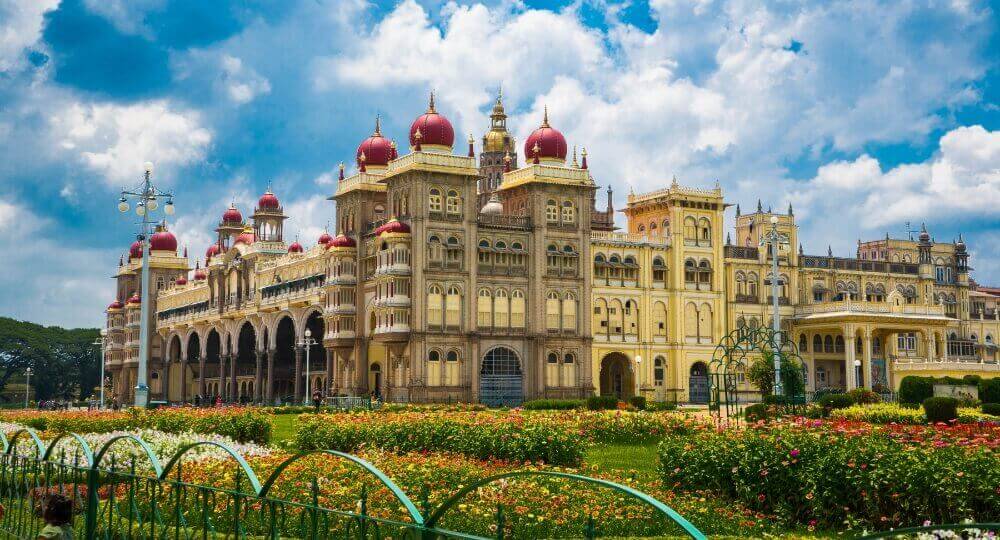
The Amba Vilas Palace in Mysuru is the official residence of the royal family of Mysore, the Wodeyars. The palace is known for its mahogany ceilings, stained glass, glazed tiles and other exquisite artworks. It was built in the 14th century to replace the original palace, which had been constructed of wood and destroyed three times in the past. Besides the grand architecture, you must check the Gombe Thotti or Doll’s Pavilion, where the Golu dolls of Navaratri were once on display. Another highlight you must not miss when visiting the palace with your Karnataka tour packages is the Golden Throne, also known as Ambari, which carries the idol of Goddess Chamundeshwari during the Dussehra procession.
Nagarahole Tiger Reserve Mysuru - Coorg
The Nagarahole National Park and Tiger Reserve is situated between Coorg and Mysuru amidst the Nilgiri Biosphere Reserve. It was one of the first reserves to become part of Project Tiger launched in 1973. Some of the animals you can spot here include the Royal Bengal tiger, deer, antelope, leopard, and wild boar.
Bandipur National Park, Chamarajnagar
Located on the Mysore Coorg highway, the Bandipur National Park shares boundaries with the Wayanad National Park in Kerala, the Mudumalai National Park in Tamil Nadu, and the Nagarahole National Park. The park was once the hunting grounds of maharajas and British officers. Besides tigers, the national park is home to several animals and birds endemic to the Western Ghats. Some of the activities you can enjoy here include jeep safari, mini-bus safari, and trekking.
Jog Falls, Shivamogga
The Jog Falls are locally called Gerusoppe Falls. They are one of India’s most beautiful waterfalls and the second-highest in India. This cascading beauty is formed by the Sharavati River and is surrounded by dense evergreen forests. The water falls as four beautiful cascades: Raja, Rani, Roarer, and Rocket. Tourists can view the falls from a distance from two open viewing decks – one located near the entrance and the other near the inspection bungalow. Some of the activities around the Jog Falls include kayaking, coracle riding, and trekking.
Sri Moogambika Temple, Udipi
The Kollur Moogambika Temple in Udipi is dedicated to Goddess Adi Parashakti. The temple, situated on the banks of the Souparnika River, is considered a powerful Shakti Peetham. The deity is worshipped here as a jyotirlinga and is believed to be a manifestation of Parvati, Saraswati, and Mahalaxmi.
Bengaluru Palace, Bengaluru
The Bengaluru Palace was built in the 19th century by Shri Chamaraja Wodeyar and was modelled on Windsor Castle in England. Built over a 454-acre campus, the Bengaluru Palace features over 34 bedrooms, fortified watch towers, and turrets. It also houses invaluable artworks by Raja Ravi Varma and numerous animal trophies hunted by the Wodeyar maharajas.
Lalbaugh, Bengaluru
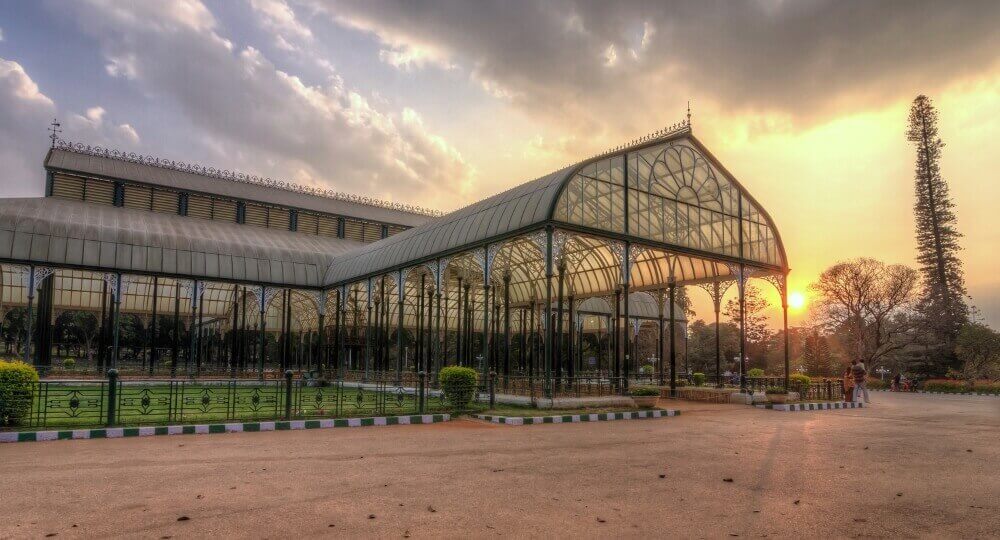
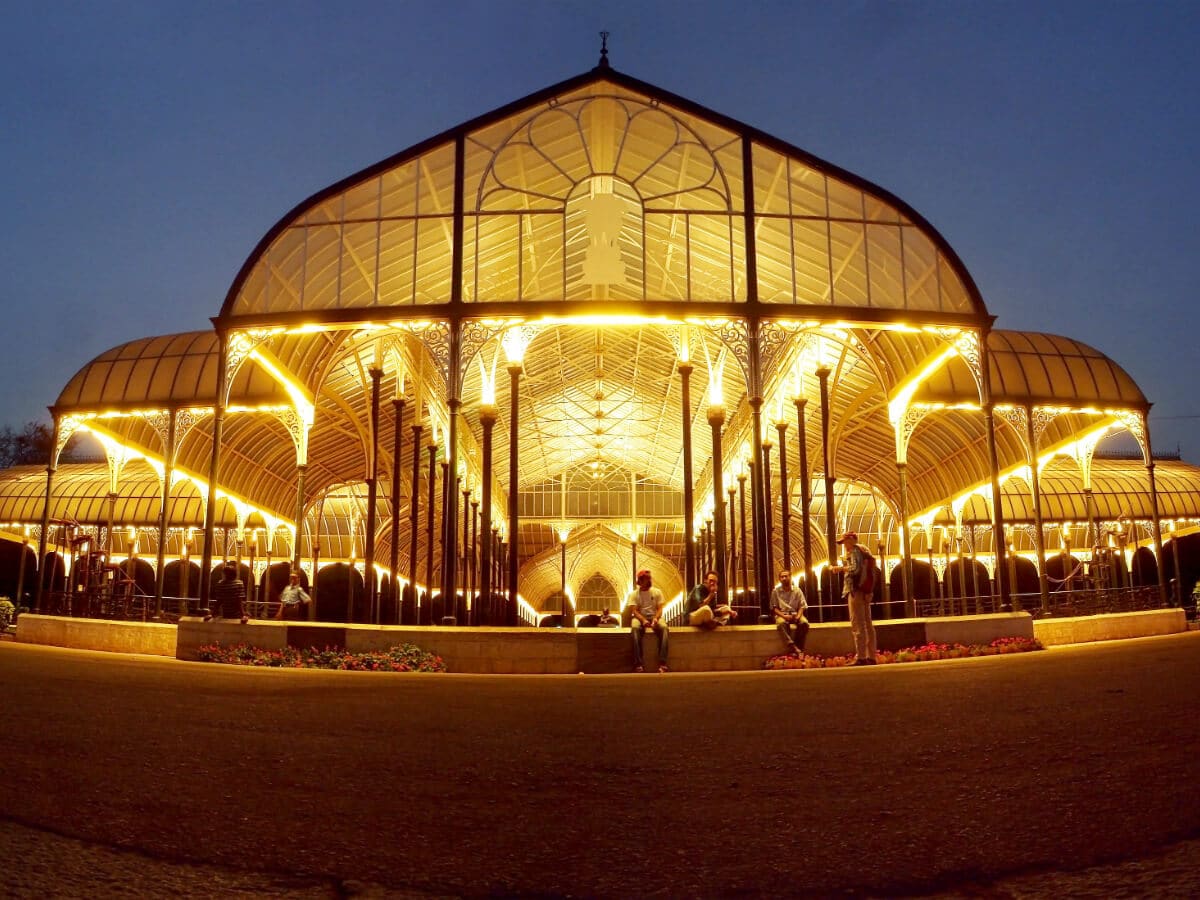
The Lalbaugh Botanical Garden was built in the 18th century by Hyder Ali and features over 2000 species of rare plants and flowers, and even a 3-billion-year-old rock. Spread over 240 acres, the garden also features a Glass House that was inspired by the Crystal Palace in London’s Hyde Park. The White Silk Cotton tree near the West Gate of the garden is the oldest tree and could be over 300 years old.
Cubbon Park, Bengaluru
Officially called Sri Chamarajendra Park, Cubbon Park is one of Bengaluru’s most famous landmarks. Spread over 300 acres, the garden is full of fountains, statues, and lush greenery. Highlights of the park include the Seshadri Iyer Memorial Hall and the children’s toy train.
Bannerghatta Biological Park, Bengaluru
The Bannerghatta Biological Park, located 22 km from Bengaluru city, is one of the best places to observe the elusive white tigers. Besides tigers, you can observe lions, crocodiles, panthers, deer, and birds. You must also check the Butterfly Park, which is home to over 48 species of butterflies. As part of your Karnataka tour packages, you can enjoy jeep safaris, lion safaris, and bus safaris.
Nandi Hills, Chikkaballapur
The serene Nandi Hills are the perfect weekend getaway for Bengalurians looking to escape the city. The place gets its name from the shape of the hills that resemble a sleeping bull. The hills were once a summer retreat for royal kings, including Tipu Sultan, the Marathas, the Paleyagars of Chikkaballapur and the British. Besides admiring the sunrise and sunset, you must also visit the Yoganandishwara and the Bhoganandishwara temples in Nandi Hills.
Badami Cave Temples, Bagalkote
The Badami Cave Temples are a complex of four Buddhist and Jain temples from the 6th century. The caves, cut out of red sandstone, are adorned with carved pillars and statues of different Hindu and Jain deities. One of the caves is dedicated to Lord Nataraja striking 81 dance poses. The temples blend different architectural styles, including Nagara and Dravidian designs.
Badami Fort, Bagalkote
Badami in Bagalkote was once the capital of the Chalukya dynasty and is known for its beautiful buildings and forts. The Badami Fort was built in the 6th century by Pulakeshin I and strategically placed to protect its residents from invading armies.
Dubare Elephant Camp, Coorg
The Dubare Elephant Camp is located on the banks of the Kaveri River and is an important base for elephants and other animals like spotted deer, sambhar, wild dog, and gaur. The camp was initially started to house elephants involved in human-animal conflict and to train them for various activities, including the Mysore Dasara celebrations. Today, tourists can stay in the adjoining lodge while participating in grooming sessions, feeding them, and even observing how Mahouts train elephants.
Namdroling Monastery, Coorg
Also called Golden Temple, the Namdroling Monastery is the largest in South India and was founded in 1963. The main attraction of the temple is the statues of Lord Buddha, Lord Amitayus and Lord Padmasambhava. It is also the largest Tibetan settlement outside Tibet, housing over 70,000 Tibetans, including over 6000 monks.
Virupaksha Temple, Hampi
The 7th-century Virupaksha Temple in Hampi is the only shrine that remains intact even when other structures were ruined by the Bahmani Sultanates. It is one of India’s oldest active temples, worshipped even today after a thousand years. A striking feature of the temple is the musical pillars that produce musical notes when struck.
St Philomena’s Church, Mysuru
This Neo-Gothic cathedral was built in 1843 by Mummudi Krishnaraja Wodeyar, the Maharaja of Mysore. It was built in memory of Saint Philomena and inspired by the Cologne Cathedral in Germany. The church, designed in the shape of a cross, can accommodate up to 800 people. It looks beautiful with its twin spires and stained-glass windows that were made in France.
Iruppu Falls, Coorg
Located in the Brahmagiri Range of Kodagu District, Iruppu Falls is a popular tourist attraction. It is also called Lakshmana Tirtha Falls because of a legend that says Lord Rama and his brother Lakshmana visited here. The cascades look beautiful because of the evergreen forests surrounding the waterfalls. The trek to Iruppu Falls is equally scenic because of the coffee plantations and thick forests that you must cross.
Kadri Manjunatha Temple, Mysuru
The Manjunatha Temple in Kadri is dedicated to Lord Shiva and is believed to be the oldest Shiva temple in Mysuru. This 11th-century temple also has natural spring tanks with laterite caves called Pandava Caves. It is also a popular place for the annual Kambala or Water Buffalo Race.
Hasanamba Temple, Hassan
The Hassanamba Temple in Hassan is dedicated to Goddess Ambe, a manifestation of Goddess Shakti. However, it is open only once a week every year during Deepavali. The temple was constructed in the 12th century by the Hoysala Kings. It is believed that the offerings to the deities, including a ghee lamp, remain fresh and lit for the entire year until it is opened.
Shri Doddagaddavalli Lakshmi Devi Temple, Hassan
This beautiful Lekshmi Devi Temple in Doddagaddavalli Village is built in the Hoysala style by a 11th-century merchant Kullahana Rahuta. It is built with soapstone and is the only example using Chatuskuta order of temples. The temple has two entrances – while the east entrance takes you through a porch, the west gate opens to the lake.
Arasikere Shri Chandramouleshwara Temple, Hassan
The Chandramouleshwara Temple in Arasikere is also called the Ishwara Temple and is dedicated to Lord Shiva. The temple was built in the 13th century by Veera Ballalla. Although modest in size and sculpture, the temple is considered the most complex of all Hoysala architecture thanks to a 16-point star-shaped mandapa and an asymmetrical star-shaped shrine. The exquisitely carved roof panels and lathe-pillars are equally mesmerising.
Shri Bucheshvara Swamy Temple, Hassan
Another beautiful temple of the Hoysala period, the Bucheshvara Temple in Koravangala, is dedicated to Lord Shiva. It was constructed to celebrate the coronation of King Veera Ballala II in the 12th century by a wealthy merchant, Buchiraja. The temple is known for its beautiful and ornate sculptures.
Shri Kappe Chennigaraya Temple, Hassan
Within the Chennakesava Temple complex is the smaller Kappe Chennigaraya Temple dedicated to Lord Vishnu. It was commissioned by Shantala Devi, the Queen Consort of King Vishnuvardhana in the 11th century. It is less ornate than the Chennakesava Temple but has two sanctum sanctorums – one in the west and the other in the south. The name Kappe refers to frog in Kannada – legend has it that when carving the statue of Chennakesava, the sculptor’s son found a frog in the belly of the sculpture.
Gol Gumbaz, Bijapur
The Gol Gumbaz, also known as the Round Dome, is the largest dome in India and a 17th-century mausoleum dedicated to Mohammed Adil Shah. Another striking feature of the structure is its iconic acoustic features, with sounds believed to reverberate 10-11 times, so much so that even whispers are known to reverberate loudly within the building. The complex also hosts an archaeological museum in the Naqqar Khana.
Maravanthe Beach
The Maravanthe Beach is a picturesque beach in Udipi and is sandwiched between the Arabian Sea on one end and the Souparnika River on the other. The best way to enjoy Maravanthe is to drive on the highway enjoying the view of the sea on one side and the river on the other. Don’t miss enjoying the sun setting over the Arabian Sea in the evening.
Call us at +91 9940882200 to learn more about our Karnataka tour packages.
Top Cities to Visit In Karnataka
Bengaluru
Karnataka’s capital city is also India’s Silicon Valley, thanks to the multiple tech-based companies in and around Bengaluru. People love the city because of its cool vibes and pleasant weather. It is also famous for its gardens, quaint eateries, and old-world charm. Some of Bengaluru’s iconic tourist attractions include Lalbaugh, Cubbon Park, and Tipu Sultan’s Palace. You can explore the city with our Bengaluru tour packages. (provide link to the keyword).
Mysuru
Karnataka’s cultural capital, Mysuru, is considered one of the cleanest cities in India and is known for its pleasant climate. It is the seat of the erstwhile kingdom of Mysuru and the present royal family, the Wodeyars. The city is famous for its traditional silk industry and its sandalwood factory. Located on the foothills of the Chamundi Hills, Mysuru is famous for its palaces, viz., the Amba Vilas Palace, the Lalit Mahal Palace, and the Chittaranjan Palace. Other attractions in Mysore include Mysuru Zoo, St. Philomena’s Cathedral, Brindavan Gardens, and the Lingambudhi Kere.
Madikeri
Madikeri is the district capital of Kodagu and is often used synonymously with Coorg. The beautiful hill station is known for its coffee and spice plantations and cascading waterfalls. Some of Madikeri’s iconic attractions include Madikeri Fort and Raja’s Seat. To learn more about Madikeri, check our Coorg tour packages.
Mangaluru
Also called Mangalore, this beautiful city is a major seaport and the largest in the Dakshina Kannada district. The coastal town is famous for its pristine beaches, Tuluva and Konkani culture and yummy cuisine. Some of Mangalore’s top tourist attractions include the Mangaladevi Temple, St. Aloysius Chapel, Kadri Manjunatha Temple, and the Rosario Church in Bolar. Not to mention, some of Mangalore’s beaches, like Kapu and Panambur, are breathtakingly beautiful.
Karwar
The coastal city of Karwar in Uttara Kannada District is often dubbed the Kashmir of Karnataka because of its scenic beauty and lush greenery. Karwar is renowned for its tranquil beaches, distinctive culture, delectable cuisine, and diverse water sports. Some of Karwar’s top tourist attractions include Rabindranath Tagore Beach, Devbagh Beach, Sadashivgadh Fort, and Kurumgad Island, where you can spot dolphins.
Talakaveri
Talakaveri is around 45 minutes from Coorg and is believed to be the source of the Kaveri River. Located on the Brahmagiri Hills, it includes the Goddess Kaveramma Temple and the Brahma Kundike, where the river emerges as a spring and then disappears underground, only to reemerge near Bhagamandala. Every year, thousands of tourists and locals visit Talakaveri to pray during the Tulu Sankramana day. Besides visiting the temple, you can explore the surrounding places that look beautiful from a vantage point.
Chikmangaluru
Chikmagalur is a charming hill station on the Mullayanagari Peak and is famous for its scenic greenery, coffee plantations, and cascading waterfalls. It is a popular honeymoon destination and a favourite haven of nature enthusiasts who visit the Bhadra Wildlife Sanctuary. Some of Chikmagaluru’s famous attractions include Baba Budangiri, Hebbe Falls, Hirekolale Lake, Kemmanagudi Peak, Khandya, and the Kudremukh National Park. It is also one of the few places in Karnataka where the Neelakurinji blooms once every 12 years.
Udupi
The beautiful coastal town of Udipi is famous for its Sri Krishna Temple and Math established by the great Vaishnavite Saint Madhavacharya. Udipi also holds a distinguished place among fans of South Indian food – it is believed that the famous Dose, especially the Masala Dose, was invented in Udipi. The town is also famous for two Lord Shiva temples, the Anantheshwara Temple and the Chandramauleshwara Temple.
Hampi
Hampi is a UNESCO World Heritage Site on the banks of the Tungabhadra River. It was once the capital of the Vijayanagara Empire during the 14th century and flourished in trade, drawing people from as far as Persia and Europe. The town is now famous for the many monuments built by the Vijayanagara Kings, but later ruined and abandoned. Some of the ruined monuments include temples, markets, and palatial homes. Some of the famous ruins in Hampi include the Virupaksha Temple, the Vittala Temple, the Zenana Enclosure, the Mahanavami Dibba, and the musical pillars.
Hassan
Hassan is a city and district in Karnataka famous for its historic Hoysala architectural temples and ruins, the most famous being the Chennakeshava Temple in Belur. The city is named after Goddess Hassanamba, also called the Smiling Mother. Some of the popular tourist attractions in Hassan include the Hoysala temples of Belur, the Hoysala temples and Jain monuments of Halebidu, Manjarabad Fort, Gorur, Holenarasipura, and Shravanabelagola.
Chitradurga
Chitradurga is a historically significant place famous for its forts, temples, and monasteries. The city was once ruled by several dynasties, including the Satvahanas, Kadambas, Chalukyas, Pallavas, Rashtrakutas, and the Cholas. Each of these dynasties built several monuments that are now famous. Some of the top tourist attractions in Chitradurga include Chitradurga Fort, which is locally called Elusittina Kotte, meaning the Fort of Seven Circles. Some of the temples within the fort include the Siddeshwara Temple, Hidimbeshwara Temple, and the Gopalakrisha temple.
Aihole
Aihole is a beautiful village in Bagalkote district and an archaeological site featuring cave temples and other monuments of the Chalukya dynasty. The place is also part of Hindu mythology, wherein locals believe that the soil is red because Lord Parashurama washed his axe after killing the Kshatriyas. Today, Aihole is home to the Durga Temple, the Ravana Phadi Cave, and the nearby Pattadakal temples.
Belgaum
Belgaum, now renamed as Belagavi, is a city and district, and is often considered Karnataka’s second capital. The city was earlier called Venugrama or Bamboo Village and was famous for its cotton and silk weavers. It is also home to ancient forts and temples, including famous monuments like Belgaum Fort, Yellur Fort, Gokak Falls, and Jamboti Hills. Other attractions include Kittur Fort and Parasgod Fort.
Bidar
Often called the City of Whispering Monuments, Bidar is an ancient city famous for its monuments, including forts, tombs, and palaces. It was once at the centre of the Bahamani Sultanate and the Barid Shahi Dynasty. Some of the popular masterpieces you can experience in Bidar include Bidar Fort, the Bahamani Tombs in Ashtoor, Gagan Mahal, Rangin Mahal, and Takhat Mahal.
Bijapur
Bijapur is a city and district and officially called Vijayapura. This ancient city is now famous for its monuments, mosques, and palaces of the Bahamani Sultanate. Although founded by the Kalyani Chalukyas, it was later ruled by the Adil Shahi kings, who built several monuments, the most famous being Gol Gumbaz, India’s largest dome. Some of the other monuments include Ibrahim Rauz, Jumma Masjid, and the Bijapur Fort.
Bylakuppe
Bylakuppe is a part of the Coorg District and is renowned for its large Tibetan settlement. In fact, it is the largest Tibetan settlement outside of Tibet. The most famous monument in the town is the Namdroling Monastery. It also has plenty of Buddhist monasteries, nunneries, and schools. Don’t miss some of the street food stalls selling authentic Momo and Thupkas.
Agumbe
Agumbe in Shimoga is called the Cherrapunji of South India because of the heavy rainfall it experiences all through the year. The place is also called the Cobra Capital of India because of the number of cobras found here. People visit here to view the sun set into the Arabian Sea as you will likely get a clear line of sight of about 40 km. Some of the popular attractions in Agumbe include Jogi Gundi Falls, Barkana Falls, Onake Abbi Falls, and the Agumbe Viewpoint.
Srirangapatna
The town of Srirangapatna in Mandya District was once the capital of the Mysore Kingdom during the reign of Hyder Ali and Tipu Sultan. It is also famous for the Ranganathaswamy Temple, which is called Adiranga and is the first of three Ranganathaswamy Temples. Today, besides the temple, you can visit the Ranganathittu Bird Sanctuary, Dariya Daulat Bagh, and the Srirangapatna Fort.
Sakleshpura
Sakleshpura in the Malnad region is famous for its lush green forests and abundant wildlife. The fertile land was also conducive for coffee, pepper and areca nut farming, making its people prosperous. During the reign of Tipu Sultan, the place became a vital defence fortification against the British. Some of the top attractions in this quaint hill station include the Manjarabad Fort, Abbey Falls, Hemavati Reservoir, and Jenukal Hill.
Badami
Badami is a small town in the Bagalkote District, famous for its heritage monuments. It was once the capital of the Chalukya Empire between the 4th and 8th centuries, when it was called Vatapi. Today, Badami is famous for its rock-cut cave temples, some dedicated to Hindu Gods and some dedicated to Jain Tirthankaras. It is also home to the Mallikarjuna Temples, the Badami Fort, Agastya Lake, and the Archaeological Museum. The Malegitti Shivalaya Fort and the Banashankari Amman Temple.
Shivamogga
Shimoga or Shivamogga is a city and district famous for its scenic landscape dotted with waterfalls and paddy fields. The city was once ruled by several dynasties like the Chalukyas, Kadambas, and the Hoysalas. Shimoga is famous for its temples, palaces, and monuments. Some of the popular tourist attractions in Shivamogga include Jog Falls, Kundadri Hills, Agumbe Rainforest, and Kaveladurga Fort.
Sringeri
Sringeri is the first of the four mathas established by Adi Shankaracharya. The town is famous for the Sharada Peetham and the Sharadamba Temple. It is also home to the 14th-century Sri Vidyashankara Temple, dedicated to Vidya Ganapati, Goddess Durga, Brahma, Vishnu, and Mahesh.
Kundapura
This beautiful coastal town in Udipi District was once part of the Vijayanagara Empire and later under the rule of the Portuguese. Kundapur gets its name from the Kundeshvara Temple and is today one of its most important tourist sites. Some of the top tourist attractions in Kundapura include Kodi Beach, Anegudde Vinayaka Temple, and Maravathe Beach.
Kollur
Kollur is a beautiful village in Udipi district, famous for the Mookambika Temple. The village gets its name from the Western Ghats, with Koll meaning mountain and Ur meaning village. Kollur was once associated with several royal dynasties, including the Kadambas, Chalukyas, and the Hoysalas. When visiting the Mookambika Temple, don’t miss visiting the Souparnika River, which flows adjacent to the temple. Tourists visiting the Kollur Mookambika Temple also visit the Sigandur Chowdeshwari Temple.
Melukote
The picturesque town of Melukote in Mandya district is a famous Vaishnavite pilgrimage site. It is famous for the Cheluvanarayana Swamy Temple and the Yoga Narasimha Swamy Temple, and is considered the birthplace of Sri Ramanujacharya. The Melukote Puliyogare is famous across Karnataka, and the Puliyogare paste sold by the local Iyengar shops is a popular souvenir.
Kemmangundi
This beautiful hill station in Chikmagaluru is famous for its ornamental gardens and picturesque valley views. You can enjoy scenic views of the valley and lush vegetation. Some of the main attractions in Kemmanagudi include Z point, Shanti Falls, Hebbe Falls, and Rose Garden.
Murdeshwar
This beautiful coastal town in the Uttara Kannada district is famous for the Shiva Temple. Sandwiched between the Western Ghats and the Arabian Sea, Murudeshwara looks scenic. Although the Murudeshwara Temple is believed to be hundreds of years old, it was renovated, and the Shiva statue was built by philanthropist R N Shetty.
Gokarna
The coastal city of Gokarna is famous for its beaches and temples. The town gets its name from a legend that Lord Shiva emerged from the ear of a cow from this town, thus the name Gokarna, as in Cow’s Ear. The most famous monument in Gokarna is the Atmalinga statue, an idol of Lord Shiva.
Honnavar
The town of Honnavar in the Uttara Kannada district looks extremely beautiful and has an equally fascinating history. It is also famous for its suspension bridges, waterfalls, and mangrove forests. Some of the popular attractions in Honnavar include the Sharavathi River, Basavaraja Durga Island, Kasarkod Beach, and the Apsarakonda Falls.
Shopping
Karnataka is not only famous for its ancient ruins and temples but also for its shopping opportunities. Each region is famous for its unique offerings. While Bangalore is famous for its malls and streets selling affordable fashion, places like Mysore are known for their exquisite silk sarees and sandalwood products. Here’s a list of things you can buy with your Karnataka tour packages.
What To Buy
Mysore is famous for Mysore silk sarees, Ganjifa cards, Mysore paintings, sandalwood products and rosewood artefacts. Mysore pak is a popular souvenir and along with incense sticks and stone sculptures. Don’t miss the Channapatna toys in Channapatna.
In Coorg, you can buy coffee, spices, homemade wine, Kachampuli, oranges, natural honey, and essential oils. Malnadu is also famous for its Kasuti work, bamboo products, wild mushrooms, and rosewood products.
In coastal areas like Mangalore and Udipi, you can buy coconut oil, Udipi cotton, dry fish, cashews, Mangalore halwa, shell crafts, and Kambala figurines.
If you are visiting North Karnataka, remember to buy Iilkal sarees in Bagalkote, pedas from Dharwad, Bidriwork from Bidar, Byadgi chillies and wooden handicrafts in Bijapur.
Dos and Don’ts of Visiting Karnataka
- Kannadigas are sensitive about language – do not expect everyone to speak to you in your language.
- Kannadigas are polite and humble, but do not appreciate rude behaviour and may give you a taste of your medicine.
- Do not discuss the Cauvery dispute or other politically sensitive subjects with strangers.
- Regions like the Western Ghats are ecologically sensitive places – do not litter or carry plastic.
- Be mindful of heritage sites – do not litter or vandalise them.
Art and Culture
Karnataka’s art and culture are diverse, featuring distinctive performing arts and traditional crafts. But the state is most known for its contribution to Carnatic music, which attained new heights during the rule of the Vijayanagara kings. Saint Purandaradasa, during the 15th to 16th centuries, composed thousands of religious songs and introduced several ragas.
The state is home to several dance forms, including Kuchipudi, the classical dance form. Some of the local dance forms native to the state include Yakshagana, Dollu Kunitha, and Beesu Kamsale. The Kodava tribesmen are renowned for their distinctive cultural dance performances, such as Ummathat and Kombaat. While not strictly a dance form, Tulunadu is renowned for its Bhoota Aradhane, a ritualistic dance that celebrates the connection between humans, nature, and divine spirits.
Puli Vesha, Gombe Atta, and Veeragaase are some of the other local dance forms popular in different regions of Karnataka.
As for music, besides the classical Carnatic music, some popular folk music includes Karadi Majalu and Kamsale.
Mysore paintings of Karnataka are famous, tracing their origin to the Vijayanagara Empire. These paintings feature traditional hues like green, red, and yellow, sourced from natural sources and blended with real gold.
Chennapatna is renowned for its handcrafted wooden toys, which are meticulously painted with natural dyes. Similarly, the Chitrakathi scrolls are known for their intricate paintings that often tell stories from the Mahabharata and the Ramayana.
The Kasuti embroidery is an ancient art that belongs to the 7th century and was popularised by the Chalukyas.
Silk weaving is another ancient handicraft that was probably encouraged by the Wodeyars in the 18th century. Mysore silk sarees are now famous across the world and a popular souvenir. North Karnataka is famous for Bidriware, the traditional Indo-Persian metal handicraft where gold or silver is inlaid on metal to create high contrast designs.
Sandalwood carving is another traditional handicraft popular in Mysore, which has been practised in the region for over a thousand years.
Karnataka also has a rich textile and handloom history. While Mysore is famous for its Mysore silk, regions like Bagalkote are famous for their Ilkal sarees. Udipi is famous for its cotton sarees.
Food
Karnataka’s geographical diversity makes its cuisine unique and varied. In fact, you can divide the state into different culinary zones. For instance, north Karnataka cuisine is dominated by millets, especially jowar. Jolada Rotti is a North Karnataka staple served with jhunka, chutneys, and salads. The hilly regions of Malnad are known for their bamboo, banana and yam-based dishes served with rice and rice-based flatbread called Akki Rotti. Within Malnad, Coorg maintains its own culinary uniqueness with dishes like Pandi (pork) Curry and ingredients like Kachampuzhi and different varieties of wild Kummu (mushrooms).
The coastal region that extends from Karwar to Mangalore is known for its seafood varieties served with Korri Rotti, rice, and Neer Dose. While Northwest Karnataka cuisine is influenced by Maratha and Konkani cuisine, the Gulbarga and Bidar regions are influenced by Andhra cuisine in terms of meat, spices, and ingredients like Sorrel leaves. Similarly, South Karnataka cuisine is renowned for its millet-based dishes, such as Ragi Mudde, and rice preparations like Bisi Bele Bath and Vangi Bhath.
But if there’s a place where you can sample of all these in a single city, it has to be Bengaluru. The city is a melting pot of the state’s varied food traditions served through its various Darshinis, Udipi hotels, military hotels, messes, highway hotels, Gowdru Manes, and upscale joints.
Even the festivals are a great way of exploring Karnataka’s varied cuisine. For instance, Ugadi is a great time to sample Bevu Bella, a bitter, sweet, sour, and hot paste made from neem, jaggery, tamarind, mango, and chilli. If you are in Coorg during Huthri, don’t forget to sample some of their unique dishes like Thambuttu, a banana and roasted rice flour based dish and Kuvaleputtu, a dessert made from rice flour, jaggery, coconut and jackfruit (or banana). Makara Sankranti is a great time to sample Chakkara Pongal, the tangy Puliyogare, and the Ellu Bella, a chutney made using sesame, jaggery, coconut, gram, and peanuts.
Must Try Food
Some of the popular must-try foods with your Karnataka tour packages include:
Ragi Mudde
Ragi is a significant millet in Karnataka, particularly in the southern districts of Hassan, Mandya, and Kolar. It is prepared using ragi flour, cooked with rice and water, and shaped into round balls, served with sambhar, meat curry, or a spicy curry that complements its bland taste. This is a staple of the poor, thanks to its high nutritional value and ability to keep you full for a long time.
Korri Roti
Korri Rotti is a very popular Mangalorean bread made using rice and coconut milk. The bread is crisp and looks more like dry wafers. The rotti is often paired with popular Mangalorean curry dishes, such as Kundapura chicken, Korri Gassi, and Chicken Sukka.
Neer Dose
This is another Tulunadu and Malnadu speciality made using rice and coconut. The thin dosas are made by soaking rice overnight and blending it with coconut to form a watery batter that’s made into dosas. It is typically served with different types of chutneys, sambar, or chicken curry, aka kozhi saaru. Some people also relish a sweeter version of Neer Dose, which is served with jaggery and grated coconut.
Masala Dose
It is believed that the ubiquitous Masala Dose was invented in Udipi when the temple cooks at the Sri Krishna Temple added the spiced potato mixture inside the Dose. The best place to sample Masala Dose in Karnataka would be the MTR and CTR in Bengaluru, and the Vidyarthi Bhavan in Gandhi Bazar, Bengaluru.
Bisi Bele Bath
This spicy and tangy rice-based dish is said to have originated in the Mysore Palace kitchens. Bisibele bath literally means hot lentil rice and is made by combining vegetables with lentils, rice, and spices, and served with ghee and a generous topping of boondi.
Chicken/Prawn Ghee Roast
This delectable Manglorean dish probably originated in Kundapura and is served with Neer Dose or Akki Rotti. It is prepared by blending spices with onions, tamarind, ginger, and garlic in ghee, accompanied by chicken or prawns as the protein of choice. The vegetarian version is prepared with mushrooms or paneer.
Maddur Vade
Originating in the town of Maddur, this savoury snack is made using rice flour, semolina, and maida mixed with onion, grated coconut and spiced with green chillies and cashews. These spicy and crispy fritters are served with hot coffee or tea and a side of chutney as an evening snack.
Golibhajji
Golibhajji is another Mangalorean speciality made with rice and maida flours and spiced with ginger and green chillies. They are served with hot tea or coffee as an evening snack and a side of chutney.
Davangere Benne Dose
The dish gets its name from the city of Davangere and refers to dosa served with a generous topping of white butter. Unlike a normal dosa, the Benne Dose is soft and pillowy on the inside but crisp on the outside. It is served with potato palya and chutney.
Jolada Rotti
Typically served in North Karnataka, Jolada Rotti refers to jowar rotti served with meat based curries, chutneys, onions, and salad. This oil-free bread is high in fibre and a staple dish found in most Khanavalis or eateries. Another popular accompaniment to Jolada Rotti is a brinjal dished called Badnekayi Ennegai.
Donne Biryani
Donne Biryani is the poor man’s biryani prepared to feed the many soldiers serving the Marathas. This hearty dish is made using Jeera Samba rice and is spiced with coriander, mint, green chillies, and served in a leaf bowl called a Donne; hence the name Donne Biryani. Today, you can sample them across Karnataka in the many military hotels, especially the Shivaji Military Hotel in Bengaluru and the many Nati Oote Manes.
Mysore Masala Dose
This dish was invented in Mysore and is different from the regular masala dose in terms of spice and fillings used. In a Mysore Masala Dose, a special red chilli and garlic chutney is spread over the Dose and filled with a special potato filling.
Mysore Bonda
Another dish originated in Mysore, this savoury snack is made using maida, rice flour, curd, baking soda, and tempered with green chillies and onions. It is served with tomato chutney and a hot cup of tea or coffee.
Mysore Pak
This sweet is believed to have accidentally originated in the Mysore Palace kitchen and was named so by the king himself who loved the dessert. It is prepared by combining gram flour with sugar syrup and ghee. Today, you will variations of this sweet all over the world, but to sample the original, we suggest you visit Guru Sweets in Mysore.
Thatte Idli
This refers to Idli that appears flat and like a plate, thus the name. The idli is believed to have originated in Bidadi during the 1950s to serve the poor workers. They are typically served with a generous serving of Podi and Ghee or Sambhar and chutney.
Pandi Curry
This staple dish of the Kodavas is famous in Coorg and made using locally available pork. The spicy and tangy curry is served with Neer Dose, Akki Rotti, Nool Puttu, or Kadambuttu.
Dharwad Peda
This yummy dessert originated in Dharwad and is made by combining thickened milk solids and caramelised sugar. The sweet holds a GI tag and is known for its melt-in-the-mouth quality, and is a popular souvenir to buy from North Karnataka.
Sannas
These spongy steamed idlis are made from raw rice, coconut, and fermented with yeast or toddy. These Mangalorean delicacies are best enjoyed with chicken or mutton curry. But if you are a vegetarian, you can serve them with chutney or sambhar.
Mangalore Bun
This is a Udipi favourite and a popular breakfast or tea-time snack. This soft and slightly doughy bread is deep-fried and mildly sweet. It is served with chutney and or sambhar. You can also eat them on their own with tea or coffee.
View All Karnataka Tour Packages
Travel Tips

Visa Information
Check visa requirements before traveling, ensuring a smooth entry and compliance with destination regulations.

Health and Safety Tips
Prioritize health, stay hydrated, follow safety guidelines, and maintain personal hygiene for a secure journey.

Currency and Tipping
Familiarize with local currency, consider customary tipping practices for respectful and seamless travel experiences.
FAQs:
Book Your Dream Vacay Today!