If you cannot visit the entire Punjab, visiting Amritsar is more than enough – the city is the entire Punjab in a nutshell. It is vibrant, full of joy, and energetic, just like its people, who are known for their warm hospitality. Here are some reasons why you should choose our Amritsar tour packages to explore the city.
Amritsar is the spiritual centre for the Sikh religion, famous not only for the Golden Temple but also for many other prominent Gurudwaras and temples.
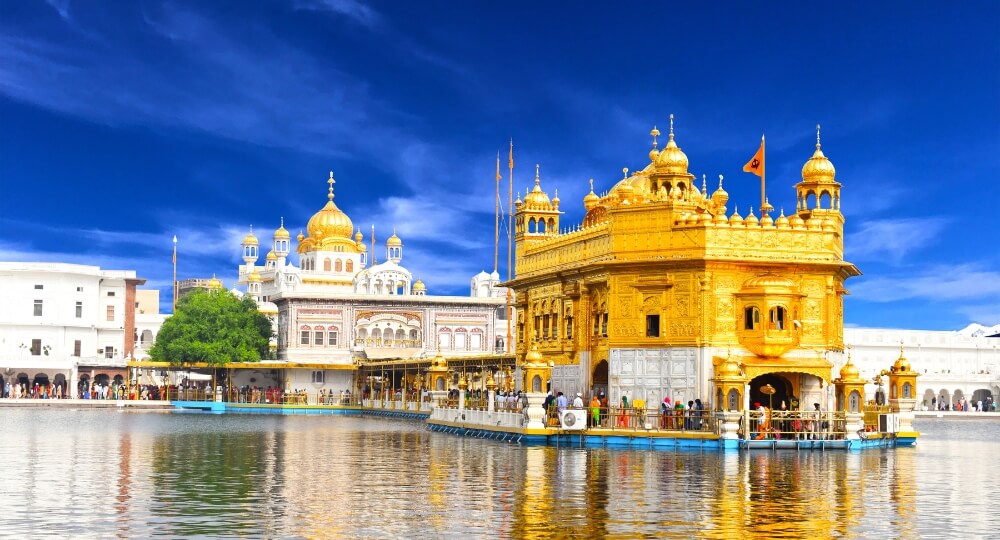
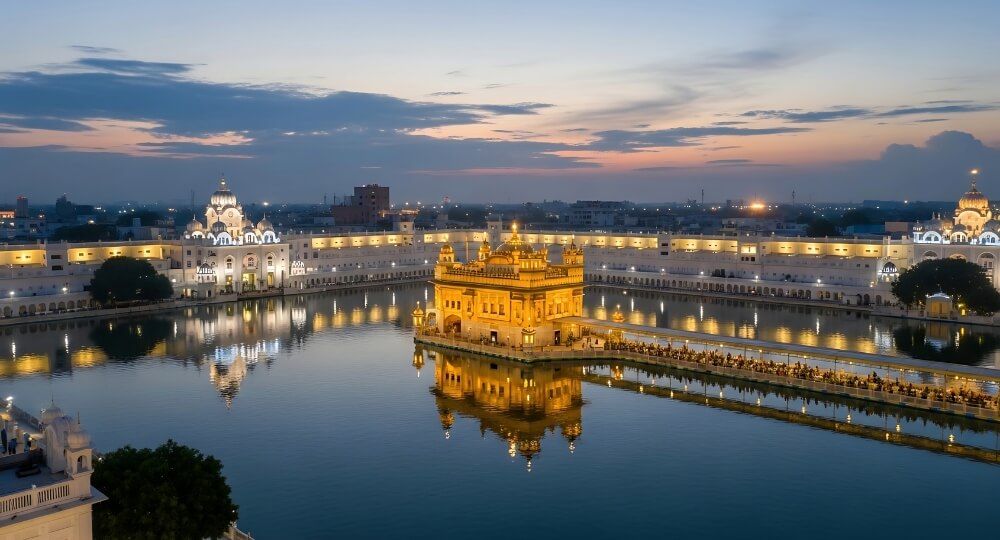
The Harminder Sahib, also known as the Golden Temple, is one of the most important pilgrimage sites for Sikhs. It is known for its golden dome and the Guru Granth Sahib that Guru Arjan Dev Ji installed in the temple.
The Durgiana Temple is a Hindu temple dedicated to Goddess Durga, and it also houses shrines for Lord Hanuman, Lord Krishna, and Goddess Lakshmi. It bears a resemblance to the Golden Temple in style and architecture.
Some of the other Gurudwaras within the city include Gurudwara Baba Atal, Gurudwara Dukh Bhanjani Sahib, Gurudwara Baba Deep Singh, Gurudwara Pipli Sahib, and Gurudwara Kaulsar Sahib.
Although a Persian word, Langar is at the root of Sikhism’s core teaching – equality and selfless service. Langar literally means an alms-house, but has come to represent the Sikh practice of a community kitchen. Guru Nanak Dev Ji, the founder of Sikhism, first introduced this system, but it was later established as a tenet of Sikhism by his successors, who introduced the concept of Pangat Sangat, i.e., everyone must sit in the same row (Pangat) and eat together in the congregation (Sangat).
Today, the practice of serving Langar, a free meal, is part of every Gurudwara in the world. But nowhere is it done at such a large scale as the one at the Harmindar Sahib. It is the world’s largest community kitchen, serving over 100,000 people every day, and approximately 200,000 people on special occasions such as Gurpurab and Baisakhi.
The system of Langar operates uniquely – meals are prepared and served by volunteers, and the funds for the ingredients come in various forms, including monetary donations. The entire system operates on a volunteer basis – pilgrims offer to cook, clean, serve, and perform every menial task in the Langar. This is done without regard to caste, clan, or socioeconomic status.
Devotees who eat in the Langar give back to the system by donating money or buying ingredients. If you cannot visit the Langar in the Golden Temple, we suggest you participate in a Langar anywhere in your community at least once in your life.
Amritsar is renowned for its vibrant markets, which sell a wide range of items, including handcrafted Phulkari shawls and Juttis, as well as brass and copper vessels crafted by the city’s Thateras. In fact, the Thathera craft is listed among UNESCO’s Intangible Cultural Heritage.
Hall Bazar in Katra, Amritsar, is one of the city’s premier shopping destinations. Located near the Golden Temple, this is a great place to purchase Phulkari Dupattas, Patiala suits, and Juttis.
Guru Bazar is an old market that sells traditional jewellery, including Kundan jewellery made from semi-precious and precious stones.
The Katra Jaimal Singh Market is located close to Guru Bazar Road and is famous for traditional Punjabi items like Juttis, Phulkari Dupattas, Jewellery, and Punjabi suits.
And if you are looking for dresses at cheap prices, head to Shastri Market. It is a great wholesale market selling a range of things from Juttis to ethnic wear.
The Lahori Gate Market is a great place to shop for local favourites like Papads, Wadiyas, Achars, and Masalas. You can also buy Salwar Kameez, Patiala Suits, and other traditional garments at this market.
With its old markets and snazzy malls, Amritsar is a shopaholic’s paradise. If you love shopping for traditional Indian attire and accessories, the city has so much to offer. The city is renowned for its Phulkari embroidery. Phulkari, which literally means ‘flower work,’ refers to intricate and brightly coloured motifs created using the darn stitch method on Dupattas and Shawls. It is one of the best things to buy in the city.
Another favourite is the Jutti, or handmade Punjabi shoe made from leather. These Juttis are decorated with interesting motifs, mirror-work, beads, and threads.
Amritsar is famous for Thathera work, the local art of crafting brass and copper vessels, as well as other decorative items such as bowls, lamps, and trays.
The city is also famous for its woollen shawls and garments, along with Kundan jewellery and other traditional pieces, such as Maang Tika and Chand Baali.
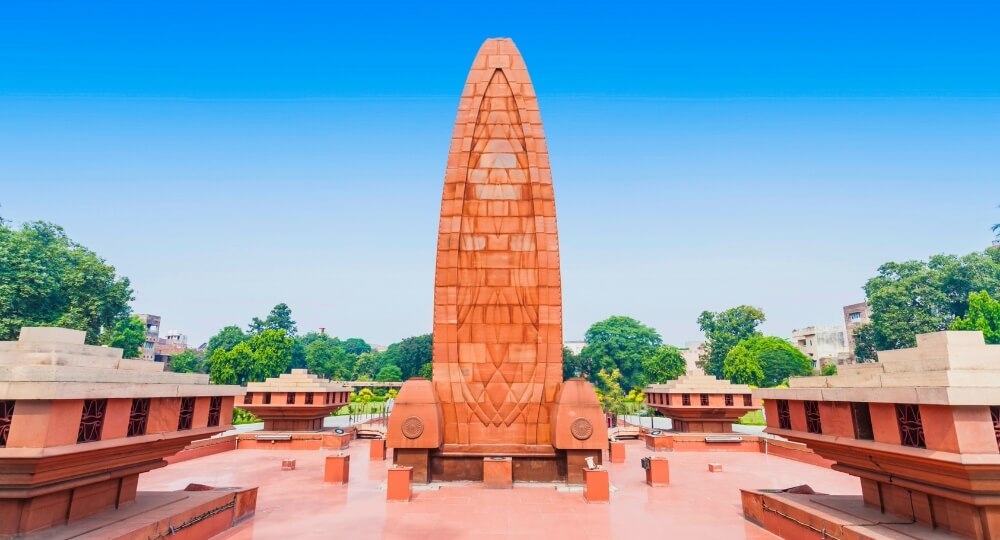
Amritsar was at the centre of the Indian independence movement and home to several freedom fighters like Udham Singh and Dr Satyapal. It was at one of its parks that over a thousand people were shot dead while gathering for a peaceful protest at Jallianwala Bagh. Today, the Jallianwala Bagh is one of the most poignant symbols of British imperialism and India’s resistance to an oppressive regime.
The city was also at the centre of an ugly riot because of a partition that displaced millions and killed thousands of people, both in India and in Pakistan. The 1947 Amritsar Train Massacre was one of the worst repercussions of the Partition, wherein over 3000 people, mostly Muslims, were killed and over 1000 wounded. The Partition Museum was built in the city as a memorial to remember the many victims who lost their lives and livelihood during the Partition.
The Maharaja Ranjit Singh War Museum was once the summer palace of the king, but was later converted into a museum to preserve and display artefacts, art, arms and armour of Maharaja Ranjit Singh.
Call us at +91 9940882200 to include the Maharaja Ranjit Singh War Memorial in your Amritsar tour packages itinerary.
Food is at the centre of Punjab’s cultural legacy and a powerful symbol of the state’s agricultural abundance. The Punjabis are known for their warm hospitality and community values. Amritsar is renowned for its lacto-vegetarian cuisine, particularly the Amritsari Khulcha and Lassi. Staples like Sarson da Saag and Makki di Roti (corn bread and mustard greens curry), and Pindi Chole with Bhature (chickpea curry with fried fluffy bread) are a favourite and a must-try in the city.
However, the city is also renowned for its non-vegetarian fare, particularly dishes cooked in a Tandoor, a traditional clay oven. While you can eat Tandoori chicken, Amritsari fish, chicken tikka, and kebabs across India, they differ in Punjab, especially Amritsar.
Not to mention butter chicken, Gobi Paratha, Aloo Paratha, Dal Makhani, and the evergreen dessert Kada Prashad, offered at Gurudwaras.
Would you like to experience an exclusive food tour that explores the street food offerings in Amritsar? Call us to include one in your Amritsar tour packages.
The bylanes of this 400-year-old city have so much to offer, from Katras and Akhara Bungas to Havelis and Hattis. Amritsar is renowned for its colonial buildings, age-old Havelis, and quaint, narrow alleyways that are too small for vehicles. The stretch around the Golden Temple is called Heritage Street and is filled with centuries-old buildings featuring frescoes and ornate Jharokas, as well as Mughal-era structures.
Don’t miss the Ahluwalia Qila that was once home to merchants from Peshawar selling textiles sourced from the Grand Trunk Road. Today, you can explore the ornate havelis and shops and even visit the famous Jalebiwala Chowk.
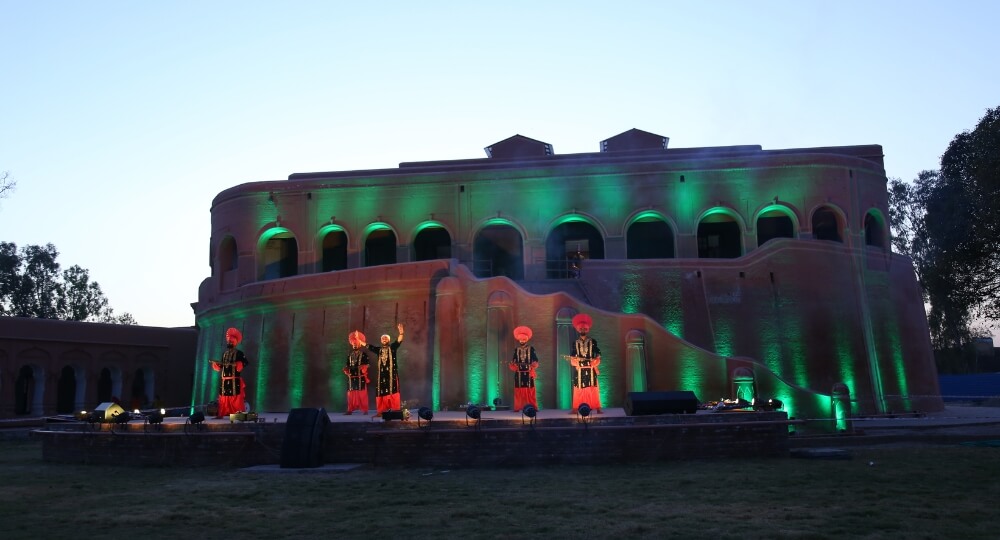
The Gobindgarh Fort, a historic fort built in the 18th century by the Bhangi Misl, is famous for its many owners, including Maharaja Ranjit Singh.
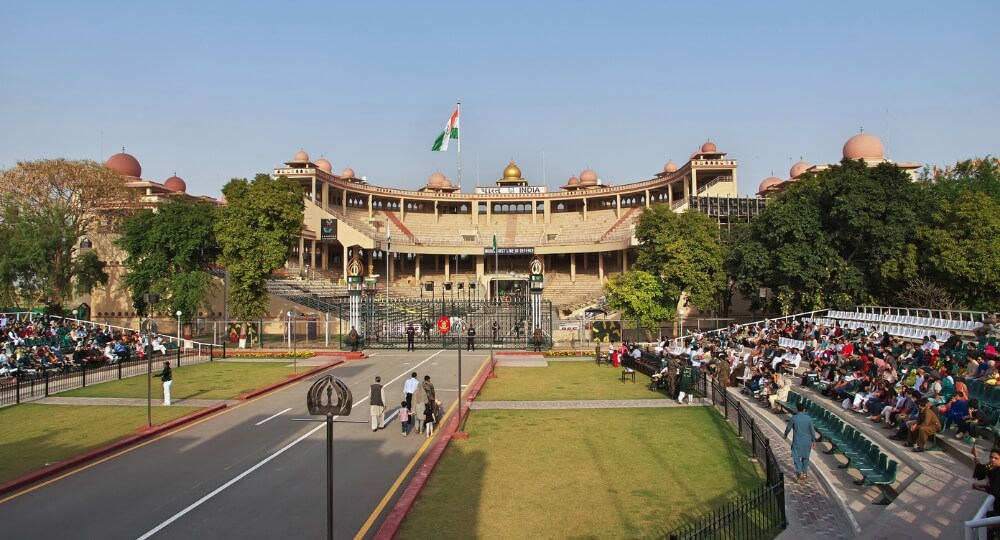
The Beating the Retreat Ceremony is one of the most interesting border ceremonies where border security forces of both countries perform a dramatic, high-energy drill that includes aggressive foot stomping and ends with them lowering their respective flags at sunset.
It is a treat to watch the vibrant and patriotic atmosphere with people from both sides cheering for their country and clapping as the ceremony unfolds.
Call us at +91 9940882200 to learn more about our Amritsar tour packages.