3

Tour Packages

Punjab Tour Packages

Capital: Chandigarh

SUPER DEAL PRICE

STARTS FROM

per person on twin sharing
Land of Five Rivers: Punjab
South India’s No.1 Travel Brand
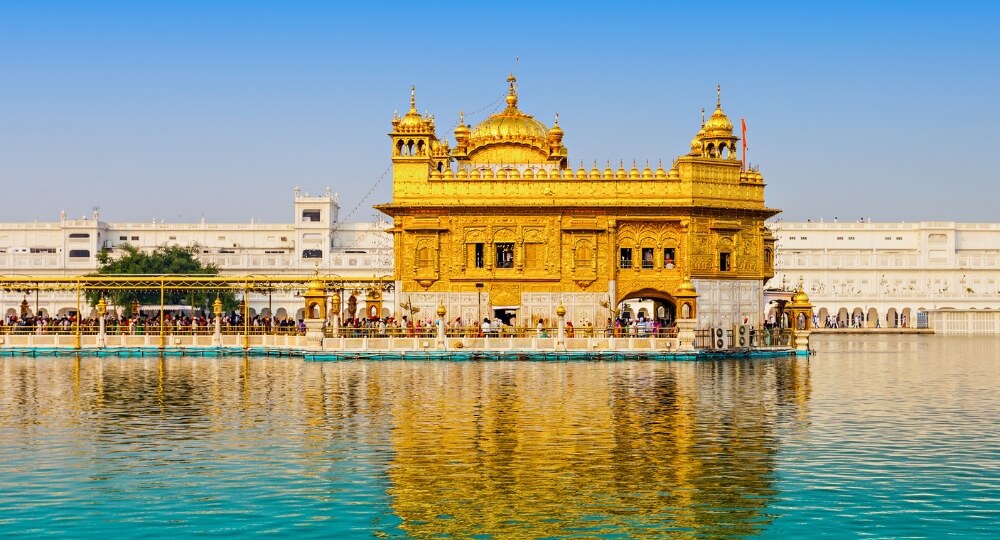
Golden Temple
Most Iconic Landmark
Wagah Border
One of the Most Popular Attractions
October - March
Best Time to Visit Punjab
Punjabi, Hindi, English
Languages Speaking
Essential Tips for Travelling to Punjab

ATMs are widely available across major tourist areas.

Credit cards are accepted at most popular locations.

Banks are easily accessible across cities and towns.

The legal drinking age in Punjab is 21 years.

Residents are known for their warm hospitality.

Punjab - Overview

punjab tour map

By Purpose

tour package tourism

Couples

For Newlywed Vacations

tour packages business

Family

For Family Vacations

Top Attractions and Nearby Sights

Golden Temple

Wagah Border

Jallianwala Bagh

Partition Museum

Durgiana Temple

Gobindgarh Fort

Anandpur Sahib

Virasat-e-Khalsa

Harike Wetland

Qila Mubarak

Sheesh Mahal

Devi Talab Mandir

Ranjit Sagar Dam

Moti Bagh Palace

Maharaja Ranjit Singh Museum

Everything You Need to Know About Punjab Tour Packages

Imagine a land that’s brimming with vibrant culture, intriguing history, and warm hospitality. The state that fits all of these titles is the beautiful state of Punjab. Located in the northwestern part of India, Punjab serves as the cultural and historical heartland of Sikh culture. The name of the state is derived from the Persian words ‘panj’, which means ‘five’ and ‘ab’, which means ‘water’. The state is known as the ‘Land of Five Rivers’ as it’s home to the Jhelum, Chenab, Ravi, Beas, and Sutlej rivers. Punjab is known as the ‘breadbasket of India’ as it’s a primary agricultural location, contributing massively to the food grain production in the country. Let’s do a deep dive into the art, history, culture, cuisine, tourist attractions, and shopping scene of the state so you can understand why you must book GT Holidays’ Punjab tour packages right away.

Table of Content:

About Punjab

History

The old British province of Punjab was segregated into two parts after India’s independence in 1947. The bigger, western part became a part of Pakistan, and it also included the Punjabi capital of Lahore. The eastern part was given to India. However, the part that was granted to India did not have a cultural, commercial, or administrative centre. Following the partition, the government hoped to choose a capital that would be suitable for the new Indian Punjab. Numerous options were considered, such as Shimla, Ludhiana, Amritsar, Ambala, Jalandhar, and Phillaur. In the end, Chandigarh was selected as its capital, with the hope that it would provide refuge and shelter to several of the Hindu and Sikh refugees who had escaped from Pakistan.

Economy

Almost two-fifths of the population of Punjab is involved in the agricultural sector. The state produces a major portion of the country’s grains. Some of the crops grown in Punjab include wheat, maize, rice, and barley. The commercial production of fruits has amplified since the 20th century, including mangoes, guavas, and citrus fruits. The other crops grown in Punjab are cotton, peanuts, chickpeas, oilseeds, vegetables, and sugarcane. The manufacturing sector in Punjab has grown visibly since the late 20th century. This led to the production of textiles like wool and silk, metal products and machinery, furniture, and processed foods and beverages. The industries in Punjab also manufacture hosiery, chemicals, leather goods, and rubber products.

Tidbits

  • The Golden Temple was founded by Guru Ram Das, the fourth Sikh Guru, in 1577.
  • The Jallianwala Bagh is a memorial that was built to honour the memory of those who tragically lost their lives during the Jallianwala Bagh massacre in April 1919.
  • The Wagah Border is the international border between India and Pakistan, where the daily Beating Retreat Ceremony is conducted jointly by India’s Border Security Force (BSF) and Pakistan Rangers.
  • The Gurudwara Mata Kaulan was named after Bibi Kaulan, a spiritual Muslim woman who was a devoted follower of Guru Hargobind.
  • The Durgiana Temple is also known as the Silver Temple because of its intricately carved silver-plated doors.
  • The Gobindgarh Fort once provided shelter to refugees from Pakistan.
  • The Sheesh Mahal was built in the 19th century by Maharaja Narinder Singh.
  • The Rock Garden was built completely out of industrial and household waste items.
  • The city of Ludhiana produces over 70% of the bicycles in India.

Essential Tips To Know Before Travelling To Punjab

  • The main airport in Punjab is the Sri Guru Ram Das Jee International Airport.
  • Buses, autorickshaws, and taxis are easily available in Punjab, and you can also opt for cab services, such as Ola and Uber, in the bigger cities.
  • Don’t consume tap water. Instead, always carry bottled water whenever you go out. This will help prevent dehydration, particularly during the peak summer months.
  • Avoid having too much street food, as not all the streetside food stalls have sanitary conditions.
  • While ATMs are available in many parts of the state, and most of the places accept credit and debit cards and online payments, the smaller stores and remote areas may not. Hence, always carry sufficient cash.
  • Don’t carry huge sums of money and always store your valuables in the locker of your hotel room.
  • Although tipping is not customary in Punjab, it’s polite to reward someone for their service, be it at restaurants, hotels, and so on. A 10% tip will usually suffice.
  • Some of the things you must carry during your trip to Punjab are comfortable clothes, sunglasses, sunscreen, and a headscarf to cover your head at religious places.
  • If you’re travelling to Punjab during the winter season, make sure to pack shawls, sweaters, and heavy jackets.
  • The people of Punjab are known to be warm, friendly, and hospitable. Therefore, greeting everyone politely and learning some local phrases is often helpful.

Punjab At A Glance

Category Details
State Punjab
Currency The Indian Rupee (INR)
Capital City Chandigarh
High season October to March
State Flower of Punjab The dhak flower
Standard Voltage 230 volts
State Animal of Punjab The Indian grey mongoose
Languages Official: Punjabi ; unofficial: Hindi, English
Famous Tourist Attractions Golden Temple, Jallianwala Bagh, Wagah Border, Maharaja Ranjit Singh Museum, Gurudwara Mata Kaulan, Durgiana Temple, Gobindgarh Fort, Sheesh Mahal, Rock Garden
Things To Do Trekking, ziplining, rock climbing, night safari, river rafting, paragliding, horse riding
Famous Food Butter chicken, chole bhature, Amritsari kulcha, rajma chawal, sarson da saag with makki di roti, tandoori chicken, aloo paratha, lassi, paneer tikka, dal makhani
Places To Visit Chandigarh, Amritsar, Ludhiana, Patial
Souvenirs To Buy Phulkari products, Punjabi juttis, handwoven rugs and carpets, nuts and dry fruits, traditional Punjabi attire, regional crafts

Top Reasons To Visit Punjab

Here are the top reasons to grab GT Holidays’ Punjab tour packages:

Rich History

Punjab has a rich and complex history, which is reflected in the numerous popular monuments and spots you can explore with our Punjab tour packages. One of the most prominent attractions in this aspect is the revered Golden Temple, which was founded in 1577 by the fourth Sikh Guru, named Guru Ram Das. The Jallianwala Bagh is a memorial that was built to honour the lives of those who passed away during the Jallianwala Bagh massacre. The Wagah Border is a testament to the military pride of India, attracting countless visitors every day to witness the spectacle known as the Beating Retreat Ceremony. Explore the Maharaja Ranjit Singh Museum, which offers an insight into the life of the founder of the Sikh Empire, Maharaja Ranjit Singh. Witness the Gobindgarh Fort, which once provided shelter to the refugees from Pakistan.

Places Of Spiritual Significance

The holy and spiritual ambience of the state can be experienced with our Punjab tour packages. The first spot to visit in this category has to be the Golden Temple, which is the spiritual centre of Sikhism. Make your way to the Gurudwara Mata Kaulan, a holy spot which was named after a spiritual Muslim woman who was a devotee of Guru Hargobind. Breathe in the serenity of the Durgiana Temple, which contains idols of Goddess Durga, Goddess Lakshmi, and Lord Vishnu.

Delicious Food

Getting to taste the lip-smacking cuisine of the state is undoubtedly one of the best reasons to book our Punjab tour packages. The recipes are passed down from one generation to another, thereby retaining their taste and authenticity. Punjab’s cuisine includes influences of Persian, Mughal, and Central Asian traditions. The tradition of langar, which is a traditional meal served in the gurudwaras of Punjab, symbolises equality, respect, and community building, which are values integral to Punjab’s culture. On one hand, you will find rich and flavourful gravies, such as chole, rajma, and dal makhani, and on the other hand are scrumptious non-vegetarian dishes, like butter chicken, tandoori chicken, and Amritsari fish. Most meals are accompanied by breads of various kinds, such as naan, kulchas, and bhaturas. Make sure to have a cooling glass of lassi at the end of your meal.

Vibrant Cities

Punjab is a melting pot of eclectic cultures and traditions, a fact which is visible through its vibrant cities, all of which you can explore with our Punjab tour packages. There is Chandigarh, which is the capital of Punjab, and is renowned as the country’s first planned city. It was planned by Le Corbusier, the famous Swiss-French architect. There is the city of Amritsar, which is home to the revered pilgrimage site known as the Golden Temple. The city of Ludhiana is known for being the ‘Bicycle Capital of India’ as it makes more than 70% of the bicycles in India. Patiala is a city filled with historical and cultural landmarks, such as the Qila Mubarak complex, Moti Bagh Palace, and Sheesh Mahal.

Best Time To Visit Punjab

Let’s take a look at what each season in the state brings about so you can accordingly decide when to book GT Holidays’ Punjab tour packages:

Summer In Punjab (April To June)

During the summer season, the range of temperatures in Punjab oscillates between 29 degrees Celsius and 45 degrees Celsius. Given the scorching heat, it’s not the ideal time to travel to Punjab during the summer months. This is particularly because the heat and humidity make it extremely difficult to engage in outdoor activities. Baisakhi is the main festival to experience in Punjab at this time.

Monsoon In Punjab (July To September)

The range of temperatures to expect in Punjab during the monsoon season is between 25 degrees Celsius and 35 degrees Celsius. While the rain brings about some much-needed relief, the state still experiences hot and humid weather. The entire landscape turns lush green at this time, attracting nature lovers. Teeyan is the biggest festival celebrated in Punjab at this time. Issues such as waterlogging and muddy roads make it difficult to travel around Punjab during the monsoon months. The regions in the state located closer to the Himalayas particularly experience heavy rainfall.

Winter In Punjab (October To March)

As Punjab welcomes the winter season, you can expect the temperatures to range between 5 degrees Celsius and 20 degrees Celsius. On some days, the temperature can go as low as 0 degrees Celsius, or even lower in some of the regions. Due to the pleasant climate, winter is the best season to book our Punjab tour packages. The festivals celebrated in Punjab during the winter months include Dussehra, Diwali, Basant Panchami, and Holi.

Top Cities to Visit In Punjab

Chandigarh

Chandigarh is both a city and a union territory. It serves as the capital of the states of Punjab and Haryana. Fondly known as ‘The City Beautiful’, Chandigarh is situated at the foothills of the Shivalik range. It’s widely recognised as the first planned city of India. Following the independence of India, the renowned Swiss-French architect Le Corbusier planned the city after being commissioned by the Indian Government. Some of the most popular tourist attractions to visit in Chandigarh with our Punjab tour packages are the Rock Garden, Sukhna Lake, Capitol Complex, Sukhna Wildlife Sanctuary, and Zakir Hussain Rose Garden.

Amritsar

The city of Amritsar was historically known as Ramdaspur. It serves as a vital cultural, commercial, and transportation hub in Punjab. The city derives its name from the Amrit Sarovar, a holy water tank which was built in the village of Tung in 1577 by Guru Ram Das, the fourth Sikh Guru. It’s also the spiritual heart of Sikhism, as the city is home to the Harmandir Sahib or Golden Temple, which is revered as one of the most significant pilgrimage sites for the Sikhs. When you explore Amritsar with GT Holidays’ Punjab tour packages, make sure to visit the Golden Temple, Jallianwala Bagh, Wagah Border, Durgiana Temple, Gobindgarh Fort, and Partition Museum.

Ludhiana

Ludhiana was founded in 1480 during the reign of the Lodi dynasty, which is how the city got its name. The city is often referred to as the ‘Manchester of India’ as it’s home to numerous industries, including textile, hosiery, and woollen garments. It has also rightfully earned the title of the ‘Bicycle Capital of India’ since the city produces over 70% of the bicycles in the country. Major cycle manufacturers, such as Hero Cycles and Avon Cycles, are based in Ludhiana. The many attractive sites to explore in the city with our Punjab tour packages include the Maharaja Ranjit Singh War Museum, Lodhi Fort, Nehru Rose Garden, Rakh Bagh Park, and Punjab Agricultural University.

Patiala

The city of Patiala is situated in the southeastern part of Punjab. It was founded in 1763 by Baba Ala Singh, the first Maharaja of Patiala. He was responsible for establishing the Qila Mubarak fort. During the British rule, the city was the capital of the princely state of Patiala. It now serves as a crucial industrial and trade centre, with some of Patiala’s major industries being distilling, weaving, manufacturing, and cotton ginning. As you roam around the city with GT Holidays’ Punjab tour packages, remember to explore the Qila Mubarak complex, Baradari Gardens, Moti Bagh Palace, Sheesh Mahal, and Gurudwara Dukh Niwaran Sahib.

Top Things To Do In Punjab

The places you get to explore and the activities you can participate in with GT Holidays’ Punjab tour packages are as follows:

Things To Do As A Family

Golden Temple

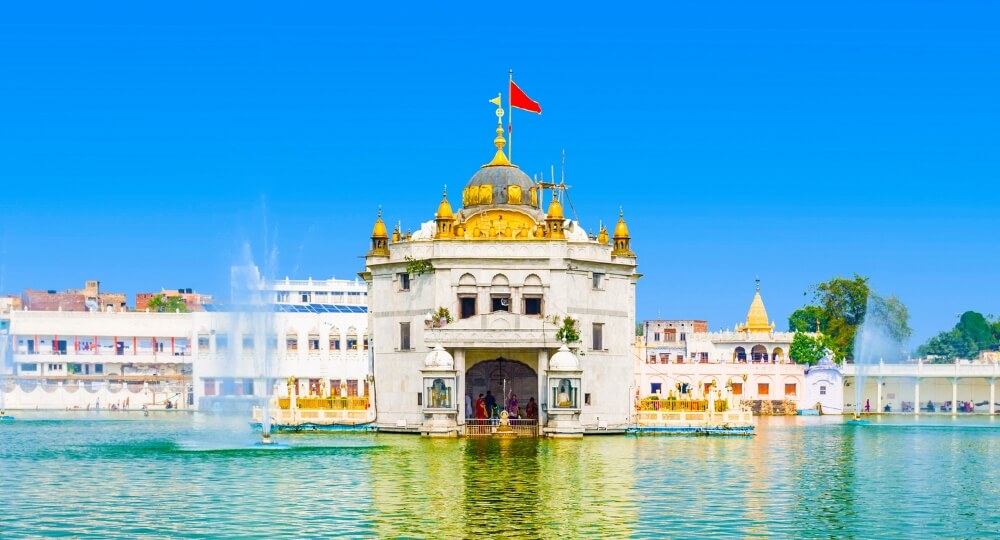
The Golden Temple, which is also known as Sri Harmandir Sahib, is located in the city of Amritsar in Punjab. The temple was founded by Guru Ram Das, the fourth Sikh Guru, in 1577. The construction of the Golden Temple was completed in 1604 by Guru Arjan, the fifth Sikh Guru. Serving as the spiritual heart of Sikhism, the temple is a revered symbol of peace, equality, humility, and devotion. This holy shrine stays open throughout the year from around 4 am to 11 pm. The langar in Golden Temple is widely recognised as the largest free community kitchen in the world, serving over 50,000 free meals every day to visitors, regardless of their faith or religious background.

Jallianwala Bagh

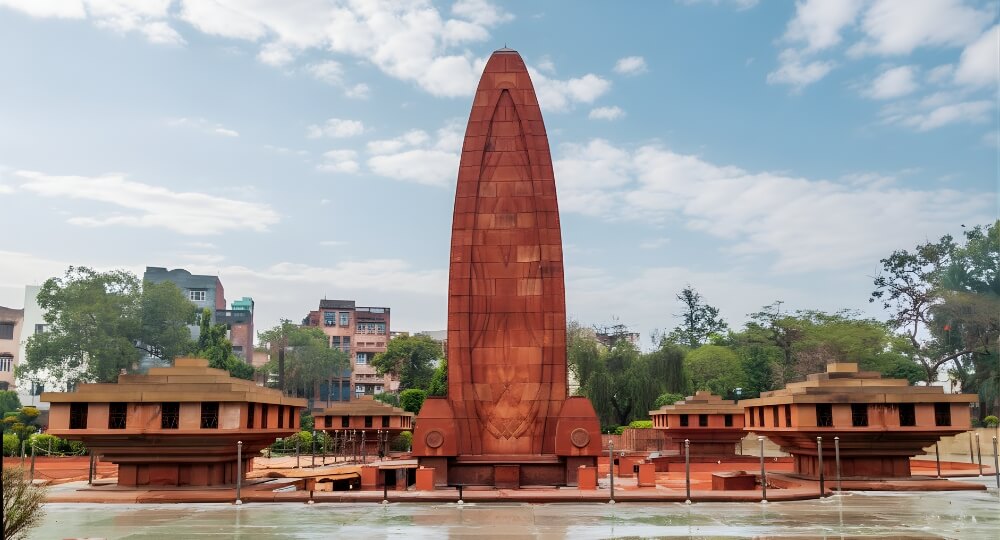
The Jallianwala Bagh is a memorial and garden located in Amritsar, near the Golden Temple. The memorial was built to honour the memory of those who tragically lost their lives during the Jallianwala Bagh massacre. The tragedy took place on 13th April 1919 when British troops opened fire on bystanders who had peacefully gathered for a festival. Visitors can see the bullet marks embedded in the walls, serving as a heartbreaking reminder of the violence faced by the departed souls. Situated in the middle of the garden is a red sandstone pillar called the ‘Flame of Liberty’, which was built as a tribute to the martyrs.

Wagah Border

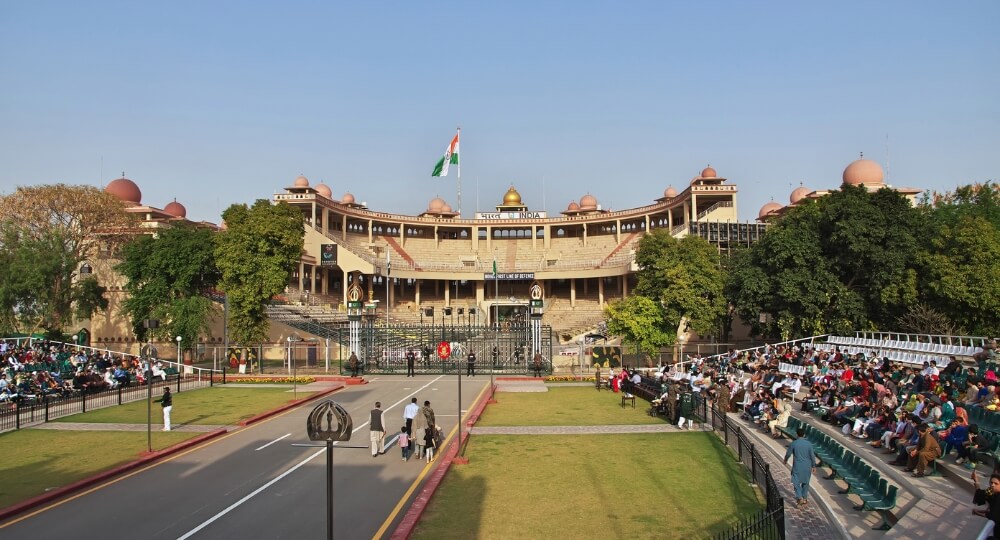
The Wagah Border, which is situated about 30 km from Amritsar, is the international border between India and Pakistan. Witnessing this popular landmark is indeed one of the highlights of our Punjab tour packages. One among the many reasons to visit this location is to experience the Beating Retreat Ceremony, a daily military practice conducted jointly by India’s Border Security Force (BSF) and Pakistan Rangers. This spectacle was initiated in 1959 and takes place right before sunset, involving synchronised and energetic parades. It also involves the lowering of the flags of both nations, symbolising hope, respect, patriotism, and military pride.

Maharaja Ranjit Singh Museum

The Maharaja Ranjit Singh Museum is located inside the Ram Bagh Garden in Amritsar. It offers a glimpse into the life of Maharaja Ranjit Singh, who was the founder of the Sikh Empire. The museum originally served as the summer palace of the maharaja, who was given the title of the ‘Lion of Punjab’. The site was converted into a museum in 1977. Some of the objects displayed within the museum include paintings, portraits, weapons, manuscripts, and coins.

Gurudwara Mata Kaulan

The Gurudwara Mata Kaulan, also known as the Gurudwara Kaulsar Sahib, is a sacred Sikh shrine located in Amritsar, near the Golden Temple. The gurudwara was named after Bibi Kaulan, a spiritual Muslim woman who was a devoted follower of Guru Hargobind. She was the daughter of the Qazi of Lahore, who ordered a death sentence because of her devotion towards Guru Hargobind ji’s teachings. However, she was rescued by the Sufi saint Mian Mir ji and then placed under the protection of Guru Hargobind, the sixth Guru of the Sikhs.

Durgiana Temple

The Durgiana Temple, which is also known as the Lakshmi Narayan Temple, is situated in the city of Amritsar. While the temple is primarily dedicated to Goddess Durga, the idols of Goddess Lakshmi and Lord Vishnu are worshipped here as well. The architectural style of the temple closely resembles the design of the Golden Temple, with its gold-plated dome and a holy water tank encircling the shrine. It’s also called the Silver Temple because of its intricately carved silver-plated doors. The current form of the temple was built by Guru Harsai Mal Kapoor in 1921.

Gobindgarh Fort

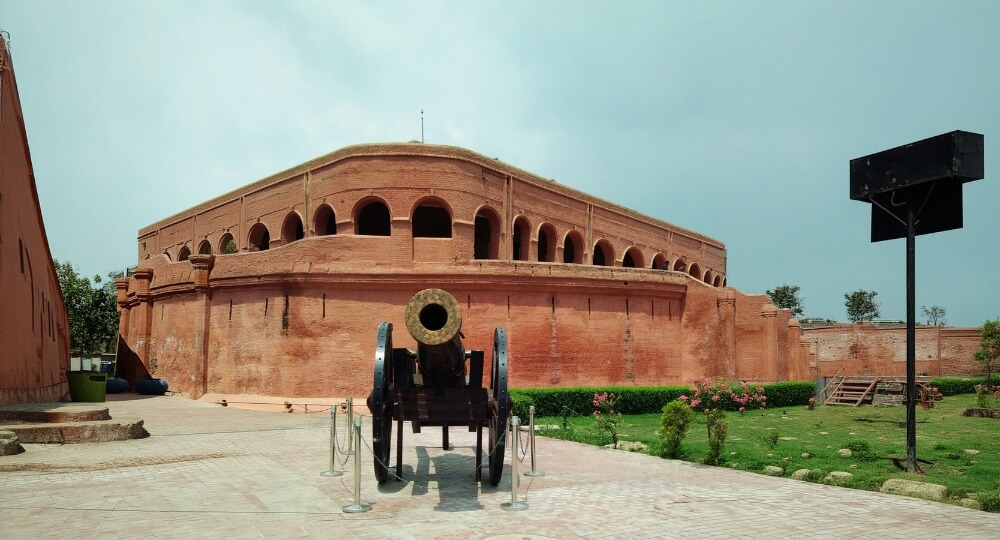
The Gobindgarh Fort is located in the heart of the city of Amritsar. Also known as Bhangi Fort, it was originally built in the 1760s by a local chieftain named Gujjar Singh Bhangi. The fort was later conquered and fortified by the founder of the Sikh Empire, Maharaja Ranjit Singh. The British added the Darbar Hall, Hawa Mahal, and Phansi Ghar to the fort. Once India achieved independence, it came under the control of the Indian Army. The fort also temporarily served as a shelter for refugees from Pakistan.

Sheesh Mahal

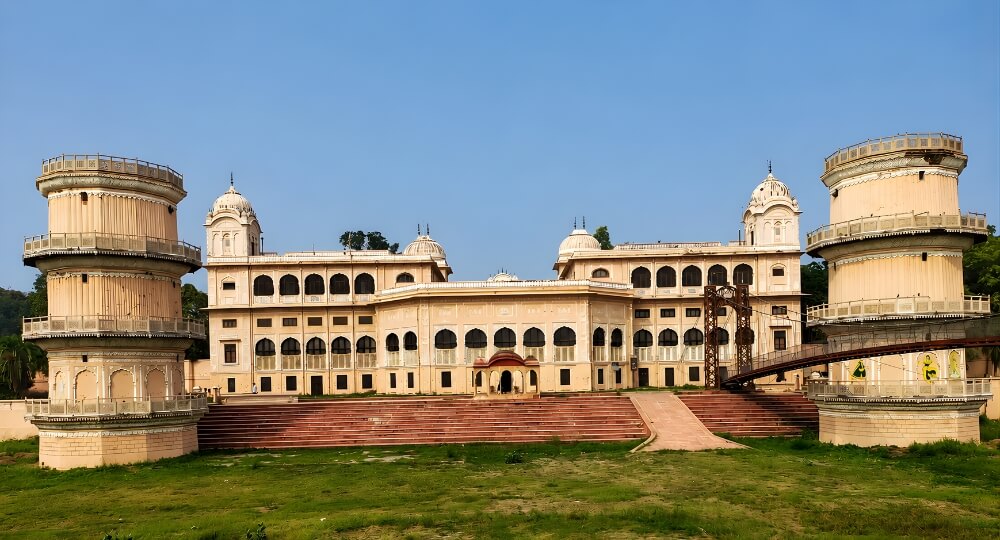
The Sheesh Mahal is located in the city of Patiala. Also known as ‘Palace of Mirrors’ (which is what the name translates to), the palace was built by Maharaja Narinder Singh in the 19th century. The walls and ceiling of the palace are embedded with thousands of tiny, mirrored glass pieces. There is an artificial lake situated at the centre of Sheesh Mahal, and the palace complex also has a suspension bridge called the Lakshman Jhula. The bridge is a replica of the one in Rishikesh. The walls of the palace are embellished with frescoes and murals featuring designs related to nature and mythology.

Rock Garden

The Rock Garden is a sculpture garden situated in the city of Chandigarh. Also known as Nek Chand’s Rock Garden, the garden was named after its founder, Nek Chand. Known for its creative appearance and whimsical design, it’s an embodiment of recycling and sustainability. This is because the structure was built completely out of industrial and household waste items, including plastic bottles, broken glass, bangles, and ceramic pots. Although it was initially meant to be a personal project, it eventually turned into a space spread over 40 acres, filled with courtyards, sculptures, tunnels, pathways, and waterfalls.

Things To Do For Adventure Lovers

  • Trekking
  • Ziplining
  • Rock climbing
  • Night safari
  • River rafting
  • Paragliding
  • Horse riding

Shopping In Punjab

Listed below are the markets to visit in Punjab and the souvenirs to check out:

What To Buy

Punjabi Juttis

Punjabi juttis, as the name suggests, originated from Punjab, and refer to traditional handmade footwear made from leather. These shoes are usually decorated with embroidery, beads, and sequins, and are a combination of beauty and comfort.

Handwoven Carpets And Rugs

The skilled artisans of Punjab are known to weave some of the most exquisite carpets and rugs you will ever come across, turning them into souvenirs that travellers can get for themselves. These handcrafted beauties are available in various sizes, designs, and styles, and can elevate the beauty of any space.

Phulkari Products

Punjab is known for its phulkari embroidery, which is why it’s not surprising that phulkari products are some of the most popular souvenirs to buy from the state. Filled with elaborate and intricate floral designs, these products are available in bright and vivid colours. Some of the different kinds of phulkari items to get for yourself and your loved ones are sarees, dupattas, and shawls.

Regional Crafts

The skilled craftsmen of Punjab create a wide variety of handicrafts that you can buy. The crafts of the region are truly eclectic, including copper and brassware items, such as bowls, trays, vases, and lamps. You will also come across wooden artefacts in the markets of Punjab, such as furniture, decorative items, and prayer beads.

Traditional Punjabi Attire

Punjabis are known for many things, including their colourful attire, and it’s these very traditional attires that you can buy from the state with GT Holidays’ Punjab tour packages. Women can check out the Patiala suits, and men can try out the colourful turbans. There are also the Punjabi kurtas to explore in this category.

Nuts And Dry Fruits

Are you looking for something edible to take back home for your loved ones from Punjab? If so, then dry fruits and nuts are the best options to go for. These high-quality food items make for great gifts, with numerous options to select from. This includes almonds, cashews, pistachios, and so on.

Where To Shop

  • Guru Bazaar (Amritsar)
  • Patel Market (Chandigarh)
  • Chaura Bazaar (Ludhiana)
  • Hall Bazaar (Amritsar)
  • Rehri Market (Chandigarh)
  • Adalat Bazaar (Patiala)

Things To Remember When Shopping In Punjab

  • Bargaining is common in the markets of Punjab. Negotiate peacefully and respectfully till you reach a price that suits both parties.
  • In order to avoid heavy crowds, try to visit the markets during the morning or early afternoon.
  • The smaller shops may not always have online payments or credit or debit card options available. Therefore, remember to carry cash when you go shopping.
  • Whenever you purchase handcrafted items, make sure to buy them only from reputable stores. Request a certificate of authenticity, if possible.

Dos and Don’ts While Travelling To Punjab

  • Always take off your shoes before entering someone’s home.
  • Dress modestly whenever you visit a religious or spiritual place. Keep your knees and shoulders covered and avoid wearing shorts and sleeveless tops.
  • Refrain from public displays of affection.
  • Don’t click pictures of any of the locals without asking for their permission. This is especially applicable to women.
  • If you’re visiting a temple or any holy spot, you will be expected to cover your head.
  • Don’t make any offensive comments on the region’s culture, politics, customs, and traditions. Show respect for the local culture and try to display interest and curiosity regarding their way of life.
  • Use your right hand while accepting something from another person and also while passing a dish at the dining table.
  • Don’t assume that everyone in the state drinks alcohol. It’s always respectful to ask what kind of beverage they would like to have. Most Sikhs, for example, refrain from alcohol due to religious reasons.
  • Not every tourist spot allows photography. Therefore, find out the rules prior to clicking photographs.
  • Maintain the cleanliness of the state and throw away any garbage only when you spot a garbage bin.
  • Don’t consume tobacco and alcohol near or around religious sites.

Foods To Try Out In Punjab

The fertile soil of Punjab reflects its agricultural richness, as is evident through the hearty meals available in the state. Butter, milk, cream, yoghurt, and ghee are used generously in the cuisine of Punjab, thereby lending a rich, creamy, and comforting texture to the dishes. Breads such as rotis or phulkas, paranthas, kulchas, tandoori rotis, and naan are commonly served during meals. Fresh and quality ingredients combined with the simplicity of the dishes create flavourful meals that symbolise Punjab’s hospitality and vibrant spirit. Slow-cooking techniques (bhunao) are employed to intensify the flavours, particularly in non-vegetarian dishes. These techniques bring about long-lasting aromas and a smoky depth. Let’s recommend some of the scrumptious dishes you must try out during your trip with GT Holidays’ Punjab tour packages:

Butter Chicken

While you may have had butter chicken in other parts of India, there is absolutely nothing like the rich, creamy, and decadent butter chicken available in Punjab. The dish includes tender pieces of chicken that are marinated in spices and yoghurt and are cooked till they turn succulent. Herbs and butter are used generously while cooking this dish. The chicken pieces are simmered in a tomato-based gravy, making it a mixture of tangy, sweet, smoky, and savoury. You can have butter chicken with rice, naan, or tandoori roti.

Dal Makhani

Dal makhani is a rich and creamy dish made using black lentils and red kidney beans. The concoction is simmered on low heat in cream and butter, giving it a smooth texture and smoky flavour. Some of the ingredients used to make this crowd favourite include garlic, ginger, tomatoes, dried fenugreek leaves, and garam masala.

Paneer Tikka

Paneer tikka is a popular appetiser and street food in Punjab. Soft pieces of cottage cheese are marinated in spiced yoghurt to make this dish. The pieces are then skewered and grilled in a tandoor till they turn golden, smoky, and flavourful. These are usually served with mint chutney.

Amritsari Kulcha

Amritsari kulchas are soft, fluffy flatbreads made using refined flour. You will come across various kinds of Amritsari kulchas with an interesting array of fillings. This includes onion kulchas, paneer kulchas, potato kulchas, and creamy cheese kulchas. The traditional way of preparing these flatbreads is on a clay tandoor, and they are served with a bit of butter or ghee. Chole are usually served along with Amritsari kulchas, and most people like to savour these with pickles and chutneys.

Sarson da Saag with Makki di Roti

When you’re in Punjab, you will inevitably hear someone mention the food combination of sarson da saag and makki di roti. This is especially true during the colder season, as these two items are staples during the winter months. If emotions could be conveyed through a food combo in Punjab, this would be the one. Makki di roti refers to a flatbread made from cornmeal. Sarson da saag is a curry made using mustard greens and other leafy vegetables. The other ingredients that go into preparing this curry are ginger, garlic, green chillies, and other spices. While the flatbread brings along a rustic and warm texture, the sarson da saag curry has an earthy and robust flavour that complements it pretty well.

Chole Bhature

Chole bhature is an omnipresent dish in Punjab and is one of those signature meals that can be eaten at all times of the day. The bhaturas are soft, fluffy, crispy pieces of bread made with white flour dough. These deep-fried bhaturas are paired with chole, which is a rich, creamy, and flavourful chickpea curry that is made using a variety of spices. This dish is usually served alongside onions, pickles, and yoghurt.

Rajma Chawal

Rajma chawal is one of those classic food combos that you must taste during your holiday with our Punjab tour packages. ‘Chawal’ refers to rice, and ‘rajma’ refers to a curry made using kidney beans. Ingredients such as onions, tomatoes, and various spices are used to create this thick and wholesome gravy. Whether you have it with jeera rice or steamed rice, this combination is truly a great go-to option when you’re craving something warm and comforting.

Tandoori Chicken

Tandoori chicken, also known as tandoori murgh, is one of the culinary treasures of Punjab. The name of the dish is derived from the Persian word ‘tannur’, which translates to ‘fire’. In order to make the dish, the chicken is marinated in tandoori masala, yoghurt, cumin, and nutmeg, after which the pieces are placed on skewers to be roasted till they turn succulent. This cooking method lends the meat a unique smoky flavour along with a slightly charred exterior. You can have tandoori chicken as a part of the main course or even as an appetiser, and it’s usually served along with mint chutney and an onion salad.

Aloo Paratha

A culinary adventure in any part of Punjab will be incomplete if you don’t get to taste aloo parathas. These are particularly popular as breakfast items in the state. An aloo paratha is basically a flatbread consisting of a potato filling. Whole wheat flour is used to make the dough, and the stuffing is filled with mashed potatoes, coriander, ginger, green chillies, salt, and chilli powder. It’s fried in ghee till the exterior turns golden brown. These flaky and crispy parathas are usually eaten alongside yoghurt, pickles, chutneys, and onions. Pair it up with a cup of tea, and you will have one of the most delicious breakfasts ever.

Lassi

Whether you’re invited to someone’s home in Punjab or you’re having a meal at a streetside stall or an eatery, chances are that lassi will be the beverage present during your meal. Serving lassi to guests is a part of Punjab’s hospitality. A chilled glass of lassi is particularly refreshing during the hot summer days. The sweet beverage has a thick and creamy consistency and is usually served in large glasses. You can either have the traditional lassi or even try out the other variants, such as mango lassi, rose lassi, almond lassi, and so on.

Art And Culture In Punjab

Handicrafts

The skilled weavers and artisans of Punjab are known to create some of the most unique handicrafts, all of which are available to be purchased by tourists and residents alike. This includes the intricate handwoven rugs and carpets, the vibrant leather Punjabi juttis, and products containing detailed phulkari embroidery. The regional crafts of the state also include wooden artefacts, copper items, and brassware.

Folk Dance

The energetic nature of Punjabis is clearly visible through the way they incorporate dance into every gathering and celebration. The folk dances of Punjab are meant to celebrate a variety of occasions. This includes religious ceremonies, harvest festivals, seasonal festivals, and social gatherings. The dances are usually accompanied by colourful costumes, vibrant music, and are performed by skilled artists who have inherited this art form over generations. One of the most beloved dances of the state is bhangra. It’s a high-energy dance wherein people utilise their entire body to engage in vigorous movements to the rhythmic beats of the dhol or drums. Another popular folk dance is the giddha, which is mainly performed by women. It involves footwork, rhythmic clapping, and graceful movements and is particularly performed during the harvest season.

Festivals

Numerous colourful and vibrant festivals are celebrated in Punjab throughout the year. The festival of Teeyan is celebrated with utmost pomp and glory in the state. It takes place during the monsoon season and lasts for 13 days. The festival is mainly associated with women, celebrating the unique bond that women share with each other. The other important festivals that occur in Punjab include Baisakhi, Holi, Diwali, Dussehra, and Lohri.

View All Punjab Tour Packages

Travel Tips

visa_information_icon

Visa Information

Check visa requirements before traveling, ensuring a smooth entry and compliance with destination regulations.

health and safety tips icon

Health and Safety Tips

Prioritize health, stay hydrated, follow safety guidelines, and maintain personal hygiene for a secure journey.

currency and tipping icon

Currency and Tipping

Familiarize with local currency, consider customary tipping practices for respectful and seamless travel experiences.

Share Your Ideal Tour: Let Us Customize!

FAQs:

What are the main rivers in Punjab?
The main rivers in Punjab are Jhelum, Chenab, Ravi, Beas, and Sutlej.
What are the key agricultural products in Punjab?
The key agricultural products in Punjab include wheat, rice, maize, cotton, and sugarcane.
How many districts are there in Punjab?
As of April 2026, Punjab has 23 districts.
Who are the popular Bollywood singers from Punjab?
Some of the popular Bollywood singers from Punjab are Diljit Dosanjh, Guru Randhawa, Badshah, Harshdeep Kaur, and Jassie Gill.
What is Punjab famous for?
Punjab is famous for many things, such as its rich art and culture, places of spiritual significance, vibrant markets, scrumptious cuisine, and warm hospitality.
Who was the first lady Chief Minister of Punjab?
Rajinder Kaur Bhattal was the first and only female Chief Minister of Punjab.
Which is the coldest month in Punjab?
January is usually the coldest month in Punjab.
How many days are sufficient for a trip to Punjab?
We would recommend you set aside at least five days for a trip to Punjab.
Was the writer Amrita Pritam from Punjab?
Yes, the writer Amrita Pritam was from Punjab.
When did Chandigarh become the capital of Punjab?
Chandigarh officially became the capital of Punjab in 1953.

Book Your Dream Vacay Today!

=
×

Enquire Now

=