1

Tour Package

Warangal Tour Packages

Telangana’s Second Largest City

SUPER DEAL PRICE

STARTS FROM

per person on twin sharing

Time Zone:
The City of a Single Stone: Warangal
South India’s No.1 Travel Brand
Warangal Fort
Iconic Fort of Telangana
Thousand Pillar Temple
Finest Example of Kakatiya Architecture
October - March
Best Time to Visit Warangal
Telugu, Urdu, English, Hindi
Languages Speaking
Essential Tips for Travelling to Warangal
ATMs

ATMs are available near major tourist attractions.

Credit Cards

UPI and cash payments are widely accepted locally.

Bank

Banks are widely available across the city.

Drinking

The legal drinking age in Warangal is 21.

Safest

Residents are known for their warm hospitality.

Warangal - Overview

By Purpose

tour package tourism

Couples

For Newlywed Vacations

tour packages business

Family

For Family Vacations

Top Attractions and Nearby Sights

Warangal Fort

Thousand Pillar Temple

Kakatiya Musical Garden

Laknavaram Lake

Ramappa Temple

Pakhal Wildlife Sanctuary

Bhadrakali Temple

Ramappa Lake

Eturnagaram Wildlife Sanctuary

Pakhal Lake

Kota Gullu

Medaram

Everything You Need to Know About Warangal

Telangana’s second-largest city and its cultural capital, Warangal, is known for its ancient history and heritage monuments. It was the capital of the great Kakatiyas from the 12th to the 14th centuries and is even listed by UNESCO as a World Heritage city. Warangal is also known for its natural beauty – it is home to placid lakes and dense forests. If you love exploring India’s architectural beauty and history, read on to learn more about Warangal. Call us at +91 9940882200 to learn more about our Warangal tour packages.

About Warangal

Once the capital of the Kakatiya Dynasty, Warangal is one of the best heritage cities in India. It is Telangana’s second-largest city and is the cultural capital. The city is also home to Telangana’s only world heritage site, the Kakatiya Rudreshwara Temple, and several tentative sites, such as the Kala Thoranam and the Thousand Pillar Temple. Agriculture is the primary business in Warangal, with paddy, mango, and wheat being the major crops. The city is home to the second-largest grain market in Asia. It is also a developing city, with several multinational companies, such as Mindtree and Tech Mahindra, setting up offices here.

Call us at +91 9940882200 to learn more about our Warangal tour packages.

History

Warangal was founded by the Kakatiya rulers, with Prola Raja credited with laying the foundation for many of the city’s monuments. It was ruled by several kings, including Beta Raja I, Prola Raja I, Prola Raja II, Beta Raja II, Rudra Deva, Ganapati Deva, Prapata Rudra, and Rani Rudrama Devi, the only Telugu woman ruler. For some time, the Kakatiya capital was shifted to Hanamkonda, but was later moved to Warangal by Ganapatideva.

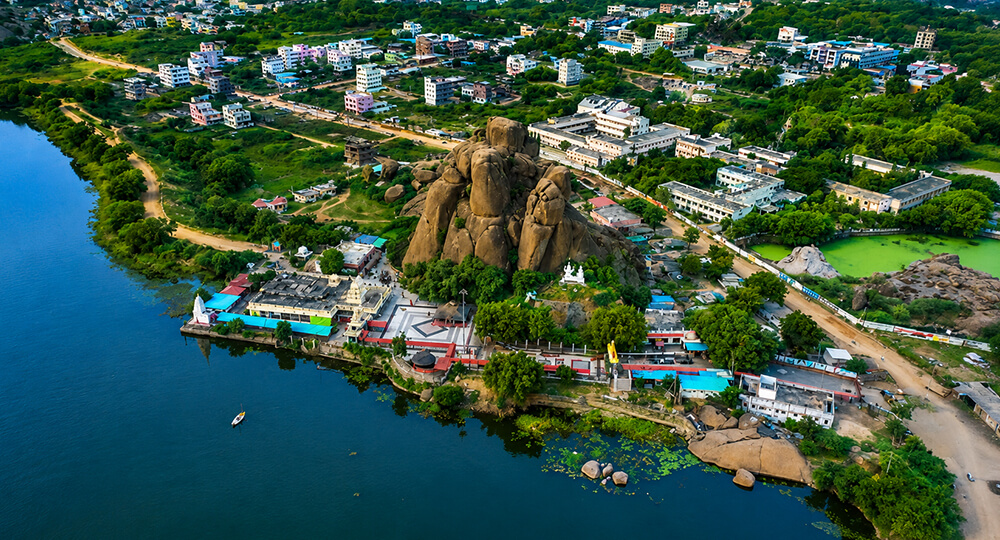
The city gets its name from the Telugu word Orugallu, meaning “one stone,” denoting that the city was built on a single stone or hillock. The city was known by several names, including Akshalinagaram, Ekasila Nagaram, and Vorakalli. The Kakatiya rulers built several monuments and architectural wonders, including Warangal Fort, the Swayambhu Temple, the Thousand Pillar Temple, and the Ramappa Temple. After the Kakatiya rulers reigned over the city for 200 years, it came under the rule of the Delhi Sultanate following Prataparudra II’s defeat in 1323. Later, it was ruled by several other kingdoms, including the Musunuri Nayaks, the Bahamani Sultans, and the Golconda Sultans. After independence, the state became part of Andhra Pradesh and, after bifurcation, part of Telangana.

Geography

Located on the Deccan Plateau, Warangal is known for its semi-arid climate and rocky terrain. The region experiences scorching summers, fairly heavy monsoons, and mild winters. The monsoon lasts from June to September, with some regions experiencing rain from northeast monsoon clouds. Winters are the best time to choose Warangal tour packages as the climate is mild and temperatures range from 22°C to 25°C. The city is full of natural and man-made reservoirs, including Bhadrakali Lake and Dharmasagar Lake. The Kakatiyas built several reservoirs, such as the Pakhal Lake and the Ramappa Lake.

Economy

Warangal’s economy is largely based on agriculture, although tourism and IT are becoming fast-growing industries. The district is also known for its handicrafts, especially Warangal Dhurries and Pochampally sarees. The Enumamula Grain Market in Warangal is the second-largest grain market in Asia. The Telangana government is planning to develop the textile industry in the region by developing the Kakatiya Mega Textile Park.

Call us at +91 9940882200 to learn more about our Warangal tour packages.

Tidbits About Warangal

  • Warangal was originally called Orugallu, or One Stone, because the entire city was carved out of a single granite boulder.
  • The city was called Ekashila Nagaram by Sanskrit scholars.
  • Warangal is listed as a World Heritage Site by UNESCO.
  • The Kakatiya Kala Thoranam features in the Telangana state emblem.
  • The classical dance Perini Shivatandavam or Perini Natyam originated in Warangal.
  • Warangal is famous for its Durries or wool rugs.

Call us at +91 9940882200 to learn more about our Warangal tour packages.

Things to Know Before Booking Warangal Tour Packages

  • Warangal can be very hot during the summer as temperatures can go up to 45°C
  • Carry bottled water with you always, as the water quality can be questionable.
  • Warangal is close to Hyderabad and can be combined with your Hyderabad tour packages
  • If you love to explore the city’s culture, we suggest choosing Warangal tour packages during Bathukamma, a nine-day celebration during Navratri.
  • Carry sunscreen lotion and mosquito repellent with you when travelling to Warangal.
  • Carry modest clothes for temple visits.

Warangal At A Glance

Category Details
State Telangana
High Season October to March
Languages Spoken Telugu, Urdu, English
Famous Tourist Attractions Warangal Fort, Thousand Pillar Temple, Ramappa Temple, Warangal Lake, Bhadrakali Temple, Eturnagaram Wildlife Sanctuary, Laknavaram Lake
Things to Do Explore Temples, Trekking
Famous Food Sarva Pindi, Golichina Gongura, Punugulu
Souvenirs to Buy Pembarthy brassware, Durries, Ikat sarees, Cheriyal Scroll Painting.

Top Reasons To Choose Warangal Tour Packages

Heritage Sites

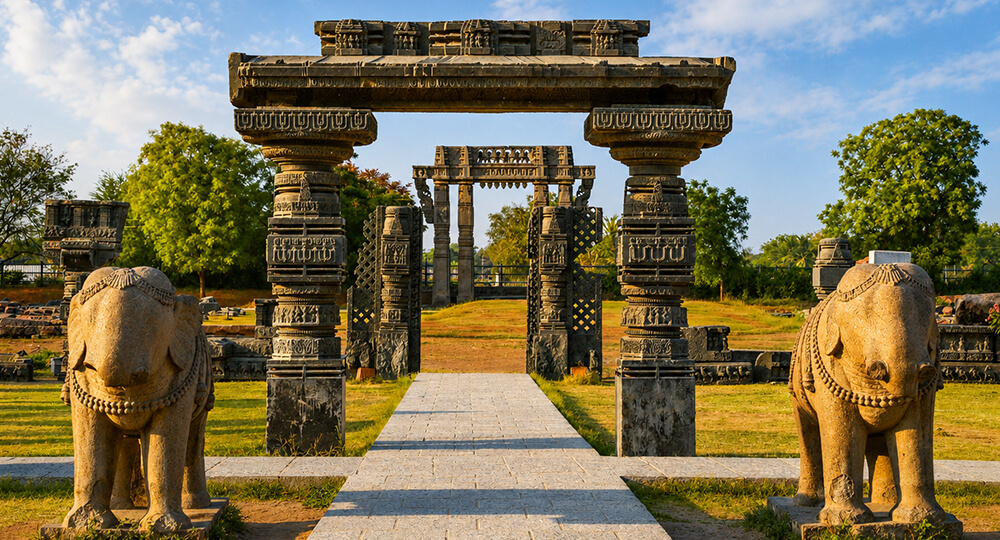
The Kakatiya rulers transformed Warangal from a modest settlement into a fortified city, leaving an enduring legacy of forts, temples, and a vast network of artificial lakes and reservoirs. The Warangal Fort is among the Kakatiya dynasty’s most impressive structures. They built the fort in the 13th century when their capital was shifted from Hanamkonda to Warangal. The entire fort complex spans approximately 19 acres and is built in three concentric circles. Although much of the fort is in ruins, visitors can still enjoy its breathtaking artistry and craftsmanship, evident in the sculptures, stonework, and motifs. But what makes the fort remarkable are the Kakatiya Kala Thoranams – a set of four grand and ornamental gateways situated symmetrically around the central zone of the fort. These gates once served as a grand entrance to the ruins of a Shiva temple.

Another architectural marvel covered in our Warangal tour packages is the Ramappa Temple. Also called the Ramalingeshwara Temple, this is the only temple named after its sculptor, Ramappa. It was constructed in the 13th century by King Ganapati Deva. Today, the temple is maintained by the Archaeological Survey of India and is listed on the UNESCO World Heritage Sites list. The Ramappa Temple is known for its ornate carvings and shrines, including carvings adorning the walls and pillars. It is built using the Sandbox Technique, in which the temple appears to float on sand, allowing it to withstand earthquakes.

The Thousand Pillar Temple is another of Warangal’s most recognised heritage sites, famous for its ornately carved pillars. It was built in the 12th century by King Rudra Deva I and is known for its many pillars built in front of the temple.

The Khush Mahal is another architectural marvel, built during the Tughlaq reign in the 14th century.

Temples

Among the Kakatiyas most memorable monuments are its temples, including the UNESCO-listed Ramappa Temple. It is dedicated to Lord Rudreshwara (Shiva) and built in the 13th century during the reign of King Ganapati Deva. The temple’s architecture resembles the Chalukyan style, with beautifully carved pillars.

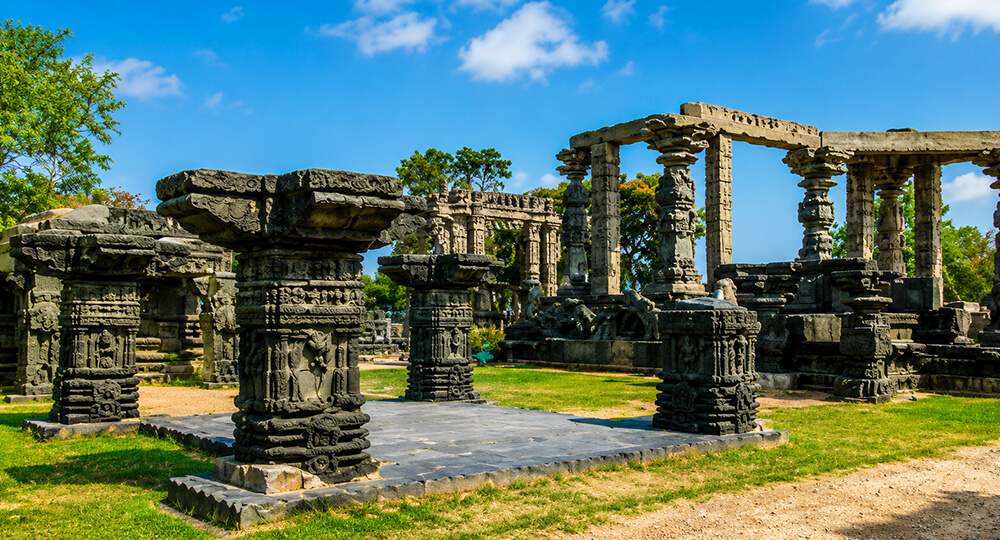
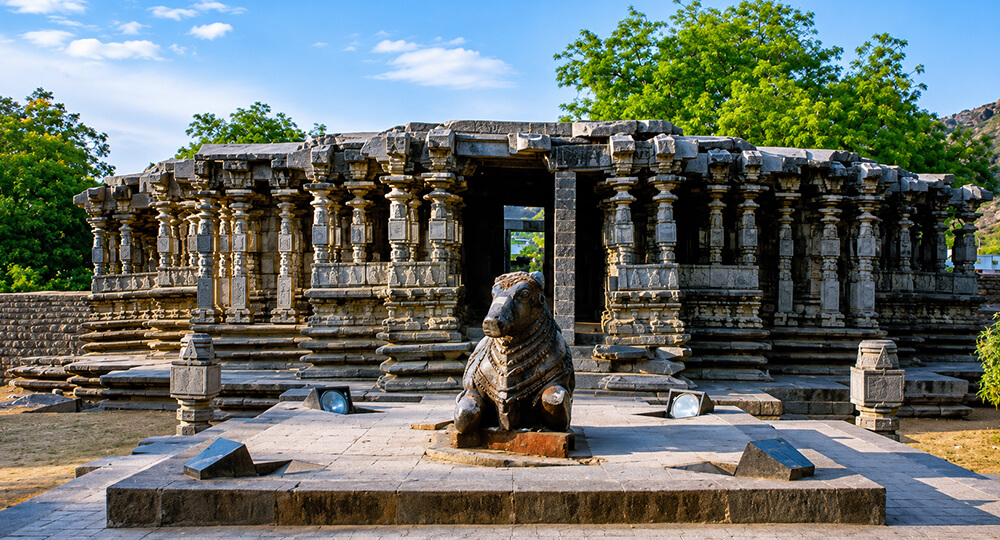
The Thousand Pillar Temple is known for its star-shaped structure, reminiscent of Chalukyan architecture, and for having three shrines dedicated to Shiva, Vishnu, and Surya Dev. As the name suggests, the temple has about a thousand pillars, intricately arranged so that no single pillar blocks the view of the main deity.

The Swayambhu Sri Shambu Lingeswara Swamy Temple was built in the 11th century by King Prola of the Kakatiya Dynasty. The temple is revered for its naturally manifested Shiva Linga and is believed by locals to bring health and prosperity to devotees.

A few kilometres from Warangal is the Ganapur Group of Temples, popularly known as the Ghanapeswaralayam. The group includes one large temple and is surrounded by multiple small temples called Upalayalu. King Ganapati Deva built them in the 12th century.

In Hanamkonda, close to Warangal, is the Siddeshwara Swamy Temple. It resembles Chalukyan architecture, with intricately carved pillars and walls.

The Bhadrakali Temple was built in the 7th century by the Chalukyas and continues to attract devotees today because of the deity’s power and the legend associated with the Kohinoor diamond. The huge, 9-foot idol is believed to represent the Devi’s Tripura Sundari form.

The Padmakshi Temple is another famous temple included in the Warangal tour packages, built in the 12th century and home to several intricately carved pillars and roofs.

Lakes

Since the region’s upland terrain caused severe water shortage, the Kakatiyas built several tanks and reservoirs to conserve rainwater, which was the only source of water for agriculture and everyday life. The Ramappa Tank in Venkatapur, near the famous Ramappa Temple, was built by the Kakatiya kings for irrigation. The Pakhala Tank, another tank excavated by the Kakatiya King Ganapati Deva in the 13th century, has historically provided irrigation to local communities and served as a valuable water source for wild animals surrounding the lake.

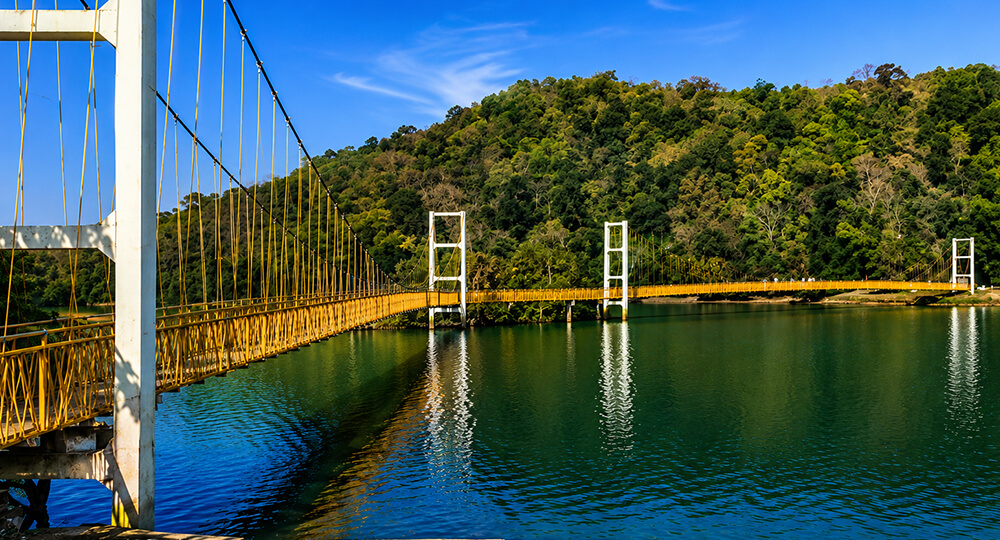
The most scenic of them all is the Laknavaram Lake, located in Govindraopet, about 80 km from Warangal. The lake has 13 small islands, with a long hanging bridge connecting 3 of them. The lake is a popular spot for picnics and boating among locals. As part of your Warangal tour packages, you can also stay at the nearby resort, which offers a panoramic view of the waters.

The Ganapasamudram Lake in Kota Gullu was excavated in the 12th century by King Ganapati Deva to ensure irrigation for around 1000 acres of land surrounding Kota Gullu.

The Dharmasagar Lake is one of the main sources of potable water for Warangal locals and is even associated with the Ramayana. Locals believe that Lord Rama, Lakshmana, and Sita visited the lake during their exile.

Adjacent to the Bhadrakali Temple is the Bhadrakali Tank, one of the largest lakes in the region. It stretches for over 2 km and was built by the Kakatiya kings for irrigation and water supply.

Wildlife Attractions

The Eturnagaram Wildlife Sanctuary, located on the banks of the Godavari River, is Telangana’s oldest sanctuary and home to tropical deciduous forests. It is bound by the Laknavaram Lake, providing a watering hole for the animals. It is home to several animals, including Indian Gaurs, giant squirrels, sloth bears, chinkaras, black bucks, and even tigers. Every two years, the tribals in the forests celebrate the Sammakka Sarakka Jathara, one of the largest tribal events in India.

The Pakhal Lake is home to several animals, including panthers and sloth bears, as well as migratory birds and reptiles such as pythons, cobras, monitor lizards, and crocodiles. The best time to include Pakhal Lake in your Warangal tour packages or Telangana tour packages is between November and June, when the weather is pleasant.

Festivals

Being Telangana’s cultural capital, Warangal celebrates colourful festivals across the year. The Bathukamma is the state’s most popular and colourful of all. This nine-day festival is celebrated during Navaratri and in honour of Goddess Gauri, also known as the Mother Goddess. In fact, Bathukamma is Telangana’s very own version of Navratri. During the festival, women return to their homes for celebrations, which include dance and music performances and flower arrangements called Bathukamma.

Once every two years, tribals in the Dandakaranya Forest celebrate the Sammakka Saralamma Jathara, drawing thousands of people from nearby states.

The Bhadrakali Temple celebrates multiple events throughout the year, including the Brahmotsavam and the Vasanta Navaratri.

Bonalu is another festival celebrated in honour of Goddess Mahakali across the Ashada month. Other popular festivals you can experience with your Warangal tour packages include Ugadi, Sankranthi, and Dussehra.

Cuisine

Unlike Hyderabadi cuisine, food in Warangal is rustic, fiery, tangy, and made using local, seasonal ingredients. Naturally, Sarva Pindi is Warangal’s most popular snack. But if you love something spicy, enjoy the local favourite Pachi Pulusu or raw tamarind Rasam, served with steaming-hot rice. Mutton and chicken are the meats of choice in the region, with famous dishes such as Gongura Mamsam and Natu Kodi Kura. Biryani is also popular in Warangal, though it is spicier than its Hyderabadi counterpart.

Best Time To Choose Warangal Tour Packages

Warangal experiences a semi-arid climate with hot summers, mild winters, and humid monsoons. The region receives heavy rainfall – in fact, Warangal is prone to cyclonic rains that result in severe flooding. Read on to learn more about the different seasons in this heritage town and the best time to choose our Warangal tour packages.

Summer (March to June)

Warangal’s arid geography leads to intense heat, with average summer temperatures ranging from 35°C to 42 °C. It is landlocked and sits on the rocky, heat-absorbing Deccan Plateau, so the sun falls directly overhead. The granite rocks and barren terrain absorb heat during the day and radiate it at night, making summer visits difficult. A lack of thick vegetation and large bodies of water to absorb heat only intensifies the problem. Of course, Warangal tour packages are the cheapest at this time and perfect for budget travellers.

Early summers, i.e., late March to early April, are a great time to explore Warangal, as you can visit some of Warangal’s tourist attractions without much trouble. It is also the time to explore Telangana’s culture through the Ugadi festival. Call us at xxx to learn more about our Telangana tour packages.

Monsoon (July to September)

Warangal experiences heavy monsoon rains, with cyclonic clouds causing severe flash floods in the region. The average temperatures in these months range from 25°C to 30°C, with above-average humidity, from 60% in June to 80% in August and September. The persistent humidity can make it muggy and sticky, with the air feeling heavy and oppressive. Although the monsoon is considered the off-season, if you plan to book Warangal tour packages during this time, we suggest you carry a sturdy umbrella and quick-drying clothes.

Monsoon is the time to celebrate Bonalu, which is celebrated across the Ashada month, falling between July and August. From the last week of September to the first week of October, people in Telangana celebrate Bathukamma, a nine-day floral festival.

Winter (October to February)

This is one of the best times to book Warangal tour packages, thanks to the pleasant weather, with temperatures ranging from 27°C to 31°C and dropping to 15°C at night. It is also a great time to explore this heritage town, as many events are held during this period.

Sankranti is a major harvest festival celebrated in January. The Telangana government also celebrates Kakatiya Festival, a cultural festival honouring the legacy of the Kakatiya dynasty. Celebrations include Perini Natyam performances, food festivals, music programmes, and art exhibitions. The Sammakka Saralamma Jatara, also called Medaram Jatara, is also celebrated in the Hindu month of Magha. This biennial festival is a major tribal festival that honours tribal goddesses Sammakka and Saralamma.

Top Tourist Attractions In Warangal

Warangal Fort

The Warangal Fort is counted among Telangana’s monumental buildings, on par with the Golkonda Fort and the Charminar. It was built by the Kakatiya King Ganapati Deva in the 13th century when he shifted his capital from Hanamkonda to Warangal. While he began construction of the fort, his daughter, Rani Rudrama Devi, oversaw its completion. Although most of the fort is in ruins, it is replete with intricate sculptures, which the Archaeological Survey of India has carefully preserved. The fort is built in three concentric circles, with the outer earthen wall built during the rule of Rani Rudrama Devi. A moat of about 150 feet surrounds this wall. The middle wall is built of massive granite blocks without mortar. The inner wall is home to temples and palaces for the king, queen, and royal officers.

Kakatiya Kala Thoranam

The Kakatiya Kala Thoranam is within the Warangal Fort, but is one of its most important attractions. It refers to the four large, ornamental pillars placed at the four cardinal points of the fort. They originally served as the grand entrance to the Swayambhu Shiva Temple, which Juana Khan destroyed in the 14th century. Following the destruction, only the arches remain. Each arch measures over 10 metres and is intricately decorated with images of mythical animals, birds, flowers, and looped garlands. The architecture is so deeply revered that it is now included in the state emblem.

Thousand Pillar Temple

Built in the 12th century by Rudra Deva, the Kakatiya ruler, the Thousand Pillar Temple is one of the finest examples of Kakatiyan architecture. The temple boasts a thousand pillars, each pillar intricately carved with images of deities, mythical animals and birds, and floral patterns. The pillars are arranged in a star shape and spaced such that every pillar not only supports the structure but also does not obstruct the view of the deity. It is a Trikutalayam, i.e., a temple dedicated to three deities: Lord Shiva, Vishnu, and Lord Surya. Another highlight of the temple is the monolithic statue of Nandi, set on a platform.

Ramappa Temple

This 13th-century temple is dedicated to Lord Shiva, also called Lord Rudreshwara. It is a UNESCO World Heritage Site, built using the sandbox technique. Another highlight of the temple is the pyramidal tower, built from porous bricks that float on water. The pillars and roof of the temple are intricately carved, depicting scenes from Ramayana and Shiva Purana. The temple also has several sub-shrines, including those for Kameswara and Koteswara. The Shiva Lingam in the temple and the large Nandi statue are among the many other attractions. It is the only UNESCO World Heritage Site in Telangana.

Bhadrakali Temple

Dedicated to Goddess Bhadrakali, this ancient temple is believed to have been constructed by the Chalukya kings around the 7th century. It was later renovated in the 20th century, gaining spiritual significance among locals and devotees from across the state. Within the temple, you will find many small shrines dedicated to Lord Shiva, Hanuman, Subramanya Swamy, and Navagrahas. The temple also has an artificial lake beside it, built by King Ganapati Deva. Locals believe that the Kohinoor diamond once adorned the deity until Allaudin Khilji ransacked it.

Laknavaram Lake

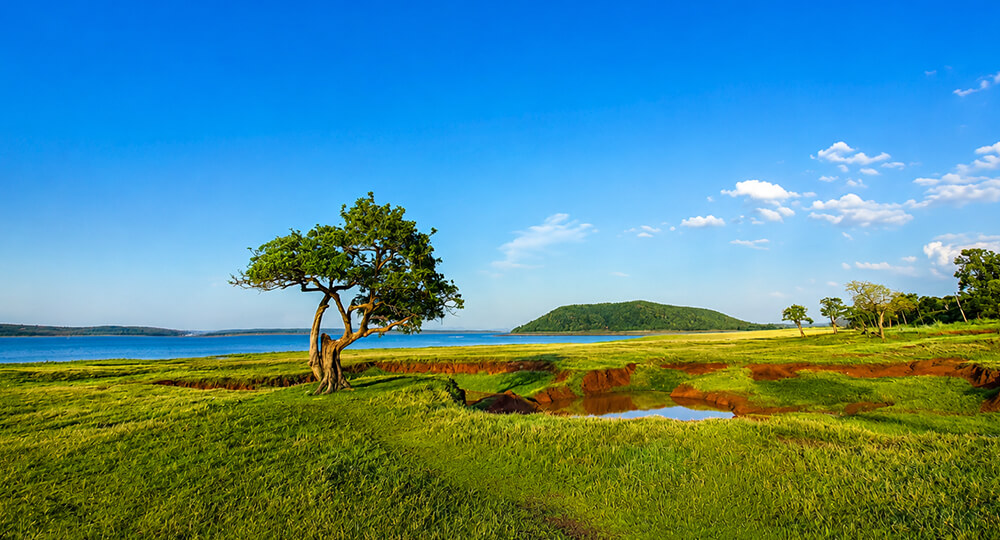
This manmade lake was built in the 13th century by rulers of the Kakatiya dynasty. It spans 10,000 acres and is surrounded by a thick forest. The highlight of the lake is the 13 small islands and a 160-metre-long suspension bridge connecting 3 of them. Tourists can walk up to the main island’s resort and camping areas through the bridge. You can visit the other islands on a boat and enjoy the beautiful scenery. Another attraction in Laknavaram is the lush Eturnagaram Wildlife Sanctuary that surrounds the lake.

Kush Mahal

Also called Shitab Khan Mahal, this historic 14th-century hall is located within the Warangal Fort Complex. The Tughluk rulers built it, and it features Indo-Islamic architectural style. The building was used as an auditorium or public audience hall. Some of the typical features of this hall include high ceilings, slanting arches, and sloping walls.

Kakatiya Musical Garden

The Kakatiya Musical Garden is a major attraction for locals, who visit for its colourful flowers and the beautiful backdrop of hillocks and lush green surroundings. A highlight of the garden is the rock sculptures in the Rock Garden adjacent to the main garden. Another highlight of the garden is the musical fountain, which is soothing to the ears. Every evening, locals visit the garden to enjoy boating on the manmade lake and the artificial waterfall.

Pakhal Lake

Set amidst forests and lush hills, the Pakhal Lake is an artificial reservoir excavated during the reign of King Ganapati Deva of the Kakatiya Dynasty in the 13th century. It was built to provide irrigation water in and around Warangal. The surrounding sanctuary is famous for the Pakhal Wildlife Sanctuary, which is home to a wide range of flora and fauna, including hyenas, wolves, and wild dogs. Some of the reptiles you can find here include crocodiles, pythons, and cobras.

Padmakshi Temple

This 12th-century temple dedicated to Goddess Padmakshi is located in the heart of Hanamkonda, Warangal and was built by Kakatiya kings. Originally, the temple also featured Shaivite and Jain carvings. A highlight of the temple is the Annakonda Pillar, an exquisitely carved quadrangular column. The temple stands atop a small hill, offering a scenic view of the surrounding city and nearby ponds. Locals visit the temple with great reverence, calling the divine mother Amma.

Eturnagaram Wildlife Sanctuary

This is the oldest sanctuary in Telangana, established in 1952. Although part of Mulugu District, it is included in most Warangal tour packages as Mulugu was initially part of Warangal. The Laknavaram Lake binds it and is home to dense forests. The sanctuary hosts a wide range of animals, including giant squirrels, sloth bears, gaur, and black bucks. Another highlight of the sanctuary is the Sammakkka Sarakkka Jathara, a unique tribal festival that’s celebrated once every two years. Some of the activities you can enjoy at Eturnagaram include jeep safaris, trekking, bird watching, and boating.

Call us at +91 9940882200 to learn more about our Warangal tour packages.

Places Near Warangal You Must Visit With Your Warangal Tour Packages

Karimnagar

Distance from Warangal: 80 km

Famous For: Temples, Forts, Handicrafts

Top Tourist Attractions: Sri Raja Rajeshwara Temple, Anjeneya Swamy Temple, Elgandal Fort, Ramagiri Fort, Molangur Fort

Khammam

Distance from Warangal: 122 km

Famous For: Temple, Fort, Archaeological Sites, Lakes

Top Tourist Attractions: Khammam Fort, Nelakondapalli Archaeological Site, Stambhadri Narasimha Swamy Temple, Jamalapuram Temple, Kusumanchi Temple, Palair Lake, Lakharam Lake

Mulugu

Distance from Warangal: 52 km

Famous For: Temples, Festivals, Waterfalls, Lakes

Top Tourist Attractions: Ramappa Temple, Bogatha Waterfall, Medaram Jathara, Lakhnavaram Lake, Eturnagaram Wildlife Sanctuary

Hyderabad

Distance from Warangal: 148 km

Famous For: Heritage Monuments, Forts, Cuisine, Markets

Top Tourist Attractions: Charminar, Golconda Fort, Birla Temple, Chowmahalla Palace, Salar Jung Museum, Qutb Shahi, Jaganatha Swamy Temple, Falaknuma Palace, Ramoji Film City, Lumbini Park, Shilparaman Arts & Crafts Village

Secunderabad

Distance from Warangal: 145 km

Famous For: Colonial Buildings, Bazaars, Scenic Lakes, Spiritual Sites

Top Tourist Attractions: Shamirpet Lake, Hussainsagar Lake, Secunderabad Clock Tower, Peddamma Temple, Paigah Palace, Safilguda Lake, Alwal Lake

Nalgonda

Distance from Warangal: 141 km

Famous For: Forts, Temples, Dam

Top Tourist Attractions: Nagarjuna Sagar Dam, Someshwara Temple, Panagal Temples, Bhongir Fort, Devarakonda Fort, Rachakonda Fort, Phanigiri Stupa

Bhadrachalam

Distance from Warangal: 200 km

Famous For: Temples, Cuisine

Top Tourist Attractions: Sree Seetharamachandra Swamy Temple, Papikondalu, Bogatha Waterfall

Shopping

Warangal offers a diverse shopping experience to tourists. If you love Durries, Warangal is famous for them. In fact, Warangal Durries are GI-tagged and famous across India for their quality and craftsmanship. You can also shop for Pembarti brassware, an 800-year-old metalworking tradition that includes home décor, temple architecture, and even wedding essentials.

Cheriyal scroll paintings are found across Telangana, but they originated in Cheriyal, a town historically in Warangal but now part of Siddipet District. Besides the above, you can shop for Lepakshi handicrafts and Pochampalli sarees.

Dos and Don’ts of Visiting Warangal

  • Dress modestly when visiting temples and remember to take off your shoes before entering them.
  • While you can visit Warangal Fort on your own, it’s best to hire a local guide to help you understand Kakatiya history and the intricate carvings of the Kakatiya Thoranams.
  • Warangal can be very hot. Even in winter, temperatures can reach around 32°C. Carry a water bottle and wear sunscreen when visiting places like the Warangal Fort or the Ramappa Temple.
  • Dispose of your trash responsibly in places like Lakhnavaram and Pakhal lakes, as the government is trying its best to maintain the place’s natural beauty.

Food

The cuisine of Warangal differs from that of Hyderabad, though Biryani is equally famous in both. The city is known for its authentic Telangana cuisine, which is rustic, fiery, and robust. Besides rice, millets are a staple for locals. Jowar Roti (Jonna Roti) and Sajje Roti (Pearl Millet Roti) are served with non-vegetarian dishes like Gongura Mamsam, Mamsum Pulusu, or Kodi Pulusu. Golichina Gongura is another famous dish in Warangal.

Pulusu refers to gravies made using tamarind as a souring agent, while Koora refers to gravies. The curries are fiery, thanks to Telangana’s special chillies that are extra hot. No meal is complete without Pachi Pulusu or raw tamarind Rasam. Chutneys and pickles have a special place in Telangana cuisine and are called Podis and Pachadis respectively. In fact, the Telugu people are known to make Pachadi out of anything! This includes chutneys made from ridge gourd and ivy gourd skins, sorrel leaves, and even brinjals.

As for sweets, Warangal is famous for Junnu, a delicacy made from raw colostrum milk and flavoured with cardamom and pepper. Other sweets savoured by locals include Gajiralu and Pootharekelu.

And if you are craving snacks, don’t forget to try Sarva Pindi, a spicy rice flour pancake, or Mirchi Bhajji, i.e., fritters made from green chillies.

Call us at +91 9940882200 to learn more about our Warangal tour packages.

Travel Tips

visa_information_icon

Visa Information

Check visa requirements before traveling, ensuring a smooth entry and compliance with destination regulations.

health and safety tips icon

Health and Safety Tips

Prioritize health, stay hydrated, follow safety guidelines, and maintain personal hygiene for a secure journey.

currency and tipping icon

Currency and Tipping

Familiarize with local currency, consider customary tipping practices for respectful and seamless travel experiences.

Share Your Ideal Tour: Let Us Customize!

FAQs:

What is the best time to choose Warangal tour packages?
October to March is the best time to explore Warangal tour packages when the average temperature ranges from 19°C to 28°C.
Is Warangal a safe city?
Warangal is a generally safe and friendly town. But we suggest you take necessary precautions, especially if you are travelling alone.
How many days do I need to explore Warangal?
We suggest spending 2-3 days exploring Warangal and its surroundings. But if you also want to explore nearby Hyderabad, we suggest booking 3-4 days of tours.
What souvenirs do I buy for friends and family from Warangal?
Warangal is famous for its Durries, Pembarti metalcraft, and Cheriyal scroll painting. Besides the above, you can also buy Pochampally sarees and Gollabhama sarees.
Is there a dress code one must follow when visiting the temples in Warangal?
While there is no dress code per se, we suggest that visitors dress modestly when visiting the temples. This includes avoiding shorts, short skirts, or ripped jeans.
Can I customise my Warangal tour package?
Yes, you can always customise your Warangal tour package to include or exclude places from your itinerary.
How much do Warangal tour packages cost?
The cost of your Warangal tour packages varies depending on the itinerary, the number of people in your group, and accommodation options.
Can I include Hyderabad in my Warangal tour packages?
Yes, Hyderabad is generally included in most Warangal tour packages, since you have to travel from Hyderabad to Warangal, which allows guests to explore Telangana’s capital city.
Do you need a tour guide for Warangal?
A tour guide will surely enhance your Warangal experience, offering historical insights as you visit the cave temples.
Is Warangal worth it for children?
Warangal is worth visiting if you’d like to introduce children to India’s heritage monuments and history. They will surely enjoy the intricate craftsmanship in Ramappa and Thousand Pillar temples.

Book Your Dream Vacay Today!

=
×

Enquire Now

=